How To Become More Self-Sufficient Without Starting a Full-Blown Farm…
Want to start preserving your harvest, making your own soap, or building a backyard root cellar — but not sure where to begin? “Homesteading Advice” gives you instant lifetime access to 35+ practical homesteading books on food preservation, veggie gardening, DIY natural cleaning products (save over $250 per year with this skill alone), brewing, off-grid energy, and a whole lot more…
Click Here To Check It Out Now!
See why professional homesteaders are letting ‘maggots’ turn their waste into high-protein chicken feed in just 24 hours. Traditional composting is great, but it’s slow. If you have poultry, you’re missing out on a closed-loop miracle. Black Soldier Fly Larvae (BSFL) can process food waste 10x faster than worms or microbes, and they turn that waste into the highest-quality protein your chickens will ever eat—for free.
The modern homesteader often looks back to ancestral wisdom to solve today’s problems. We seek a way to live that doesn’t rely on the heavy hand of industrial supply chains. For those of us raising a flock, the rising cost of organic grain is a constant thorn in the side. We know our ancestors didn’t buy plastic bags of soy-based pellets; they utilized every scrap, every insect, and every ounce of grit the land provided.
Enter the Black Soldier Fly (Hermetia illucens). While the name might sound like something out of a military manual, these creatures are the silent laborers of a truly self-reliant farm. Unlike the common housefly, they don’t carry disease and they don’t buzz around your dinner table. They have one mission: to eat, grow, and provide a nutrient-dense harvest for your birds.
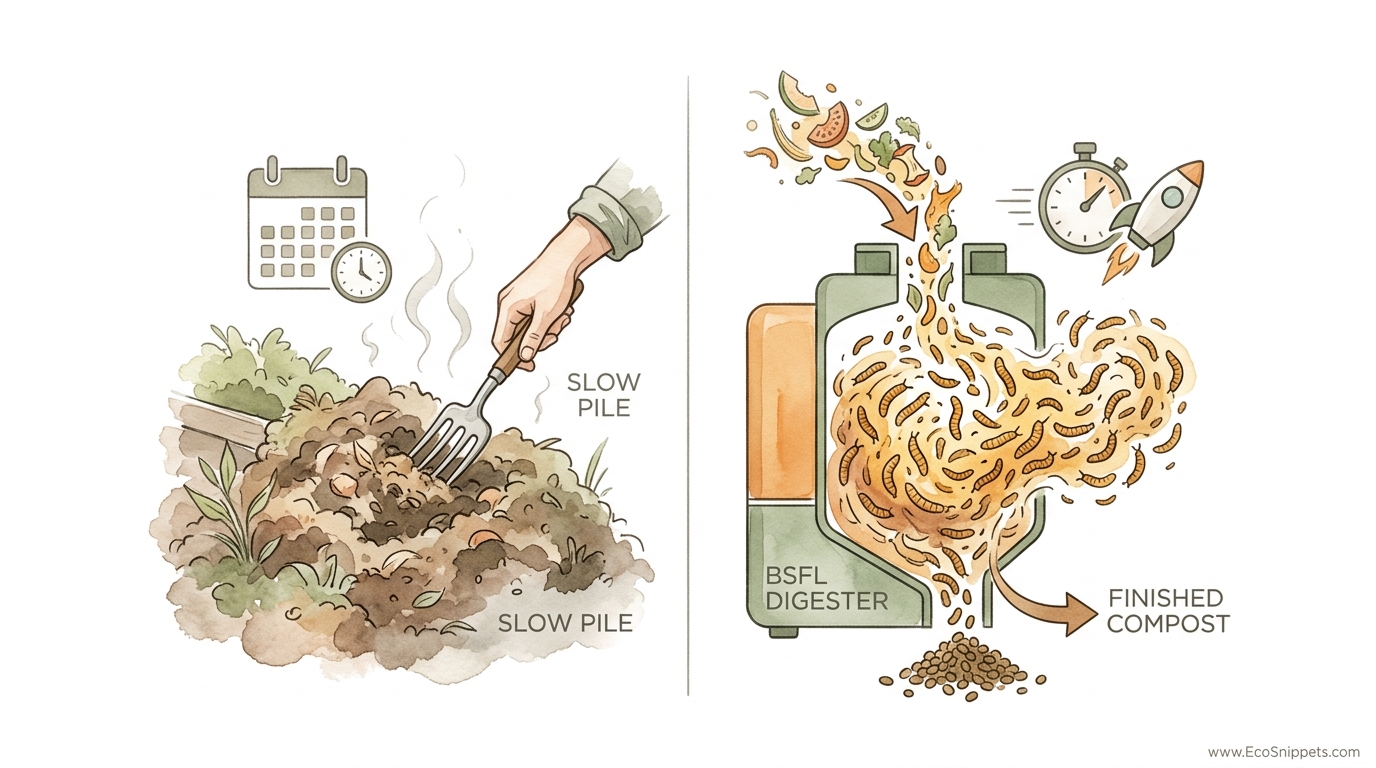
This isn’t just about getting rid of kitchen scraps. This is about building a biological engine that outpaces the STANDARD SLOW PILE and rivals the PRO BSFL DIGESTER systems used by commercial operations. It is a bridge between the waste of today and the self-sufficiency of tomorrow.
Black Soldier Fly Composting Vs Traditional Compost
Traditional composting is a slow, patient dance between carbon and nitrogen. You stack your “browns” and “greens,” turn the pile with a pitchfork, and wait months for microbes to break the material down into humus. It is a vital practice for the garden, but it is a “cold” process that loses a significant amount of energy to the atmosphere as heat and gas. When you are trying to feed animals, that lost energy is lost potential.
Black Soldier Fly composting is a “hot” biological process driven by the sheer voracity of the larvae. Instead of waiting for bacteria to slowly nibble away at a cabbage leaf, thousands of larvae descend upon it, consuming it entirely in hours. This method is used across the globe in tropical and temperate regions to manage large-scale food waste because it reduces the volume of organic matter by up to 95% almost overnight.
Think of traditional composting like a slow-burning log in a fireplace—it provides steady warmth over a long period. BSFL composting is more like a forge; it is intense, focused, and transforms raw material into a refined product in a fraction of the time. While a traditional pile requires a delicate balance of air and moisture to prevent rot, BSFL thrive in the very “wet” conditions that would kill a standard compost pile.
In the real world, this means you can throw meat, dairy, and oily scraps into a BSFL digester—items that are strictly forbidden in a standard compost bin. The larvae don’t care about the rules of the slow pile. They see energy, and they extract it with surgical efficiency.
The Life Cycle: Understanding Your Workers
To master the digester, you must understand the life of the soldier fly. It begins with the adult. These flies look more like slender black wasps than the iridescent bluebottles we usually see. They have no mouthparts as adults; they do not eat, they do not bite, and they do not spread pathogens. They live for only 5 to 14 days, with a single purpose: mating and egg-laying.
The female fly is a seeker. She looks for the scent of decomposing organic matter—not to land on it, but to lay her eggs nearby. She prefers dry, tight crevices near a food source. Once she finds a suitable spot, she deposits a cluster of 500 to 900 eggs. On a homestead, we provide this spot using corrugated cardboard or stacked wood shims.
Within four days, the eggs hatch into tiny “neonates.” These microscopic larvae fall into the waste and begin their feast. For the next 14 to 21 days, they will eat continuously. This is the stage where the magic happens. They grow from nearly invisible to nearly an inch long, accumulating massive stores of fat and protein to sustain them through their next life stages.
When the larvae reach their final “prepupal” stage, they stop eating and change color from creamy white to a dark, charcoal grey. This is the moment of instinct. They seek a dry, dark place to pupate. They will actually use their specialized mouthparts to climb out of the wet waste and up a ramp. This “self-harvesting” behavior is what makes them the perfect livestock feed—they literally walk themselves into your collection bucket.
How to Build Your Own BSFL Digester
Building a home for your larvae doesn’t require an engineering degree or a trip to a specialized supply house. You can construct a functional digester using a heavy-duty plastic tote, some PVC pipe, and a few hand tools. The goal is to create a controlled environment where the larvae are contained, the waste is managed, and the harvest is automatic.
First, select a 20-gallon or larger plastic bin with a tight-fitting lid. This will be the main “stomach” of your system. You need to provide a way for the mature larvae to escape, so you will install an “exit ramp.” Use a piece of 2-inch PVC pipe or an old aluminum gutter. Cut a hole in the side of the bin and angle the pipe at approximately 30 to 45 degrees, extending from the bottom of the waste area to a hole at the top of the bin.
Second, ensure proper drainage. BSFL create a liquid byproduct called “leachate” as they process wet waste. If this liquid pools, the bin will become anaerobic and start to stink. Drill a hole at the lowest point of the bin and install a small spigot or a drainage tube. This liquid is a potent fertilizer for your ornamental plants or can be diluted for the garden.
Third, create the “oviposition” site. This is where the wild flies will lay their eggs to keep your colony going. Take a few strips of corrugated cardboard, about 2 inches wide and 4 inches long. Tape or wire them to the inside of the bin, just above the waste level. The flies will crawl through the entry holes you’ve drilled in the lid and lay their eggs in the “flutes” of the cardboard.
Finally, set up your collection bucket. Position a 5-gallon bucket directly under the end of your exit ramp. When the larvae are ready to pupate, they will climb the ramp, drop out of the pipe, and land in the bucket. You can leave the bucket empty for a “clean” harvest or add a layer of wheat bran if you want them to stay dry and plump for a few days before feeding them to the hens.
Feeding the Grubs: What’s on the Menu?
The beauty of the Black Soldier Fly is its versatility. While a worm bin is picky about acidity and oils, the BSFL bin is a generalist. However, to get the highest protein output for your chickens, you should consider what you are putting into the “fuel tank.”
Kitchen Scraps: This is the bread and butter of the system. Fruit peels, vegetable trimmings, and coffee grounds are all excellent. If the scraps are large, like a whole melon rind, chop them up. Smaller pieces provide more surface area for the larvae to latch onto, which speeds up the consumption process significantly.
Meat and Dairy: Unlike almost any other composting method, BSFL can handle moderate amounts of meat, fish, and cheese. Because they process the material so quickly, it doesn’t have time to putrefy and attract houseflies. This allows you to reclaim the protein from table leftovers that would otherwise go to the landfill.
Manure: If you have rabbits, goats, or even pigs, their manure is a prime feedstock for BSFL. The larvae will strip the nutrients from the manure, reducing its volume and leaving behind a high-quality “frass” (larvae manure) that is an incredible soil amendment. Note: Be cautious about using manure from animals treated with dewormers, as these chemicals can kill your larvae.
Grains and Starches: Old bread, pasta, and cooked rice are like rocket fuel for larvae. These high-carbohydrate foods help them pack on the fat stores that make them so valuable for poultry. If your bin seems too wet, adding dry bread or grain can help soak up excess moisture and keep the colony balanced.
The Nutritional Powerhouse: Why Your Chickens Need BSFL
We often talk about “protein” as a single metric, but the quality of protein matters more than the quantity. Black Soldier Fly larvae are a complete protein source, meaning they contain the essential amino acids that chickens cannot produce on their own. Specifically, they are rich in methionine and lysine, which are often the “limiting” factors in poultry growth and egg production.
Beyond protein, BSFL are a “calcium bomb.” A laying hen requires a massive amount of calcium to produce strong eggshells. While mealworms are often low in calcium, BSFL contain up to 3% calcium by weight. Feeding these grubs to your hens can lead to thicker shells and fewer “rubber eggs,” especially in older birds whose systems are less efficient at processing supplemental oyster shells.
The fat content of the larvae is equally important. These are not just empty calories; they are rich in lauric acid. Lauric acid is a medium-chain fatty acid known for its antimicrobial properties. When chickens consume BSFL, they aren’t just getting fuel; they are getting a boost to their immune system. Many homesteaders report a noticeable decrease in gut issues and overall flock mortality when BSFL are a regular part of the diet.
Finally, consider the behavioral benefits. Chickens are natural foragers. Tossing a handful of live, wiggling larvae into the run triggers their hunting instinct. This enrichment reduces boredom, pecking, and stress within the flock. You are providing a “superfood” that satisfies both their nutritional requirements and their ancestral nature.
Black Soldier Fly Composting Vs Traditional Compost: A Comparison
| Feature | Traditional Compost | BSFL Composting |
|---|---|---|
| Primary Agent | Microbes/Worms | Soldier Fly Larvae |
| Processing Speed | 3–12 Months | 12–21 Days |
| Meat/Dairy Allowed? | Generally No | Yes |
| Space Requirement | Large Pile/Bin | Small Vertical Tote |
| End Product | Soil Humus | High-Protein Feed + Frass |
| Effort Level | Medium (Turning) | Low (Feeding) |
Challenges and Common Mistakes
Even the most resilient system has its breaking points. The most common mistake new practitioners make is overfeeding. If you dump ten pounds of scraps into a bin with only a thousand larvae, they won’t be able to keep up. The waste will sit, go anaerobic, and start to smell like a swamp. Always wait until the previous meal is mostly “shredded” before adding a fresh layer of waste.
Another pitfall is moisture management. BSFL need a moist environment, but they don’t have gills. If the bin floods due to heavy rain or excessively wet fruit, the larvae will attempt a mass exodus to avoid drowning. Ensure your drainage spigot is always clear and that your bin is kept under a roof or a sturdy cover.
Temperature is the third major hurdle. These are tropical and temperate insects. If the temperature inside the bin drops below 60°F, the larvae will slow down and eventually enter a state of dormancy. If it hits freezing, they will die. In colder climates, you must either move your digester into a greenhouse or basement, or accept that your BSFL season is limited to the warmer months.
Lastly, beware of pesticides. Because you are concentrating these larvae to feed to your livestock, any chemicals present in your waste stream will be concentrated in the larvae’s bodies. Avoid feeding them lawn clippings treated with herbicides or store-bought produce known for high pesticide residue unless you’ve washed it thoroughly.
Limitations: When This May Not Be Ideal
As much as we love the BSFL system, it isn’t a silver bullet for every homestead. Environmental limitations are the biggest factor. If you live in an area with a very short growing season and no way to heat an indoor space, the energy required to keep a colony active through the winter might outweigh the benefits of the feed you produce.
Scale is also a consideration. While a small tote is perfect for a backyard flock of six hens, a large-scale poultry operation with 500 birds would require a massive, industrial-sized digester to make a significant dent in their feed bill. For larger farms, BSFL are often used as a high-value supplement rather than a primary calorie source.
There is also the “yuck factor.” Let’s be honest: you are essentially farming maggots. While the Black Soldier Fly is clean and doesn’t spread disease, the sight and sound of thousands of squirming larvae can be unsettling for some. If your homestead is in a tight suburban neighborhood, you must be extremely diligent about managing odors to avoid friction with neighbors.
Practical Tips for Peak Production
- Seed your bin early: Don’t wait for wild flies to find you in the late spring. You can buy “starter” larvae online to jumpstart your colony as soon as the nights stay above 50°F.
- Balance the C:N: While they love nitrogen, adding a little carbon (like shredded cardboard or dry leaves) helps maintain the structure of the waste and provides “air pockets” for the larvae to breathe.
- Harvest at the right time: The “prepupae” stage—when they turn dark—is the peak nutritional moment. If you wait until they actually pupate into hard shells, they become less digestible for the chickens.
- Keep it dark: BSFL are negatively phototropic, meaning they hate light. Ensure your bin is opaque and the lid is kept on. They will feed much closer to the surface if they aren’t hiding from the sun.
Advanced Considerations: Breeding Your Own
Serious practitioners don’t just rely on wild flies; they manage the entire life cycle. This involves building a “breeding cage” or “love cage.” This is a mesh enclosure that houses the adult flies, providing them with the exact humidity (70%+) and light spectrum they need to mate successfully.
By controlling the breeding, you can produce larvae year-round in a climate-controlled room. This requires a dedicated light source—specifically one that provides UVA and UVB rays—to stimulate the flies’ mating dance. Scaling to this level allows you to produce a consistent daily harvest of protein, regardless of the weather outside.
Another advanced technique is substrate optimization. Researchers have found that adding specific “boosters” to the feed can alter the nutritional profile of the larvae. For instance, adding fish oil or seaweed to the bin can increase the Omega-3 fatty acid content of the larvae, which then transfers directly to the eggs your chickens lay. This is bio-engineering at its most basic and effective level.
A Realistic Example: The 24-Hour Cleanup
Imagine it’s Sunday evening after a large family gathering. You have a bucket filled with melon rinds, some leftover mashed potatoes, a bit of stale bread, and the scraps from a roast chicken. In a traditional compost pile, this bucket would sit for weeks, likely attracting raccoons or smelling of rot.
You take this five-pound bucket and spread it across the surface of an active BSFL digester. Within minutes, the vibration of the larvae below the surface increases. By the next evening—24 hours later—the structure of the food is gone. The melon rinds are paper-thin, the potatoes have vanished, and all that remains is a dark, granular residue.
In the collection bucket below, you find two cups of plump, wriggling, high-protein grubs. You carry that bucket to the coop. The hens see you coming and start a chorus of excitement. You toss the grubs onto the ground, and in a flurry of feathers, the waste from your Sunday dinner has been converted into the energy for tomorrow’s eggs. That is the closed-loop miracle in action.
Final Thoughts
The transition from a standard slow pile to a pro BSFL digester is more than just a change in composting technique; it is a shift in how we view waste. On a self-reliant homestead, there is no such thing as “trash.” There are only inputs and outputs. By partnering with the Black Soldier Fly, we reclaim the energy that most of the world simply throws away.
This system rewards the observant homesteader. It asks you to pay attention to the moisture, the temperature, and the life cycle of a creature that most people would overlook. In return, it provides a level of feed security that is hard to find in a bag of store-bought grain. It is a way to toughen the “grit” of your farm and move one step closer to true independence.
Start small, build a simple bin, and watch the magic happen. You’ll soon find that those “maggots” are the hardest-working livestock on your land. Once you see the health of your birds and the quality of their eggs, you’ll never look at a kitchen scrap the same way again.
