How To Become More Self-Sufficient Without Starting a Full-Blown Farm…
Want to start preserving your harvest, making your own soap, or building a backyard root cellar — but not sure where to begin? “Homesteading Advice” gives you instant lifetime access to 35+ practical homesteading books on food preservation, veggie gardening, DIY natural cleaning products (save over $250 per year with this skill alone), brewing, off-grid energy, and a whole lot more…
Click Here To Check It Out Now!
The Vine-Grown Secret to a Plastic-Free Kitchen
Your kitchen sponge is likely shedding microplastics into your food, but this vine-grown alternative lasts longer and costs zero dollars. Most people think sponges come from the store, but they actually grow on a vine! We traded the smelly, bacteria-trapping plastic scrubbers for homegrown luffas. They are tougher on grease, completely compostable, and one single plant provides a year’s supply of scrubbers for the whole house. Stop buying plastic and start planting your cleaning supplies.
The modern world has conditioned us to believe that household essentials must be manufactured in a factory, wrapped in plastic, and purchased every two weeks. There is a quiet, ancestral wisdom in stepping back from that cycle. When we look at the history of self-reliance, we find that the most effective tools often came directly from the soil. The luffa gourd is a prime example of this pioneer-style efficiency.
Transitioning to a luffa-based household isn’t just about saving a few dollars at the checkout counter. It is about reclaiming autonomy over the materials we bring into our homes. It is about knowing that when a scrubber reaches the end of its life, it returns to the earth rather than sitting in a landfill for centuries. This guide will walk you through the reality of the luffa gourd and how you can integrate it into your homestead.
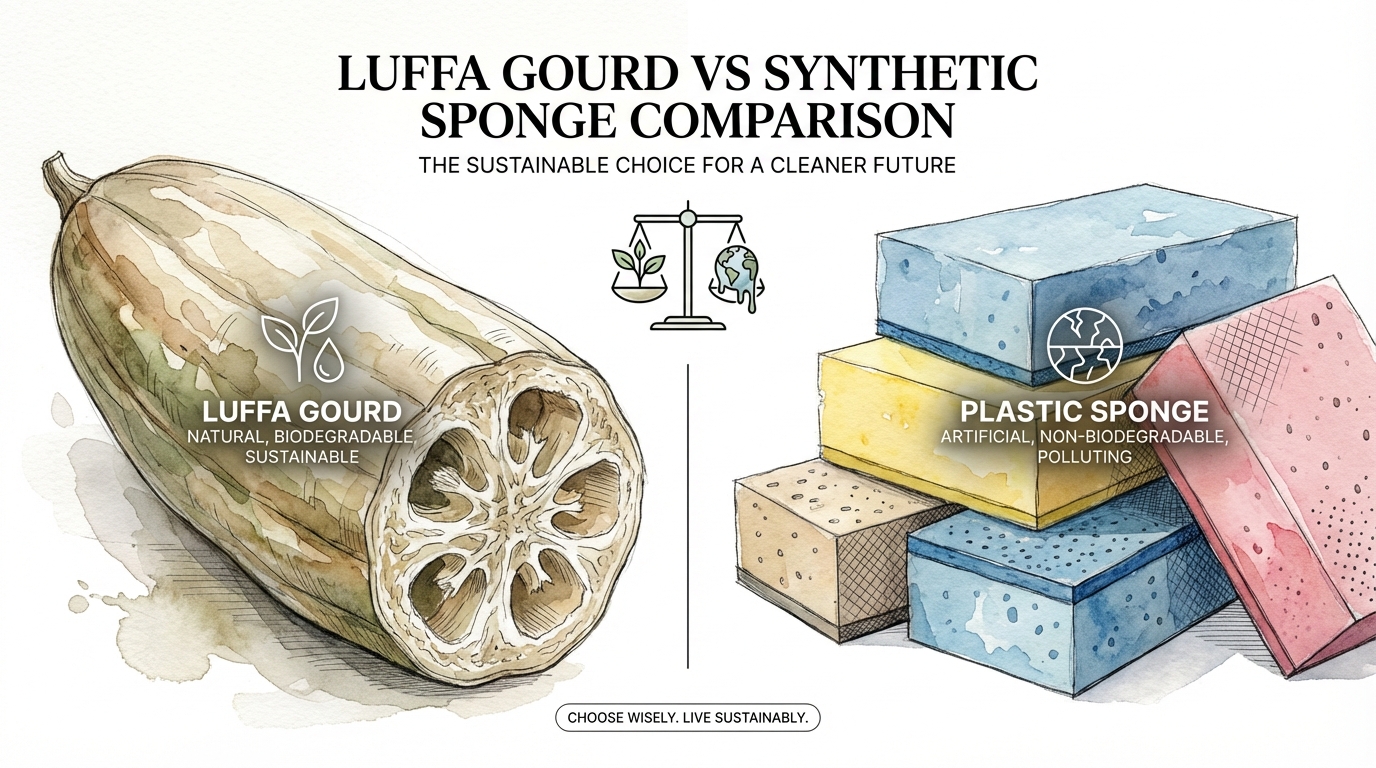
Luffa Gourd Vs Synthetic Sponge Comparison
To understand why the luffa is superior, we must first look at what a standard yellow-and-green sponge actually is. Most synthetic sponges are made of polyurethane, a petroleum-based plastic, or treated wood pulp that has been heavily processed with chemical softeners. They are designed to fail, breaking down into microscopic fragments that enter our waterways and, eventually, our food chain.
The luffa gourd, specifically Luffa aegyptiaca or Luffa cyclindrica, is a member of the cucumber family. While it is edible when very young, its true value lies in its mature state. As the fruit ripens, the interior flesh dries away, leaving behind a complex network of cellulose fibers. This fibrous skeleton is what we use as a scrubber.
Synthetic sponges are notorious for harboring bacteria. Their dense, foam-like structure stays damp for hours, creating a breeding ground for pathogens. In contrast, the open-weave structure of a luffa allows for rapid airflow. It dries quickly between uses, which naturally inhibits the growth of mold and the “sour” smell associated with old kitchen sponges.
When it comes to durability, the luffa is deceptively strong. While a plastic scrubber might lose its abrasive edge within a week, a properly dried luffa remains effective for a month or more of heavy scrubbing. Once it finally softens too much for the kitchen sink, it doesn’t go in the trash. It goes into the compost pile, completing a perfect circle of utility and return.
How It Works: Growing Your Own Scrubber
Growing luffas requires patience and a bit of pioneer grit. These are not plants for the impatient gardener. They require a long growing season, often between 150 and 200 frost-free days. If you live in a northern climate, you must start your seeds indoors weeks before the last frost to give them a fighting chance.
Starting the Seeds
Luffa seeds have a notoriously hard outer shell. To improve germination rates, many growers “nick” the seed coat with a pair of nail clippers or sandpaper and soak them in warm water for 24 hours. This signals to the embryo that it is time to wake up. Plant them in deep pots, as they dislike having their roots disturbed during transplanting.
The Importance of Trellising
You cannot grow luffas on the ground like pumpkins. If the fruit touches the damp soil, it will rot or become misshapen. These vines are aggressive climbers, often reaching 20 or 30 feet in a single season. You need a sturdy cattle panel, a heavy-duty fence, or an overhead arbor to support the weight of the developing gourds. A single vine can produce dozens of heavy fruits, so do not skimp on your support structure.
Pollination and Growth
Luffas produce beautiful yellow flowers that attract bees and pollinators. They have separate male and female flowers on the same plant. If you find your small gourds are shriveling and falling off, you may need to hand-pollinate. Simply take a male flower and rub its pollen onto the center of the female flower (the one with the tiny gourd at the base).
The Harvest Process
Knowing when to harvest is the most critical step. If you pick them while they are green and heavy, they will simply rot. You must wait until the gourd feels light as a feather and the skin has turned brown or yellow. You should be able to hear the seeds rattling inside when you shake it. This is the sign that the internal fibers have hardened and the “sponge” is ready.
How to Process and Prepare Your Luffas
Once you have harvested your dried gourds, the work isn’t quite finished. You must remove the outer skin to reveal the scrubber inside. If the gourd is perfectly dry, the skin will often crack and peel off like a hard-boiled egg. If it is stubborn, soaking it in water for a few minutes can help loosen the bond.
After peeling, you will see a tan, fibrous skeleton filled with black seeds. Shake out the seeds—save these for next year’s planting or share them with neighbors. Wash the fiber thoroughly in a bucket of water with a dash of dish soap to remove any remaining sap or skin fragments. Some people prefer a bright white sponge and will soak them in a weak bleach solution, but for a true natural look and feel, a simple water rinse is sufficient.
Hang the cleaned luffas in the sun to dry completely. Once dry, you can cut them into various sizes. A long luffa can be sliced into several kitchen-sized rounds or left long for use as a back scrubber in the bath. The versatility of the material is limited only by your needs.
Benefits of the Luffa Gourd
Integrating luffas into your home provides a range of benefits that go far beyond simple cleaning. It is a shift in mindset toward a more sustainable and self-reliant way of living.
- Zero Cost: After the initial purchase of a packet of heirloom seeds, you will never have to pay for a sponge again. One plant can produce 15 to 25 sponges.
- Microplastic-Free: You can scrub your cast iron and your dinner plates without worrying about shedding synthetic fibers into your food or down the drain.
- Superior Exfoliation: In the shower, a luffa provides better mechanical exfoliation than any plastic “pouff,” helping to remove dead skin and improve circulation.
- Compostable: When the luffa wears out, it is 100% biodegradable. You can bury it in the garden to add organic matter back to the soil.
- Durability: The natural lignin in the fibers is incredibly tough. It can handle burnt-on food on a stovetop without tearing apart.
Challenges and Common Mistakes
While growing your own cleaning supplies is rewarding, it is not without its hurdles. Many first-time growers fail because they treat luffas like standard cucumbers. These plants are tropical by nature and demand high heat and consistent moisture.
Common Pitfall: Harvesting Too Early. This is the number one mistake. If the gourd is green, it is still full of water and soft flesh. If you peel it then, the fibers will collapse and turn into a slimy mess. You must wait for the “crunch” test. The gourd must be light and the skin must feel like parchment paper.
Pest Management. Cucumber beetles love luffas. They can carry wilt diseases that kill the vine before the fruit matures. Use row covers early in the season and keep a close eye on your plants. A healthy, vigorous vine can usually outgrow some insect damage, but a young seedling cannot.
The “Sour” Sponge. Even though luffas dry faster than plastic, they can still get funky if left sitting in a puddle of water. Always use a soap dish that drains or hang your luffa by a string to ensure it stays fresh and dry between uses.
Comparison: Luffa vs. Synthetic Options
To help visualize the difference, consider the following breakdown of how the luffa stacks up against the standard store-bought options.
| Feature | Synthetic Plastic Sponge | Homegrown Luffa Gourd |
|---|---|---|
| Material Source | Petroleum / Polyurethane | Plant Cellulose (Grown from seed) |
| Average Lifespan | 1-2 Weeks (Effective) | 4-6 Weeks (Effective) |
| Environmental Impact | High (Leaches microplastics) | Zero (Compostable) |
| Bacterial Resistance | Low (Stays wet/dense) | High (Open weave/fast drying) |
| Cost Over 1 Year | $30 – $50 (Recurring) | $0 (Self-sustaining) |
Practical Tips for Best Results
If you are ready to make the switch, here are some actionable tips to ensure your luffa journey is a success. These are the small details that make a big difference in the quality of your finished product.
- Sanitize Regularly: To keep your luffa in top shape, toss it in the top rack of the dishwasher once a week or microwave it while damp for 30 seconds to kill any lingering bacteria.
- Seed Saving: Always save the seeds from your largest, fastest-growing gourds. Over several years, you will “breed” a strain of luffa that is perfectly adapted to your specific local climate.
- Softening the Fiber: A brand new luffa can be quite stiff. If you find it too abrasive for delicate tasks, soak it in hot water for ten minutes before its first use to soften the fibers.
- Vary Your Harvest: If you want softer sponges for the bath, harvest a few gourds just as they start to turn yellow. For heavy-duty pot scrubbing, wait until they are fully brown and bone-dry.
- Winter Storage: Store your processed, dry sponges in a breathable bag (like cotton or mesh) in a dry place. They will keep for years as long as they don’t get damp.
Final Thoughts
There is a profound satisfaction in standing at your kitchen sink and realizing that the tool in your hand didn’t come from a shipping container halfway across the world. It came from a seed you planted, a vine you watered, and a harvest you brought in with your own two hands. This is the essence of the pioneer spirit—taking the basic elements of nature and turning them into something of immense practical value.
We often think of sustainability as a series of sacrifices, but the luffa gourd proves otherwise. It is a better-performing tool that happens to be free and environmentally friendly. It cleans more effectively, dries more hygienically, and connects us back to the rhythms of the seasons. By trading plastic for the vine, you are making a small but significant stand for self-reliance.
As you plan your next garden, leave a little room on the fence for a luffa vine. It may seem like a novelty at first, but once you experience the quality of a truly natural scrubber, you will never go back to the yellow plastic blocks of the past. Start small, stay persistent, and enjoy the reward of a year’s supply of cleaning power grown right in your own backyard.
