How To Become More Self-Sufficient Without Starting a Full-Blown Farm…
Want to start preserving your harvest, making your own soap, or building a backyard root cellar — but not sure where to begin? “Homesteading Advice” gives you instant lifetime access to 35+ practical homesteading books on food preservation, veggie gardening, DIY natural cleaning products (save over $250 per year with this skill alone), brewing, off-grid energy, and a whole lot more…
Click Here To Check It Out Now!
Stop paying to dissolve your pipes with acid when you can use the ‘waste’ from your morning orange juice to grow a probiotic plumbing army. Chemical drain cleaners are a disaster for your pipes, your health, and the water table. Garbage Enzymes—a simple ferment of citrus scraps and sugar—create a biological solution that ‘eats’ grease and organic buildup without the toxic fumes. It’s time to stop buying poison and start brewing your own cleaning solutions from the trash bin.
Most modern homeowners reach for a bottle of liquid fire the moment a sink slows down. We have been conditioned to believe that if a cleaner doesn’t hiss, burn, or smell like a laboratory accident, it isn’t working. This is a dangerous myth that trades long-term plumbing integrity for a five-minute fix.
Traditional drain openers rely on caustic soda or sulfuric acid to melt clogs. While they might clear a path today, they are silently eating away at the glue in your PVC joints and pitting your metal pipes. Embracing a biological approach isn’t just about being “green”; it is about preserving the infrastructure of your home using the same fermentation principles our ancestors used to preserve food.
By shifting from a mindset of destruction to one of decomposition, you can maintain a free-flowing home using nothing more than fruit scraps and patience. This guide will show you how to turn your kitchen scraps into a potent, living cleaner that works with nature instead of against it.
Natural DIY Drain Cleaner Recipe
Garbage enzyme, often called “eco-enzyme,” is a complex organic liquid produced by the fermentation of fresh kitchen waste, sugar, and water. It was popularized by Dr. Rosukon Poompanvong, a researcher in Thailand, as a way to turn organic waste into a valuable resource for cleaning and agriculture. In the context of your home, it serves as a concentrated source of specialized proteins that break down the gunk living in your pipes.
The beauty of this recipe lies in its simplicity and its reliance on the 1:3:10 ratio. This golden rule of fermentation ensures the solution remains acidic enough to prevent rot while providing enough fuel for beneficial microbes to thrive. You don’t need fancy lab equipment—just a plastic bottle and some time.
Think of this solution as a “probiotic for your plumbing.” Just as you might eat yogurt to balance your gut, you pour garbage enzymes down your sink to balance the microbial environment of your drain lines. It targets the “biofilm”—that slimy layer of bacteria and food particles that traps hair and grease—and dissolves it at the molecular level.
The Ingredients You Will Need
- 1 Part Brown Sugar or Jaggery: This acts as the “fuel” for the fermentation process. Avoid white sugar if possible, as the minerals in unrefined sugar help the microbes grow.
- 3 Parts Citrus Peels: Orange, lemon, lime, or pineapple skins are best. Citrus contains d-limonene, a natural degreaser that adds extra cleaning power and a pleasant scent.
- 10 Parts Water: Use clean, filtered water if your tap water is heavily chlorinated, as chlorine can inhibit the growth of the beneficial bacteria you are trying to cultivate.
- A Plastic Container: Use a container with a screw-top lid. Plastic is safer than glass because it can expand slightly as gases build up during the first few weeks.
How to Brew Your Probiotic Plumbing Army
Creating this cleaner is a three-month journey. While that sounds like a long time, the process is almost entirely hands-off after the first few weeks. It is a lesson in the “pioneer-grit” mentality: we plan for tomorrow’s problems today.
Step 1: Preparation
Chop your citrus peels into small pieces, roughly half an inch wide. Smaller pieces provide more surface area for the bacteria to colonize, which speeds up the fermentation process. Put your sugar into the plastic container first, add the water, and shake until the sugar is fully dissolved.
Step 2: Submerging the Peels
Add the peels to the sugar-water mixture. Ensure you leave about 10% to 15% of the container empty. This “headspace” is critical because the fermentation process releases carbon dioxide. Without room for gas, you risk a “citrus explosion” in your pantry.
Step 3: The First Month (The “Burping” Phase)
For the first 30 days, you must open the lid slightly once a day to release the gas. You will hear a hiss, much like opening a bottle of soda. This is the sound of your microbes working. After the first month, the gas production will slow down, and you can keep the lid tightly sealed for the remaining two months.
Step 4: Harvesting
After 90 days, the liquid should be a dark brown color and smell like a vinegary citrus punch. If it smells like rotten eggs, something went wrong. Strain the liquid through a fine-mesh cloth and store it in a cool, dark place. The leftover pulp can be buried in your garden as a potent fertilizer or blended up to use as a heavy-duty scrub for your toilet bowl.
How It Works: The Science of Biological Digestion
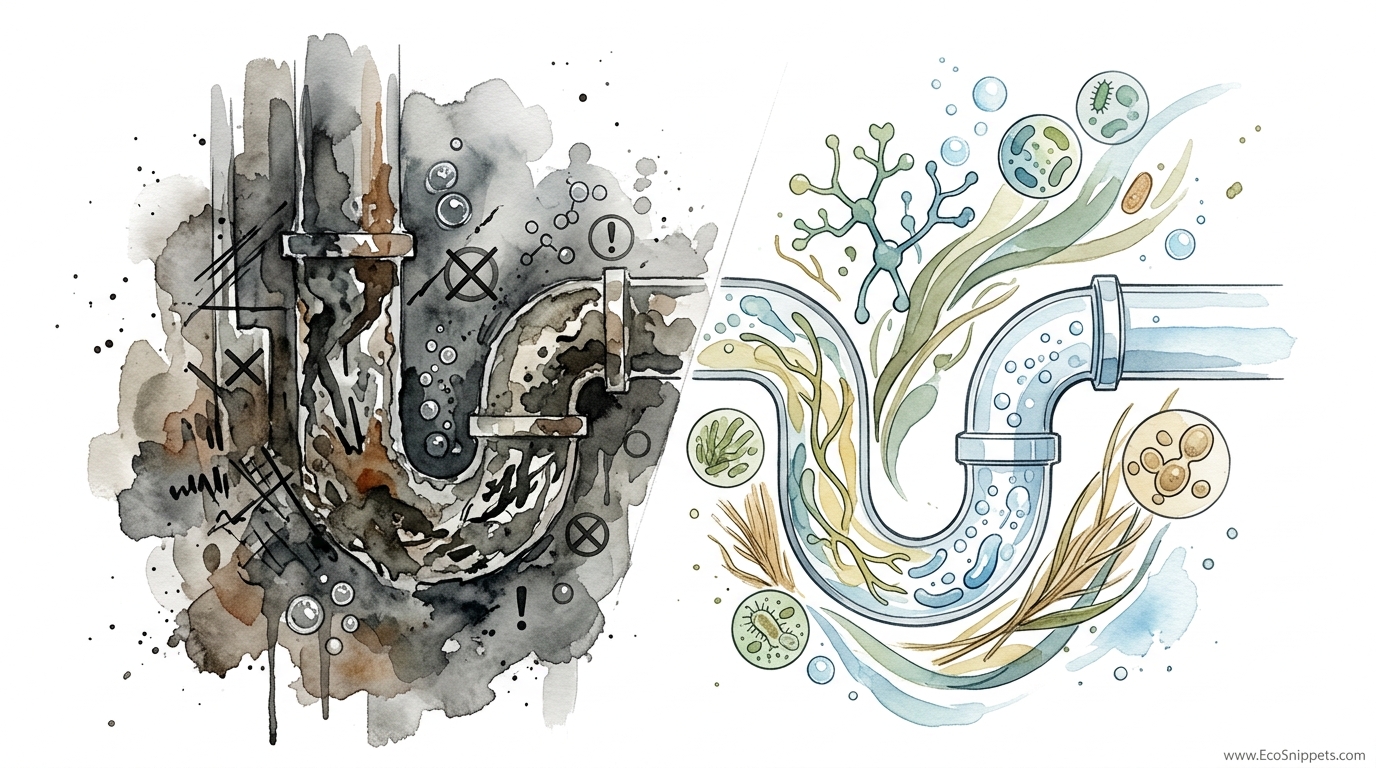
When you pour a chemical cleaner down a drain, it relies on an exothermic reaction—it creates heat to melt grease. This is the CAUSTIC WASTE approach. It is violent, short-lived, and often leaves a hardened “plug” of soap scum further down the line. Garbage enzymes use a LIVING ENZYMES approach, which is far more surgical.
During the three-month fermentation, the yeast and lactic acid bacteria in the jar produce various enzymes:
- Lipase: This enzyme specifically targets and breaks down fats, oils, and grease (FOG). This is essential for kitchen sinks where bacon grease and oils tend to solidify.
- Protease: This breaks down protein-based waste, such as skin cells and some food particles.
- Amylase: This targets starches, like the residues from pasta water or potato peels.
Instead of just moving the clog, these enzymes act as biological scissors. they cut the long, complex chains of fat and protein into tiny, water-soluble pieces. These smaller pieces then wash away easily with the next flush of water. Furthermore, because the solution is acidic (usually a pH of around 3.5), it helps break down the mineral bonds that hold soap scum together.
The most important part of the process is the “probiotic” effect. Some of the beneficial bacteria remain in the pipe’s biofilm. They continue to live and eat organic waste long after you have finished pouring, creating a self-cleaning ecosystem within your plumbing walls.
Benefits of Choosing Living Enzymes Over Chemicals
The advantages of switching to a fermented citrus cleaner extend far beyond just saving a few dollars at the hardware store. It is a comprehensive upgrade for the health of your home.
Safe for All Pipes: Whether you live in a brand-new home with PVC pipes or a century-old farmhouse with cast iron and lead-solder joints, garbage enzymes are safe. They do not generate the intense heat or corrosive reactions that cause metal pipes to thin and eventually leak.
Septic System Health: For those on a septic system, chemical cleaners are a nightmare. They kill the “good” bacteria in your septic tank, which leads to sludge buildup and expensive pump-outs. Garbage enzymes actually help your septic tank by introducing more beneficial microbes that accelerate the breakdown of waste in the tank itself.
Odor Elimination: Chemical cleaners often try to mask smells with heavy perfumes. Garbage enzymes eliminate odors by removing the rotting organic matter that causes the smell in the first place. A single dose can refresh a “stinky” floor drain or a garbage disposal that has seen better days.
Cost-Effective and Sustainable: You are turning trash—citrus peels and a bit of cheap sugar—into a premium cleaning product. This reduces the amount of organic waste going to landfills and eliminates the need for plastic-heavy chemical bottles that end up in the ocean.
Challenges and Common Mistakes
While the process is simple, it is not foolproof. Nature requires specific conditions to work her magic, and straying from the path can lead to a literal mess.
Using the Wrong Scraps: While you can technically ferment any vegetable scrap, citrus is king for drains. Avoid adding “oily” waste like leftover cooked food or meat scraps. These will rot and smell terrible. Stick to raw fruit and vegetable peels—specifically citrus, pineapple, or apple.
The “Black Mold” Trap: A healthy ferment should have a white, filmy layer on top (known as Kahm yeast). This is harmless. However, if you see fuzzy black or green mold, it means your ratio was off or your container wasn’t airtight. If the batch turns black and smells putrid, it has failed. You can sometimes save a “stinky” batch by adding more sugar and re-fermenting it, but usually, it is best to start over and ensure your peels stay submerged.
Forgetting to Burp: This is the most common mistake for beginners. In the first two weeks, the gas pressure can be immense. If you forget to release the air, the pressure can compromise the seal of your bottle or even cause it to burst. If you are worried about forgetting, you can use a “water lock” or an airlock from a home-brewing shop, which allows gas to escape without letting oxygen in.
Limitations: When This May Not Be Ideal
To be an effective practitioner of home maintenance, you must know when to put down the enzyme bottle and pick up a different tool. Garbage enzymes are a “slow and steady” solution, not an emergency fix.
Total Blockages: If your sink is completely backed up and water is not moving at all, pouring enzymes on top of the standing water won’t do much. Enzymes need contact with the clog and time to “eat.” In a total blockage, you are better off using a mechanical snake or a plunger first to get the water moving, then using the enzymes to clean out the remaining residue.
Hair Clogs: Enzymes are incredible at eating grease and food, but they are much slower at breaking down keratin—the protein that makes up human hair. While regular use of enzymes will dissolve the oils that *hold* the hair together, they won’t “melt” a massive ball of hair in the shower drain overnight. For hair, a mechanical drain zip tool is often the best companion to an enzyme maintenance routine.
Non-Organic Obstacles: If your toddler flushed a plastic toy or you have a build-up of mineral scale from extremely hard water, biological enzymes cannot help. These require mechanical removal or specific de-scaling agents. Enzymes only eat what was once alive.
Comparison: Caustic Waste vs. Living Enzymes
| Feature | Chemical Cleaners (Caustic) | Garbage Enzymes (Probiotic) |
|---|---|---|
| Action Time | Minutes | Hours to Days |
| Pipe Safety | Corrosive / High Heat | 100% Safe / Non-Corrosive |
| Cost | $10 – $20 per bottle | Pennies (Made from waste) |
| Environmental Impact | Toxic to water table | Beneficial to ecosystems |
| Septic Impact | Kills beneficial bacteria | Replenishes beneficial bacteria |
Practical Tips for Best Results
If you want to maximize the efficiency of your homemade drain cleaner, follow these best practices. A little bit of technique goes a long way in improving the “kill rate” of your probiotic army.
Warm it Up: Enzymes are most active in warm environments. Before you pour your garbage enzyme down the drain, run the hot water for a minute to warm up the pipes. Do not use boiling water, as temperatures above 120°F (49°C) can denature the enzymes and kill the beneficial bacteria. A “lukewarm” environment is the sweet spot.
The Overnight Soak: The best time to apply your cleaner is right before bed or before you leave for work. This gives the enzymes 8 to 10 hours of uninterrupted time to sit in the trap and “digest” the organic matter. If you pour it and then immediately run the dishwasher, you are just washing your hard-earned enzymes straight out to the city sewer.
Secondary Fermentation for Scent: If you want a cleaner that smells like a high-end spa, try a secondary fermentation. After the initial 3 months, strain the liquid and add a few sprigs of fresh rosemary or eucalyptus leaves. Let it sit for another week. This doesn’t just improve the smell; the essential oils in these plants provide additional antimicrobial properties.
The Consistency Secret: Don’t wait for a clog to appear. Use about half a cup of undiluted enzyme in each drain once a week. This “maintenance dose” prevents the biofilm from ever getting thick enough to cause a slow-down. Prevention is always easier than a cure.
Advanced Considerations: Scaling and Strength
Once you have mastered the basic 1:3:10 recipe, you can begin to fine-tune your batches for specific tasks. Not all garbage enzymes are created equal; the type of fruit you use dictates the dominant enzymes in the final product.
Pineapple Power: Pineapple skins are incredibly rich in bromelain, a powerful protease. If you have drains that are prone to protein-based buildup (like bathroom sinks where skin cells and hair are the main culprits), a batch made entirely of pineapple scraps will be more effective than a standard orange peel batch.
Increasing Concentration: For heavy-duty grease traps or workshop drains, you can “supercharge” your batch. Instead of using plain water, use the strained liquid from a *previous* batch of garbage enzymes as 20% of your water input. This “back-slop” method introduces a massive colony of established microbes immediately, resulting in a more potent, faster-fermenting cleaner.
Storage and Longevity: Garbage enzymes do not have an expiration date. In fact, like a fine wine, they often become more effective as they age. The organic acids continue to break down and refine over time. As long as the pH remains below 4.0, the solution is shelf-stable indefinitely. Store your “vintage” enzymes in a dark cabinet to prevent UV rays from killing the light-sensitive bacteria.
Practical Scenario: The Kitchen Grease Trap
Imagine your kitchen sink has been gurgling lately. You’ve been doing a lot of cooking, and despite your best efforts to wipe pans, grease has found its way into the pipes. Instead of reaching for a chemical bottle that smells like bleach, you grab your three-month-old jar of orange-peel enzyme.
At 10:00 PM, you run the warm water for 30 seconds. You pour one cup of undiluted garbage enzyme into the sink. You might notice a faint fizzing as the acidic liquid meets the alkaline soap residue. You leave it alone. Overnight, the lipases in the liquid latch onto the grease molecules, breaking the chemical bonds that make the grease “sticky.”
The next morning, you boil a kettle of water (letting it cool slightly so it isn’t rolling boiling) and pour it down the drain. The loosened, digested grease simply slides away. The gurgling stops. No fumes were inhaled, no pipes were damaged, and you just saved $15. That is the power of working with the biology of your home.
Final Thoughts
Embracing garbage enzymes is more than just a cleaning hack; it is a return to a more thoughtful, self-reliant way of living. We have spent decades trying to sanitize our lives with poisons, only to find that nature has already provided the most efficient tools for the job. By looking at our “trash” through the lens of potential energy and biological power, we close the loop in our own households.
The transition from CAUSTIC WASTE to LIVING ENZYMES requires a shift in expectations. It requires us to value the health of our plumbing over the convenience of a “magic” chemical fix. It encourages us to be patient, to observe the slow bubbling of fermentation, and to take pride in the solutions we brew ourselves.
Start your first jar today. In three months, you will have the first batch of a lifetime supply of drain cleaner. You will likely find that once you stop killing the beneficial microbes in your home, the home starts to take care of itself. Experiment with different peels, find the scents you love, and share the “mother” liquid with your neighbors. This is how we build a cleaner world—one sink at a time.
