How To Become More Self-Sufficient Without Starting a Full-Blown Farm…
Want to start preserving your harvest, making your own soap, or building a backyard root cellar — but not sure where to begin? “Homesteading Advice” gives you instant lifetime access to 35+ practical homesteading books on food preservation, veggie gardening, DIY natural cleaning products (save over $250 per year with this skill alone), brewing, off-grid energy, and a whole lot more…
Click Here To Check It Out Now!
What if your garden’s worst enemy was actually the secret ingredient to the world’s best breakfast? Most gardeners see a slug and reach for the poison. We see a slug and see high-protein egg fuel. By integrating ducks into our garden rotation, we turned our biggest pest headache into our most valuable resource. No chemicals, no manual labor, just happy birds and deep orange yolks. Here is the secret to animal integration that works for you.
Working with nature rather than against it requires a shift in perspective. Instead of viewing a pest infestation as a failure, you begin to see it as an untapped energy source. Domestic ducks are the ultimate tool for this transition. They possess an ancestral drive to forage that surpasses almost any other poultry. This guide will show you how to harness that drive to create a self-sustaining loop of fertility and protection.
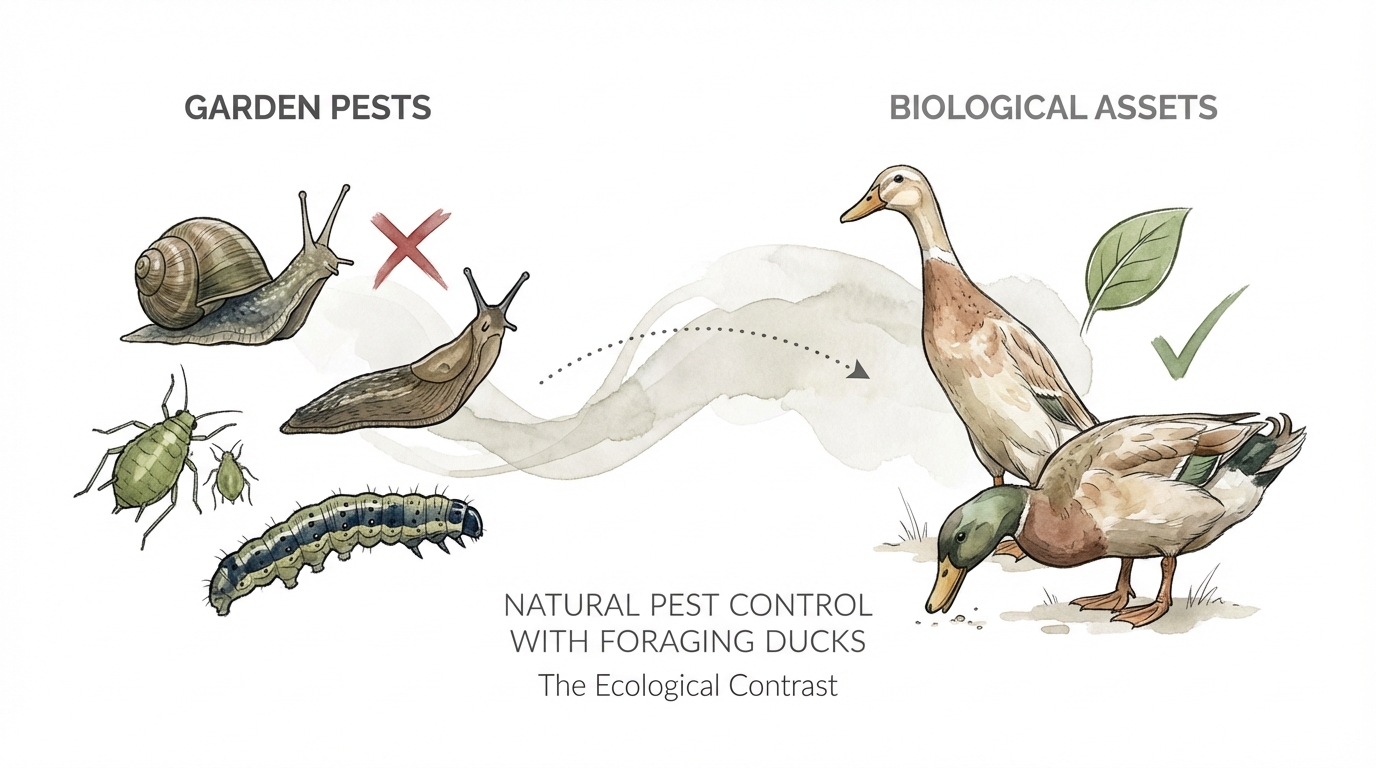
Natural Pest Control With Foraging Ducks
Natural pest control focuses on using biological assets to manage garden populations. Most gardeners rely on expensive sprays or back-breaking manual labor to keep slugs and snails at bay. Ducks offer a more elegant solution. They are specialized foragers that naturally seek out high-protein insects hidden beneath leaves and in the damp soil.
Ducks do not see your garden as a series of decorative plants. They see it as a buffet of snails, slugs, grasshoppers, and beetle larvae. Unlike chickens, which often scratch the earth and destroy delicate root systems, ducks use their sensitive bills to “drill” into the soil. This behavior targets pests without the destructive tillage associated with other birds. It is a targeted, surgical approach to garden maintenance.
In real-world settings, this method is used in permaculture systems and organic smallholds to eliminate the need for synthetic molluscicides. You might see this practiced in rice paddies in Asia or orchard floors in Europe. The ducks provide a service that would otherwise cost money and time. They turn a liability—the pests—into a high-value product: eggs and manure.
The Biological Engine: How to Integrate Ducks Successfully
Integrating ducks requires a keen understanding of timing and geography. You cannot simply release a flock into a bed of tender lettuce seedlings and expect them to behave. Strategic placement is the key to success. You must manage their access based on the stage of your garden’s growth.
The first step is identifying your “duck zones.” These are areas where the pest pressure is highest, usually near cool, damp mulch or under heavy foliage. You should use mobile fencing, often called poultry netting, to concentrate the ducks in these specific areas. This ensures they thoroughly clean one section before moving to the next.
Seasonality plays a major role in how this system functions. During the early spring, ducks can be used to clear out overwintering pests before you even put your seeds in the ground. In the fall, they can clean up fallen fruit and spent vegetable plants, consuming the larvae that would otherwise emerge to plague you the following year. Controlled access is the difference between a productive partnership and garden chaos.
The Practical Benefits of the Duck-Garden Loop
The most obvious advantage is the eradication of slugs and snails. These pests can destroy a season’s worth of work in a single damp night. Ducks are so efficient at hunting them that most keepers report a near-zero slug population within weeks of introduction. This saves money on organic pellets and saves the lives of beneficial insects that are often collateral damage in chemical warfare.
Another significant benefit is the “manure tea” effect. Ducks are messy eaters and frequent drinkers. As they move through the garden, they deposit nitrogen-rich manure directly onto the soil. This waste is much “cooler” than chicken manure, meaning it is less likely to burn your plants when applied in moderate amounts.
Egg production is the ultimate reward for your management. A duck fueled by a diet of garden pests produces eggs with vibrant, deep orange yolks and a richness that store-bought eggs cannot match. You are essentially harvesting the nutrients of your garden twice—once through the vegetables and once through the eggs. This increases the total caloric yield of your land without increasing your workload.
Challenges and Common Mistakes to Avoid
Many beginners underestimate the water needs of a duck. Ducks do not just drink water; they use it to clean their bills and eyes. If you do not provide enough clean water, they can suffer from respiratory issues or clogged nostrils. However, putting a large pond in the middle of a vegetable bed creates a muddy mess.
A frequent mistake is leaving ducks in a garden bed for too long. While they do not scratch like chickens, their flat feet can compact wet soil if they stay in one spot for days on end. You must monitor the ground condition. If the soil starts to look “puddled” or flattened, it is time to move the flock to a fresh patch of grass or a different garden zone.
Protection from predators is another hurdle that requires constant vigilance. Because ducks are often heavier and less flighty than chickens, they are easy targets for foxes, hawks, and stray dogs. You must provide a secure, predator-proof house for them at night. Relying on garden fencing alone to keep them safe is a recipe for heartbreak.
Limitations: When This System May Not Work
Environmental constraints can limit the effectiveness of garden ducks. If you live in an extremely arid climate where slugs are not a primary concern, the ducks may struggle to find enough natural forage. In these cases, you might spend more on supplemental feed than you gain in pest control. Ducks are water-fowl, and they thrive best in environments that mimic their natural wetland habitats.
Small, cramped urban gardens may also pose a challenge. Ducks require space to move and forage effectively. Keeping them in a tiny enclosure can lead to sanitation issues and odors that might bother neighbors. You need enough square footage to rotate them frequently; otherwise, the “biological asset” quickly becomes a “sanitation liability.”
Furthermore, certain delicate crops are not compatible with ducks. While they generally ignore mature plants, they can accidentally crush young, succulent seedlings or eat the flowers off of certain ornamental species. You must be willing to use physical barriers like cloches or low fences to protect your most prized specimens.
Ducks vs. Chickens: Choosing Your Garden Ally
When deciding between these two common poultry types, it is helpful to look at their specific behaviors. The following table compares their impact on a typical garden environment.
| Factor | Foraging Ducks | Garden Chickens |
|---|---|---|
| Soil Impact | Minimal scratching; some compaction in wet areas. | Heavy scratching; can uproot plants and destroy mulch. |
| Pest Preference | Slugs, snails, soft-bodied insects. | Beetles, grasshoppers, seeds, and greens. |
| Plant Damage | Low (mostly accidental trampling). | High (will eat leaves, tomatoes, and fruit). |
| Maintenance | High water needs; require mud management. | Low water needs; require dust bathing areas. |
Practical Tips for Immediate Application
Start by choosing the right breed for your specific goals. Indian Runners are often cited as the best garden ducks because they are highly active, have a narrow profile that fits between rows, and rarely fly. Khaki Campbells are another excellent choice if you want to maximize egg production while maintaining a strong foraging instinct.
Build a “duck tractor” if you have limited space. This is a mobile bottomless coop that allows you to park the ducks over a specific garden bed. They get to work on the pests in that area while remaining protected from predators. Move the tractor every day to ensure even distribution of manure and to prevent soil compaction.
Focus on the water system to save yourself time. Instead of a traditional pond, use a series of shallow basins or heavy-duty rubber tubs that are easy to tip and refill. You can pour the nutrient-dense “duck water” directly onto your compost pile or around the base of heavy-feeding trees like citrus or nut trees. This captures every ounce of fertility the birds provide.
Advanced Considerations for the Serious Practitioner
Scaling your duck integration requires a deeper look at your landscape’s carrying capacity. You should aim for roughly 2 to 4 ducks per 1,000 square feet of garden space for maintenance. If you have a massive pest outbreak, you can temporarily increase this density, but you must be prepared to supplement their diet once the pest population crashes.
Breeding your own replacements is the hallmark of a self-reliant system. Muscovy ducks are famous for their brooding instincts and will often raise several clutches of ducklings a year with zero intervention. While Muscovy ducks are technically a different species and act more like geese, they are legendary for their ability to hunt larger pests like mice and even small snakes.
Consider the layout of your garden paths. By creating “duck highways”—fenced lanes that lead from the coop to various garden quadrants—you can move the birds without them wandering into restricted areas. This infrastructure allows for a more automated rotation system, reducing the time you spend herding birds and increasing the time they spend hunting.
Real-World Example: The Orchard Rotation
Imagine an old-growth apple orchard plagued by codling moths and fallen, rotting fruit. A traditional approach involves chemical sprays and manual cleanup. Instead, a practitioner introduces a flock of twenty ducks once the fruit begins to ripen. The ducks patrol the “drop zone” under the trees, consuming every fallen apple before the larvae can burrow into the soil to pupate.
The ducks also feast on the grasshoppers that compete with the trees for moisture during the dry summer months. By the end of the season, the orchardist has a harvest of clean fruit, a flock of well-fed ducks, and soil that has been naturally fertilized for the following year. This is not a theory; it is a proven method of orchard management that has been used for centuries.
In a vegetable context, think of a patch of brassicas—broccoli, cabbage, and kale. These plants are magnets for cabbage worms and slugs. By allowing ducks to patrol the rows for thirty minutes each morning, you can maintain a “clean” crop without a single drop of pesticide. The ducks learn the routine and will often wait at the gate, ready to begin their morning shift.
Final Thoughts
Integrating ducks into your garden is a return to a more logical, ancestral way of managing the land. It acknowledges that every creature has a role to play and that our job as stewards is to facilitate those roles. When you stop fighting the slugs and start feeding the ducks, you reduce your stress and increase your farm’s resilience.
The transition from a gardener who battles nature to a manager who guides it is a profound one. It requires patience, observation, and a willingness to get your boots a little muddy. The rewards, however, are undeniable: a pest-free garden, fertile soil, and the most delicious eggs you have ever tasted.
Experiment with different breeds and rotation schedules to find what works best for your specific climate. Every garden is an ecosystem, and every ecosystem thrives when its biological assets are allowed to work. Start small, watch your birds, and let them show you how to build a better breakfast from the ground up.
