How To Become More Self-Sufficient Without Starting a Full-Blown Farm…
Want to start preserving your harvest, making your own soap, or building a backyard root cellar — but not sure where to begin? “Homesteading Advice” gives you instant lifetime access to 35+ practical homesteading books on food preservation, veggie gardening, DIY natural cleaning products (save over $250 per year with this skill alone), brewing, off-grid energy, and a whole lot more…
Click Here To Check It Out Now!
The Gardeners Secret Weapon: Rabbit Manure
Why wait months for your compost to break down when your rabbits are making ‘cold’ gold right now? Most people think all manure needs to age for months to avoid burning plants. But rabbit droppings are a ‘cold’ fertilizer, meaning they are ready for the soil the second they hit the hutch floor. It is high-octane fuel that turns your ‘waste’ management into a self-sustaining nutrient loop.
The modern gardener often looks toward plastic jugs and synthetic pellets for success. Ancestral wisdom, however, points us back to the hutch. If you are keeping rabbits for meat, fur, or companionship, you are sitting on a gold mine of nitrogen, phosphorus, and potassium. This guide will walk you through why these little pellets are the most powerful tool in your homesteading arsenal.
Understanding the difference between raw waste and instant fuel is the first step toward self-reliance. You do not need a degree in soil science to see the results. When you observe your tomatoes doubling in size without the typical “manure burn,” you will understand why seasoned pioneers valued the rabbit above almost any other small livestock.
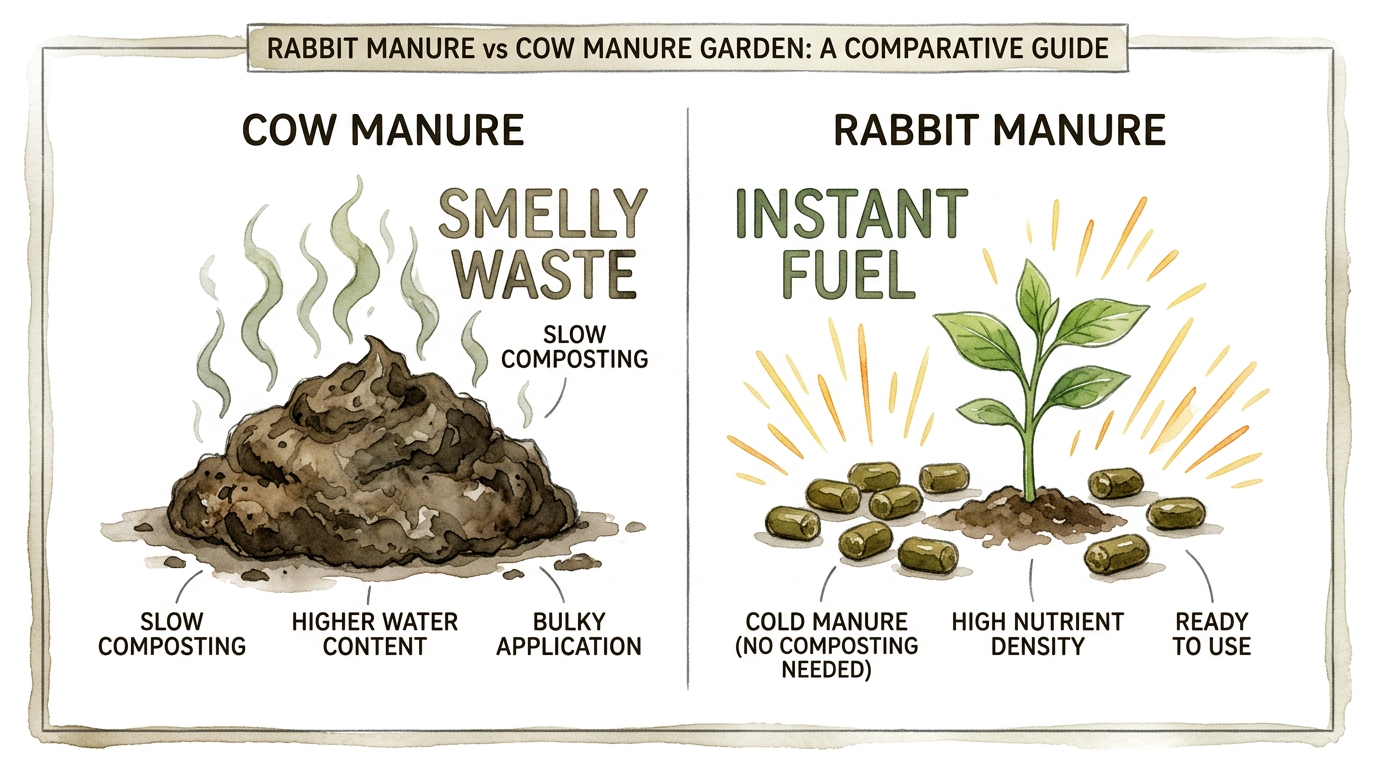
Rabbit Manure Vs Cow Manure Garden
Comparing rabbit manure to cow manure reveals a stark contrast in both chemistry and convenience. Cow manure is considered “hot” because it is high in nitrogen and moisture, which leads to rapid decomposition and intense heat. If you apply fresh cow manure to your garden, the ammonia levels and heat generated will likely kill your plants before they can thrive.
Rabbit manure, on the other hand, is a “cold” fertilizer. It does not need to be composted before use because it breaks down slowly and does not produce the same volatile heat. You can take a handful of rabbit droppings and bury them directly at the base of a heavy feeder like a pumpkin or a pepper plant with zero risk of root burn.
The nutrient density also favors the rabbit. On a pound-for-pound basis, rabbit manure contains significantly more nitrogen than cow, horse, or pig manure. While cow manure is excellent for improving soil structure over large acreages, rabbit manure acts as a concentrated nutrient spike for the intensive kitchen garden. It is the difference between a slow-moving river and a focused pressure washer.
Rabbits have a unique digestive system that involves “re-processing” their food, resulting in a pellet that is essentially pre-packaged compost. This dual-pass digestion ensures that the nutrients are more stable. While cow manure often contains a high percentage of weed seeds that survived the cow’s four stomachs, rabbit droppings are much less likely to turn your garden into a weed patch.
How to Harness the Power of the Pellet
Using this resource is as simple as collection and distribution. You do not need fancy equipment or expensive additives. Start by placing a tray or a slanted floor under your rabbit hutches to catch the waste. This ensures you are collecting the pellets without them getting lost in the mud or bedding.
Direct application is the most common method for the busy homesteader. You can sprinkle the dry pellets across the surface of your garden beds like a top-dressing. As you water your plants, the nutrients slowly leach into the soil, providing a steady stream of food for your crops. This mimicry of the natural forest floor keeps soil microbes active and happy.
Creating “Rabbit Tea” is another way to utilize this fuel. Fill a five-gallon bucket about one-quarter full with fresh pellets and top it off with water. Let it sit for twenty-four to forty-eight hours, stirring occasionally. The resulting liquid is a potent foliar spray or root drench that provides an immediate boost to struggling plants.
Incorporating these pellets into your seed starting mix provides a gentle foundation for young seedlings. Mix one part crushed rabbit manure with three parts peat or coco coir and one part perlite. The slow-release nature of the nitrogen ensures that the young roots are nourished without being overwhelmed by the salts often found in chemical starters.
The Benefits of Living Fertilizer
The primary advantage of rabbit manure is its incredible N-P-K ratio. It is typically higher in nitrogen than almost any other animal waste, making it the king of leafy green production. If you want kale, spinach, or lettuce that grows with vigorous speed, this is the fuel you need. The phosphorus content is also notably high, which supports robust flower and fruit development.
Soil structure improvements happen almost immediately. These small, round pellets act like tiny time-release capsules. They prevent the soil from compacting and allow for better aeration. Earthworms are naturally drawn to rabbit manure, and they will do the heavy lifting of tilling your soil for you as they come up to feed on the organic matter.
Microbial life thrives in the presence of rabbit droppings. The manure is teeming with beneficial bacteria that help convert atmospheric nitrogen into a form that plants can actually use. This biological activity creates a resilient ecosystem in your soil, making your garden more resistant to pests and diseases over time.
Sustainability is perhaps the greatest benefit. Instead of paying for bagged fertilizer that was manufactured in a factory and shipped across the country, you are producing your own. It closes the loop on your homestead. The weeds and garden scraps you feed to your rabbits are transformed into the very nutrients that will grow next year’s harvest.
Challenges and Common Pitfalls
One common mistake is neglecting to manage the urine that often accompanies the pellets. While the manure itself is cold, rabbit urine is very high in ammonia. If your collection system allows the pellets to sit in a pool of urine, they can become “hot” and potentially harm your plants. Always ensure your collection trays allow for drainage or use an absorbent bedding like straw or wood shavings.
Over-application can lead to an accumulation of salts in the soil. While rabbit manure is gentle, any concentrated organic matter can cause issues if used in excessive amounts year after year without testing the soil. Balance is the key to any healthy garden. Watch for signs of salt crusting on the soil surface, which may indicate you need to dial back the application.
Storage is another area where many fail. If you leave rabbit manure in an open pile exposed to heavy rain, the most valuable nutrients—especially the nitrogen—will leach out into the ground before they ever reach your garden. Store your harvested pellets in a covered bin or a burlap sack to keep them dry and potent until you are ready to use them.
Pathogen safety is a concern with any animal product. While rabbits are generally cleaner than swine or poultry, you should still practice good hygiene. Avoid using fresh manure on root crops like radishes or carrots that will be eaten raw soon after application. For those specific crops, it is safer to age the manure for a few weeks or use it at the beginning of the season well before harvest.
Limitations of the Method
The biggest limitation is the volume of production. A single rabbit produces a significant amount of manure for its size, but it is not enough to fertilize a multi-acre field. For a large farm, you would need a massive rabbitry to keep up with the demand. This makes it an ideal solution for kitchen gardens and raised beds, but less practical for broad-scale row cropping.
Labor is another factor to consider. Collecting, moving, and applying the manure takes time and physical effort. Unlike turning a knob on a liquid fertilizer tank, you have to shovel, haul, and spread the pellets. If you have physical limitations, you may need to design a more automated collection system to make the process sustainable for your lifestyle.
Regional climate plays a role in how quickly the manure breaks down. In very arid environments, the dry pellets may sit on top of the soil for a long time without decomposing. In these areas, you must bury the manure or use the “tea” method to ensure the nutrients are actually reaching the root zone. Without moisture, the “cold gold” stays locked in its pellet form.
Comparing Animal Manures
To truly understand the value of what your rabbits are producing, it helps to look at the numbers. Every animal produces a different “flavor” of fertilizer. Knowing these differences helps you decide which waste to use for specific gardening goals.
| Manure Type | Nitrogen (N) | Phosphorus (P) | Potassium (K) | Status |
|---|---|---|---|---|
| Rabbit | 2.4 | 1.4 | 0.6 | Cold (Instant Use) |
| Cow | 0.6 | 0.2 | 0.5 | Hot (Must Age) |
| Horse | 0.7 | 0.3 | 0.6 | Hot (Must Age) |
| Chicken | 1.1 | 0.8 | 0.5 | Very Hot (Must Compost) |
As the table shows, rabbit manure is the clear winner for nitrogen and phosphorus. This makes it particularly valuable for the early stages of plant growth and for establishing strong root systems. While chicken manure is also high in nutrients, its “hot” nature makes it much more dangerous to use without careful composting.
Practical Tips for Best Results
Crushing the pellets before application can speed up nutrient delivery. If you are preparing a bed for immediate planting, run the dry manure through a simple hand-cranked grinder or even just smash them with the back of a shovel. This increases the surface area for soil microbes to attack, releasing the nitrogen faster.
Using a “mulch sandwich” technique works wonders for soil health. Lay down a thin layer of rabbit manure, cover it with a layer of straw or dried leaves, and then water it deeply. This creates a humid, protected environment where the manure can break down rapidly while keeping the soil underneath cool and moist.
Consider the timing of your application. Applying the manure in the late afternoon or evening allows it to settle into the soil without the harsh midday sun drying out the beneficial bacteria. If you are using the tea method, spraying the leaves in the morning allows the plant to absorb the nutrients through its stomata as they open for the day.
Keep a close eye on your plants’ reaction. Dark green, lush growth is a sign that the nitrogen is working. If you notice an abundance of leaves but no fruit, you may have too much nitrogen. In that case, balance the manure with some wood ash or bone meal to provide more potassium and phosphorus to encourage blooming.
Advanced Considerations: The Worm Connection
The most sophisticated way to use rabbit manure is through vermicomposting. Red wiggler worms absolutely love rabbit droppings. By placing a worm bin directly under your rabbit cages, you can create a stacked system where the worms process the manure as it falls. This turns “cold gold” into “black gold”—worm castings.
Worm castings are even more biologically active than raw rabbit manure. The worms break down the organic matter further, adding their own enzymes and beneficial microbes to the mix. This double-processed fertilizer is perhaps the finest soil amendment known to man. It creates a product that is odorless, easy to handle, and incredibly potent.
Scaling this system requires careful attention to moisture. Worms need a damp environment to survive, so you will need to mist the manure piles occasionally if they are under cover. This setup also helps manage the ammonia from the urine, as the worms and the bedding they live in will neutralize the odors and soak up the liquids.
Real-World Scenario: The Kitchen Garden
Imagine a small homestead with four breeding does and one buck. This small colony can produce enough manure to support a 1,000-square-foot kitchen garden. Each week, the gardener collects two five-gallon buckets of pellets. Instead of throwing this away, they walk directly to their rows of broccoli and heavy-feeding tomatoes.
The gardener digs a small trench, three inches deep, alongside the tomato row. They fill the trench with a thin layer of pellets and cover it back up. Within two weeks, the tomato plants show a noticeable surge in height and the leaves turn a deep, healthy emerald green. No expensive fertilizers were bought, and no complicated composting schedules were followed.
By mid-summer, the gardener notices the soil is softer and easier to work. The constant addition of organic matter has invited a massive population of earthworms. Even during a dry spell, the soil retains more moisture because of the improved structure provided by the rabbit manure. This is the pioneer-grit approach to gardening: simple, effective, and entirely self-contained.
Final Thoughts
Mastering the use of rabbit manure is a foundational skill for anyone seeking true self-reliance. It transforms the burden of waste management into the joy of a thriving harvest. By understanding the “cold” nature of these pellets, you gain an immediate advantage over those stuck waiting for traditional compost piles to break down.
The beauty of this system lies in its simplicity. You do not need to overthink it. Whether you are using it as a direct top-dressing, a liquid tea, or the base for a worm farm, the result is the same: healthier plants and richer soil. It is a testament to the efficiency of nature when we learn to work with its cycles.
Take what you have learned and put it into practice today. Start small with a single garden bed and watch the difference for yourself. As you build your soil year after year with this ancestral fuel, you will find that your garden becomes more productive and your reliance on the outside world continues to fade. The path to a better garden is right under your hutches.
