How To Become More Self-Sufficient Without Starting a Full-Blown Farm…
Want to start preserving your harvest, making your own soap, or building a backyard root cellar — but not sure where to begin? “Homesteading Advice” gives you instant lifetime access to 35+ practical homesteading books on food preservation, veggie gardening, DIY natural cleaning products (save over $250 per year with this skill alone), brewing, off-grid energy, and a whole lot more…
Click Here To Check It Out Now!
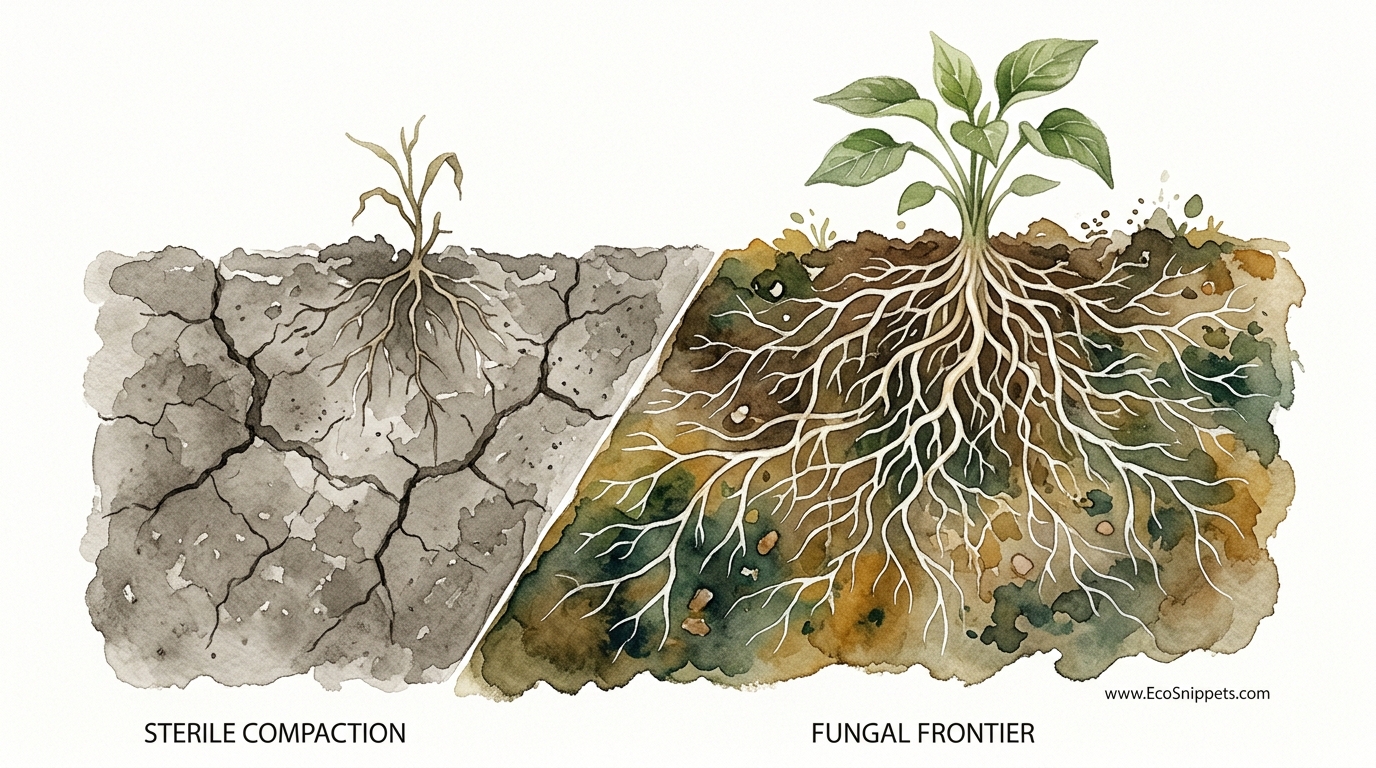
Your soil shouldn’t be a solid block; it should be a living, breathing sponge. Urban soil is often a compacted ‘biological desert.’ By reintroducing ‘Wild’ fungal networks, you turn your land into a sponge that can hold 20,000 gallons of water per acre for every 1% of organic matter you add. This mycelial highway is the secret to plants that never wilt, even in a record-breaking drought.
Modern gardening often treats the ground as a simple container for holding plants upright. This mechanical view ignores the ancient, sophisticated machinery working beneath the surface. True soil health relies on a vast, microscopic workforce that has been refining its craft for over 450 million years. These organisms are the difference between a garden that requires constant life support and a self-sustaining heritage landscape.
Compacted earth acts like a sealed tomb. Roots struggle to penetrate the concrete-like layers, and water simply runs off the surface, taking precious topsoil with it. Restoring life to this ground requires more than just adding bags of store-bought fertilizer. It demands a fundamental shift back to the ancestral wisdom of land stewardship, where we focus on feeding the biology rather than just the plant.
Restoring Mycorrhizal Fungi To Your Soil
Mycorrhizal fungi are specialized organisms that form a mutualistic partnership with the roots of almost 80% of all vascular plants on Earth. The name itself comes from the Greek words “mykes,” meaning fungus, and “rhiza,” meaning root. This is not a parasitic relationship where the fungus drains the host. Instead, it is a high-speed barter system that has sustained life since plants first crawled out of the ancient seas.
These fungi act as an extension of the plant’s own root system. While a typical root hair is limited in its reach and can only absorb nutrients in its immediate vicinity, fungal hyphae—the thin, thread-like filaments of the fungus—are significantly finer and more extensive. They weave through the microscopic pores of the soil that roots are too thick to enter. This creates a secondary root network that can increase the effective surface area of a root system by hundreds or even thousands of times.
The exchange is simple and elegant. Plants are masters of photosynthesis, turning sunlight into carbon-rich sugars. Fungi, however, cannot produce their own food. They provide the plant with essential minerals like phosphorus, nitrogen, and trace elements that are otherwise locked away in the soil. In return, the plant “pays” the fungus with a portion of the sugars it produces. This trade ensures both partners thrive in environments where either might struggle alone.
How It Works: The Mycelial Highway and Soil Glue
Understanding the mechanics of this relationship reveals why fungal-rich soil is so resilient. The hyphae do not just sit there; they actively mine the ground. They secrete specialized enzymes that break down rock minerals and organic matter, releasing nutrients that the plant can then absorb. This process is particularly vital for phosphorus, a nutrient that is notoriously immobile and often gets “stuck” in the soil chemistry.
The Role of Glomalin
One of the most profound discoveries in soil science is a substance called glomalin. This sticky glycoprotein is produced exclusively by arbuscular mycorrhizal fungi. Glomalin acts as a biological “superglue” for the earth. It binds tiny silt, sand, and clay particles together into stable aggregates, creating a crumbly, well-aerated structure known as “tilth.”
Aggregated soil features a network of macropores and micropores. These channels allow oxygen to reach the roots and provide a path for water to infiltrate deep into the subsoil rather than puddling on top. This structure is what gives healthy soil its “sponge” quality. Without glomalin, soil collapses into a dense, anaerobic mass—a state we often call sterile compaction.
Inoculation: Bringing the Wild Back Home
Restoring these networks in a “biological desert” requires active reintroduction. While you can purchase commercial inoculants in a bag, many dedicated practitioners prefer “Wild” or indigenous collection methods. These methods focus on harvesting the fungi that have already adapted to your local climate, soil type, and native plant communities.
One effective technique involves the use of “trap pots.” This process involves growing a host plant, such as annual rye or bahiagrass, in a container filled with a mix of your garden soil and a small amount of soil from a healthy, undisturbed wild area. Over a growing season, the fungi from the wild sample colonize the roots of the grass. At the end of the season, the roots are harvested, chopped up, and used as a potent, locally-adapted inoculant for the rest of your garden.
Benefits of a Fungal Frontier
The advantages of a thriving mycelial network extend far beyond simple nutrient uptake. A garden built on fungal foundations is a fortress against environmental stress. These benefits are measurable and provide a clear advantage over chemically dependent systems.
Unparalleled Drought Resistance
Fungal hyphae are significantly more efficient at extracting water from the soil than roots alone. They can tap into microscopic pockets of moisture that are physically inaccessible to the plant. During a drought, the fungal network continues to deliver water to the host, preventing the cellular collapse that leads to wilting. This connection allows your garden to remain productive with significantly less irrigation.
Natural Pest and Disease Defense
Plants connected to a mycorrhizal network have a heightened immune response. The fungi can trigger the production of defensive compounds within the plant, making it less attractive to sucking insects and more resistant to pathogens. Some fungi even form a physical protective “mantle” around the roots, acting as a barrier against harmful soil-borne diseases like Fusarium or Pythium.
Improved Soil Structure and Carbon Storage
The glomalin mentioned earlier is not just a glue; it is a carbon storage powerhouse. Research indicates that glomalin can account for a significant portion of the organic carbon in undisturbed soils. By building fungal networks, you are actively sequestering carbon from the atmosphere and locking it into the ground in a stable, long-lasting form. This improves the “grit” and resilience of your land for generations to come.
Challenges and Common Mistakes
The biggest hurdle to restoring fungal life is the “mechanical mindset.” Many traditional gardening habits are unintentionally lethal to the very organisms we are trying to foster. Avoiding these pitfalls is the first step toward a successful restoration.
The Destruction of Tillage
Tilling is the ultimate enemy of the fungal highway. When you turn the soil with a rototiller or a spade, you are physically shredding the delicate hyphal networks that the fungi have spent months or years building. This disturbance shatters the soil aggregates, releases stored carbon, and leaves the fungi unable to transport nutrients. Repeated tillage creates a “vicious cycle” where the soil structure collapses, requiring even more mechanical intervention to stay workable.
Chemical Dependency and Salt Burn
High-analysis synthetic fertilizers, especially those high in phosphorus, send a signal to the plant that it no longer needs its fungal partners. The plant will often stop feeding the fungi with sugars, causing the network to wither away. Additionally, the high salt content in many commercial fertilizers can chemically “burn” the sensitive fungal hyphae. This turns your soil into a sterile medium that relies entirely on the next bag of chemicals to produce a crop.
The Danger of Fungicides
Using broad-spectrum fungicides to treat a leaf problem can have devastating unintended consequences below ground. These chemicals do not discriminate between “bad” fungi on the leaves and “good” fungi in the roots. Drenching the soil with fungicides can wipe out decades of mycelial growth in a single afternoon.
Limitations: When the Connection Fails
While mycorrhizal fungi are incredibly versatile, they are not a universal solution for every single plant in the garden. Understanding the boundaries of this symbiosis prevents frustration and wasted effort.
The Non-Mycorrhizal Outliers
Some plant families simply do not form these partnerships. The most notable group is the Brassicaceae family, which includes cabbage, broccoli, kale, radishes, and turnips. These plants have evolved a different strategy for nutrient uptake and often produce chemicals that actually inhibit fungal growth. If you are planting a bed of pure broccoli, adding mycorrhizal inoculants will not provide any direct benefit to those specific plants.
Environmental Constraints
Fungi are living organisms that require specific conditions to thrive. In extremely waterlogged or anaerobic soils, the beneficial fungi will die off, often replaced by pathogenic molds. Similarly, soils that are excessively high in certain heavy metals or have an extreme pH may prevent colonization. Restoration is a process of balancing the entire ecosystem, not just adding a single “magic” ingredient.
Fungal Frontier vs. Sterile Compaction
The choice between these two approaches determines the future of your land. One leads to a self-healing legacy; the other leads to a permanent reliance on industrial inputs.
| Feature | Sterile Compaction | Fungal Frontier |
|---|---|---|
| Water Retention | Low; high runoff and evaporation. | High; soil acts as a biological sponge. |
| Nutrient Delivery | Dependent on synthetic, soluble NPK. | Delivered via mycelial exchange. |
| Maintenance | High tillage, constant irrigation. | Low-to-no-till, mulch-based care. |
| Long-term Cost | Increasing; soil health degrades over time. | Decreasing; the system becomes self-sustaining. |
Practical Tips for the Soil Pioneer
Transitioning to a fungal-dominant garden requires patience and a few tactical changes to your routine. These steps will help you protect and expand your underground allies.
- Switch to No-Till: Stop turning the soil. Instead, use “sheet mulching” or “lasagna gardening” techniques to build new layers of organic matter on top of the existing ground. This protects the hyphal networks from physical destruction.
- Use Coarse Mulches: Fungi love woody materials. Using wood chips, shredded bark, or arborist mulch provides a long-term food source for the fungal community. As the fungi break down the wood, they release nutrients into the soil.
- Keep Living Roots in the Ground: Fungi need a host to survive. Use cover crops like clover or winter rye during the off-season to ensure the mycelium has a continuous supply of carbon. Bare soil is a death sentence for mycorrhizae.
- Minimize High-P Fertilizer: If you must use fertilizer, opt for slow-release organic sources like bone meal or fish emulsion. Avoid high-phosphorus “bloom boosters” that can trigger the plant to shut down its fungal partnership.
Advanced Considerations: The Fungal to Bacterial Ratio
For the serious practitioner, understanding the balance between fungi and bacteria is the next level of soil mastery. Different plant communities prefer different soil biology. Most annual vegetables thrive in soil with a balanced ratio of fungi to bacteria (1:1). However, perennial systems, fruit trees, and forest gardens prefer a fungal-dominant soil (10:1 or even higher).
Serious land stewards often use a microscope to monitor these ratios. By observing a soil suspension, you can identify the presence of fungal hyphae versus bacterial colonies. If your soil is too bacterial, you can “steer” it toward a fungal state by adding more complex carbons, such as woody debris and fungal-rich compost teas. This advanced tuning allows you to tailor your soil environment to the specific needs of your high-value heritage crops.
A Scenario of Transformation: The Dry-Land Orchard
Consider a homestead located in an arid region with sandy, depleted soil. A traditional approach would involve deep holes, heavy chemical fertilization, and daily drip irrigation. Despite these efforts, the trees often struggle, showing signs of nutrient lockout and heat stress.
The soil pioneer takes a different path. At the time of planting, each tree receives a handful of wild-harvested mycorrhizal inoculum directly against the roots. The entire orchard floor is then covered in six inches of coarse wood chips. No synthetic fertilizers are used.
Within two seasons, the difference is undeniable. The wood chips have begun to host visible “white rot” fungi, and the soil beneath has turned from pale sand into a dark, crumbly loam. During a month-long heatwave with zero rain, the fungal-connected trees show no signs of leaf curl or wilting. The mycelial network is pulling moisture from the deep subsoil, sustaining the orchard through the crisis. This is the practical power of the fungal frontier.
Final Thoughts
Restoring the “Wild” fungal networks to your land is more than just a gardening technique; it is an act of restoration. You are reviving an ancestral partnership that has been broken by decades of industrial mismanagement. This path requires a shift in focus from the visible plant to the invisible web that supports it.
The rewards for this shift are profound. You will spend less time fighting with the earth and more time witnessing its natural abundance. Your soil will become a resilient reservoir, capable of weathering the extremes of a changing climate while producing food with deep, nutritional integrity.
Start small, perhaps with a single bed or a few fruit trees. Observe the changes in soil texture and plant vigor. Once you see the “white gold” of mycelium spreading through your mulch, you will realize that you are no longer gardening alone. You have an army of billions working with you, building the living sponge that will sustain your land for years to come. Regardless of the size of your plot, returning to these fungal roots is the surest way to build a legacy of true soil health.
