How To Become More Self-Sufficient Without Starting a Full-Blown Farm…
Want to start preserving your harvest, making your own soap, or building a backyard root cellar — but not sure where to begin? “Homesteading Advice” gives you instant lifetime access to 35+ practical homesteading books on food preservation, veggie gardening, DIY natural cleaning products (save over $250 per year with this skill alone), brewing, off-grid energy, and a whole lot more…
Click Here To Check It Out Now!
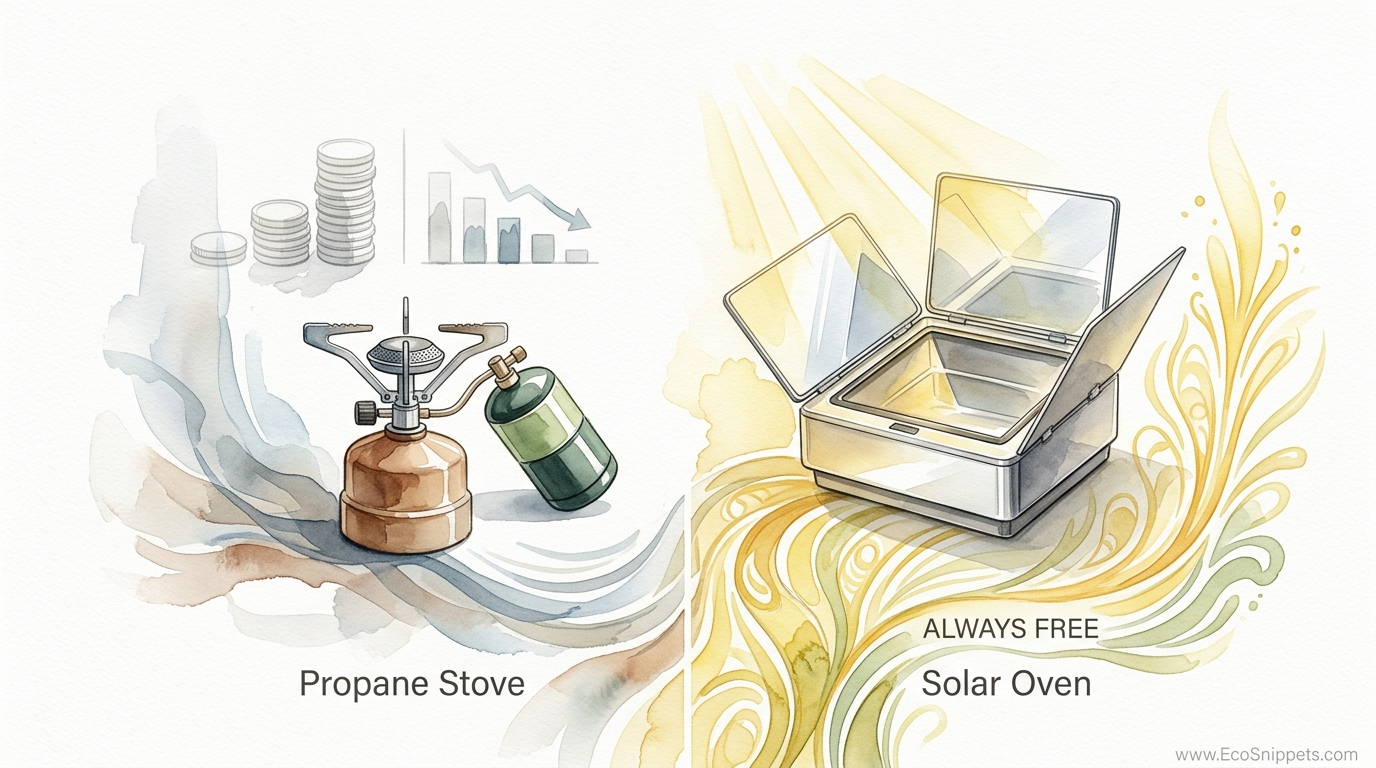
Why are you paying a utility company or a hardware store to cook your food when the sky is giving away 1,000 watts per square meter for free? Propane is a finite resource that you have to haul, store, and pay for. But the sun shows up every day for free. Transitioning to solar cooking isn’t just about saving money—it’s about removing one more link from the chain of dependency. Learn how a simple reflective box can bake bread and roast meat using nothing but light.
Stepping away from the grid requires a fundamental shift in how we view energy. In a modern kitchen, heat is an invisible commodity that arrives via a pipe or a wire, billed by the kilowatt or the gallon. For the modern pioneer, energy is something to be harvested, respected, and used with intention. Cooking a meal becomes an act of partnership with the environment rather than a battle against it.
Every homesteader eventually faces the same dilemma during a long winter or a supply chain disruption: how much fuel is left in the tank? Relying on propane means you are always counting down to zero. Relying on the sun means you are waiting for the dawn. This guide explores the balance between these two powerful tools and how to integrate them into a truly resilient lifestyle.
Solar Oven Vs Propane Stove For Off Grid
Solar ovens and propane stoves represent two different philosophies of self-reliance. A propane stove is a “point-and-shoot” tool. It offers high-intensity heat on demand, much like the gas ranges found in suburban homes. It relies on Liquefied Petroleum Gas (LPG), a dense energy source that provides roughly 91,500 BTUs per gallon. This makes it incredibly efficient for quick tasks like boiling water or searing a steak in a heavy iron skillet.
A solar oven, by contrast, is a thermal harvester. It does not create heat; it collects it. By using reflective surfaces to concentrate UV rays into an insulated chamber, a solar oven can reach temperatures between 250°F and 550°F depending on the design. It is the ultimate “slow and steady” tool, turning a sunny afternoon into a free fuel source for roasts, stews, and sourdough bread.
Choosing between them is not about picking a winner, but about understanding their roles. Propane is your tactical backup for rainy days, midnight meals, and emergency speed. Solar is your strategic primary for long-term sustainability and zero-cost operation. In a truly resilient off-grid setup, you use the sun whenever it shines and save your precious propane for when it doesn’t.
The Physics of Sunlight: How Solar Ovens Work
Harnessing the sun requires mastering three basic principles of physics: reflection, absorption, and insulation. Without all three working in harmony, your solar cooker is nothing more than a shiny box in the yard. Understanding these principles allows you to troubleshoot your setup and even build your own equipment from salvaged materials.
Reflection and Concentration
Sunlight hits the earth with an intensity of about 1,000 watts per square meter. To cook food, you need to gather the light hitting a large area and bounce it toward a smaller area. Mirrors, polished aluminum, or even high-grade Mylar act as the “gatherers.” Parabolic cookers use a curved shape to focus light to a single pinpoint, while box ovens use flat “wings” to reflect light into a central chamber.
Absorption: The Power of Matte Black
Once the light reaches your cooking vessel, it must be converted into heat. This is where many beginners fail. Light bounces off shiny or light-colored surfaces. To trap that energy, your pots and the interior of your oven should be matte black. This color choice maximizes the absorption of photons, turning light energy into thermal energy that penetrates the food.
The Greenhouse Effect and Insulation
Retaining the heat is the final step. Most solar ovens use a glass or heavy plastic lid to create a “heat trap.” Short-wave solar radiation passes through the clear lid, hits the black pot, and transforms into long-wave infrared heat. This infrared heat cannot easily pass back through the glass. Combined with thick insulation in the walls—such as sheep’s wool, recycled denim, or high-density foam—the oven becomes a pressurized heat chamber that stays hot even if a stray cloud passes by.
Advantages of the Sun: Always Free vs. Cost Per Meal
The most immediate benefit of solar cooking is the economic independence it provides. When you use a propane stove, every meal has a literal price tag. A standard 20-pound propane tank holds approximately 4.6 gallons of fuel and typically provides 10 to 20 hours of burn time. If you are cooking three meals a day on high heat, that tank may only last two weeks. In a remote setting, the cost isn’t just the fuel—it’s the fuel used to drive to town to get the refill.
Solar energy has a “cost per meal” of exactly zero. Once the initial investment in the oven is made, every roast and loaf of bread is a gift from the sky. This allows you to redirect your financial resources toward other homestead improvements like soil amendments or water filtration. Over a single decade, a dedicated solar cook can save thousands of dollars in fuel costs and thousands of pounds in carbon emissions.
Beyond the money, solar ovens offer a “set it and forget it” simplicity. Unlike a propane flame that requires constant monitoring to avoid scorching, solar ovens provide a gentle, surrounding heat. It is nearly impossible to burn food in a box-style solar oven. The moisture is trapped inside the pot, resulting in meats that are tender and bread that doesn’t dry out. You can place a stew in the oven at 10:00 AM, go work in the garden or fix a fence, and return at 4:00 PM to a perfectly finished meal.
Challenges and Common Mistakes
Learning to cook with the sun requires unlearning the habits of the modern kitchen. The most common mistake is “peeking.” Every time you open the lid of a solar oven to stir the food, you lose up to 50°F of accumulated heat. In a system where heat builds slowly, a single peek can add 30 minutes to your cooking time. Trust the process and keep the lid sealed until the shadows tell you the day is ending.
Shadows and placement are another stumbling block. A solar oven must be realigned with the sun as it moves across the sky. For a box oven, this usually means a quick adjustment every 60 to 90 minutes. For high-performance vacuum tube cookers, the window of alignment is even tighter. If you leave the oven in the morning sun but forget to move it, you might return to a half-cooked meal sitting in the shade of a pine tree.
Timing is the third hurdle. You cannot start dinner at 5:00 PM with a solar oven. By then, the sun is too low in the sky and has lost its thermal punch. Off-grid pioneers must learn to cook “backward.” You cook your largest meal during the peak sun hours (10:00 AM to 2:00 PM) and use insulated “wonder bags” or hay boxes to keep the food hot until dinner time. This rhythm aligns your chores with the natural cycles of the day.
Limitations: When the Clouds Roll In
Resilience requires a balanced understanding of limitations. Solar ovens are not magic; they are weather-dependent. On a heavily overcast day or during a week-long rainstorm, the solar oven becomes a storage box. While vacuum tube cookers like the GoSun can harvest some energy through thin clouds, they still struggle to reach roasting temperatures without direct UV exposure.
Winter presents a unique challenge, particularly in northern latitudes. While a solar oven can work in freezing temperatures—because it relies on light, not ambient heat—the shorter days and the lower angle of the sun mean you have a much smaller “cooking window.” You may only have three hours of usable light, which is enough to pasteurize water or cook a small dish, but perhaps not enough for a five-pound brisket.
Nighttime cooking is, of course, impossible with solar. If you crave a hot midnight snack or need to boil coffee before dawn, the solar oven cannot help you. This is why the propane stove remains a vital component of the off-grid kitchen. It provides the high-heat “burst” capacity that solar lacks, making it the perfect partner for the sun’s slow, steady output.
The Efficiency Gap: Data Comparison
Understanding the measurable differences between these two tools helps you plan your energy budget. The following table compares a high-end solar oven (like the All American Sun Oven) with a standard two-burner propane camp stove.
| Feature | Solar Oven | Propane Stove |
|---|---|---|
| Fuel Cost | $0.00 (Always Free) | $2.50 – $5.00 per hour (Estimated) |
| Max Temp | 350°F – 550°F | 1,500°F+ (At the flame) |
| Time to Boil 1L Water | 40 – 60 minutes | 5 – 8 minutes |
| Reliability | Dependent on sky clarity | Dependent on fuel supply |
| Safety | No open flame; cool to touch walls | Fire hazard; carbon monoxide risk |
Practical Tips for the Modern Pioneer
Mastering the sun is a craft that rewards attention to detail. One of the best ways to improve efficiency is to use the right cookware. Heavy cast iron is excellent for holding heat, but it takes a long time to “charge” up in a solar oven. Thin, matte-black enameled steel—often called “graniteware”—is the gold standard. It transfers heat to the food almost instantly, allowing the oven to spend more time cooking and less time heating up the pot.
Pre-heating is another secret to success. Set your oven out 30 minutes before you intend to put the food in. This allows the internal air and the insulation to reach peak temperature. If you put a cold pot into a cold oven, you are starting from behind. A pre-heated oven can sear the outside of a roast, locking in juices before the long slow-cook begins.
Consider the “thermal mass” of your oven. On days when the sun is intermittent, placing a few black-painted bricks or stones inside the oven can act as a battery. They soak up heat during the sunny bursts and radiate it back into the chamber when a cloud passes. This levels out the temperature fluctuations and provides a more consistent cooking environment.
Advanced Solar Strategies: Beyond the Box
If you want to move beyond basic baking, you can explore advanced solar configurations. Parabolic cookers, for instance, are the “top-of-stove” equivalent in the solar world. They don’t use a box; instead, they focus a massive amount of light onto a single point. This allows for actual frying, sautéing, and rapid boiling. However, they require constant adjustment and can be dangerous if a child or pet wanders into the focal point.
Integrating a “hay box” or “retained heat cooker” is the ultimate efficiency hack for the off-grid kitchen. Once your solar oven has brought a pot of beans or rice to a boil, you can move that pot into a highly insulated bag or box. The food will continue to cook using its own stored thermal energy for hours. This frees up the solar oven to start a second dish, effectively doubling your cooking capacity during the peak sun hours.
For those in extreme climates, building a permanent “solar shed” is an option. This is a small structure with a large, south-facing glass wall and an interior painted entirely black. By placing your cooking stations inside this controlled environment, you protect your equipment from wind—which is a major cause of heat loss—and create a year-round solar kitchen that remains functional even in the snow.
Real-World Scenarios: Homesteading Examples
Imagine a typical Tuesday on a remote homestead. At 9:00 AM, the sun is high enough to clear the treeline. You set out the solar oven to pre-heat while you prep a gallon of water for pasteurization. By 10:30 AM, the water is safe, and you swap it for a five-pound chicken seasoned with garden herbs. You go to the barn to work on the tractor.
At noon, you walk by and give the oven a 15-degree turn to follow the sun. You notice the internal thermometer is holding steady at 325°F. At 3:00 PM, the chicken is perfectly browned and falling off the bone. You move it into a retained-heat bag to stay warm. Total fuel cost: $0.00. Total active labor: 10 minutes.
Compare this to a day when you rely solely on propane. You must carefully watch the burner to ensure the flame doesn’t blow out in the wind. You worry about the “hiss” of the tank, knowing that every minute of cooking is a minute closer to your next $30 refill trip. The solar oven doesn’t just save money; it saves the mental energy of resource management. It allows you to feel like a participant in the landscape rather than a consumer of it.
Final Thoughts
True self-reliance is not found in a single piece of gear, but in a diversity of systems. A propane stove is a magnificent tool for precision and speed, but it is a tether to the industrial world. A solar oven is a bridge to the ancient wisdom of living by the sun. By combining both, you create a kitchen that is resilient, economical, and deeply satisfying to operate.
Start small. Build a simple box oven out of cardboard and foil to prove the concept to yourself. Experience the magic of seeing steam rise from a pot that hasn’t been touched by fire. Once you taste bread baked by nothing but light, the dependency on a utility company starts to feel like a choice rather than a necessity.
The sky is providing 1,000 watts per square meter every single day. The only question is whether you have the grit and the tools to catch it. Stop hauling the weight of the old world on your back and start harvesting the abundance that is falling for free on your roof. The sun is waiting.
