How To Become More Self-Sufficient Without Starting a Full-Blown Farm…
Want to start preserving your harvest, making your own soap, or building a backyard root cellar — but not sure where to begin? “Homesteading Advice” gives you instant lifetime access to 35+ practical homesteading books on food preservation, veggie gardening, DIY natural cleaning products (save over $250 per year with this skill alone), brewing, off-grid energy, and a whole lot more…
Click Here To Check It Out Now!
Most people pay to have this hauled away, but it’s actually the secret to a self-sufficient garden and a chemical-free home. Don’t let your fireplace waste go to the landfill. Wood ash is a powerhouse resource for the homestead, acting as a natural fertilizer, a pest deterrent, and the base for traditional soap. It’s time to stop thinking like a consumer and start thinking like a producer by closing the loop on your energy waste.
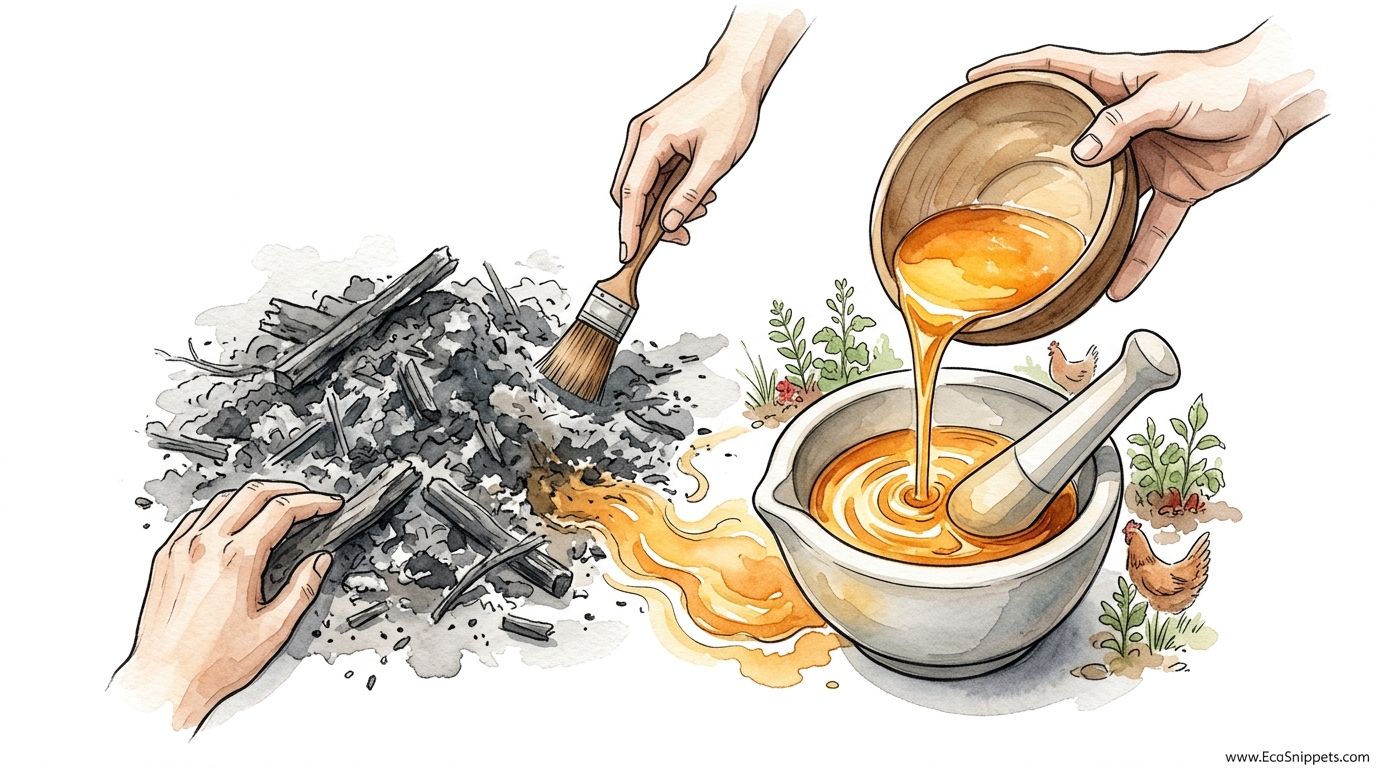
Generating heat for your home often leaves behind a gray, powdery residue that looks like nothing more than a chore to clean up. However, for the self-reliant homesteader, that bucket of cold ash represents a concentrated source of minerals gathered by trees over decades of growth. This is the ultimate “liquid gold” of the domestic ecosystem, provided you know how to unlock its potential.
Every bucket of ash you save is a bucket of store-bought lime or potassium fertilizer you don’t have to buy. This ancient wisdom was once common knowledge, but in the era of cheap chemical solutions, we forgot how to use the resources right under our noses. This guide will walk you through the chemistry, the application, and the safety of wood ash so you can reclaim this ancestral tool.
Stop Tossing Your Wood Ash: From Waste to Homestead Gold
Wood ash is the inorganic remain of burnt organic matter, primarily composed of the minerals that the tree pulled from the soil during its lifetime. While the carbon, nitrogen, and sulfur are released into the air during combustion, the calcium, potassium, magnesium, and phosphorus stay behind in the hearth. These are the building blocks of life, and in ash, they are concentrated and ready to be returned to the earth.
Think of wood ash as a highly reactive, fast-acting version of garden lime. It exists because the heat of the fire transforms complex wood fibers into simple oxides and carbonates that plants can easily absorb once moisture is reintroduced. On a homestead, this material bridges the gap between the forest and the field, ensuring that the energy cycle remains unbroken.
Historically, wood ash was so valuable that it was a primary export in early colonial economies. “Potash”—literally ash from a pot—was used for everything from glass making to gunpowder production. Today, it remains a cornerstone of organic land management and traditional crafts like soap making and hide tanning. If you have a wood stove or a fireplace, you are sitting on a gold mine of self-sufficiency.
How Wood Ash Works in the Soil and Beyond
The magic of wood ash lies in its chemical composition. Most wood ash contains approximately 25% to 50% calcium carbonate, which is the same active ingredient found in agricultural lime. It also provides a significant dose of potassium (3% to 7%) and phosphorus (1% to 2%), along with essential micronutrients like iron, manganese, and boron.
When you spread wood ash on your soil, the calcium and magnesium oxides react with the moisture to raise the pH level. This neutralizing power makes it an excellent choice for correcting acidic soils. Unlike standard lime, which can take months to break down, the fine particles in wood ash react almost immediately, making it a “quick fix” for nutrient-starved beds.
Beyond chemistry, the physical structure of ash plays a role. It is abrasive and highly desiccant, meaning it can draw moisture out of small organisms. This physical property is why it works so well for pest control and livestock hygiene. When dry, it acts as a barrier; when wet, it becomes a potent alkaline solution that can break down fats and oils.
The Potash Factor (0-1-3 N-P-K)
In the world of commercial fertilizers, wood ash would be labeled with an N-P-K ratio of approximately 0-1-3. While it lacks nitrogen, which is lost as gas during the fire, its high potassium content is vital for plant health. Potassium helps with water regulation, disease resistance, and the development of strong roots and flavorful fruits.
Hardwood trees like oak, hickory, and maple generally produce more ash and a higher concentration of nutrients than softwoods like pine or fir. If you are burning high-quality hardwoods, your ash is even more potent. Saving this material allows you to customize your soil amendments without relying on synthetic bags from the big-box store.
Benefits of Using Wood Ash on the Homestead
The advantages of wood ash extend far beyond the garden gate. This versatile substance can replace several expensive products you might currently be purchasing. By integrating ash into your daily routines, you reduce your dependency on industrial supply chains and lower your homestead’s carbon footprint.
- Soil pH Adjustment: Wood ash is a free, natural alternative to garden lime for raising soil pH in acidic regions.
- Nutrient Boost: It provides a concentrated source of potassium and calcium, essential for heavy-feeding crops like tomatoes and brassicas.
- Natural Pest Control: A ring of dry ash around vulnerable seedlings can deter slugs, snails, and soft-bodied insects.
- Livestock Health: When added to a chicken’s dust bath, it helps eradicate mites and lice without using neurotoxic pesticides.
- Home Cleaning: Sifted ash mixed with a little water creates a gentle abrasive paste for cleaning oven glass and polishing metal.
- Compost Enhancer: Lightly dusting your compost pile with ash can neutralize odors and add minerals to the finished humus.
Choosing wood ash over chemical alternatives means you are working with nature rather than against it. You aren’t just feeding the plant; you are feeding the soil biology and maintaining a balance that has worked for thousands of years. It’s a low-tech solution for a high-performance homestead.
Challenges and Common Mistakes
Using wood ash requires a bit of finesse and a healthy respect for chemistry. One of the most common errors is over-application. Because ash is so fine and reactive, it is easy to accidentally spike the pH of your soil too high, which can “lock up” other nutrients and make them unavailable to your plants.
Another dangerous pitfall involves the source of the wood. Never use ash from wood that has been treated, painted, or stained. Pressure-treated lumber often contains arsenic and chromium, which will remain in the ash and contaminate your food supply. Similarly, burning trash or plastics in your stove will introduce toxins that have no place in a healthy garden.
Timing is also a factor that many beginners get wrong. Spreading ash in the wind or right before a massive rainstorm can lead to uneven distribution or runoff. To avoid these issues, always handle ash when it is slightly damp or immediately incorporate it into the top few inches of soil. This ensures the minerals stay exactly where you need them.
Limitations and When Not to Use It
Wood ash is not a universal solution for every corner of the homestead. There are specific situations where its high alkalinity can do more harm than good. Understanding these constraints is what separates a novice from an expert practitioner of homestead wisdom.
Acid-loving plants are the primary casualties of improper ash use. Blueberries, azaleas, rhododendrons, and strawberries thrive in acidic soil and will suffer if you raise the pH. Furthermore, avoid using ash on potatoes, as high-alkalinity soil promotes the growth of potato scab, a fungal disease that ruins the skin of your tubers.
Environmental factors also play a role. If your soil already has a pH of 7.0 or higher, adding wood ash is unnecessary and potentially harmful. Excessive alkalinity can cause chlorosis, where leaves turn yellow because the plant can no longer absorb iron. Always perform a simple soil test before embarking on a major ash-spreading campaign.
Wood Ash vs. Garden Lime: A Comparison
Many people wonder if they should stick to store-bought lime or switch to the ash from their hearth. While both serve to raise soil pH, they behave differently in the garden. Wood ash is a more complex substance that offers more than just pH adjustment.
| Feature | Wood Ash | Agricultural Lime |
|---|---|---|
| Reaction Speed | Fast (Weeks) | Slow (Months) |
| Nutrient Content | K, P, Ca, Mg, Micro | Ca, Mg |
| Cost | Free (Waste Product) | Moderate ($15-$30/bag) |
| Application Rate | 2 lbs per 100 sq ft | 1 lb per 100 sq ft |
| Pest Control | Yes (Physical Barrier) | No |
As seen in the table, it generally takes about twice as much wood ash by weight to achieve the same pH shift as lime. However, the added benefit of potassium and micronutrients often makes wood ash the superior choice for a productive homestead. It is a holistic amendment rather than a singular chemical input.
Practical Tips and Best Practices
To get the most out of your fireplace waste, you need a system for collection and application. Sifting is the first step in a professional approach. Use a piece of hardware cloth to remove large chunks of unburnt charcoal, which can be saved separately as biochar or used in the grill.
Storage is another critical consideration. Keep your ash in a metal container with a tight-fitting lid. This serves two purposes: it prevents any stray embers from starting a fire and keeps the ash dry. If wood ash gets wet, the potassium—which is highly water-soluble—will leach out, leaving you with a much less potent fertilizer.
When applying to the garden, a “light dusting” is usually the best rule of thumb. Aim for about 20 pounds of ash per 1,000 square feet annually. This is roughly the amount that would fill a five-gallon bucket. Spread it evenly across the soil surface in late winter or early spring, giving it time to react with the earth before you plant your summer crops.
Advanced Homestead Considerations: Making Lye
For the advanced homesteader, wood ash is the gateway to traditional chemistry. By leaching water through hardwood ash, you can create a potent alkaline solution known as lye (potassium hydroxide). This was the primary ingredient for soap making before the advent of industrial lye production.
To make lye at home, you typically set up a leaching barrel. You fill a wooden barrel with stones and straw at the bottom for filtration, then pack it with clean hardwood ashes. By slowly pouring rainwater over the top, you collect the brown, tea-colored liquid that trickles out of the bottom. This liquid is caustic and must be handled with extreme care, using gloves and eye protection.
This lye can be combined with rendered animal fats or vegetable oils to create soft soap. It is a complex process that requires patience and precision, but mastering it allows you to become completely self-sufficient in your household hygiene. It is the ultimate expression of the “waste not, want not” pioneer spirit.
Real-World Examples and Scenarios
Imagine you have a small flock of ten chickens and a 500-square-foot vegetable garden. During a cold winter, you might produce five buckets of wood ash. Instead of dumping them behind the shed, you can strategically distribute them to maximize your homestead’s productivity.
You might use one bucket to create a luxury dust bath for your chickens by mixing it with equal parts sand and peat moss. This prevents a mite outbreak in the spring. Two more buckets can be spread over your asparagus and brassica beds, as these plants thrive in slightly alkaline, potassium-rich soil. The remaining two buckets can be stored in the garage for use as an ice melt on your front walkway, providing traction and melting ice without the corrosive salt damage to your concrete.
In another scenario, a homesteader dealing with a heavy slug infestation in their lettuce patch might create a “no-fly zone” by sprinkling a three-inch-wide border of dry ash around the bed. As long as the ash remains dry, the slugs will find the abrasive, moisture-wicking surface impossible to cross. This saves the crop without the need for toxic slug pellets.
Final Thoughts
Reclaiming wood ash is more than just a frugal gardening hack; it is an act of stewardship. It represents a shift from being a consumer who relies on external inputs to a producer who understands the value of every molecule on their land. By closing the loop on your energy waste, you build a more resilient and self-reliant home.
The transition from “messy waste” to “liquid gold” happens the moment you start seeing your hearth as a source of fertility rather than a source of dust. Whether you are correcting the pH of a legacy garden, keeping your livestock healthy, or experimenting with the ancient art of soap making, wood ash is an indispensable partner in the homesteading journey.
Start small, test your soil, and respect the potency of the minerals you are handling. Over time, you will find that the rhythm of the hearth and the rhythm of the harvest are inextricably linked. The wisdom of our ancestors is still there, waiting in the ashes, ready to help us grow a better future.
