How To Become More Self-Sufficient Without Starting a Full-Blown Farm…
Want to start preserving your harvest, making your own soap, or building a backyard root cellar — but not sure where to begin? “Homesteading Advice” gives you instant lifetime access to 35+ practical homesteading books on food preservation, veggie gardening, DIY natural cleaning products (save over $250 per year with this skill alone), brewing, off-grid energy, and a whole lot more…
Click Here To Check It Out Now!
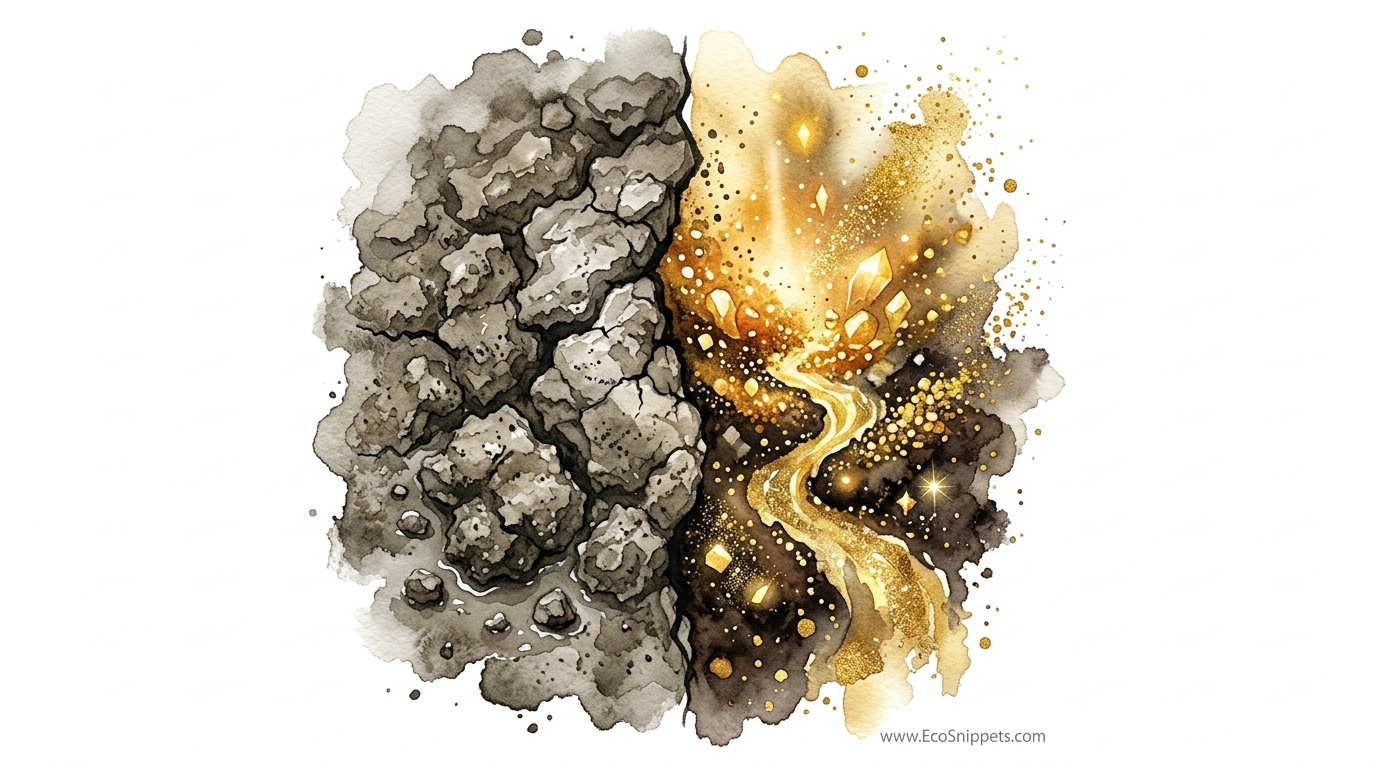
Your ‘terrible’ clay soil is actually the most mineral-rich resource on your property. Most people see clay as a drainage nightmare. Successful homesteaders see it as a high-capacity mineral storage tank. Once you unlock the biology to structure it, clay soil outperforms sandy soil every single time. Here is how to stop fighting and start winning.
For generations, the heavy, greasy clods of clay have been the bane of the impatient gardener. We have been told to dig it, till it, and drown it in sand to make it “workable.” But that path leads only to sore backs and a garden that sets like sun-dried brick. True stewardship requires a different mindset, one that looks past the sticky mud and recognizes the mineral gold hidden within.
Clay is not a defect of the earth; it is a concentrated legacy of geological time. It holds onto water and nutrients with a grip that sandy soils can never match. Your task is not to change the nature of the soil, but to change its structure. By inviting life into the depths, you transform a suffocating slab into a thriving, porous sponge that will feed your family for decades.
How To Fix Heavy Clay Soil
Fixing heavy clay soil is a transition from managing chemistry to managing biology. In its raw state, clay consists of microscopic, flat platelets that stack tightly together like a deck of cards. When wet, these platelets slide against each other, creating that familiar, slick mud. When dry, they bond into a nearly impenetrable mass that excludes air and crushes tender roots.
This condition exists because the soil lacks “aggregation.” In healthy soil, these tiny platelets are bound together into larger crumbs, or peds, by biological glues. Think of it as turning that flat deck of cards into a sturdy house of cards. The minerals remain, but the spaces between them allow for the free movement of oxygen and water, which is the definition of high-quality tilth.
Real-world homesteading requires us to stop seeing clay as a drainage problem and start seeing it as a structure problem. You will find heavy clay in low-lying river valleys, ancient lake beds, and areas where glaciers once ground rock into a fine flour. It is the bedrock of some of the most productive agricultural regions on the planet, provided the farmer knows how to unlock the vault.
How It Works: The Path from Mud to Gold
The transformation of clay relies on a process called flocculation and the subsequent building of soil aggregates. Flocculation is the chemical part of the equation where individual clay particles are attracted to one another to form small clumps. This is often driven by divalent cations like Calcium, which act as a bridge between the negatively charged clay surfaces.
Once those clumps form, biology takes over the heavy lifting. Mycorrhizal fungi are the master architects of the soil. As they weave through the earth, they exude a sticky, carbon-rich glycoprotein called glomalin. This “biological cement” coats the clay particles and binds them into stable crumbs that do not dissolve even during heavy rains.
The step-by-step process for the modern pioneer looks like this:
- Stop the Tillage: Every time you run a rototiller through clay, you shatter the fungal networks and the existing aggregates. You are essentially “pureeing” the soil, which leads to even tighter compaction once the next rain hits.
- Apply Organic Surface Armor: Lay down thick layers of compost and mulch. This protects the surface from the “hammer action” of raindrops, which otherwise seals the soil pores and leads to crusting.
- Inoculate with Life: Introduce compost teas or high-quality worm castings to jumpstart the microbial population. These organisms are the ones who will manufacture the glues needed for structure.
- Utilize Bio-Drills: Use deep-rooted cover crops to fracture the subsoil mechanically while pumping carbon deep into the profile.
The Benefits of Living with Clay
The primary advantage of clay is its incredible Cation Exchange Capacity (CEC). Because clay particles are negatively charged, they act like a magnet for positively charged nutrients such as Calcium, Magnesium, and Potassium. While these minerals wash right through sandy soils, clay holds them in a “pantry” for your plants to access as needed.
Water retention is the other great gift of the heavy ground. In an era of unpredictable weather and increasing droughts, clay soil is your insurance policy. Once structured properly, clay can hold significantly more plant-available water than any other soil type. A garden built on improved clay requires far less irrigation, saving both your well and your time.
Furthermore, clay provides a stable physical anchor for large plants and trees. The density that makes it hard to dig also makes it resistant to erosion. While a flash flood might wash away a sandy hillside, a well-mulched clay slope will hold its ground, preserving your topsoil for the next generation.
Challenges and Common Mistakes
The most dangerous mistake a homesteader can make is the “Sand Myth.” Many beginners think that adding sand to clay will create a loam. In reality, unless you add enough sand to equal roughly 50% to 70% of the total soil volume, you are simply providing the aggregate for a rudimentary form of concrete. The fine clay particles fill the gaps between the sand grains, creating a rock-hard mess that is worse than the original soil.
Another pitfall is working the soil while it is wet. If you walk on, dig, or till wet clay, you cause “smearing.” This aligns the clay platelets into a solid, anaerobic sheet that can take years of biological activity to repair. A simple test is to squeeze a handful of soil; if it forms a ball that doesn’t crumble with a light touch, stay out of the garden.
Over-reliance on synthetic fertilizers can also sabotage your progress. High levels of salt and concentrated nitrogen can suppress the very mycorrhizal fungi you need to build structure. When you bypass the plant-microbe bridge with liquid feeds, the plant stops pumping carbon into the soil, and the structure begins to collapse back into a “dead” mineral state.
Limitations of Heavy Clay
Even the best-managed clay has its limits. One of the most significant is the “spring lag.” Because clay holds so much water, it takes much longer to warm up in the spring compared to sandy soils. This can delay your planting dates for heat-loving crops like tomatoes and peppers by two to three weeks.
Compaction is a constant shadow. Even after you have improved the structure, a single season of heavy foot traffic or the use of heavy machinery can reset your progress. You must commit to permanent beds and designated pathways to ensure the “living sponge” you’ve created isn’t crushed back into a brick.
Lastly, some clays are “sodic,” meaning they have a high sodium content. Sodic soils are chemically dispersed and will not form aggregates regardless of how much organic matter you add until the sodium is displaced. Recognizing this requires a professional soil test, as the visual symptoms can look like standard compaction but the cure is entirely different.
Comparison: Clay vs. Sand
Understanding the fundamental differences between these two extremes helps you appreciate why clay is worth the effort of “fixing.”
| Feature | Sandy Soil | Clay Soil (Unstructured) | Clay Soil (Structured) |
|---|---|---|---|
| Nutrient Retention | Very Low (Leaches) | High (Locked) | High (Available) |
| Water Capacity | Low | High (Causes rot) | High (Available) |
| Aeration | Excellent | Very Poor | Good |
| CEC (Cation Exchange) | 2 – 5 | 30 – 100+ | 30 – 100+ |
| Ease of Working | Easy | Difficult | Moderate |
Practical Tips and Best Practices
To start winning your war with the mud today, implement a “No-Dig” system. Instead of turning the soil over, layer four inches of well-rotted compost directly on top of the clay in the autumn. Over the winter, earthworms and fungi will do the “tilling” for you, pulling that organic matter down and creating thousands of microscopic drainage channels.
Perform the “Jar Test” to see if gypsum is actually needed. Take a clump of your dry soil and drop it into a jar of distilled water. If the water remains clear and the clump stays together, you have stable clay—adding gypsum will do nothing but waste your money. If the water turns cloudy (disperses), you have sodic clay, and gypsum will help “flocculate” those particles.
- Use a Broadfork: If you must relieve deep compaction, use a broadfork to lift and crack the soil without turning it over. This preserves the soil horizons while introducing much-needed oxygen.
- Mulch Constantly: Never leave clay bare. Bare clay “slakes” under rain and “bakes” under sun. Always keep it covered with straw, wood chips, or living plants.
- Plant High-Silica Crops: Plants like horsetail or even certain grasses can help improve the internal mineral balance of the soil as they decompose.
Advanced Considerations: The Liquid Carbon Pathway
Serious practitioners should look into the “Liquid Carbon Pathway.” This is the process where plants capture atmospheric CO2 and transform it into simple sugars, which they then exude through their roots to feed soil microbes. Research suggests this pathway builds stable soil humus five to thirty times faster than the decomposition of surface mulch alone.
To maximize this, you need “green cover” for as many days of the year as possible. Even in winter, having a cold-hardy cover crop like cereal rye or winter wheat ensures that the “carbon pump” is still functioning. The more living roots you have in the ground, the more biological “glue” is being manufactured in the rhizosphere.
Focus also on the Fungal-to-Bacterial (F:B) ratio. Most disturbed garden soils are bacterially dominated, which leads to rapid nutrient cycling but poor structure. By adding woody mulches and avoiding tillage, you shift the balance toward fungi. Fungi are the true “clay-busters,” as their hyphae can exert massive pressure to fracture even the tightest subsoil.
Example Scenario: The Greasy Pasture Transition
Imagine a one-acre homestead on an old dairy pasture. The soil is “blue clay”—so tight that water stands in puddles for days after a light rain. The initial instinct is to bring in a tractor and a plow. Instead, the wise steward begins by broadforking the area in late summer when the soil is slightly moist but not wet.
In every crack made by the broadfork, they sow a mix of Daikon Radish and Crimson Clover. The Daikon acts as a “living drill,” its massive taproot punching three feet deep into the clay. When the winter frost kills the radish, the root rots in place, leaving a vertical “compost tube” that allows air and water to reach the subsoil. The clover fixes nitrogen and provides a thick mat of organic matter.
By the second spring, the standing water has disappeared. The soil is no longer a grey slab but has developed a “cottage cheese” texture in the top four inches. By the third year, the homesteader can push a finger into the soil with ease. They haven’t removed the clay; they have simply invited the biology to move in and organize the furniture.
Final Thoughts
Success on heavy ground is a marathon, not a sprint. It requires the grit to resist the “quick fix” of the rototiller and the patience to let the worms and fungi do their ancestral work. When you stop fighting your clay, you stop fighting the very thing that makes your land fertile. You are not “fixing” a mistake of nature; you are stewarding a mineral powerhouse.
The reward for this labor is a garden that grows more resilient every year. While others are hauling bags of expensive fertilizer and struggling with irrigation during the August heat, your plants will be tapping into the deep, cool, mineral-rich reservoir of your structured clay. This is the essence of self-reliance—turning what others call a burden into the foundation of a legacy.
Start today by putting down your shovel and picking up a bag of cover crop seeds. Cover the ground, feed the life beneath your boots, and watch as the sticky mud of yesterday becomes the mineral gold of tomorrow. The earth has provided the raw materials; it is up to you to provide the stewardship.
