How To Become More Self-Sufficient Without Starting a Full-Blown Farm…
Want to start preserving your harvest, making your own soap, or building a backyard root cellar — but not sure where to begin? “Homesteading Advice” gives you instant lifetime access to 35+ practical homesteading books on food preservation, veggie gardening, DIY natural cleaning products (save over $250 per year with this skill alone), brewing, off-grid energy, and a whole lot more…
Click Here To Check It Out Now!
Your solar panels are wasting 80% of the energy they hit – here is how to catch the rest. Standard solar panels have a dirty secret: as they get hotter, they get less efficient. Adding a liquid-cooling loop to create a Hybrid PVT system solves two problems at once. You cool the panel to boost electrical output while simultaneously generating free domestic hot water. Why choose between power and heat when you can have both?
The modern homesteader knows that efficiency is the bedrock of self-reliance. When you look at a traditional solar array, you are seeing a marvel of technology that is, quite frankly, behaving like a teenager—doing one job while ignoring the massive mess it leaves behind. That mess is heat. For every kilowatt of electricity those cells produce, they are absorbing nearly four kilowatts of thermal energy that simply radiates back into the atmosphere or, worse, cooks the delicate silicon.
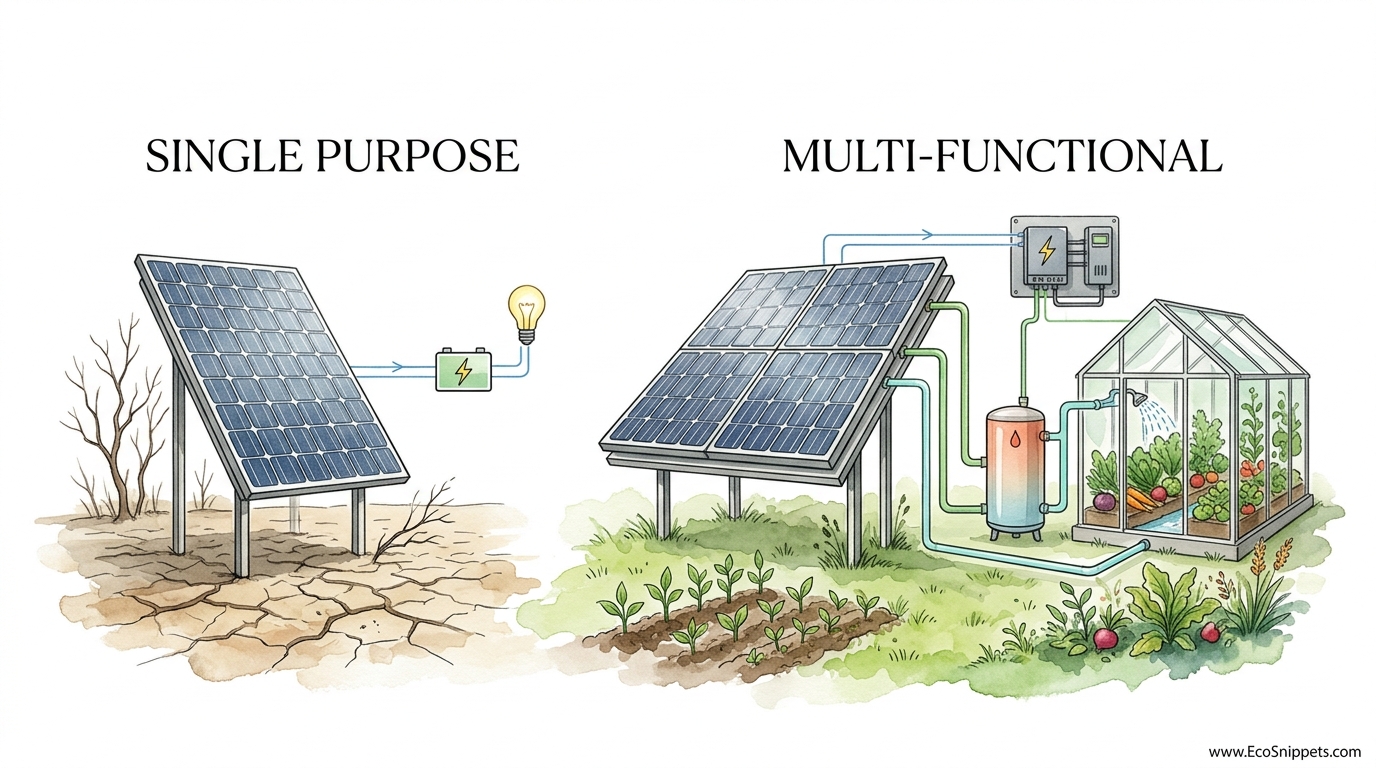
This article explores a more traditional way of thinking applied to modern hardware. In the old days, a wood stove did not just heat the air; it had a kettle on top and perhaps a water jacket inside to warm the bathwater. We are bringing that same multi-functional wisdom to the roof. A Photovoltaic Thermal (PVT) system is the solar equivalent of the “use every part of the animal” philosophy. It turns your roof into a high-performance engine that harvests photons for your lights and thermal energy for your laundry, showers, and floors.
Photovoltaic Thermal Pvt Systems For Homesteads
A Photovoltaic Thermal system, or PVT, is a hybrid technology that merges two distinct solar worlds into a single module. On the surface, it looks like a standard solar panel. Beneath that glass and silicon, however, lies a thermal absorber plate—usually made of copper or aluminum—that carries a heat-transfer fluid. This fluid, typically a mixture of water and non-toxic propylene glycol, acts as a coolant for the electrical cells and a harvester for the thermal energy.
These systems exist because standard PV panels are notoriously sensitive to temperature. Most silicon-based solar cells are rated at a Standard Test Condition (STC) of 25°C (77°F). In the real world, especially during a clear summer afternoon, a panel can easily reach 65°C (149°F) or higher. For every degree above that 25°C baseline, the electrical efficiency of the panel drops by roughly 0.4% to 0.5%. By the time a panel is baking in the July sun, it might be losing 15% to 20% of its rated power capacity simply because it is too hot to function efficiently.
Homesteaders use PVT systems to maximize limited roof space. If you have a small cabin or a barn with a small south-facing roof, you do not want to choose between a PV array for your batteries and a solar thermal collector for your hot water. A PVT system allows you to occupy the same square footage with a “2-in-1” solution. This is not just a gadget; it is a resource-management strategy. It mimics the natural resilience of a diversified farm, where one input (sunlight) provides multiple outputs (electrons and calories of heat).
Visualize the PVT panel as a radiator with a solar panel as its skin. As the sun beats down, the cells produce electricity. Simultaneously, the liquid flowing behind the cells carries away the heat. This prevents the cells from overheating, which keeps the voltage high and the power output steady. The now-warm liquid is then pumped to a storage tank, where it can provide domestic hot water or pre-heat a radiant floor system. It is a closed-loop cycle of efficiency that honors the abundance of the sun.
How the Hybrid PVT System Works Step-by-Step
Understanding the mechanics of a PVT system requires looking at the “sandwich” of materials that make up the collector. Every layer serves a specific purpose in the conversion of light to energy.
The Layered Anatomy
- The Glazing: A top layer of high-transparency, low-iron tempered glass protects the cells. In “glazed” PVT collectors, this glass also creates a greenhouse effect to trap more heat, though it can slightly reduce electrical efficiency compared to “unglazed” models.
- The Photovoltaic Layer: This is where the magic of the “p-n junction” happens. Photons hit the silicon, knocking electrons loose and creating a flow of direct current (DC) electricity.
- The Thermal Absorber: Situated directly behind the PV cells is a metal plate. This plate is designed for maximum contact. Many high-end systems use a “roll-bond” or “sheet-and-tube” design where copper pipes are laser-welded to the plate to ensure that every bit of heat is transferred to the fluid.
- The Insulation: To prevent the harvested heat from escaping out the back of the panel, a layer of high-density mineral wool or polyurethane foam is used. This forces the thermal energy into the fluid loop rather than into the attic or the air.
The Fluid Loop and Heat Exchange
The process begins when a circulation pump, controlled by a differential thermostat, senses that the panels are warmer than the water in your storage tank. The pump pushes the cold heat-transfer fluid up to the roof. As the fluid enters the manifold of the PVT array, it branches out into small channels behind each panel.
Thermal energy moves from the hot silicon cells, through the backsheet, and into the metal absorber plate. The fluid picks up this energy through conduction. By the time the fluid exits the top of the array, its temperature has risen significantly—often reaching 40°C to 60°C (104°F to 140°F) in residential applications. This warmed fluid then travels down to a heat exchanger inside a thermal storage tank. Here, it gives up its heat to the domestic water supply before returning to the roof to begin the cycle again.
The Electrical Performance Boost
Physically, cooling the panels lowers the “internal resistance” of the solar cells. When silicon stays cool, the voltage remains stable. Without cooling, the voltage of a solar panel drops as the temperature rises, which can cause the inverter to struggle to find the “Maximum Power Point” (MPP). The liquid-cooling loop acts like the radiator in a car, keeping the “engine” (the solar cells) in its optimal temperature range. Studies have shown that active cooling can increase annual electrical yields by 10% to 15% in warmer climates.
The Practical Benefits of Going Hybrid
Choosing a PVT system over a standard “split” system (separate PV and thermal panels) offers several measurable advantages for the serious practitioner.
Maximized Surface Efficiency
Space is often the most significant constraint on a homestead. A PVT system can generate up to four times the total energy (electrical + thermal) per square meter compared to a standard PV panel alone. This makes it the ideal choice for tiny homes, off-grid cabins, or suburban homesteads with limited roof area.
Increased Solar Cell Longevity
Heat is the enemy of electronics. Constant thermal cycling—the daily expansion and contraction caused by heating up to 70°C and cooling down to 10°C—stressed the solder joints and the EVA (ethylene vinyl acetate) encapsulant in solar panels. Keeping the panels at a more consistent, lower temperature can potentially extend the functional life of the solar cells by years, reducing the risk of delamination and micro-cracking.
Winter Performance and Snow Shedding
One of the most frustrating sights for a solar owner is a beautiful, sunny winter day where the panels are covered in six inches of snow. With a PVT system, you can briefly reverse the flow or use a small amount of stored heat to warm the panels from the inside out. This melts the bond between the snow and the glass, allowing the snow to slide off and the panels to begin producing power hours or even days before your neighbors’ panels clear.
Synergy with Heat Pumps
Modern homesteads often use air-source or ground-source heat pumps. A PVT system is a perfect partner for these units. The low-grade heat (20°C to 30°C) harvested by the PVT panels on a cloudy day might not be hot enough for a shower, but it is a “gold mine” for a heat pump. Using the PVT loop to pre-heat the source side of a heat pump can dramatically increase its Coefficient of Performance (COP), saving even more electricity.
Challenges and Common Mistakes to Avoid
While the promise of “free power and free heat” is alluring, the integration of plumbing and electricity requires a higher level of skill and planning.
The Danger of Stagnation
Stagnation occurs when the sun is shining, but the pump stops moving the fluid—perhaps due to a power outage or because the water tank has already reached its maximum temperature. In a PVT system, temperatures in the collector can spike to 150°C (302°F) or more. This extreme heat can literally cook the solar cells, causing permanent damage. To avoid this, you must install a “heat dump” (like a radiator with a fan) or use a “drain-back” system where the fluid naturally drains out of the panels into a reservoir when the pump is off.
Galvanic Corrosion
Mixing metals is a classic pitfall. If you use an aluminum absorber plate in your panels but connect them to your tank using copper pipes without dielectric unions, you are creating a giant battery that will slowly eat the aluminum. Always ensure that the metals in your loop are compatible or properly isolated.
Improper Pump Sizing
A pump that is too small will not move the fluid fast enough to cool the cells effectively, leading to “hot spots.” A pump that is too large will consume more electricity than the cooling boost provides, negating the efficiency gains. Precision in calculating the “head pressure” and flow rate is mandatory. Practitioners should aim for a flow rate that creates turbulent flow within the absorber channels, as this maximizes heat transfer compared to slow, laminar flow.
Air Traps in the Loop
Air is an insulator, not a conductor. If air bubbles get trapped in the top of your solar array, they will block the fluid and create localized overheating. Installing automatic air vents at the highest point of the system and ensuring a consistent slope for the piping is the only way to keep the system “burped” and functional.
Limitations: When PVT Is Not the Ideal Choice
Transparency is a virtue in engineering. PVT systems are not a “one-size-fits-all” solution, and there are specific scenarios where they might not be the best investment.
Low-Grade Heat Realities
The heat produced by a PVT system is generally “low-grade,” meaning it typically hovers between 40°C and 50°C (104°F to 122°F). While this is perfect for domestic hot water or underfloor heating, it is not suitable for industrial processes requiring steam or high-temperature sterilization. If your primary goal is boiling water, a dedicated vacuum-tube solar thermal collector is more effective because its vacuum insulation allows it to reach much higher temperatures.
Complexity vs. Reliability
A standard PV system is “solid-state”—no moving parts, no fluids, and very little that can go wrong over twenty years. By adding pumps, valves, sensors, and fluid, you are introducing points of failure. For a remote homestead where maintenance is difficult, the added complexity of a PVT system might outweigh the efficiency benefits. You must be prepared to monitor fluid levels, check for leaks, and replace the glycol every few years.
High Initial Capital Costs
The upfront cost of a PVT installation is generally 20% to 30% higher than a separate PV and thermal system. While the long-term Return on Investment (ROI) is often better due to the space savings and efficiency gains, the initial “sticker shock” can be a barrier for those on a tight budget.
Comparison: Hybrid PVT vs. Traditional Split Systems
| Feature | Hybrid PVT System | Separate PV & Thermal |
|---|---|---|
| Energy Density | Highest (Heat & Power in one) | Moderate (Requires double space) |
| Installation Complexity | High (Plumbing + Electrical) | Standard |
| Electrical Efficiency | Boosted by active cooling | Degrades as panels get hot |
| Thermal Temperature | Low-Medium (40-60°C) | High (70-90°C+) |
| Maintenance | Moderate (Fluid checks) | Low (PV) to Moderate (Thermal) |
Best Practices for a Homestead PVT Setup
Following these guidelines will ensure that your system operates with the reliability of an heirloom tool.
- Use a Differential Controller: Never run the pump based on a timer. Use a controller with two sensors—one at the panel outlet and one at the bottom of the storage tank. The pump should only activate when the panel is at least 5°C (9°F) warmer than the tank.
- Insulate Every Foot of Pipe: Thermal energy is elusive. Use high-temperature EPDM pipe insulation for the exterior runs. Forgetting to insulate even a small section of pipe can result in significant heat loss, especially in the wind.
- Incorporate a Pressure Relief Valve (PRV): Fluid expands when it gets hot. Without a PRV and an expansion tank, the high pressure during a hot summer day can burst your pipes or damage the panels.
- Optimize Orientation: For a homestead focused on self-reliance, a “Winter Tilt” is often best. Setting your panels at an angle equal to your latitude plus 15 degrees helps catch the low-hanging winter sun, which is when you need the thermal energy most for heating.
Selecting the Right Storage Tank
Sizing the tank is the most critical part of the design. A tank that is too small will overheat by noon, causing the system to stagnate. A rule of thumb is to allow for 50 to 80 liters of storage per square meter (1.2 to 2 gallons per square foot) of collector area. If you have a 10-square-meter PVT array, you should be looking at an 800-liter (211-gallon) thermal storage tank.
Advanced Considerations: Seasonal Storage and PCM
For the practitioner who wants to push the boundaries of homesteading technology, consider integrating Phase Change Materials (PCM) or seasonal storage.
Phase Change Materials (PCM)
PCMs are substances, like specialized waxes or salts, that absorb and release large amounts of energy when they melt and solidify. By integrating a PCM module into your thermal loop, you can store much more heat in a smaller volume than water alone. This “thermal battery” can help bridge the gap between a sunny afternoon and a cold evening, providing heat long after the sun has set.
Borehole Thermal Energy Storage (BTES)
In larger homesteads with ground-source heat pumps, the excess heat generated by PVT panels in the summer can be pumped into the ground. This “recharges” the soil around your geothermal loops. When winter arrives, the heat pump extracts that stored summer heat, operating with a much higher efficiency than if it were pulling from “cold” virgin soil. This transforms the earth beneath your feet into a giant, slow-moving thermal battery.
A Real-World Homestead Scenario
Consider a family of four living on a 5-acre homestead. They install a 4kW PVT array consisting of 12 hybrid panels.
On a clear autumn day with an ambient temperature of 15°C (59°F), a standard 4kW PV array would produce about 3.4kW of electricity because the cells would heat up to 45°C. However, the PVT system actively cools the cells back down to 25°C using the domestic water loop. This maintains the full 4kW electrical output—a gain of 600 watts.
Simultaneously, the thermal side of those 12 panels harvests approximately 12kW of thermal energy. Over 5 hours of peak sun, this generates 60kWh of heat. This is enough to raise the temperature of a 500-liter (132-gallon) tank from 15°C to 65°C. The family now has enough hot water for four showers, a load of laundry, and several hours of radiant floor heating in the evening, all while their batteries are topped off with a “cooled” electrical boost.
Final Thoughts
The transition to a hybrid PVT system is a step toward a truly integrated homestead. It moves away from the “single-purpose” mindset of modern consumerism and back toward the multi-functional utility that defined our ancestors’ tools. By capturing the 80% of solar energy that standard panels waste as heat, you are not just improving your efficiency—you are honoring the primary source of all life on earth.
Success with these systems requires a balanced understanding of both electrons and BTUs. You must be willing to learn the language of plumbing alongside the language of wiring. While the initial setup is more demanding, the result is a home that breathes with the rhythm of the sun, providing both the power for your tools and the warmth for your bones.
As you look at your property and plan your energy future, ask yourself if you are making the most of every square inch. If the sun is going to shine on your roof regardless, why not catch every bit of it? Experimenting with hybrid technology is a path toward deeper self-reliance and a more profound connection to the resources we often take for granted.
