How To Become More Self-Sufficient Without Starting a Full-Blown Farm…
Want to start preserving your harvest, making your own soap, or building a backyard root cellar — but not sure where to begin? “Homesteading Advice” gives you instant lifetime access to 35+ practical homesteading books on food preservation, veggie gardening, DIY natural cleaning products (save over $250 per year with this skill alone), brewing, off-grid energy, and a whole lot more…
Click Here To Check It Out Now!
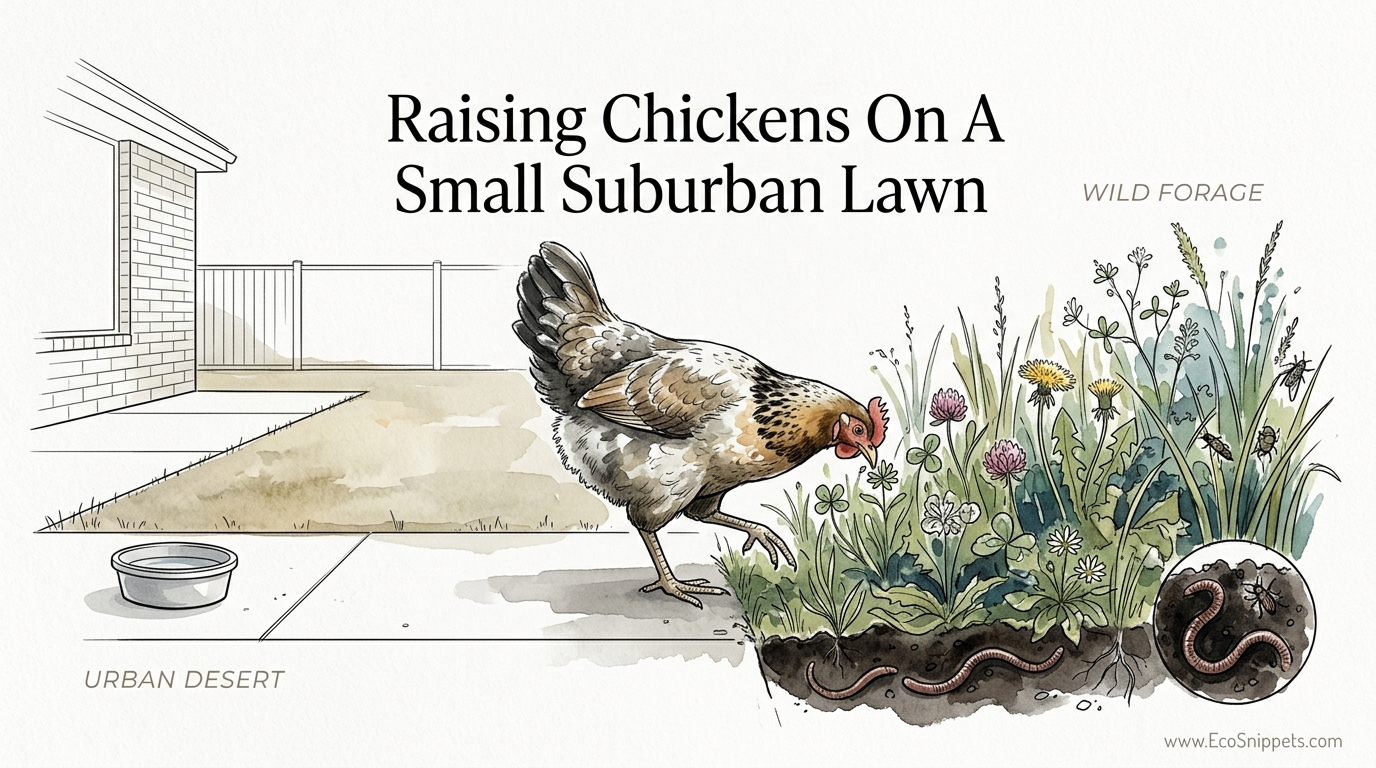
Your lawn is a biological desert, but it could be the high-protein foundation of your family’s breakfast. We spend billions as a society to keep our ‘urban deserts’ perfectly sterile and green. Meanwhile, your livestock are starving for the diversity that a ‘wild’ lawn provides for free. Stop mowing your wealth away and start planting the high-protein forage that turns your backyard into a self-sustaining egg and meat factory.
The modern suburban landscape is often a monoculture of Kentucky Bluegrass or Bermuda, treated with synthetic fertilizers and kept at a precise height of 3 inches (7.6 cm). To a chicken, this is equivalent to a human living in a room made of cardboard—technically shelter, but completely devoid of the nutrition required for a vibrant life. When you shift your perspective and view your property as a functional ecosystem, your “lawn” becomes a high-yielding pasture.
Developing a wild forage system in a small space requires a marriage of old-world wisdom and modern management. It is about understanding that a chicken is not just a consumer of grain, but an active participant in soil remediation. Every peck, scratch, and dropping is a biological input that, when managed correctly, transforms dead dirt into a nutrient-dense forage machine.
Raising Chickens On A Small Suburban Lawn
Raising chickens on a small suburban lawn is the practice of intensive, rotational poultry management within the confines of a standard residential lot. Unlike traditional farm-scale free-ranging, where birds roam over acres of uncontrolled land, suburban foraging relies on high-density, high-frequency rotation to keep the land healthy and the birds fed. This system is designed for the modern homesteader who may only have 1,000 to 5,000 square feet (93 to 465 square meters) of usable outdoor space.
In a traditional suburban setting, chickens are often kept in a static coop with a small, dirt-floored run. This setup quickly becomes a “sacrifice zone” where the birds destroy all vegetation, leading to mud, odors, and fly problems. A wild forage system replaces this static model with a mobile one, utilizing tools like “chicken tractors” or portable electric netting to move the birds to fresh “wild” grass every one to two days. This prevents the birds from over-scratching the roots and allows the vegetation to regrow with the added benefit of fresh fertilizer.
This approach exists because it addresses the two biggest hurdles of suburban farming: space and aesthetics. By mimicking the movement of wild birds across a prairie, you maintain a green lawn that actually grows faster and thicker than it did under a mower. The neighbors see a well-managed backyard, while you see a production system that reduces your commercial feed bill by up to 20% while skyrocketing the nutritional value of your eggs.
Imagine your lawn as a living buffet. Instead of a single type of grass, it is filled with White Clover, Dandelions, and Chicory. These “weeds” are actually high-protein forage that attracts a secondary layer of nutrition: insects. A healthy, biodiverse lawn is home to earthworms, crickets, and beetles, providing the essential amino acids that grains alone cannot offer.
The Mechanics of Transitioning to Wild Forage
Transitioning from a “sterile” lawn to a “wild” forage system does not happen overnight. It starts with the cessation of chemical “weed and feed” treatments, which are toxic to chickens and lethal to the soil biology they rely on. Once the chemicals are gone, you must actively introduce the species that will provide the protein and vitamins your flock needs.
Establishing a forage base involves “frost seeding” or over-seeding your existing lawn with legumes. White Clover (*Trifolium repens*) is the king of suburban forage because it stays low, handles foot traffic well, and fixes nitrogen into the soil. Red Clover and Alfalfa (*Medicago sativa*) are also excellent but may require more frequent mowing or grazing to keep them at a height accessible to the birds.
Soil Disturbance and Reseeding
Chickens are the world’s best tillers. You can use their natural behavior to prep your lawn for new seeds. By confining a group of chickens to a small area for three to four days, they will scratch away the thatch and expose the soil. Immediately after moving the chickens, broadcast a diverse seed mix and water it in. The birds have provided the “tillage” and the “starter fertilizer” in one go.
The Role of “Weeds” as Superfoods
Stop fighting the Dandelions. Dandelions are a natural superfood for poultry, containing high levels of Vitamin A, Vitamin K, and iron. Their deep taproots bring up minerals from the subsoil that shallow-rooted grasses cannot reach. Similarly, Lamb’s Quarter and Amaranth are high-protein greens that most homeowners try to kill, but a savvy chicken keeper sees them as a free protein supplement that rivals expensive commercial soy.
The High-Protein Harvest: Plants and Insects
To truly turn your lawn into a high-protein factory, you must cultivate both the plants and the organisms that live among them. A chicken’s natural diet is omnivorous, and they require high-quality protein to produce eggs with the dark orange yolks that signify high nutrient density.
Top Forage Plants for Protein
- White Clover: Contains 20% to 25% crude protein and is highly palatable. It is also a magnet for beneficial insects.
- Alfalfa: Often called the “Queen of Forages,” it is incredibly high in protein and calcium, though it needs well-drained soil.
- Chicory: A deep-rooted perennial that is rich in minerals and has natural anthelmintic properties, which help control internal parasites in the flock.
- Dandelion: High in beta-carotene, which gives egg yolks that sought-after orange glow.
- Mustard Greens: These grow rapidly and provide a peppery bite that acts as a natural stimulant for the digestive system.
The Living Protein: Managing Insects
A healthy lawn is a teeming metropolis of invertebrates. Insects provide the amino acid lysine and essential fatty acids that are often lacking in plant-based feeds. Earthworms are the gold standard, providing a massive protein boost, but you can also encourage Black Soldier Fly Larvae (BSFL) by keeping a small compost area near your rotation. These larvae are 40% protein and 30% fat, making them the ultimate “rocket fuel” for laying hens.
Research indicates that chickens given access to a diverse “biological carpet” of plants and insects produce eggs with twice the Vitamin E and more than double the total Omega-3 fatty acids compared to birds kept in conventional, grain-only systems. This isn’t just about saving money; it’s about producing a superior food product that cannot be bought in a store.
Benefits of the Wild Forage System
The most immediate benefit is the reduction in feed costs. While chickens cannot live on forage alone—they lack the multi-compartmented stomach of a cow and cannot digest cellulose efficiently—high-quality forage can replace 5% to 20% of their daily intake. In a year, this adds up to hundreds of pounds of feed saved for a small flock.
Beyond the wallet, the health of the birds is the most dramatic change. Chickens that forage are active, engaged, and significantly less likely to engage in “bad behaviors” like feather pecking or egg eating. The exercise they get from walking and scratching improves their cardiovascular health and meat quality.
Soil and Landscape Improvement
The “biological desert” of a suburban lawn is usually compacted and starved of organic matter. Chickens act as miniature manure spreaders. Their manure is high in nitrogen, phosphorus, and potassium. Because they are moved frequently in a forage system, the manure is diluted and absorbed, preventing the “nitrogen burn” that occurs in static coops. Over two to three seasons, you will notice your lawn stays green longer during droughts and grows more vigorously in the spring.
Challenges and Common Suburban Pitfalls
The biggest challenge in a suburban setting is the “Social Contract.” Your neighbors may love the idea of fresh eggs, but they will hate the sound of a rooster at 5:00 AM or the smell of an unmanaged coop. The key to suburban success is management, not just ownership.
The “Dirt Patch” Syndrome
The most common mistake is leaving chickens on one spot for too long. In a small yard, four chickens can turn a lush 100-square-foot (9.3-square-meter) patch into a dust bowl in less than three days. Once the grass is gone and the soil is compacted, it can take weeks or months to recover. You must be disciplined about your rotation schedule. If the grass looks like it’s being stressed, move the birds.
Predator Pressure
Suburban areas are often more dangerous for chickens than rural ones. Raccoons, foxes, hawks, and even the neighbor’s dog are constant threats. A “chicken tractor” must be built with hardware cloth, not flimsy chicken wire. Chicken wire is meant to keep chickens in, not to keep predators out. A determined raccoon can tear through chicken wire in minutes.
Limitations of Small Scale Grazing
While a 5,000-square-foot (465-square-meter) lawn can support a small flock, it has a finite “carrying capacity.” You cannot keep 50 birds on a suburban lot and expect a healthy lawn. A good rule of thumb is 8 to 10 square feet (0.75 to 0.9 square meters) of outdoor space per bird to prevent total destruction of the vegetation.
Another limitation is local ordinance. Many cities have a “six-bird minimum” purchase rule at hatcheries but a “three-bird maximum” legal limit for residents. Always check your zoning laws before you invest in equipment. Some areas also have “setback” requirements, meaning your coop must be a certain distance from property lines, which can significantly limit where you can rotate your birds.
Comparison: Conventional Run vs. Wild Forage System
| Feature | Conventional Static Run | Suburban Wild Forage |
|---|---|---|
| Dietary Diversity | Low (Grain & Scraps) | High (Plants, Seeds, Insects) |
| Labor Level | Low (Clean once a week) | Moderate (Move daily/every 2 days) |
| Soil Health | Poor (Compaction/Runoff) | Excellent (Remediation) |
| Odor Control | Can be high if not cleaned | Very Low (Dilution of waste) |
| Egg Nutrition | Standard (USDA Avg) | Superior (High Vit E/Omega-3) |
Practical Tips and Best Practices
Managing a wild forage system in a suburban backyard is an exercise in observation. You are no longer just a “feeder” of birds; you are a “manager” of an ecosystem.
- Keep Grass Height at 2-4 Inches: Chickens have short necks. If the grass is too tall, they can’t effectively reach the tender new growth or find the insects hiding at the base. Mowing your pasture to about 4 inches (10 cm) before moving the birds in is often ideal.
- The “Two-Week Recovery” Rule: Never return birds to a patch of lawn until the vegetation has had at least 14 days to recover. This breaks the parasite cycle and allows the plants to regrow their leaf mass.
- Provide a Dust Bath: If you don’t provide a designated spot for a dust bath (a mix of sand, wood ash, and peat moss), the chickens will dig one in your lawn. Providing a box inside their tractor saves your grass.
- Use Hardware Cloth: Line the bottom 12 inches (30 cm) of your mobile coop and the entire floor of any permanent structure with 1/4 inch (0.6 cm) hardware cloth to stop rodents and predators.
Advanced Considerations: Integrating the Garden
For the serious practitioner, the wild forage system doesn’t end at the lawn. It integrates with the vegetable garden. Using chickens to “clear” a garden bed at the end of the season is a classic permaculture technique. They will eat the spent plants, consume the weed seeds, and hunt down the pests like tomato hornworms or squash bugs.
The Biological Carpet Approach
A sophisticated method involves using the chickens to spread compost. By placing piles of partially finished compost or “brown” material (like wood chips) on the lawn and allowing the chickens to scratch through it, you create a “biological carpet.” This process inoculates the lawn with beneficial microbes and fungi, further accelerating the transition from a biological desert to a productive prairie.
Scenario: The 1/4 Acre Mini-Farm
Let’s look at a realistic example of what this looks like on a standard 10,890-square-foot (1,011-square-meter) suburban lot. Subtracting the house, driveway, and ornamental beds, you might have 4,000 square feet (372 square meters) of lawn.
By keeping a flock of four hens in a 4×8 foot (1.2×2.4 meter) chicken tractor, you are covering 32 square feet (3 square meters) of lawn at a time. If you move the tractor every morning, it will take you 125 days to cover the entire lawn once. This gives each patch of grass over four months to recover and regrow—more than enough time for even the most delicate clover to bounce back.
In this scenario, your hens are getting a fresh buffet every 24 hours. Your feed consumption might drop by 15%, but the quality of your eggs—measured by the deep pigment of the yolks and the strength of the shells—will be indistinguishable from birds raised on high-end organic pastures. You are essentially producing $8.00-a-dozen eggs using your own “waste” space.
Final Thoughts
The transition from a sterile lawn to a wild forage system is more than just a way to raise chickens; it is a fundamental shift in how we interact with the land we own. It rejects the idea that a suburban yard must be a high-input, low-output “biological desert” and instead embraces the ancestral wisdom of integrated farming.
By managing your lawn as a high-protein factory, you provide your family with a level of food security and nutritional density that is increasingly rare in the modern world. You also become a steward of the soil, proving that even a small backyard can be a powerhouse of regeneration.
Start small. Plant some clover this weekend. Move your coop ten feet to the left. Observe how the grass responds and how the birds’ feathers begin to shine. The path to self-reliance doesn’t require forty acres and a tractor—it starts with the few hundred square feet right outside your back door.
