How To Become More Self-Sufficient Without Starting a Full-Blown Farm…
Want to start preserving your harvest, making your own soap, or building a backyard root cellar — but not sure where to begin? “Homesteading Advice” gives you instant lifetime access to 35+ practical homesteading books on food preservation, veggie gardening, DIY natural cleaning products (save over $250 per year with this skill alone), brewing, off-grid energy, and a whole lot more…
Click Here To Check It Out Now!
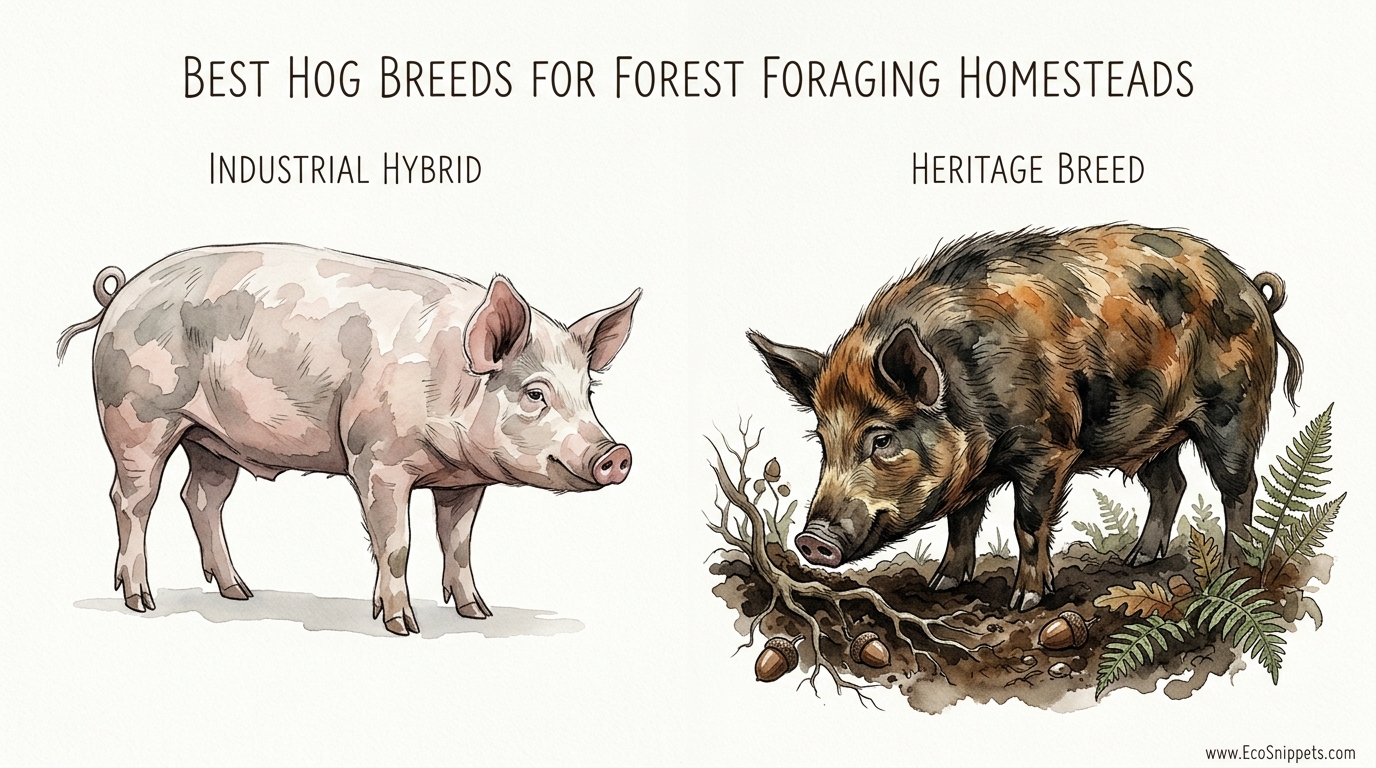
One of these pigs requires a climate-controlled barn and expensive soy; the other turns a forest floor into the world’s most expensive bacon. We traded 500 years of survival instincts for a pig that can’t even handle a cold breeze. Discover why heritage breeds are the real secret to a profitable, resilient homestead.
Walking into a modern confinement barn feels like stepping into a sterile factory. Rows of pale, lean hogs stand on slatted floors, breathing filtered air and eating a precisely measured ration of GMO corn and soy. These animals are the “Formula One” racers of the pork world—bred for speed, efficiency, and a very narrow range of environmental conditions. If the power goes out or the temperature drops 10 degrees, the system collapses.
Homesteading is not about fragile systems. It is about building a life that thrives when the world gets noisy. Choosing a heritage breed for your woodland or silvopasture setup is a return to ancestral wisdom. These pigs don’t just survive in the brush; they dominate it. They turn acorns, hickory nuts, and wild tubers into high-quality fats and nutrient-dense protein that no supermarket can replicate. Understanding which breed fits your specific acreage is the first step toward true food independence.
Best Hog Breeds For Forest Foraging Homesteads
Selecting the right breed is a decision that dictates your daily chores for the next nine months. A forest-raised hog must possess specific physical traits: a hardy constitution, a thick coat, and a drive to forage. Modern industrial hogs, like the Large White or Landrace, often lack the pigment to protect against sunburn in the dappled forest light and the ruggedness to navigate uneven terrain.
The Tamworth: The Red Powerhouse
Often called the “bacon pig,” the Tamworth is perhaps the most athletic of the heritage breeds. These hogs are easily recognized by their striking ginger-red coats and long, straight snouts. Their physical build is designed for the woods; they have long legs that allow them to cover large distances (1-2 miles or 1.5-3 km daily) and a lean, muscular frame that resists the “lardy” buildup common in other heritage types.
Tamworths are exceptional foragers. Their long snouts are powerful tools for excavating roots and tubers deep beneath the leaf litter. If your homestead is dominated by thick brush and dense undergrowth, the Tamworth will act as a biological bulldozer. They are also incredibly hardy in cold, damp climates, making them a favorite for northern homesteaders in regions like the Pacific Northwest or the UK.
The Berkshire: The Kobe Beef of Pork
If your goal is high-end culinary quality, the Berkshire is the gold standard. These pigs are black with white “points” (socks, snout, and tail tip). In Japan, they are known as “Kurobuta,” and their meat is prized for its intense intramuscular marbling. While they are slightly more docile than the Tamworth, they are excellent foragers that thrive in a woodland environment.
Berkshires are known for their easy-going temperament, which makes them a great choice for families with children. They maintain a good layer of backfat, which protects them from winter temperatures. In the forest, they excel at finding mast crops like acorns and beech nuts, which further enhances the sweet, nutty flavor of their marbled meat.
The Mangalitsa: The Woolly Lard Pig
Hailing from Hungary, the Mangalitsa looks more like a sheep than a pig. Their thick, curly fleece allows them to survive in sub-zero temperatures that would kill a commercial hog. This is a “lard-type” pig, meaning they produce a staggering amount of high-quality fat. In a world that spent forty years fearing fat, the Mangalitsa is leading a flavorful revolution.
These pigs are slow growers, often taking 12 to 18 months to reach a market weight of 250 lbs (113 kg). However, the wait is worth it. The fat from a forest-raised Mangalitsa is high in monounsaturated fats and melts at room temperature. They are peaceful, hardy, and perfectly suited for steep, wooded hillsides where they can spend months slowly turning forest floor forage into “liquid gold.”
The Large Black: The Gentle Giant
Large Black pigs are famous for their enormous, floppy ears that hang over their eyes. While this might look like a disadvantage, it is actually a protective feature for woodland life. The ears protect their eyes from thorns, branches, and brush while they are rooting. Their dark skin prevents sunburn, a common issue for white-skinned breeds in outdoor systems.
This breed is incredibly docile—so much so that they can sometimes be a bit “lazy” compared to the Tamworth. They are excellent mothers and have high milk production. If you are looking for a breed that will calmly clear out an overgrown woodlot without being flighty or aggressive, the Large Black is a top contender.
The American Guinea Hog: The Small-Scale Specialist
For the homesteader with limited acreage, the American Guinea Hog is a piece of living history. These are smaller pigs, usually topping out at 150 to 250 lbs (68 to 113 kg). They were the traditional “yard pig” of the American South, expected to forage for snakes, rodents, and fallen fruit.
Guinea Hogs are exceptionally “thrifty,” meaning they can maintain their weight on very little supplemental grain if the forest forage is diverse. They are lard pigs with a sweet, dark meat. Because of their smaller size, they are easier to handle and transport, making them ideal for the solo homesteader or those on 1-2 acres (0.4-0.8 hectares).
How to Manage Pigs in the Woods
Raising pigs in the forest is not a “set it and forget it” endeavor. It requires a system that mimics natural migrations to prevent the animals from destroying the very ecosystem they are meant to improve. This process is often called silvopasture or woodland foraging management.
Fencing is the foundation of the system. Most experienced practitioners recommend a two-tier approach. A permanent perimeter fence, usually woven wire or “hog panels,” provides the ultimate security. Inside that perimeter, use portable electric fencing—either a single strand of polywire or electric netting—to create paddocks. Training your pigs to electric fencing is mandatory. Start them in a small, solid-walled pen with a “hot” wire inside so they learn to respect the “pop” before they are set loose in the trees.
Rotation is the second pillar of success. Pigs should be moved to a new paddock every 7 to 14 days, depending on the stocking density and the sensitivity of the ground. If you see the forest floor turning into a moonscape of bare dirt, you have waited too long. The goal is to have the pigs “lightly till” the leaf litter, eating invasive roots and larvae, then move on before they damage the root systems of mature trees.
Water must be available at all times. Forest-raised pigs move a lot, and they need hydration to digest the high-fiber diet they are finding. A mobile waterer—such as a 55-gallon (200-liter) drum with a hog nipple—can be moved from paddock to paddock. In summer, they also need a wallow. If the forest doesn’t have a natural low spot, you must provide a shallow depression filled with water so they can coat themselves in mud, which acts as their only defense against heat and biting insects.
Benefits of Forest Foraging
The primary advantage of this system is the quality of the end product. Forest-raised pork is a completely different food group than industrial pork. The meat is darker, often a deep rosy pink or red, and the fat is firm and white. Because the pigs eat a variety of wild foods—acorns, walnuts, hickory nuts, berries, and mushrooms—the flavor profile carries “terroir,” much like a fine wine.
Nutritional density is another measurable benefit. Studies show that pigs raised on pasture and in forests have significantly higher levels of Vitamin D (from sunlight) and Omega-3 fatty acids compared to their confined counterparts. The fat from a pig finished on acorns is rich in oleic acid, the same heart-healthy fat found in olive oil. This is why the famous Iberico ham of Spain, raised in oak “dehesas,” is among the most sought-after meats in the world.
Environmental restoration is a benefit that homesteaders often overlook. Pigs are biological disturbances. In a neglected woodlot, they can clear out invasive species like multi-flora rose, buckthorn, and garlic mustard. Their rooting action aerates the soil and encourages the germination of dormant native seeds. By following the pigs with a “rest and recover” period, you will see a flush of new, diverse growth that wasn’t possible under a choked canopy.
Challenges and Common Mistakes
Predators are a reality in the woods. While a 300 lb (136 kg) sow can hold her own against most things, piglets are vulnerable to coyotes, foxes, and large birds of prey. Maintaining a strong electric fence and, in some cases, employing a Livestock Guardian Dog (LGD) is essential for security. Do not assume the woods are a safe haven just because you haven’t seen a predator lately; the scent of a farrowing sow will draw them from miles away.
Over-rooting is the most common management failure. A group of hungry pigs can strip the bark off a young sapling or dig up the structural roots of a mature oak in a matter of days if they are bored or underfed. To prevent this, never let the “pigness of the pig” go unmonitored. If the pigs are constantly rooting at the base of trees, it often means they are lacking minerals or calories. Providing a high-quality mineral block and a base ration of grain ensures they use the forest for “snacks” rather than their entire survival.
Parasite management is different in the woods. While forest rotation helps break the parasite cycle, pigs can still pick up lungworms or kidney worms from eating earthworms or snails. Working with a veterinarian to develop a regular fecal testing schedule is much more effective than “blind” deworming. Keeping the ground dry and rotating frequently are your best defenses against the buildup of internal parasites.
Limitations of Woodland Systems
Carrying capacity is the hard limit of your land. In a lush, mature oak forest during a mast year (when trees produce an abundance of nuts), you might be able to support 10 pigs per acre (25 per hectare) for a few months. In a young pine forest with little understory, that number might drop to 1 or 2. Expecting the forest to provide 100% of the nutrition is a recipe for stunted growth and tough meat. Most successful forest-pork producers still provide about 2-3 lbs (1-1.4 kg) of grain per pig per day.
Winter brings its own set of constraints. When the ground freezes, the pigs cannot root. When the snow gets deep, electric fences can short out. If your climate has severe winters, you need a plan for a “sacrifice lot”—a small, well-drained area near the barn where the pigs can live during the coldest months to prevent them from destroying the forest floor when it is most vulnerable to erosion.
Labor is another trade-off. It is objectively easier to walk into a barn and flip a switch than it is to haul water and grain through 5 acres of uneven, wooded terrain. You will spend more time checking fences, moving paddocks, and observing animal health. If you are physically unable to navigate the woods daily, this system may not be the right fit for your current stage of life.
Comparison: Heritage vs. Industrial Hogs
| Feature | Heritage Breeds (Woodland) | Industrial Hybrids (Confinement) |
|---|---|---|
| Growth Rate | Slow (8-12+ months) | Fast (5-6 months) |
| Meat Quality | Dark, marbled, rich fat | Pale, lean, neutral flavor |
| Foraging Drive | High (High snouts/legs) | Low (Sedentary focus) |
| Hardiness | Exceptional (Weather resistant) | Poor (Requires climate control) |
| Maintenance Cost | Low grain, high labor | High grain, low labor |
Practical Tips for Success
Timing your harvest to the “mast” is the secret of the old-world masters. If you have oak or hickory trees, try to have your pigs at their finishing weight (200-250 lbs or 90-113 kg) just as the nuts begin to fall in late autumn. Letting them feast on nuts for the final 30 to 45 days before slaughter will dramatically change the fat composition and flavor of the meat. This is often referred to as “finishing on the mast.”
Portable shade is necessary even in the woods. While trees provide some cover, the sun moves, and a pig trapped in a paddock without a dense canopy can overheat quickly. Using a simple “A-frame” shelter built from scrap lumber or a repurposed IBC tote can give them a reliable, dry place to sleep and escape the midday heat.
Mineral supplementation is the “insurance policy” for your trees. Pigs root because they are looking for specific trace minerals like iron, copper, and zinc. By providing a free-choice, high-quality loose mineral or a salt block designed for swine, you reduce their urge to dig deep, destructive holes. They will still root for fun and food, but they won’t be as desperate to hit the mineral-rich subsoil.
Advanced Considerations: Breeding and Silvopasture
Serious practitioners often move beyond just “raising” pigs to “managing the forest for the pigs.” This involves selective thinning of the canopy. By removing low-value trees (like diseased elms or invasive brush), you allow more sunlight to hit the forest floor. This stimulates the growth of grasses, legumes, and forbs, providing a “salad bar” alongside the nut crops. This three-tier system—canopy for nuts, mid-story for shelter, and floor for forage—is the pinnacle of regenerative homesteading.
Selection of breeding stock is another level of mastery. If you plan to keep a sow and a boar, do not just buy the first registered pigs you find. Look for lines that have been raised outdoors for generations. A pig that was born in a concrete pen and fed only pelleted feed may have lost the “knowledge” of how to forage effectively. Buying your “seed stock” from a farm that already practices woodland management ensures those survival instincts are passed down to your herd.
Marketing your forest-raised pork requires telling a story. You are not selling “meat”; you are selling a heritage experience, a restorative environmental process, and a nutritional powerhouse. High-end chefs and health-conscious families are often willing to pay two to three times the price of grocery store pork for an animal that lived its life in the trees. Highlighting the specific breed and the “finish” (e.g., “Acorn-Finished Tamworth”) is essential for a profitable enterprise.
Example Scenario: The 5-Acre Woodlot
Imagine a homesteader with 5 acres (2 hectares) of mixed hardwood forest. They purchase four Berkshire weaners in the spring. For the first two months, the pigs are kept in a training pen near the house to get them used to human contact and electric fencing. In early summer, they are moved to the first 0.5-acre (0.2-hectare) paddock in the woods.
Every two weeks, the homesteader spends 30 minutes moving the polywire fence to a new section. The pigs spend their days hunting for grubs and eating fallen fruit from wild cherry trees. By September, the oak trees begin dropping acorns. The pigs have reached 180 lbs (82 kg). The homesteader stops the rotation and gives the pigs access to the most nut-rich 2 acres for the final “finish.”
By late October, the pigs are at 260 lbs (118 kg). They are calm, healthy, and heavy. The homesteader harvests two for the family freezer and sells two to a local farm-to-table restaurant. The profit from the two sold pigs covers the cost of all the grain and the initial purchase price of all four piglets. The family eats the highest-quality meat in the world for “free,” and the 5-acre woodlot is now clearer, more fertile, and ready for a rest before the next season.
Final Thoughts
Raising heritage hogs in the forest is more than just a farming method; it is a rejection of the “fast and cheap” philosophy that has hollowed out our food system. It requires a different kind of effort—one that involves observation, patience, and a deep respect for the animal’s nature. When you choose a breed like the Tamworth or the Mangalitsa, you are preserving a piece of genetic history that was nearly lost to the industrial machine.
The transition from a “consumer” to a “steward” happens the moment you see your pigs running through the underbrush, ears flapping and snouts deep in the soil. You realize that you aren’t just raising dinner; you are participating in a cycle of life that has sustained humans for millennia. The resilience of your homestead isn’t measured by the money in your bank account, but by the health of your soil and the fat on your hogs.
Start small, choose the breed that fits your land, and don’t be afraid to make mistakes. The woods are a forgiving teacher if you are willing to listen. Every acorn eaten and every root turned over is a step toward a more self-reliant and flavorful future. Discovering the “pigness of the pig” might just be the most rewarding journey your homestead ever takes.
