How To Become More Self-Sufficient Without Starting a Full-Blown Farm…
Want to start preserving your harvest, making your own soap, or building a backyard root cellar — but not sure where to begin? “Homesteading Advice” gives you instant lifetime access to 35+ practical homesteading books on food preservation, veggie gardening, DIY natural cleaning products (save over $250 per year with this skill alone), brewing, off-grid energy, and a whole lot more…
Click Here To Check It Out Now!
Your messiest farm problem is actually the secret to high-grade diesel fuel. That stinking manure runoff isn’t a problem to be hidden; it’s the high-nitrogen feedstock for an algae bioreactor. See how to turn ‘the smell of the country’ into the fuel in your tractor.
The modern homesteader often looks at a spring rain with a mix of gratitude and dread. While the garden drinks its fill, the low spots near the barn begin to collect a murky, tea-colored liquid. This nutrient-rich runoff, heavy with nitrogen and phosphorus from livestock waste, is usually a liability that threatens local groundwater and creates a muddy eyesore.
Instead of viewing this as a waste management crisis, the self-reliant practitioner sees a biological goldmine. Algae, the simplest of aquatic plants, possess an incredible ability to scavenge these exact nutrients, doubling their biomass in as little as 24 hours under the right conditions. By capturing this runoff and feeding it to a controlled algae colony, you aren’t just cleaning your water; you are growing the precursor to high-grade biodiesel.
This process bridges the gap between ancestral land stewardship and modern energy independence. It utilizes the same biological principles that have kept our soils fertile for centuries, but focuses them through the lens of fuel production. Converting manure into “Green Oil” is the ultimate closed-loop system for a productive homestead.
DIY Algae Biofuel For Homesteaders
DIY Algae Biofuel is the process of cultivating oil-rich microalgae using farm waste as a primary nutrient source and then refining that algae into a combustible diesel substitute. Unlike corn or soybeans, which require prime acreage and months of growth, algae can be grown in tanks, ponds, or plastic tubes on land that is otherwise useless. It is the most efficient photosynthetic organism on the planet, capable of producing up to 10 to 100 times more oil per acre than traditional land crops.
On a homestead, this system functions as a biological refinery. The nitrogen and phosphorus in manure runoff, which would otherwise cause toxic blooms in local creeks, are diverted into a bioreactor. Inside this reactor, algae consume the nutrients and sunlight to create lipids—natural oils stored within their cell walls. Once harvested, these lipids are extracted and undergo a simple chemical process called transesterification to become biodiesel.
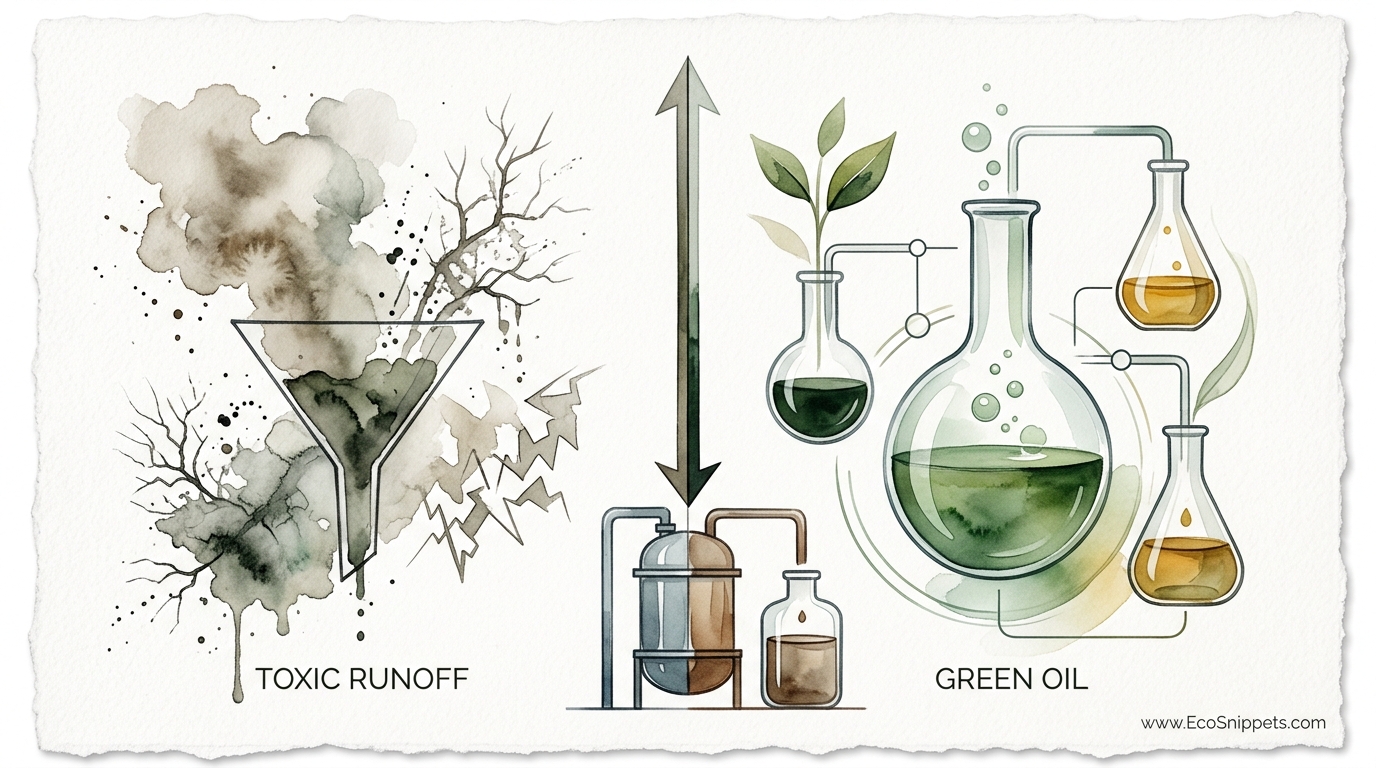
This isn’t just a theoretical concept; it is a practical application of “pioneer grit” meeting microbiology. In real-world homesteading, this means you can produce tractor fuel behind the barn using nothing but sunlight, water, and the very waste your animals produce daily. It turns a “toxic runoff” problem into a “green oil” asset, securing your energy future while protecting your land’s legacy.
How It Works: From Manure to Motion
The journey from a muddy puddle to a purring diesel engine involves four distinct stages: nutrient preparation, cultivation, harvesting, and refining. Each step requires an understanding of both biology and basic chemistry, but the equipment can be built from common farm materials.
1. Nutrient Preparation and Pre-Treatment
Raw manure runoff is often too concentrated for young algae colonies. High levels of ammonia can actually be toxic to certain strains, and solid particles can block the sunlight necessary for photosynthesis. To prepare the “feedstock,” the runoff is typically collected in a settling tank.
Solid waste sinks to the bottom, where it can be recovered for traditional composting. The remaining liquid, often called “manure tea,” is then diluted with water. This creates a nutrient-dense broth that is safe for the algae to consume. Ideally, this broth should be slightly alkaline, with a pH between 7.5 and 8.5, which mimics the natural environments where many oil-producing algae thrive.
2. Cultivation in the Bioreactor
The bioreactor is where the magic happens. There are two primary DIY designs: the open “raceway pond” and the closed “photobioreactor” (PBR).
An open pond is essentially a shallow, oval-shaped tank with a paddle wheel. The wheel keeps the water moving, ensuring that every algae cell gets its fair share of sunlight and preventing the colony from settling and rotting. A closed PBR, on the other hand, uses clear plastic tubes or sheets to keep the algae contained. This prevents contamination from wild “trash” algae and allows for much higher cell densities.
Sunlight is the engine here. Through photosynthesis, the algae use the nitrogen from the manure and CO2 from the air to build complex molecules. As the colony grows, the water turns a deep, dark green—a sign that the lipid production is in full swing.
3. Harvesting and Lipid Extraction
When the algae reach their peak density, they must be removed from the water. This is often the most challenging step for the homesteader because algae cells are microscopic. Simple filtration with a 20-micron mesh can work, but many practitioners use “flocculation”—adding a small amount of a safe coagulant like alum or even certain types of clay to make the algae clump together and sink.
Once the “algae paste” is collected, it must be dried. Spreading it on a black tarp in the sun or using a simple solar dehydrator at 50°C to 60°C (122°F to 140°F) removes the moisture. The dried algae are then crushed. A manual oil press, similar to those used for sunflower seeds, can squeeze out the crude “green oil.” Serious practitioners may use ultrasonic transducers or even food-grade solvents like ethanol to maximize the harvest.
4. Transesterification: The Final Alchemy
The crude algae oil cannot be poured directly into a modern diesel engine because it is too thick (viscous). To fix this, you perform transesterification. You mix the algae oil with an alcohol (usually methanol) and a catalyst (sodium hydroxide or potassium hydroxide, commonly known as lye).
This reaction breaks the large oil molecules into two parts: biodiesel and glycerin. The glycerin sinks to the bottom and can be used to make high-quality farm soap. The clear, amber-colored liquid on top is your high-grade diesel fuel, ready to be washed, filtered, and poured into the tank.
Benefits of the Algae Fuel Loop
Choosing to grow your own fuel offers more than just a lower bill at the pump. It represents a fundamental shift toward true self-reliance and environmental stewardship.
- Unmatched Efficiency: While an acre of soybeans might give you 48 gallons (181 liters) of oil per year, a well-managed algae system can produce between 1,000 and 6,500 gallons (3,785 to 24,605 liters) on that same footprint.
- Waste Remediation: You are taking a pollutant (nitrate-rich runoff) and turning it into a resource. This protects your well water and prevents the “toxic runoff” that kills fish in local streams.
- No Food Competition: Unlike corn ethanol, which uses land that could grow human food, algae grow in tanks on rocky soil, rooftops, or even in the corner of a swamp.
- By-Product Value: After the oil is extracted, the remaining algae “cake” is incredibly high in protein (up to 40%). This can be dried and fed back to your chickens or pigs, completing the farm’s nutrient cycle.
- Carbon Neutrality: The CO2 your tractor emits was recently pulled out of the air by the algae you grew. This makes your homestead energy cycle significantly cleaner than using fossil fuels.
Challenges and Common Mistakes
Though the process is straightforward, nature rarely cooperates without a fight. Beginners often stumble on a few specific hurdles that can ruin a harvest.
Contamination: In open ponds, “wild” algae species often blow in on the wind. These trash species grow faster than oil-rich strains but contain almost no lipids. Keeping your “starter” culture pure and maintaining a high pH can help the good algae outcompete the invaders.
Ammonia Shock: If you pour raw pig or poultry manure directly into a young algae tank, the high ammonia levels will “burn” the cells and turn the tank brown overnight. Always dilute your manure tea until it is a pale straw color before adding it to the bioreactor.
Temperature Swings: Algae are sensitive. If the water gets above 35°C (95°F), the colony may collapse. Conversely, growth slows to a crawl below 15°C (59°F). Using the thermal mass of the ground or a simple greenhouse cover can help regulate these temperatures.
Harvesting Difficulty: Many beginners try to filter algae with coffee filters or fine cloth, only to find the cloth clogs instantly. Using the flocculation method mentioned earlier is almost always necessary for small-scale success.
Limitations of DIY Algae Fuel
It is important to maintain a realistic perspective on what a homestead-scale system can achieve. While the “pioneer-grit” approach works, it has its boundaries.
Environmental constraints are the biggest factor. In high-latitude regions during winter, the lack of sunlight and the freezing temperatures make algae production impossible without expensive indoor lighting and heating. For those in colder climates, algae is a seasonal crop, much like corn or hay.
There is also the matter of labor. While the nutrients are free, the time required to maintain the bioreactor, harvest the paste, and perform the chemical refining is significant. This is not a “set it and forget it” system; it requires the same daily attention as a vegetable garden or a small flock of sheep.
Finally, the initial setup cost for a high-efficiency closed photobioreactor can be steep. While you can build one from recycled water bottles and PVC, scaling up to produce hundreds of gallons of fuel requires an investment in pumps, clear tubing, and storage tanks.
Comparison: Toxic Runoff vs. Green Oil
| Feature | Toxic Runoff (Problem) | Green Oil (Solution) |
|---|---|---|
| Nutrient Content | Wasteful Excess (Pollutant) | Targeted Fertilizer (Feedstock) |
| Environmental Impact | Groundwater contamination, Algal blooms | Water purification, Carbon sequestration |
| Economic Value | Negative (Fines, Soil degradation) | Positive ($4.00+ per gallon fuel savings) |
| Complexity | Low (Let it run) | Moderate (Biological management) |
| Skill Level | None | Advanced Beginner / Intermediate |
Practical Tips for Success
To maximize your yield, follow these best practices honed by those who have been refining this “green gold” for years:
- Select the Right Strain: Start with Chlorella vulgaris. It is incredibly hardy, tolerates a wide range of temperatures, and has a high lipid content. Save more delicate strains like Nannochloropsis for when you have a closed system.
- Use a “Settling Basin”: Never feed runoff directly into the reactor. Use a three-tank system where the first tank settles solids, the second aerates the liquid, and the third feeds the algae. This prevents the “manure smell” from lingering in your fuel.
- Optimize Your Catalyst: If using potassium hydroxide (KOH), ensure it is kept in an airtight container. It absorbs moisture from the air rapidly, which weakens its ability to convert oil into fuel.
- The “Wash” Step: Once your biodiesel is made, “mist wash” it with a fine spray of water. This removes any leftover soap or methanol, ensuring your tractor’s fuel injectors stay clean and clog-free.
- Leverage Free CO2: If you have an anaerobic digester for your manure, the biogas it produces is rich in CO2. Bubbling this gas through your algae tank will double your growth rate.
Advanced Considerations: Scaling the Loop
For the serious practitioner looking to run their entire farm on algae, scaling is about more than just bigger tanks. It’s about thermal and nutrient integration.
Consider the “Winter Loop.” By building your bioreactor inside a lean-to greenhouse against the south side of your barn, you can use the animals’ body heat to keep the algae growing longer into the autumn. Some advanced homesteaders even pipe the warm exhaust from their diesel generators back through the algae tanks, capturing both the heat and the CO2 in one go.
Genetic selection also plays a role at this level. You aren’t “modifying” the algae, but rather selecting the survivors. By keeping a portion of the colony that survives a cold snap or a nutrient spike, you are essentially breeding a “landrace” strain of algae that is specifically adapted to your farm’s unique microclimate and manure chemistry.
Example Scenario: The 10-Acre Fuel Cycle
Imagine a small homestead with five cows and fifty chickens. In a typical year, the spring and autumn rains create significant runoff. By installing a 500-gallon (1,892 liter) raceway pond in a small greenhouse, the owner captures the equivalent of 200 lbs (90 kg) of nitrogen per year.
Using *Chlorella*, this system produces roughly 15 lbs (6.8 kg) of dry biomass per week during the peak growing season. From this biomass, the owner extracts about 0.5 gallons (1.9 liters) of crude oil. After transesterification, this yields 0.45 gallons (1.7 liters) of high-grade biodiesel and a half-pound (0.22 kg) of glycerin soap.
Over a 30-week growing season, that’s nearly 15 gallons (57 liters) of fuel. While that won’t run a commercial trucking fleet, it is more than enough to handle the weekly mowing, rototilling, and light tractor work required to maintain a 10-acre property. The “waste” algae cake provides over 250 lbs (113 kg) of high-protein supplemental feed for the chickens, significantly reducing the farm’s external grain requirements.
Final Thoughts
The transition from viewing manure as a problem to seeing it as a fuel source is the hallmark of the modern pioneer. It requires a willingness to get your hands dirty and a deep respect for the biological processes that govern the earth. By harnessing the rapid growth of algae, you are taking a “toxic” waste product and distilling it into the very energy that powers your independence.
This system isn’t just about the fuel in the tank; it’s about the health of the land. Every gallon of algae diesel you produce is a gallon of petroleum you didn’t have to buy and a pound of nitrogen that didn’t end up in the local river. It is a quiet, powerful way to prove that the messiest parts of farm life are often the most valuable.
As you begin your journey with algae, remember that patience is as important as the pH level. Start small, observe how your local strains react to your specific manure tea, and slowly build your system as your confidence grows. The secret to high-grade diesel has been sitting in your barnyard all along—it’s time to put it to work.
