How To Become More Self-Sufficient Without Starting a Full-Blown Farm…
Want to start preserving your harvest, making your own soap, or building a backyard root cellar — but not sure where to begin? “Homesteading Advice” gives you instant lifetime access to 35+ practical homesteading books on food preservation, veggie gardening, DIY natural cleaning products (save over $250 per year with this skill alone), brewing, off-grid energy, and a whole lot more…
Click Here To Check It Out Now!
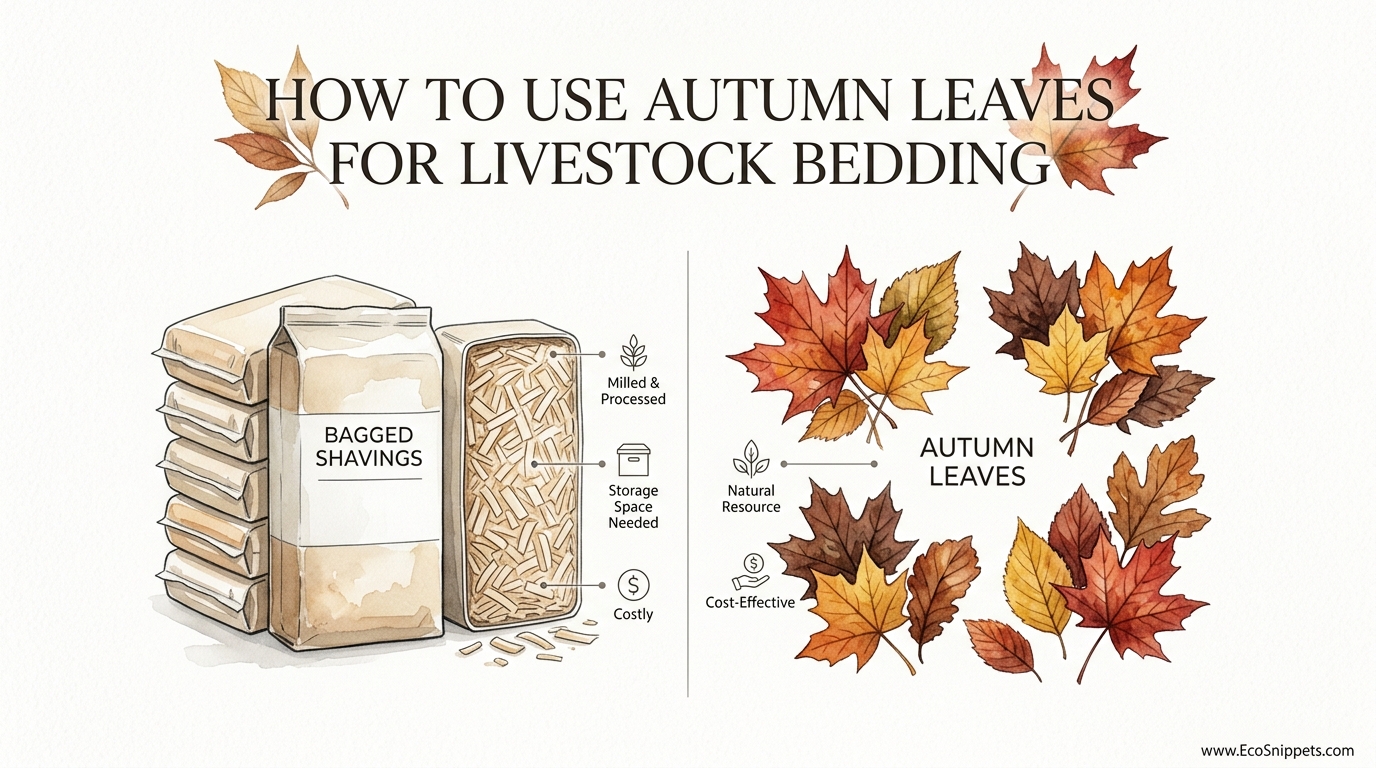
You are spending a fortune on wood chips every year while the trees are dropping a superior resource on your lawn for free. Most homesteaders throw away their best winter resource every October. Discover why dried leaves are more absorbent, carbon-rich, and 100% free.
Managing a homestead requires a keen eye for efficiency and a deep respect for the cycles of nature. For generations, the falling of the leaves was not a chore to be dreaded with a rake and a plastic bag destined for the landfill. It was a harvest. Those crisp, brown layers represent a massive influx of carbon that can transform the health of your soil and the comfort of your animals.
If you have ever winced at the price of bagged pine shavings at the local feed store, you are already looking for a better way. Modern industrial agriculture has taught us to rely on purchased inputs, but the old ways suggest that everything we need to keep a clean, warm barn is already falling from the sky. This guide will walk you through the transition from expensive wood products to the biological gold of autumn leaves.
By understanding the science of decomposition and the practical needs of your flock or herd, you can turn a seasonal nuisance into a closed-loop system. This is not just about saving a few dollars; it is about building a more resilient, self-sufficient homestead that works with the seasons rather than fighting them.
How To Use Autumn Leaves For Livestock Bedding
Using autumn leaves for livestock bedding is the practice of gathering, drying, and utilizing the deciduous debris of trees as a primary or supplemental floor covering in animal shelters. This method serves as a direct alternative to commercial products like bagged shavings, straw, or sand. It is most commonly applied in chicken coops, pig pens, and goat shelters, where it provides a dry, insulating layer that eventually breaks down into high-quality compost.
The core of this practice lies in the high carbon content of the leaves. In the natural world, these leaves form a forest floor that slowly digests organic matter. On the homestead, we are essentially moving that forest floor inside the barn. When mixed with the nitrogen-rich manure of livestock, dried leaves create the perfect environment for beneficial microbes to thrive.
Visualizing this process helps in understanding its value. Imagine a bag of pine shavings as a sterile, static material that simply sits there until it is saturated and must be removed. Now, imagine a thick layer of autumn leaves as a living sponge. It is active, diverse, and constantly working to bind nitrogen and suppress the odors that plague many modern coops. It is a biological tool as much as it is a physical bedding.
In real-world terms, this bedding is used most effectively in “deep litter” systems. Instead of cleaning out the floor every week, you simply add fresh layers of dried leaves on top of the old ones. This creates a thick, insulating “pack” that can reach 30 centimeters to 45 centimeters (12 inches to 18 inches) in depth. This pack generates its own internal heat as it composts, providing a natural underfloor heating system for your animals during the coldest months of winter.
The Harvest and Storage Process
The success of using leaves as bedding depends entirely on the quality of your collection and storage. You cannot simply rake wet, soggy leaves into a coop and expect good results. Moisture is the enemy of healthy bedding, as it invites anaerobic bacteria and mold.
The Golden Rule of Leaf Collection: Harvest only when the leaves are “crinkle-dry.” If the leaves do not shatter or crunch loudly when you walk on them, they are too wet for storage. Ideally, you want to wait for a string of three dry, sunny days before you begin your collection.
Step 1: Collection
There are several ways to gather your resource depending on the scale of your operation. Raking is the traditional method and remains the gentlest on the land, though it is labor-intensive. For larger homesteads, a leaf vacuum or a lawn mower with a bagging attachment is far more efficient. Using a mower has the added benefit of shredding the leaves, which significantly increases their surface area and makes them more absorbent.
Step 2: Drying and Curing
If your leaves have any residual moisture, spread them out on a large tarp in the sun for a few hours. Even leaves that feel dry can harbor dampness in the center of a pile. Curing the leaves ensures that they are stable enough to be packed away for months without turning into a fermented mess.
Step 3: Storage Solutions
Storage is where most people fail. You need enough leaves to last through the following autumn. This means you need a dry, ventilated space. Old feed bags are excellent for storage because they are breathable, but they can be tedious to fill.
A better solution is to build “leaf cribs” using four wooden pallets lashed together with wire. Line the inside with hardware cloth or chicken wire to keep the leaves contained while allowing air to circulate. If you must store them outside, cover the top of the crib with a tarp, but leave the sides open to the air.
The Science of Leaves: C:N Ratios and Absorbency
To truly master this system, you must understand the chemistry of the floor you are standing on. Every organic material has a Carbon-to-Nitrogen (C:N) ratio. For successful composting—which is what a deep litter system is—the ideal ratio is roughly 30:1.
Autumn leaves are incredibly high in carbon, with ratios ranging from 40:1 to 80:1 depending on the tree species. Animal manure, particularly from poultry, is very high in nitrogen. When you combine the two, the leaves “lock up” the nitrogen in the manure, preventing it from escaping as ammonia gas. This is why a properly managed leaf-bedding system smells like a forest floor rather than a dirty barn.
Regarding absorbency, leaves operate differently than wood shavings. A pine shaving is like a tiny sponge that holds water in its cells. A leaf, however, relies more on surface area and layering. Whole leaves can sometimes “mat” together, creating a waterproof barrier that allows moisture to sit on top. Shredded leaves avoid this problem, acting more like a loose mulch that allows moisture to percolate down where microbes can process it.
Benefits of Using Autumn Leaves
The advantages of this system extend far beyond the financial savings, though those savings are substantial for any growing homestead.
- Zero Cost: The most obvious benefit is the price. While a single bale of shavings can cost $6 to $12 (USD) and lasts only a few weeks, a single mature oak tree can provide several bales’ worth of bedding for free.
- Superior Soil Health: Wood shavings take a long time to break down and can actually “rob” nitrogen from your garden soil if they aren’t fully composted. Leaves, however, are designed by nature to break down quickly. By the time you clean out your coop in the spring, you have “black gold”—a nutrient-dense compost ready for the vegetable patch.
- Animal Enrichment: Chickens and pigs are natural foragers. Tossing a fresh bag of leaves into a pen provides hours of entertainment. They will scratch and root through the leaves looking for hidden seeds or the occasional dormant bug, which reduces boredom and aggressive behaviors like feather picking.
- Thermal Insulation: A thick layer of leaves trapped with air pockets provides an R-value that commercial bedding struggles to match. This is critical for keeping livestock off the frozen ground in sub-zero temperatures.
- Healthier Respiratory Systems: Many commercial shavings are dusty or treated with chemicals. Clean, dry leaves are a natural, dust-free alternative that keeps the air in the barn much cleaner for both you and your animals.
Challenges and Common Mistakes
While using leaves is a brilliant strategy, it is not without its pitfalls. Most failures can be traced back to a few common errors.
The “Wet Leaf” Disaster: Putting damp leaves into a coop is the fastest way to invite respiratory disease and “bumblefoot” in poultry. Wet leaves will mat down and mold within days. This mold produces mycotoxins that can be fatal to small animals. If you cannot get the leaves dry, do not use them as bedding.
Compaction Issues: Whole leaves, particularly from Maple or Sycamore trees, are large and flat. If they are not turned regularly, they will pack down into a solid, airless mat. This creates an anaerobic environment where stinky, harmful bacteria thrive. The solution is to either shred the leaves before use or toss a handful of scratch grain into the bedding every morning to encourage your animals to do the turning for you.
Species Misidentification: Not all leaves are created equal. Some common landscape trees are actually toxic to livestock. Using the wrong species can lead to anything from mild irritation to sudden death.
Limitations: When This May Not Be Ideal
It is important to recognize when leaves might not be the best choice for your specific situation. Resilience means knowing the limits of your tools.
For those living in extremely humid or rainy climates where “crinkle-dry” days are a rarity, collecting enough leaves can be nearly impossible. If your storage area is prone to dampness, your leaf supply will rot before it ever reaches the barn.
Furthermore, leaves have a lower total liquid-holding capacity than high-quality peat moss or hemp bedding. If you have a high-density operation where animals are confined to a small space 24/7, leaves may become saturated too quickly. In these cases, leaves are best used as a “brown” supplement to a more absorbent base material.
Comparing Bedding Materials
To help you decide how to integrate leaves into your system, consider this comparison between the two most common homestead bedding options.
| Feature | Bagged Shavings | Autumn Leaves |
|---|---|---|
| Cost | High ($5–$15 per bag) | Zero (Free) |
| Absorbency | Very High | Moderate (Better if shredded) |
| Compost Speed | Slow (12–24 months) | Fast (4–6 months) |
| Insulation | Good | Excellent (High loft) |
| Labor Level | Low (Easy to pour) | High (Requires harvesting) |
Practical Tips and Best Practices
If you are ready to start using leaves this season, follow these best practices to ensure a smooth transition.
- Mix Your Media: You do not have to go “all or nothing.” Many successful homesteaders use a base of pine shavings for their high absorbency and then add 10 centimeters (4 inches) of leaves on top for carbon and enrichment.
- The “Crinkle Test”: Before adding leaves to the coop, grab a handful and squeeze. If they don’t shatter into small pieces, they aren’t dry enough.
- Avoid “Stinky” Trees: Leaves from trees like Ginkgo or certain Eucalyptus species can have strong odors that may irritate animals in enclosed spaces. Stick to Oak, Maple, Ash, and fruit trees.
- Watch for “Hitchhikers”: When you bring in leaves, you are also bringing in the forest. This is usually good (beneficial microbes), but be aware of ticks or large spiders if you live in an area where these are a concern.
- Keep a “Dry Reserve”: Always keep at least 5 bags of leaves more than you think you need. A sudden winter thaw or a leaking waterer can ruin a section of bedding, and you will be grateful for the dry replacements when the ground is covered in snow.
Advanced Considerations: Toxicity and Tannins
Experienced practitioners need to look beyond just “dry leaves” and consider the specific biology of the trees they are harvesting.
Black Walnut (Juglans nigra): This is the most dangerous tree for livestock owners. Black walnut contains juglone, which is toxic to many animals. While the highest concentration is in the roots and hulls, the leaves also contain enough to cause issues, particularly for horses (laminitis) and even some sensitive poultry. Avoid these entirely.
Cherry and Plum (Prunus species): The leaves of these trees contain cyanogenic glycosides. While safe when fresh and green on the tree, they become highly toxic when wilted. Once they are “dead-dry” and brown in the autumn, the toxicity levels drop significantly, but many homesteaders choose to avoid them just to be safe.
Oak (Quercus species): Oak leaves are high in tannins. In a compost pile, tannins are great because they slow down the process slightly, preventing the pile from “burning out” too fast. However, if animals (especially goats or sheep) eat large quantities of oak leaves, they can suffer from tannin poisoning. Usually, animals will not eat dry, brown bedding leaves if they have access to hay, but it is something to monitor.
Scenario: The Chicken Coop Cycle
Let’s look at a practical application of this system for a flock of 12 chickens in a 2.5-meter by 2.5-meter (8-foot by 8-foot) coop.
In October, you harvest 20 large bags of shredded oak and maple leaves. You start the season by laying down 15 centimeters (6 inches) of dry leaves on the coop floor. Every two weeks, you notice the leaves are starting to look a bit flat and “poopy.” You add another 5 centimeters (2 inches) of fresh leaves from your storage.
Every morning, you toss a handful of grain into the leaves. The chickens spend the next two hours scratching, which mixes the manure down and brings the fresh carbon to the top. By January, the “bedding pack” is 30 centimeters (12 inches) deep. You stick your hand into the bottom layer (use a glove!) and feel that it is noticeably warm—this is the microbial activity keeping your hens’ feet warm.
When April arrives, you pitchfork the entire mess out. What was once a pile of dead leaves and waste is now a dark, crumbly, earthy-smelling pre-compost. You pile this in the corner of the garden, and by the time you are ready to plant your pumpkins in May, you have the richest fertilizer on the block, all for the cost of a few hours of raking.
Final Thoughts
The transition to using autumn leaves for livestock bedding is more than a cost-cutting measure; it is a return to a more logical, decentralized way of farming. By viewing the “waste” of your trees as a vital input for your animals, you reduce your dependence on industrial supply chains and improve the health of your land simultaneously.
It requires a bit more foresight and labor during the autumn months, but the rewards are measured in healthier animals, better soil, and a heavier wallet. The next time you see a neighbor bagging up leaves for the curb, offer to take them off their hands. You aren’t just doing them a favor; you are collecting the raw materials for next year’s success.
Embrace the seasonal rhythm. Let the trees do the work of gathering the carbon, and let your livestock do the work of turning it into soil. This is the essence of the self-sufficient life—finding the “gold” that everyone else is throwing away.
