How To Become More Self-Sufficient Without Starting a Full-Blown Farm…
Want to start preserving your harvest, making your own soap, or building a backyard root cellar — but not sure where to begin? “Homesteading Advice” gives you instant lifetime access to 35+ practical homesteading books on food preservation, veggie gardening, DIY natural cleaning products (save over $250 per year with this skill alone), brewing, off-grid energy, and a whole lot more…
Click Here To Check It Out Now!
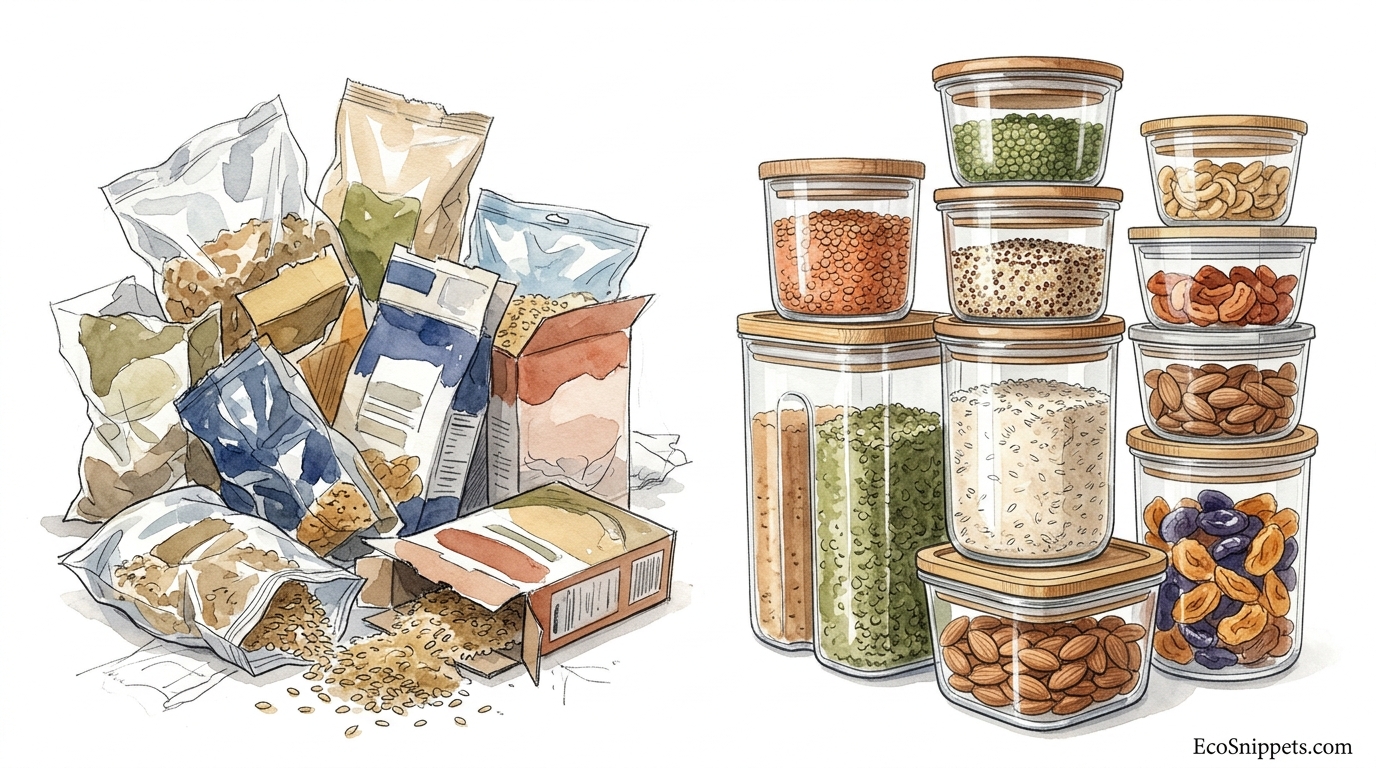
Is your winter survival plan a buffet for rodents, or an impenetrable fortress for your family’s calories? You spent all season growing it, don’t lose it in the storage phase. Paper bags are an invitation to moisture and moths. A shift toward galvanized bins and a FIFO (First-In, First-Out) system doesn’t just look better—it ensures that every gram of grain you store actually makes it to your dinner table.
True self-reliance requires a shift in perspective. We often focus so much on the harvest that the preservation becomes an afterthought. However, the hard-earned yield of a garden or a bulk purchase is only as good as the container that protects it. Understanding how to manage bulk dry goods is the bridge between temporary abundance and long-term security.
Effective storage is about more than just finding a corner in the basement. It involves a strategic combination of environmental control, pest defense, and organization. This guide explores the transition from a disorganized pantry to a professional-grade storage system that honors the labor of the harvest.
Bulk Dry Goods Storage Ideas
Bulk dry goods storage refers to the systematic preservation of large quantities of staple foods like grains, legumes, flour, and sugar. These items are the foundation of a resilient kitchen, providing the bulk of the calories and nutrition needed during lean months or emergencies. Unlike everyday pantry items, bulk goods require specialized containers and methods to maintain freshness over years rather than weeks.
In the real world, this looks like rows of sealed 5-gallon (19-liter) buckets, shimmering Mylar bags, and heavy-duty metal bins. These tools are used by homesteaders, long-term preppers, and even budget-conscious families who buy in volume to hedge against inflation. The goal is to create a “bank” of food that is protected from the four main enemies of storage: oxygen, light, moisture, and pests.
Think of your bulk storage as a biological battery. You are “charging” it when food is plentiful and “discharging” it when you need it. If your containers have “leaks”—such as holes from mice or spoilage from humidity—you are losing the energy you worked so hard to store. Proper ideas for storage range from traditional root cellar techniques to modern vacuum-sealing technology.
The choice of container often depends on the specific food item. For instance, wheat berries are incredibly hardy and can last decades if stored in an oxygen-free environment. On the other hand, brown rice contains natural oils that can go rancid, requiring more frequent rotation. Navigating these nuances is what separates a successful storage plan from a wasted effort.
How to Implement a Secure Storage System
Building a bulk storage system starts with selecting the right vessel. The gold standard for many practitioners is the food-grade plastic bucket paired with a Mylar bag. This “belt and suspenders” approach provides a physical barrier against rodents while the Mylar provides a chemical barrier against oxygen and light. To begin, ensure your buckets are made of High-Density Polyethylene (HDPE), usually marked with a “2” recycling symbol.
The sealing process is the most critical step. Once the food is placed inside a Mylar bag, you must add an oxygen absorber (OA). These small packets contain iron powder that chemically reacts with any remaining oxygen in the bag, effectively creating a vacuum-like environment. After dropping in the OA, the bag is heat-sealed using a specialized sealer or a common household iron. This process stops the clock on spoilage and kills any insect larvae that might have been present in the grain.
Organization is the second pillar of a functional system. Implementing a First-In, First-Out (FIFO) system is non-negotiable. This means the oldest stock is always at the front or the top, ready to be used first. Labeling each container with the contents, the date it was sealed, and the “best by” date ensures you never have to play a guessing game with your family’s food security.
Physical placement also matters. Containers should be stored off the floor, preferably on metal shelving or wooden pallets. This prevents moisture from wicking up through concrete floors and allows for airflow around the containers. Keeping the storage area cool (ideally below 60°F or 15°C) and dark will significantly extend the shelf life of almost every dry good in your inventory.
Advantages of Professional-Grade Bulk Storage
Investing in high-quality storage systems offers a measurable return on investment. First and foremost is the drastic reduction in waste. When food is stored in original paper or thin plastic packaging, it is vulnerable to “pantry pests” like weevils and moths. Moving to sealed, rigid containers eliminates this risk, ensuring that the 50 pounds (22.6 kg) of flour you bought remains 50 pounds of usable food.
Financial security is another major benefit. Buying in bulk is significantly cheaper per unit than buying small packages. By having the infrastructure to store 500 pounds (226 kg) of rice or beans, you can take advantage of wholesale prices and seasonal sales. In times of economic volatility or supply chain disruptions, your “pantry bank” acts as a buffer against rising prices at the grocery store.
Peace of mind cannot be overlooked. There is a profound psychological shift that occurs when you know you have six months to a year of food tucked away. It reduces anxiety about the future and provides a sense of autonomy. You are no longer entirely dependent on the “just-in-time” delivery systems that modern society relies upon.
Finally, these systems improve the quality of the food. Oxygen and light degrade vitamins and minerals over time. By excluding these elements, you preserve the nutritional density of your grains. A home-baked loaf of bread made from properly stored wheat berries will taste better and be more nutritious than one made from stale, oxidized flour that has been sitting in an open bag for months.
Common Mistakes and Pitfalls
One of the most frequent errors is using non-food-grade containers. Not all plastic is created equal. Some industrial buckets contain chemicals or dyes that can “off-gas” or leach into your food. Always look for the food-grade certification to ensure your staples remain uncontaminated. Similarly, avoid using “found” containers that once held chemicals or detergents, as residues can be impossible to fully remove.
Mismanaging oxygen absorbers is another common pitfall. OAs start working the moment they are exposed to air. If you leave a bag of 50 absorbers open while you slowly seal 50 buckets, the last ones will be exhausted before they even enter the container. Work in small batches and keep unused absorbers in a vacuum-sealed jar to maintain their potency.
Temperature fluctuations are a silent killer of food quality. Many people store their bulk goods in uninsulated garages or attics. The extreme heat of summer accelerates the breakdown of fats and vitamins, while winter cold can cause condensation inside containers if they aren’t sealed perfectly. Stability is more important than absolute cold; a consistent 65°F (18°C) is better than a room that swings between 40°F and 90°F (4°C and 32°C).
Failure to inspect the inventory regularly can lead to disaster. Even the best system can fail. A mouse might chew through a plastic lid, or a seal might break. If you don’t check your storage area at least once a month, a small problem can turn into a total loss. Look for signs of “frass” (insect waste), rodent droppings, or bulging lids that might indicate gas production from spoilage.
Limitations of Bulk Dry Goods Storage
While bulk storage is a powerful tool, it has its limits. Space is the most obvious constraint. Storing a year’s supply of food for a family of four can take up a significant amount of square footage. For those living in small apartments or urban environments, the “galvanized bin” dream may need to be scaled down to smaller, under-bed containers or decorative jars that double as furniture.
Weight is another factor often forgotten. A 5-gallon bucket of wheat weighs about 37 pounds (16.8 kg). If you have 20 of them, you are looking at nearly 750 pounds (340 kg) concentrated in one area. If you live in an older home with questionable floor joists, or if you are planning to store food in an upstairs spare room, you must consider the structural capacity of your house.
Bulk storage is also not a “set it and forget it” solution for all food types. High-fat items like brown rice, nuts, and whole-wheat flour have a much shorter shelf life (usually 6 months to a year) compared to white rice or whole wheat berries. You cannot store these items for a decade and expect them to be edible. Understanding the biological limits of each food type is essential to avoid wasting money.
Finally, the initial cost of the storage infrastructure—buckets, Mylar bags, absorbers, and shelving—can be high. While it pays for itself in the long run, the upfront investment can be a barrier. It is often better to start small, mastering the storage of one or two staples, rather than trying to build a massive system all at once and cutting corners on quality to save money.
Comparing Storage Methods
When deciding how to house your calories, it helps to compare the most common methods across key factors. Below is a comparison of PANTRY CHAOS (leaving items in original packaging) versus PROTECTED ORDER (using sealed, rigid containers).
| Feature | Pantry Chaos (Original Paper Bags) | Protected Order (Mylar + Buckets) |
|---|---|---|
| Rodent Resistance | Zero (Mice chew through easily) | High (Rigid plastic/metal) |
| Shelf Life (Grains) | 6–12 Months | 20–30 Years |
| Moisture Protection | Poor (Paper absorbs humidity) | Excellent (Hermetic seal) |
| Cost (Initial) | $0 (Already included) | Moderate ($10–$20 per bucket) |
| Maintenance | High (Frequent cleanup) | Low (Periodic inspection only) |
The table clearly shows that while the “Protected Order” approach requires an initial investment, the long-term benefits in terms of shelf life and pest protection are overwhelming. For anyone serious about self-reliance, the transition to sealed containers is an essential evolution.
Practical Tips and Best Practices
To maximize the efficiency of your bulk storage, consider the “Russian Doll” method for galvanized bins. Galvanized metal is excellent for keeping rodents out, but it is not food-grade and can impart a metallic taste. Store your food in Mylar bags or plastic buckets first, then place those containers inside the galvanized bins. This gives you the ultimate protection against physical damage and chemical degradation.
Labeling should be done on the side of the container, not just the lid. Lids can be swapped or misplaced during a busy cooking session. Use a permanent marker to write the date of purchase, the date of sealing, and the weight. This makes inventory management much faster when you are doing your quarterly checks. If you have multiple bins of the same item, numbering them (e.g., “Rice 1 of 4”) helps track your consumption rates.
Don’t forget the tools required to use the food. If you are storing 500 pounds of wheat berries, you must have a high-quality grain mill to turn them into flour. Storing bulk dry goods is useless if you lack the means to process them into edible meals. Keep a “pantry kit” nearby that includes a manual mill, measuring scoops, and a reliable kitchen scale that can handle large weights.
Maintain a digital or physical “Pantry Log.” Every time you open a bucket or add a new one, update the log. This prevents the “mystery bucket” syndrome where you have no idea how much food you actually have left. A simple spreadsheet can track your calories and help you identify which items you are using faster than others, allowing you to adjust your future purchases accordingly.
Advanced Considerations for Long-Term Success
For those looking to take their storage to the next level, environmental engineering is the key. Serious practitioners often install dehumidifiers in their storage rooms to maintain a constant relative humidity below 15%. Excessive humidity can cause metal lids to rust and can slowly permeate even the best plastic seals over a decade. A stable, dry environment is the secret to reaching that 30-year shelf life mark.
Consider the role of diatomaceous earth (DE). This food-grade powder is made from fossilized algae and acts as a natural insecticide. Mixing a small amount of DE into your grains (especially corn or beans) can provide an extra layer of protection against weevils. It is completely safe for human consumption and can be easily rinsed off or milled right along with the grain. It provides mechanical protection that doesn’t rely on chemical seals alone.
Scaling for a group or community requires a different approach. Instead of individual 5-gallon buckets, you might look into intermediate bulk containers (IBC totes) or 55-gallon (208-liter) food-grade drums. These require heavy equipment to move once full, so they must be placed in their permanent location before being filled. If you are coordinating a neighborhood food coop, these larger vessels offer the best economy of scale.
Think about “thermal mass.” If you have a dedicated room for food storage, filling it to capacity actually helps stabilize the temperature. The food itself acts as a battery for cold. Once the temperature of 2,000 pounds (907 kg) of grain is lowered, it will resist sudden spikes in outside temperature much better than an empty room would. Designing your storage space with high thermal mass and proper insulation is an advanced strategy for passive climate control.
Example Scenario: Storing 100 Pounds of Rice
Let’s walk through the process of storing 100 pounds (45.3 kg) of white rice for a 20-year shelf life. You will need four 5-gallon food-grade buckets, four large Mylar bags (20×30 inches), and four 2,000cc oxygen absorbers. First, clean and dry the buckets thoroughly. Even a single drop of water can cause mold inside a sealed bag.
Place a Mylar bag inside each bucket and fold the edges over the rim. Pour 25 pounds (11.3 kg) of rice into each bag. This will leave a few inches of headspace. Drop one 2,000cc oxygen absorber on top of the rice in each bag. Immediately move to the sealing phase. Using a flat iron on its highest setting, press the top edges of the Mylar bag together against a flat board, leaving a small 2-inch gap at the end.
Squeeze as much air out of the bag as possible through that small gap, then quickly seal the remaining 2 inches. As the oxygen absorber works over the next 24 hours, the bag will take on a “vacuum-packed” appearance, pulling tight against the rice. Finally, snap the lids onto the buckets and label them. You have now successfully preserved 100 pounds of staple calories that will remain fresh well into the next decade.
In this scenario, the cost of the rice might be $50, while the storage supplies cost an additional $40. While doubling the price may seem steep, you are paying for the guarantee that those $50 worth of calories will be there when you actually need them, rather than becoming a nest for pantry moths within six months.
Final Thoughts
Transitioning to a professional bulk storage system is a rite of passage for anyone seeking true self-reliance. It moves you away from the fragile “just-in-time” mindset and toward the resilient wisdom of our ancestors, who understood that a full granary was the only real insurance policy. By using the right tools—like Mylar bags, oxygen absorbers, and galvanized bins—you ensure that your hard-earned harvest is never wasted.
Remember that food storage is a journey, not a destination. Start with the staples your family already eats and master the techniques of sealing and rotation. Over time, you can expand your “pantry bank” to include a wider variety of grains, legumes, and even freeze-dried goods. The goal is to create a system that is so well-organized and protected that it becomes a seamless part of your lifestyle.
Do not be intimidated by the scale of the task. Every bucket you seal and every bin you organize is a step toward greater security. Apply these principles, stay disciplined with your FIFO rotation, and take pride in knowing that your family’s calories are stored in an impenetrable fortress, ready for whatever the future may hold.
