How To Become More Self-Sufficient Without Starting a Full-Blown Farm…
Want to start preserving your harvest, making your own soap, or building a backyard root cellar — but not sure where to begin? “Homesteading Advice” gives you instant lifetime access to 35+ practical homesteading books on food preservation, veggie gardening, DIY natural cleaning products (save over $250 per year with this skill alone), brewing, off-grid energy, and a whole lot more…
Click Here To Check It Out Now!
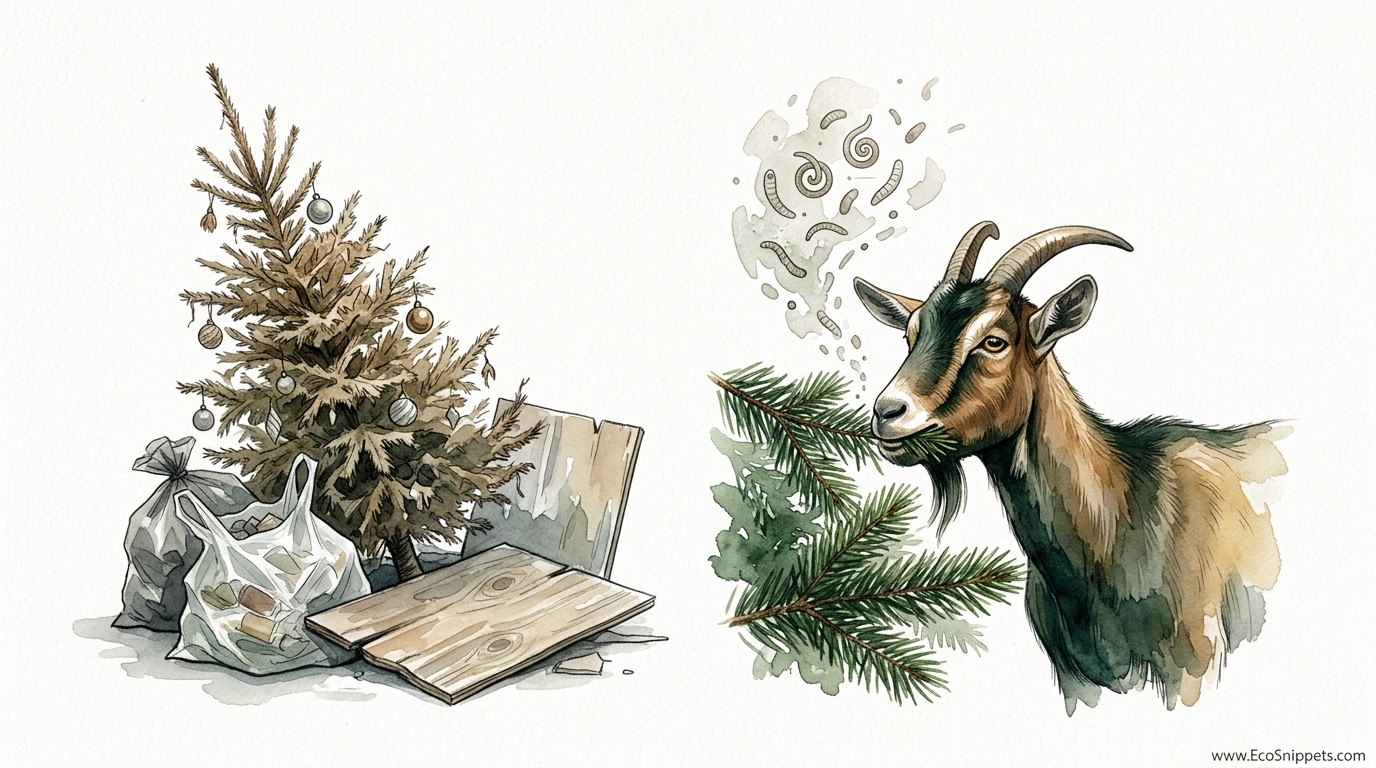
That $80 tree you are tossing on the curb is actually a high-potency winter medicine your herd is starving for. Stop paying for city waste pickup and start feeding your animals. This ‘post-holiday trash’ is loaded with Vitamin C and natural tannins that act as a powerful dewormer for goats and sheep during the lean winter months.
Winter on the homestead often feels like a long battle against the elements. As the lush green pastures of summer fade into a memory of frozen ground and grey skies, our livestock are forced to rely almost entirely on dry hay and stored grains. While quality hay provides the necessary bulk, it often lacks the vibrant, living nutrients that keep a ruminant’s immune system at its peak.
You might see your goats or sheep staring longingly at the evergreen treeline during a December snowstorm. They are following an ancient instinct, seeking out the deep-rooted minerals and resins found in conifers. These trees are not just scenery; they are a concentrated source of winter vitality that has been used by mountain cultures for generations to keep herds healthy when nothing else grows.
Transforming your old holiday centerpiece into medicinal fodder is a masterclass in self-reliance. It turns a potential waste product into a valuable resource, reducing your feed costs while simultaneously addressing the biggest threat to small ruminant health: internal parasites. This guide will show you how to safely bridge the gap between holiday tradition and ancestral animal husbandry.
Feeding Christmas Trees To Goats: Natural Dewormer Secret
The practice of feeding conifers to livestock is far more than a simple recycling trick. It is a biological intervention that utilizes the secondary metabolites of the tree to disrupt the life cycle of common parasites like the barber pole worm (Haemonchus contortus). The secret lies in a specific group of compounds known as condensed tannins.
Condensed tannins are naturally occurring polyphenols found in the bark and needles of many evergreen species. Unlike the simple tannins found in tea, these complex molecules have a unique ability to bind with proteins. When a goat or sheep consumes these needles, the tannins go to work in the rumen and the abomasum, creating a hostile environment for nematodes.
Research has demonstrated that feeding pine bark and needles can significantly reduce fecal egg counts in small ruminants. Some studies have shown a reduction in worm burdens by as much as 30% to 74% depending on the concentration and frequency of feeding. These tannins work by directly inhibiting the hatching of eggs and the development of larvae, effectively breaking the cycle of reinfection that plagues winter housing.
Beyond the direct impact on worms, these trees provide a nutritional “boost” that helps the animal fight off infection from within. Conifer needles are famously rich in Vitamin C—often containing five times the concentration found in citrus fruits. They also provide significant amounts of Vitamin A, antioxidants, and trace minerals like phosphorus and calcium that are frequently deficient in winter hay.
How to Feed Christmas Trees to Your Herd Safely
Success starts with rigorous inspection. You must ensure the tree is a “clean” specimen before it ever enters the paddock. This means more than just removing the ornaments; it requires a deep look at the tree’s history and its botanical identity. Most commercial trees are safe, but a few specific varieties and treatments can be deadly.
First, verify the species. Common Christmas trees like Fraser Fir, Balsam Fir, Douglas Fir, White Pine, Scotch Pine, and Blue Spruce are excellent choices. However, you must be able to distinguish these from the Yew (Taxus genus), which is highly toxic and can cause sudden heart failure in goats and sheep even in small amounts. Always use a reliable botanical guide if you are sourcing trees from the wild or from neighbors.
Second, check for chemical residues. Many large-box retail trees are sprayed with flame retardants, colorants (to make them look greener), or systemic pesticides like glyphosate and bifenthrin. These chemicals can linger in the sap and needles, potentially causing neurological issues or digestive distress. Ideally, you should only feed trees that you cut yourself at a local farm or those confirmed to be unsprayed.
Introduce the fodder gradually to prevent rumen shock. A goat’s digestive system is a finely tuned fermentation vat; sudden changes can lead to bloat or acidosis. Start by offering a few branches or one small tree for every five to ten animals. Observe their behavior and ensure they are still eating their primary hay and drinking plenty of water.
The actual feeding process is simple. You can secure the tree upright to a fence post to mimic a standing tree, which encourages natural browsing behavior, or lay it flat on the ground. Goats will typically start with the tender tips and needles before moving on to the bark. Once the tree is stripped bare, it becomes a “skeleton” that can be moved out for secondary uses like biochar or brush piles for wildlife.
Benefits of Conifer Fodder in Winter
The primary benefit is the medicinal deworming effect, but the advantages extend into every corner of homestead management. During the winter, livestock can become lethargic and bored. Boredom in goats often leads to destructive behavior—chewing on fences, fighting with herd mates, or attempting to escape. Providing a fresh evergreen tree acts as high-level environmental enrichment.
Nutritionally, the infusion of Vitamin C is a game-changer for the immune system. Cold stress can predispose animals to respiratory issues like pneumonia. The high levels of antioxidants and ascorbic acid found in pine and fir needles help the body maintain its mucosal barriers and fight off viral challenges. This is especially critical for young stock or older animals whose immune reserves may be lower.
Cost savings are another measurable advantage. Every pound of tree bark and needles consumed is a pound of hay you don’t have to buy or pull from your barn. While a single tree won’t replace a bale of hay, a steady supply of trees from neighbors and friends can significantly stretch your winter forage reserves. It is one of the few times when “trash” can actually lower your overhead costs.
- Parasite Control: Condensed tannins reduce fecal egg counts and inhibit larval growth.
- Immune Support: High Vitamin C and A content helps prevent winter illnesses.
- Enrichment: Browsing on needles and bark provides mental stimulation for bored animals.
- Resource Efficiency: Keeps carbon on the farm and reduces waste disposal fees.
Challenges and Common Mistakes to Avoid
The most common mistake is failing to remove every single piece of tinsel or ornament hook. A goat’s tongue is highly dexterous, but they can easily swallow small bits of wire or plastic. This can lead to “Hardware Disease,” where metal punctures the reticulum, or intestinal blockages that are often fatal. You must be meticulous in your cleaning process.
Over-feeding is another pitfall. While conifers are medicinal, they are also high in resin and acidic compounds. If a goat eats nothing but pine needles for three days, it will likely suffer from rumen upset. These trees should always be treated as a supplement or a “treat,” never as the sole source of nutrition. Aim for no more than 10% to 15% of their daily intake coming from evergreen fodder.
Ignoring the “brown needle” rule can lead to wasted effort. Fresh, green needles contain the highest concentration of vitamins and tannins. Once a tree has sat in a heated living room for three weeks and the needles have turned brittle and brown, much of the medicinal value has evaporated. If the needles fall off at a touch, the tree is better suited for the compost pile than the feed trough.
Limitations and Environmental Constraints
There are specific situations where feeding Christmas trees is not ideal. If your herd is in the very late stages of pregnancy, caution is required. While Ponderosa Pine is the primary culprit for causing abortions in cattle, some practitioners recommend limiting large intakes of any pine for heavily pregnant goats and sheep as a “safety-first” measure. The resins and acids can be taxing on an animal whose internal organs are already compressed by multiple kids or lambs.
Location also matters. If you live in an area where Yew trees are common ornamentals, you must be 100% certain of the tree’s origin. Many people mistake the flat needles of a Yew for a Hemlock or a Fir. Because Yew is so incredibly toxic—containing taxine alkaloids that stop the heart—the risk of a “neighbor’s gift” being the wrong species is the highest hurdle for urban or suburban homesteaders.
In terms of scale, this method is most effective for small to mid-sized herds. If you have 200 head of sheep, you would need a constant convoy of Christmas trees to make a statistical dent in their parasite load. For the family farm with five to twenty animals, however, the “Christmas tree cycle” is a perfectly scaled solution for winter health.
Comparison: Pine vs. Fir vs. Spruce
Not all evergreens are created equal. Depending on the species available in your region, the nutritional and medicinal profile will vary slightly. Below is a breakdown of the most common trees used for winter fodder.
| Tree Type | Palatability | Key Benefits | Best For |
|---|---|---|---|
| White / Scotch Pine | High | High Vitamin C, high tannin content in bark. | Goats (they love stripping the bark). |
| Fraser / Balsam Fir | Moderate | Very soft needles, gentle on the mouth. | Sheep and younger kids. |
| Blue / White Spruce | Low to Moderate | Very prickly; high resin content. | Boredom busting (takes longer to eat). |
| Cedar (Red/White) | High | Powerful antimicrobial properties. | Digestive upsets and coughs. |
Practical Tips for Managing Your Tree Bounty
If you are collecting trees from your community, set up a designated “drop zone” away from your animals. This allows you to inspect each tree individually before it enters the paddock. Check for spray-on “snow” (flocking) which is often made of toxic materials, and look for “stay-fresh” additives in the sap at the base of the trunk.
Storage is another consideration. If you receive twenty trees in one day, don’t dump them all in the field. Stack them in a cold, shaded area or even under a tarp. The cold winter air will act as a natural refrigerator, keeping the needles fresh and the sap stable for weeks. This allows you to “meter out” the medicine throughout the months of January and February.
Once the needles are gone, don’t throw the wood away. The remaining branches are excellent for creating “dead hedges” that provide habitat for beneficial birds and insects. Alternatively, the trunks can be chipped for high-carbon garden mulch or saved for the summer smoker. Pine wood burns hot and fast, making the smaller branches perfect kindling for your woodstove.
Advanced Considerations: Fermentation and Bio-char
Serious practitioners may want to go beyond direct feeding. If you have a surplus of pine needles, they can be harvested and dried to be used as a “tea” for animals showing signs of respiratory distress later in the season. Some homesteaders even ferment the needles in a molasses-based brine to create a probiotic-rich winter supplement, though this requires careful monitoring of pH levels to prevent spoilage.
The carbon cycle on your farm is also improved through the use of these trees. If you have the equipment, turning the stripped trunks into bio-char—charcoal created in a low-oxygen environment—creates a powerful soil amendment. This bio-char can be “charged” with goat manure and urine, then added to your garden beds in the spring. This transforms the $80 Christmas tree into a multi-year investment in soil fertility.
Consider the timing of your deworming strategy. While the tannins provide a natural suppressive effect, they are most effective when used as part of an Integrated Parasite Management (IPM) plan. Use the Christmas trees in January, then follow up with fecal egg counts in the early spring to determine if further clinical intervention is needed as the weather warms.
Example Scenario: The Post-Holiday Harvest
Imagine a small homestead in the Pacific Northwest with six Nigerian Dwarf goats. In late December, the owner collects four unsprayed Douglas Firs from a local “u-cut” farm that were leftovers. Instead of letting them rot, the owner introduces one tree every five days.
The goats spend hours each day stripping the needles, which provides them with approximately 120 mg of Vitamin C per kg of body weight—far exceeding their baseline requirements. By the end of January, the herd shows glossy coats and high energy levels despite the sub-zero temperatures. A fecal test in February reveals a low parasite burden, allowing the homesteader to skip the chemical dewormer for the first time in years.
The total cost for this medicinal intervention was zero dollars and a few gallons of fuel. The remaining wood is chipped and used to line the muddy path to the barn, preventing foot rot in the goats during the spring thaw. This is the definition of a closed-loop system where every “waste” product serves multiple purposes.
Final Thoughts
Feeding Christmas trees to your goats and sheep is a bridge to a more resilient way of farming. It honors the animal’s natural biology and rewards the homesteader’s observant eye. By recognizing that nature provides its own pharmacy even in the dead of winter, you move one step closer to true self-reliance.
Remember that the key to success is observation. Watch how your animals interact with the fodder, learn to identify the trees in your landscape, and always prioritize the purity of what you feed. What was once a symbol of the holidays in your living room can become a symbol of health and vitality in your barnyard.
Start small this year. Collect a few known-safe trees, inspect them with the care of a craftsman, and watch your herd thrive. You may find that the best medicine for your animals isn’t found in a bottle on a shelf, but standing right there on the curb, waiting to be rediscovered.
