How To Become More Self-Sufficient Without Starting a Full-Blown Farm…
Want to start preserving your harvest, making your own soap, or building a backyard root cellar — but not sure where to begin? “Homesteading Advice” gives you instant lifetime access to 35+ practical homesteading books on food preservation, veggie gardening, DIY natural cleaning products (save over $250 per year with this skill alone), brewing, off-grid energy, and a whole lot more…
Click Here To Check It Out Now!
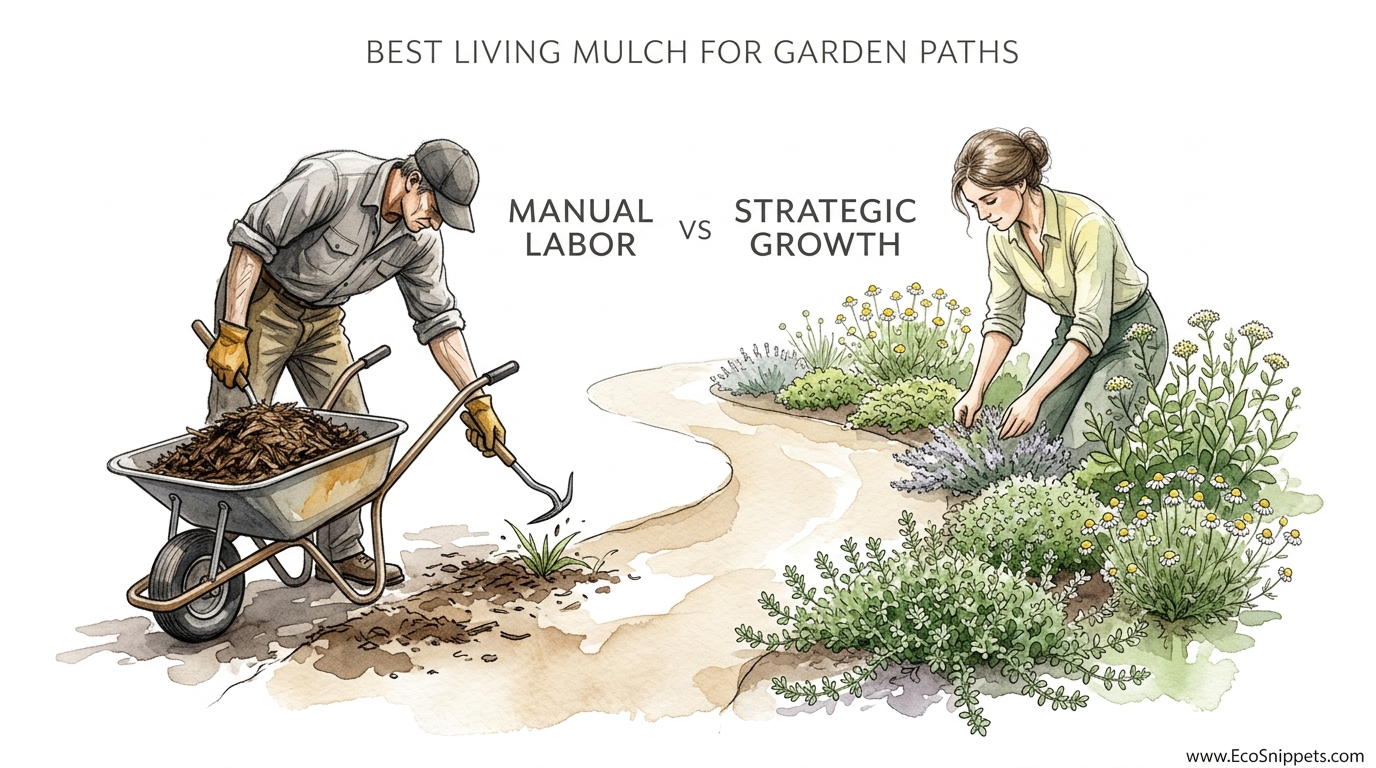
Are you spending your weekends fighting nature, or have you learned to delegate the work to a ‘living’ carpet? Bare soil is an open invitation for weeds to move in. You can spend 40 hours a year pulling them, or 30 minutes seeding a living mulch. One breaks your back; the other builds your soil and feeds your pollinators while you watch from your porch.
Managing a homestead or a kitchen garden requires a balance of effort and outcome. Traditional paths made of wood chips or gravel require constant replenishment and often become a nursery for the very weeds you want to avoid. A living mulch transforms these necessary walkways from high-maintenance chores into active contributors to your garden’s health.
When you choose to grow your paths instead of just paving them, you are employing a strategy of growth over one of suppression. This transition shifts the focus from manual labor to biological efficiency. It is the difference between fighting the earth and partnering with it to create a resilient, self-sustaining ecosystem.
Best Living Mulch For Garden Paths
A living mulch for garden paths is a low-growing, durable ground cover designed to protect the soil while withstanding regular foot traffic. Unlike traditional mulch, which consists of dead organic matter like bark or straw, a living mulch is a community of plants that covers the earth like a functional rug. These plants are selected for their ability to spread horizontally, stay low to the ground, and offer specific ecological services such as nitrogen fixation or nectar production.
In real-world applications, these “green paths” serve as the arteries of the garden. They provide a stable, mud-free surface for wheelbarrows and heavy boots, even during the rainiest months. Think of it as a biological armor for your soil. Just as a forest floor is rarely bare, your garden paths should be covered to prevent erosion and the loss of precious topsoil.
Common examples of living mulch for paths include Dutch White Clover (*Trifolium repens*), which is prized for its resilience and ability to improve soil fertility. Creeping Thyme (*Thymus serpyllum*) is another favorite, often chosen for its fragrant leaves and drought tolerance. For those in warmer climates, newer sterile cultivars like Kurapia provide a thick, green carpet that requires significantly less water than traditional turf grass.
How to Establish a Living Mulch Path
Establishing a successful green walkway requires more than just tossing seeds onto the ground. It involves preparing a clear slate so your chosen species can dominate before weeds have a chance to compete.
Site Preparation
Success begins with the removal of existing vegetation. You can use several methods, but sheet mulching or solarization are often the most effective for long-term weed control. If you are starting in a grassy area, mow the grass as low as possible—down to about 2.5 centimeters (1 inch). Cover the area with heavy cardboard or several layers of wet newspaper to smother the remaining growth.
If you have more time, solarization is an excellent tool for clearing a path. Lay clear or black plastic over the soil during the hottest months. This process uses the sun’s heat to kill weed seeds and pathogens in the top few centimeters (inches) of soil. Once the ground is clear, you have a clean seedbed ready for your living mulch.
Seeding and Planting
For species like clover, broadcasting seed is the most efficient method. Aim for a rate of approximately 60 to 120 grams per 93 square meters (2 to 4 ounces per 1,000 square feet). Mixing the seed with a carrier like sand or fine compost ensures even distribution. After sowing, lightly rake the surface to ensure good seed-to-soil contact and tamp it down with your boots or a lawn roller.
Species like Creeping Thyme or Kurapia are often better established using plugs. Space these small plants about 15 to 30 centimeters (6 to 12 inches) apart in a staggered grid. This allows them to knit together quickly, forming a solid mat within a single growing season.
Initial Maintenance
The first six to eight weeks are critical. Keep the soil consistently moist until the seeds germinate or the plugs show active new growth. Once the plants are established, you can gradually reduce watering. For clovers, a light mowing once they reach 10 to 15 centimeters (4 to 6 inches) will encourage them to spread horizontally rather than vertically.
Benefits of Living Mulch Paths
Choosing a living mulch over stone or wood chips provides measurable advantages that go beyond simple aesthetics.
Natural Nitrogen Fixation
Clovers are legumes, meaning they have a symbiotic relationship with bacteria in their root nodules that allows them to pull nitrogen from the air and store it in the soil. As the clover roots die back or are trimmed, this nitrogen becomes available to the vegetable beds or fruit trees adjacent to the path. This creates a self-fertilizing system that reduces the need for external inputs.
Pollinator Support and Biodiversity
Paths planted with flowering species like thyme or white clover provide a vital food source for bees and butterflies. This increased pollinator activity directly benefits your garden’s productivity, leading to better fruit set in your crops. Furthermore, the dense foliage of a living mulch provides habitat for beneficial predatory insects like ground beetles, which help manage pest populations naturally.
Soil Temperature and Moisture Regulation
Bare soil or gravel paths can become incredibly hot in the summer, radiating heat into your garden beds. A living mulch acts as a cooling blanket, keeping the soil temperature lower and reducing evaporation. This helps the entire garden retain moisture more effectively, which is particularly beneficial during heat waves or periods of drought.
Challenges and Common Mistakes
While living mulch paths are lower maintenance than bare soil, they are not entirely “set and forget.” Understanding the common pitfalls can save you significant frustration.
Inadequate Weed Control During Establishment
The biggest mistake is failing to clear the path thoroughly before planting. If perennial weeds like dandelions or aggressive grasses are left in the soil, they will quickly outcompete your living mulch. It is far easier to spend two weeks clearing the ground than two years trying to pull grass out of a clover patch.
Ignoring Species Requirements
Not every plant is suited for every path. Planting a shade-loving species like Irish Moss in a full-sun, high-traffic area will lead to patchy growth and eventually bare soil. Conversely, putting sun-loving Creeping Thyme in a deep-shade corridor will result in leggy, weak plants that cannot handle foot traffic.
Over-fertilization
Many living mulches, especially clovers, thrive in poor to average soil. Excessive nitrogen fertilizer can actually hinder clover because it encourages aggressive grasses to move in and take over. Rely on the plants’ natural ability to build soil rather than trying to force growth with chemicals.
Limitations and Environmental Constraints
A living mulch path is a biological system, and like all systems, it has boundaries where it may not be the ideal choice.
Traffic Intensity
While Dutch White Clover and Kurapia can handle moderate foot traffic and the occasional wheelbarrow, they are not indestructible. If a path is used dozens of times a day by heavy equipment or large livestock, even the toughest living mulch will wear down. In these high-intensity areas, a hybrid approach using stepping stones or permeable pavers set into the living mulch is often necessary.
Climate and Seasonal Dormancy
In regions with severe winters, many living mulches will go dormant or die back to the ground. This can leave paths looking brown and potentially muddy during the early spring thaw. For example, Kurapia is frost-sensitive and may lose its green color in temperatures below freezing. Homeowners in these areas should plan for a “shoulder season” appearance that may not be as lush as the summer months.
Comparing Path Materials: Living Mulch vs. Wood Chips
When deciding between a biological path and a physical one, consider the long-term trade-offs in labor and soil health.
| Factor | Living Mulch (e.g., Clover) | Wood Chips / Bark |
|---|---|---|
| Initial Cost | Low (Seed) to Moderate (Plugs) | Low to High (depending on source) |
| Maintenance | Occasional mowing/edging | Annual replenishment needed |
| Soil Health | Actively improves fertility/life | Slowly adds organic matter |
| Pollinator Value | High (provides nectar/pollen) | Minimal |
| Longevity | Permanent (self-seeding) | Temporary (decomposes) |
Practical Tips and Best Practices
Maximizing the effectiveness of your living paths involves a few strategic adjustments to your routine.
- Use Inoculated Seed: When planting clover, ensure the seeds are coated with the correct *Rhizobium* bacteria. This ensures the plant can immediately begin fixing nitrogen.
- Integrate Stepping Stones: In areas where you stand frequently—such as in front of a potting bench or a main garden gate—place flat stones. This protects the crown of the plants from constant compression.
- Mow at the Right Height: To keep a clover path tidy and minimize “bee encounters” for barefoot children, mow to a height of about 5 to 7 centimeters (2 to 3 inches). This removes most flowers while keeping the foliage lush.
- Edge Your Paths: Use a spade or a mechanical edger to keep the living mulch from creeping into your vegetable beds. This defines the path and prevents competition with your main crops.
Advanced Considerations for Serious Practitioners
For the experienced gardener, the living mulch path is a tool for systemic optimization.
Microclover vs. Standard White Clover
Serious practitioners often debate between standard Dutch White Clover and modern Microclover cultivars like ‘Pipolina’. Microclover has significantly smaller leaves and a lower growth habit, making it look more like a traditional lawn. It also produces fewer flowers, which can be an advantage if you want the nitrogen benefits without attracting too many bees directly into the walking path. However, Microclover seed is substantially more expensive and may require more frequent overseeding to maintain its dwarf characteristics.
Fungal-to-Bacterial Ratios
The soil under a living mulch path tends to be more biologically active than the soil under wood chips. By maintaining a living root system, you encourage a healthy balance of mycorrhizal fungi. These fungi can extend their reach from the path into your garden beds, effectively creating an underground communication and nutrient-sharing network. This is a level of soil health that inert mulches simply cannot provide.
Example Scenario: The Orchard Walk
Imagine a small home orchard with six fruit trees. Traditionally, the area between the trees might be kept as grass, requiring weekly mowing and competing with the trees for water.
A practitioner decides to replace the grass with a living mulch of Dutch White Clover and Creeping Thyme. They clear a 1.2-meter (4-foot) wide circular path connecting the trees. By the second year, the clover has fixed enough nitrogen to noticeably improve the vigor of the fruit trees. The thyme provides a fragrant experience every time the gardener walks out to check for pests. Instead of a chore-heavy lawn, the orchard now has a self-fertilizing, bee-friendly carpet that only needs a quick trim every few weeks.
Final Thoughts
Transforming your garden paths into living mulches is a fundamental shift toward self-reliance and ecological stewardship. It replaces the endless cycle of hauling wood chips with a one-time investment in seeds or plugs that pay dividends for years. These green walkways do more than just guide your feet; they nourish the earth, support the pollinators, and bring a sense of ancestral wisdom to the modern landscape.
Building a resilient garden is about making choices that favor life over suppression. When you look out from your porch, you shouldn’t see a battleground of bare soil and emerging weeds. You should see a lush, vibrant carpet that is doing the hard work of soil building for you.
Experiment with different species to find what thrives in your specific microclimate. Whether you choose the rugged reliability of clover or the fragrant beauty of thyme, your soil—and your back—will thank you for the transition.
