How To Become More Self-Sufficient Without Starting a Full-Blown Farm…
Want to start preserving your harvest, making your own soap, or building a backyard root cellar — but not sure where to begin? “Homesteading Advice” gives you instant lifetime access to 35+ practical homesteading books on food preservation, veggie gardening, DIY natural cleaning products (save over $250 per year with this skill alone), brewing, off-grid energy, and a whole lot more…
Click Here To Check It Out Now!
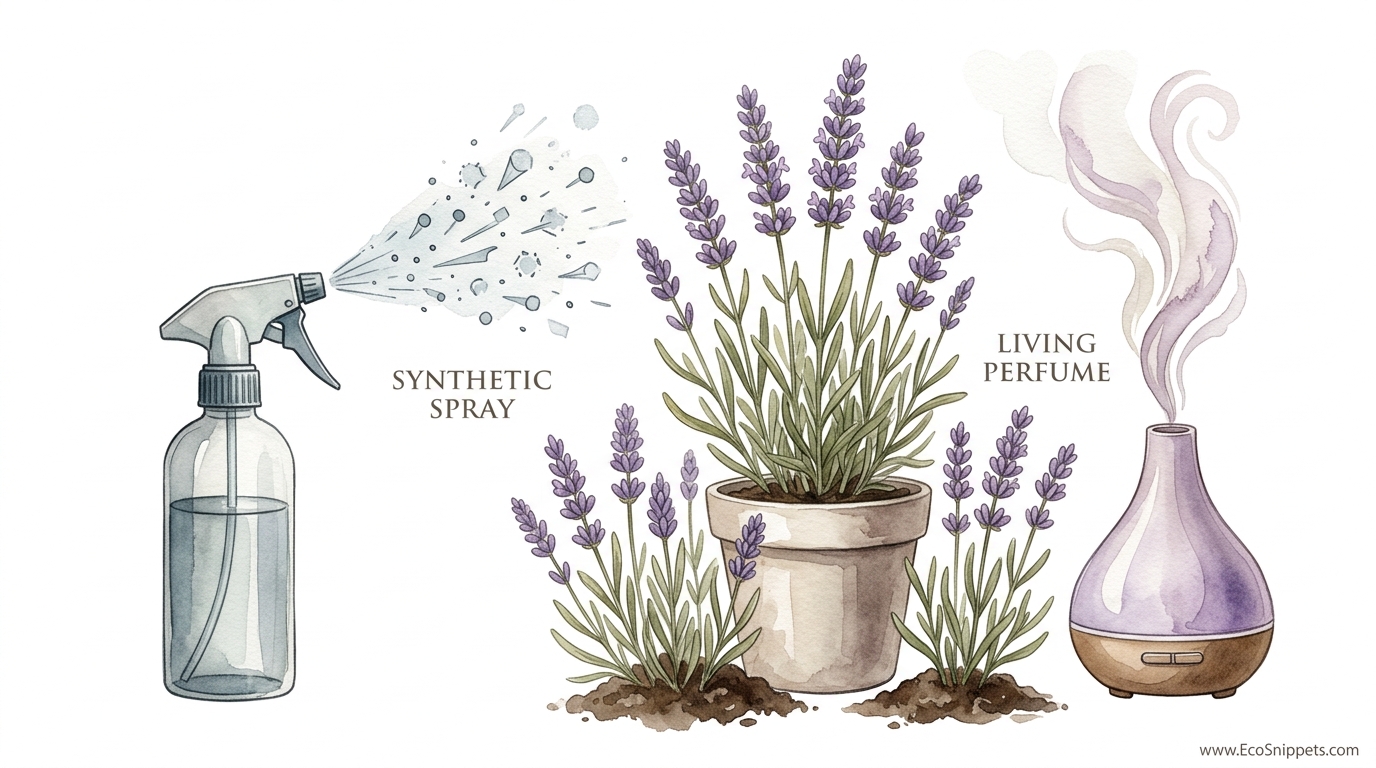
Stop paying to inhale petroleum-based aerosols and start growing a living fragrance that cleans your air for free. We’ve been trained to buy ‘ocean breeze’ in a can, but have you ever looked at the ingredient list? Planting a simple lavender and jasmine screen outside your windows turns your home into a natural oasis that smells better than any lab-created chemical ever could.
Modern living has disconnected us from the basic sensory wisdom of our ancestors. Generations ago, the air inside a home wasn’t refreshed by a plastic plug-in or a pressurized canister filled with butane and propane. Instead, the breeze carried the scent of the garden through open shutters, filtering through leaves and petals to create a breathable sanctuary.
Choosing a living perfume over a synthetic spray is a quiet act of rebellion against the convenience-at-any-cost culture. This guide will walk you through the practical, gritty details of establishing a fragrant landscape that works for you. You will learn to select the right cultivars, prepare the earth, and harvest the bounty to keep your home smelling like a meadow even in the dead of winter.
Growing Lavender For Home Fragrance
Lavender is the cornerstone of any natural fragrance strategy. This hardy, perennial sub-shrub belongs to the genus Lavandula and has been prized since Roman times for its ability to “wash” the air. The word itself comes from the Latin lavare, meaning “to wash,” referencing its historical use in baths and laundry.
In a real-world setting, lavender acts as a biological air filter. Its essential oils, primarily linalool and linalyl acetate, are held in tiny glandular trichomes on the surface of the flowers and leaves. When the wind brushes against the plant, or when the sun heats the foliage, these oils volatilize, releasing a scent that is scientifically proven to reduce cortisol levels and encourage deep sleep.
English Lavender (Lavandula angustifolia) is the most popular choice for home fragrance due to its sweet, delicate aroma and high-quality oil. It is remarkably cold-hardy, surviving temperatures down to -29°C (-20°F) in USDA zones 5 through 9. For those in more humid or coastal environments, French Lavender (Lavandula dentata) or Spanish Lavender (Lavandula stoechas) provide alternatives that handle moisture or heat with more resilience, though their scents are often more camphorous and pungent.
Varieties for Maximum Scent
If your primary goal is a powerful aroma that travels, you must choose your variety with care. Hybrid lavenders, known as Lavandins (Lavandula x intermedia), produce significantly more essential oil than true English lavender. Cultivars like ‘Grosso’ and ‘Provence’ are the heavy lifters of the fragrance world, often used in commercial perfume production because they can be smelled from dozens of meters away.
How to Plant a Living Fragrance Screen
Building a fragrance screen requires more than just digging a hole. You are creating a system where airflow and plant biology work together to move scent from the garden into your living space. Strategic placement is the most important factor in this process.
Position your plants where the prevailing winds will carry the aroma toward your windows or doors. Planting a row of lavender at the base of a south-facing wall creates a heat-sink effect. The sun warms the stones or bricks, which in turn warms the lavender, causing it to release its oils throughout the day and well into the evening.
Soil Preparation and Drainage
Lavender and jasmine are often paired together, but they have slightly different needs. Lavender demands “lean” soil—earth that is sandy, gravelly, and low in organic matter. Over-fertilizing lavender is a common mistake; it leads to lush green growth but very few fragrant flowers.
Mix 2.5 to 5 centimeters (1 to 2 inches) of coarse gravel or builders’ sand into the planting site to ensure drainage. In areas with heavy clay soil, consider planting on a mound 15 to 20 centimeters (6 to 8 inches) high. This prevents the roots from sitting in water, which is the quickest way to kill a lavender plant.
Jasmine Support Systems
Jasmine (Jasminum) is a vining plant that needs a structure to climb. To create a screen, install a sturdy trellis or wire system about 15 centimeters (6 inches) away from your window frame. This gap allows for air circulation, preventing powdery mildew while letting the scent of the Arabian Jasmine (Jasminum sambac) or Common Jasmine (Jasminum officinale) waft directly into the room.
Star Jasmine (Trachelospermum jasminoides) is another excellent screening choice. While not a “true” jasmine, it is much hardier and produces a massive flush of white, star-shaped flowers in late spring that smell like honey and spice. It can climb up to 6 meters (20 feet) and provides a thick evergreen screen year-round.
Benefits of Living Perfume
Switching to living plants provides measurable health benefits that synthetic products cannot replicate. Commercial air fresheners often contain Volatile Organic Compounds (VOCs) like formaldehyde and benzene. These chemicals are linked to respiratory irritation, headaches, and long-term endocrine disruption.
Natural fragrances from living plants provide a “clean” scent profile. They do not linger in the air as heavy, greasy residues. Instead, they interact with the atmosphere dynamically. Lavender, for instance, has antimicrobial properties that can help reduce the presence of airborne bacteria in a room when fresh bundles are kept nearby.
Cultivating these plants also builds a bridge to your local ecosystem. Lavender and jasmine are magnets for pollinators. Watching bees and butterflies hover around your windows provides a sense of peace and connection to the seasons that no aerosol can can provide. It is a productive hobby that rewards you with fresh material for sachets, tea, and tinctures.
Challenges and Common Mistakes
The biggest hurdle for most growers is the “kindness” trap. People often treat lavender like a tropical houseplant, watering it daily and feeding it rich compost. This is a fatal error. Lavender thrives on neglect. If the soil stays damp for more than 48 hours, the roots will begin to rot, and the plant will turn a sickly gray-brown.
Another frequent mistake is failing to prune. Lavender is a “woody” perennial, meaning it grows stems that become hard and bark-like over time. If you do not prune it back every year, the center of the plant will become a dead zone of dry sticks. You must trim away about one-third of the green growth every autumn to keep the plant compact and productive.
Jasmine faces its own set of challenges, particularly regarding temperature. Most fragrant jasmine varieties are tropical or subtropical. If you live in a region where the ground freezes, you must grow your jasmine in a large pot and move it indoors during the winter. Forgetting to bring it inside even once can kill a decade-old vine in a single night.
Limitations and Environmental Constraints
While the idea of a house surrounded by flowers is romantic, it isn’t possible in every environment. Sunlight is the primary constraint. Both lavender and jasmine require at least 6 to 8 hours of direct, unobstructed sun to produce the oils necessary for fragrance. If your home is shaded by large trees or neighboring buildings, your plants will be leggy and scentless.
Humidity is another factor that limits success. In the Deep South of the United States or the tropical regions of Southeast Asia, traditional English lavender often struggles with fungal diseases. In these climates, you must choose specific cultivars like ‘Phenomenal’ or ‘Sensational’ that have been bred to withstand high moisture levels without wilting.
Space also dictates your approach. A full screen requires several meters of horizontal space. If you are an apartment dweller, you are limited to container gardening. While possible, lavender in pots requires much more frequent monitoring of soil pH and root temperature than plants in the ground.
Comparison: Living Perfume vs. Synthetic Sprays
| Feature | Synthetic Aerosols | Living Plants |
|---|---|---|
| Ongoing Cost | High ($5-$15 per month) | Near Zero (Self-propagating) |
| Air Quality | Adds VOCs and propellants | Filters air and adds oxygen |
| Health Impact | Potential respiratory irritant | Therapeutic; reduces stress |
| Scent Quality | Static, chemical-heavy | Complex, evolving, organic |
| Environmental Footprint | High (Plastic, metal, shipping) | Negative (Sequesters carbon) |
Practical Tips for Maximum Fragrance
Timing your harvest is the secret to capturing the best scent. If you want to dry lavender for indoor use, cut the stems when the bottom third of the flower spike has just started to open. This is when the oil concentration is at its peak. If you wait until the whole spike is in full bloom, the flowers will fall off as they dry, leaving you with a mess and less aroma.
- Harvest in the Morning: Wait until the dew has evaporated but before the sun is at its zenith. The heat of the day causes the plants to release their oils into the atmosphere; harvesting early keeps that oil inside the plant.
- Sharp Tools Matter: Always use clean, sharp shears. A ragged cut on a lavender plant creates an entry point for disease and slows down the recovery of the bush.
- Soil pH Check: Lavender prefers slightly alkaline soil (pH 6.7 to 7.3). If your soil is acidic, add a handful of lime to the planting hole. This adjustment alone can double the fragrance production of the plant.
- Airflow is Essential: Space your plants at least 45 to 60 centimeters (18 to 24 inches) apart. Crowding them leads to stagnant air, which encourages mold and reduces the amount of scent that can blow through your window.
Advanced Considerations: Soil Microbiology and Oil Extraction
Experienced growers know that the fragrance of a plant is a direct reflection of the soil’s health. While lavender likes “poor” soil, it still requires a diverse community of soil microbes. Using a light mulch of pea gravel or crushed oyster shells rather than wood chips helps maintain the temperature and alkalinity the roots crave.
Scaling up your operation might involve extracting your own essential oils. A small copper alembic still can turn 5 kilograms (11 pounds) of fresh lavender into 50 to 100 milliliters of pure essential oil. This process is the ultimate expression of self-reliance, giving you a shelf-stable supply of natural fragrance that will last for years.
Understanding the chemistry of your plants allows you to blend scents effectively. Jasmine is a “base” or “middle” note—heavy, floral, and persistent. Lavender is a “top” note—bright, fresh, and fleeting. By planting them together, you create a complex, layered perfume that changes throughout the day as different compounds evaporate at different rates.
Scenario: The “Window Box” Strategy
Suppose you have no garden at all, only a small balcony or a wide windowsill. You can still create a fragrance screen using the “layered container” method. Choose a deep, long trough—at least 30 centimeters (12 inches) deep.
Plant a compact variety of lavender like ‘Munstead’ or ‘Hidcote’ in the front of the box. In the back, install a small trellis and plant Arabian Jasmine (Jasminum sambac). Because sambac jasmine is a shrubby vine, it will climb the trellis while the lavender hides its woody base. This vertical arrangement maximizes the fragrance output in a footprint no larger than a standard suitcase.
During the summer, the jasmine will provide heavy, sweet notes at night, while the lavender provides a crisp, clean scent during the day. This simple setup can transform a cramped city apartment into a sanctuary of fresh air, proving that you don’t need a farm to live like a pioneer.
Final Thoughts
Restoring natural fragrance to your home is more than a landscaping project; it is a commitment to a cleaner, more intentional way of living. By replacing chemical aerosols with living plants, you reduce your exposure to toxins and reclaim a piece of ancestral knowledge. The earth provides everything we need to keep our spaces fresh, provided we are willing to put in the work to nurture it.
Starting small is the best way to ensure success. Plant one lavender bush under your favorite window or one jasmine vine by your front door. Observe how the scent changes with the humidity and the time of day. Once you experience the difference between a lab-grown “scent” and a living, breathing perfume, you will never go back to the aerosol can again.
Gardening with a focus on fragrance requires patience and grit, but the rewards are tangible. You will sleep better, breathe easier, and find a new sense of pride in the living oasis you have built with your own hands. Take the first step today and let the wind do the work of freshening your home.
