How To Become More Self-Sufficient Without Starting a Full-Blown Farm…
Want to start preserving your harvest, making your own soap, or building a backyard root cellar — but not sure where to begin? “Homesteading Advice” gives you instant lifetime access to 35+ practical homesteading books on food preservation, veggie gardening, DIY natural cleaning products (save over $250 per year with this skill alone), brewing, off-grid energy, and a whole lot more…
Click Here To Check It Out Now!
Stop paying for a global supply chain when the most medicinal tea on earth is growing under your feet in the grass. Your lawn is not a chore; it is a tea chest. Most common weeds were brought here as medicine by pioneers for a reason. It is time to stop spraying them and start steeping them.
Every spring, millions of homeowners wage a chemical war against “weeds” that their ancestors would have guarded like gold. These plants aren’t invaders; they are a lost heritage of self-reliance and deep nutrition. When you look at a dandelion or a patch of nettle, you aren’t looking at a nuisance. You are looking at a localized pharmacy that requires no shipping, no plastic packaging, and no middleman.
This guide will show you how to reclaim your backyard as a source of potent, healing beverages. We will move beyond the basic tea bag and explore the science and tradition of harvesting wild plants. Whether you want to support your liver, clear your skin, or simply enjoy a brew that tastes like the earth itself, the answers are already in your garden.
Foraged Backyard Tea Recipes
The transition from “weed” to “wellness” begins with knowing exactly what you are picking and how to prepare it. Each plant has a unique profile of vitamins, minerals, and bitter compounds that require different handling to extract. Here are the staples of the pioneer tea chest that you can find in almost any temperate backyard.
The Morning Liver Tonic: Dandelion Root and Leaf
Dandelions are perhaps the most famous “pest” in the modern lawn, but they are nutritional powerhouses. Every part of the plant is edible and medicinal, from the bright yellow flowers to the deep taproot. Historically, dandelions were a must-have for colonists because they acted as a spring tonic to “thinner the blood” and jumpstart the liver after a long winter of heavy foods.
To make a fresh leaf tea, harvest 2 tablespoons (approx. 10-15 grams) of young, tender leaves. Choose leaves that haven’t flowered yet for a milder flavor, as older leaves develop a strong bitterness. Steep these in 2 cups (500 ml) of hot water for about 10 minutes to extract potassium and vitamins A, C, and K.
For a richer, coffee-like experience, focus on the roots. Dig deep to get the whole taproot, scrub it clean, and chop it into small pieces. You can use these fresh, or roast them in an oven at 150°C (300°F) until they are dark brown and fragrant. Simmer 1 tablespoon of the roasted root in 2 cups of water for 20 minutes to create a dark, earthy decoction that supports liver detox and digestion.
The Mineral-Dense Nettle Infusion
Stinging nettle (Urtica dioica) is often avoided because of its defensive hairs, but once dried or steeped, those stings vanish. This plant is a “blood builder,” packed with iron, calcium, magnesium, and protein. In many cultures, it is considered a superior alternative to store-bought green tea because of its savory, umami flavor profile.
Harvest nettles in early spring before they go to seed. Always wear gloves to protect your hands from the “sting.” To make a potent nourishing infusion, use 1/2 cup (approx. 15-20 grams) of dried nettle leaves per 2 cups of boiling water. Let this steep for at least 30 minutes, or even overnight, to fully extract the minerals. The resulting liquid should be a deep, dark green—almost black—and tastes like a cross between spinach and high-grade Japanese green tea.
The Soothing Plantain Leaf Brew
Plantain (Plantago major) is the “bandage of the earth.” While it is famous as a topical poultice for bee stings, it is equally effective as an internal tea. It contains mucilage, which provides a cooling, demulcent effect that is perfect for soothing a sore throat or an irritated digestive lining.
Identify the broad, oval leaves with prominent parallel veins. For a simple tea, use 1 teaspoon of fresh or dried leaves per cup of boiling water. Steep for 5 to 10 minutes. This brew is incredibly gentle and has been used traditionally to support respiratory health and clear the voice during seasonal changes. It is a quiet, humble tea that works best when sipped slowly while warm.
The Lymphatic Cleaver Cold Brew
Cleavers (Galium aparine), often called “sticky willy,” are early spring plants that cling to your clothes like Velcro. They are the ultimate lymphatic system support, helping the body flush out sluggishness. Unlike many other herbs, cleavers are best prepared as a cold infusion to preserve their delicate enzymes.
Pack a jar tightly with fresh cleavers and cover it with cold, filtered water. Leave the jar in the refrigerator overnight (about 8 to 12 hours). Strain the liquid the next morning and drink it throughout the day. It has a light, grassy, and refreshing taste that feels like a clean start for your internal systems.
How It Works: Infusions vs. Decoctions
Making tea from the backyard is more than just dropping leaves in water. You must understand the two primary methods of extraction: infusions and decoctions. Choosing the wrong method can mean leaving the most valuable nutrients behind or destroying delicate vitamins with too much heat.
Infusions are for the soft parts of the plant, such as leaves, flowers, and tender stems. You pour hot water over the plant material, cover the vessel to prevent volatile oils from escaping, and let it sit. Most backyard teas, like clover or nettle, are infusions. Standard steep times are 5 to 15 minutes for flavor, and 30 minutes to 4 hours for medicinal strength.
Decoctions are necessary for the “tough” parts, including roots, bark, and seeds. Because these parts have dense cellular structures, a simple steep won’t cut it. You must place the plant material in a pot with cold water, bring it to a slow simmer, and keep it there for 20 to 45 minutes. This “active” cooking process breaks down the lignin and cellulose to release minerals and deep-seated alkaloids.
Always use non-reactive cookware. Glass, ceramic, or high-quality stainless steel are ideal. Avoid aluminum or chipped enamel pots, as the tannins and acids in the wild plants can react with the metal, altering the taste and safety of your tea.
Benefits of Backyard Brewing
Choosing foraged tea over commercial alternatives offers benefits that go far beyond your wallet. The most immediate advantage is nutrient density. Wild plants often grow in more diverse, unmanipulated soil than monocrop tea plantations, leading to a higher concentration of secondary metabolites and minerals.
Sustainability is another massive factor. Commercial tea has a heavy carbon footprint, involving global shipping, plastic-lined tea bags, and industrial processing. When you harvest from your lawn, your “food miles” are measured in footsteps. You eliminate the waste of packaging and the microplastics often found in modern pyramid-style tea bags.
Furthermore, backyard foraging builds ecosystem awareness. You begin to notice the seasons, the rain cycles, and the health of your local soil. This connection to the land is a form of ancestral wisdom that provides a sense of security. Knowing that you can find medicine in the grass during a supply chain disruption is a powerful form of modern resilience.
Challenges and Common Mistakes
The most dangerous mistake a beginner can make is improper identification. While many “weeds” are safe, some have toxic look-alikes. For example, young dandelion leaves can look similar to some varieties of wild lettuce or catsear. While those aren’t typically dangerous, other plants like Poison Hemlock can be fatal and grow in similar disturbed soils. Never consume a plant unless you are 100% certain of its identity using multiple field guides.
Another common pitfall is harvesting from “yellow zones.” This refers to areas that have been sprayed with herbicides, pesticides, or are near heavy road runoff. Plants are excellent at absorbing what is in the soil. If you or your neighbors use chemicals to keep the lawn “pristine,” those chemicals end up in your tea cup. Always harvest from areas you know to be clean and untreated for at least three years.
Over-harvesting is also a concern. Even if a plant is considered a weed, taking too much can damage the local ecosystem. Follow the “1 in 10” rule: only harvest one plant for every ten you see. This ensures the population remains stable and continues to provide food for local pollinators like bees and butterflies.
Limitations: When This May Not Be Ideal
Foraged teas are powerful, but they are not a substitute for emergency medical care. Many wild plants have potent effects on the body that can interact with prescription medications. For instance, dandelion is a natural diuretic and may affect how your body processes certain blood pressure medications or lithium.
Environmental constraints also play a role. If you live in a high-traffic urban area, the soil may contain heavy metals like lead or arsenic from decades of industrial activity. In these cases, it is safer to grow “wild” weeds in clean, raised beds or large pots rather than foraging from the park or sidewalk edges.
Pregnancy and breastfeeding are periods where caution is paramount. Some herbs, like Red Clover, contain phytoestrogens that can affect hormonal balance. Others may have uterine-stimulating properties. Always consult with a qualified herbalist or healthcare provider before introducing new wild plants into your routine if you have a pre-existing condition.
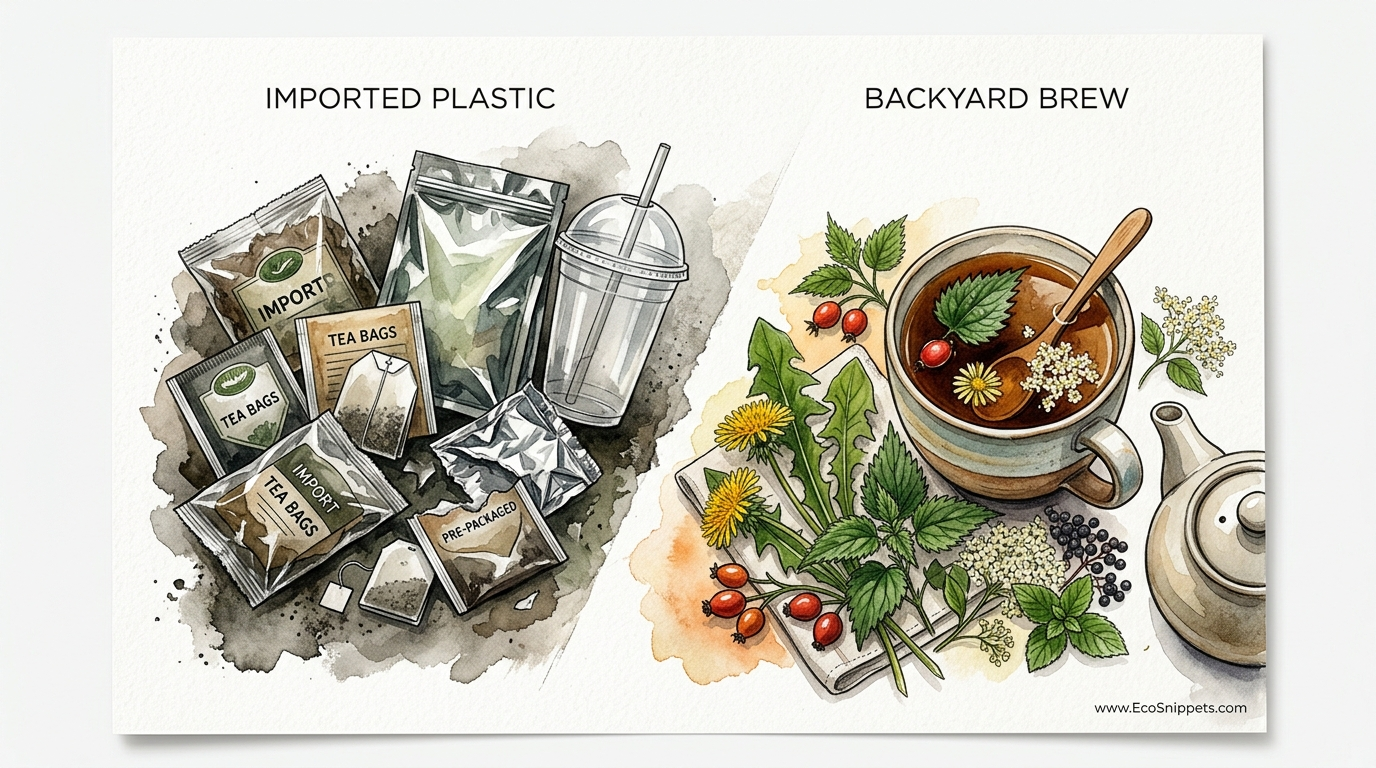
Imported Plastic vs. Backyard Brew
| Feature | Store-Bought Tea Bags | Foraged Backyard Tea |
|---|---|---|
| Cost | $5–$15 per box | Free ($0) |
| Packaging | Plastic, foil, bleached paper | None (Reusable jars) |
| Freshness | Stored for months/years | Harvested same day |
| Traceability | Global supply chain | Under your own feet |
| Nutrition | Standardized, often low-grade | High mineral & enzyme content |
Practical Tips for the Wild Herbalist
Timing your harvest is the secret to a great cup of tea. The best time to gather leaves and flowers is in the mid-morning, after the dew has dried but before the sun becomes too hot. This is when the plant’s essential oils are most concentrated. For roots, the best time is late autumn or very early spring when the plant is dormant and the energy is stored underground.
If you aren’t using the herbs immediately, you must dry them properly to prevent mold. Bundle them and hang them upside down in a well-ventilated area out of direct sunlight. Alternatively, use a dehydrator set to a very low temperature—around 35°C to 40°C (95°F to 105°F). You know they are ready when the leaves “crackle” and crumble easily between your fingers.
Store your dried bounty in amber glass jars. Light and heat are the enemies of herbal potency. Label every jar with the name of the plant and the date of harvest. Most foraged herbs will retain their medicinal value for about 12 to 18 months if stored in a cool, dark pantry.
Advanced Considerations: Blending and Potency
Once you are comfortable with single-herb teas, you can begin the art of herbal blending. This allows you to balance flavors and combine medicinal actions. A classic “Spring Tonic” blend might include 2 parts Nettle (for minerals), 1 part Dandelion leaf (for kidney support), and a pinch of dried Peppermint or Lemon Balm for flavor.
Consider the “Solvent” you are using. While water is the most common, some compounds are better extracted in other mediums. For example, certain resins and fats in plants aren’t water-soluble. Serious practitioners often move from teas to tinctures (using alcohol) or infused vinegars to capture a broader spectrum of the plant’s chemistry. However, for daily wellness and hydration, the water-based infusion remains the most accessible and traditional method.
Pay attention to your body’s response. Herbalism is not “one size fits all.” A tea that helps one person sleep might make another person feel restless. Start with a “simple”—a tea made from only one plant—to see how your system reacts before moving on to complex formulas. This focused approach is how you develop a true relationship with the plants in your yard.
Example Scenario: The Winter Recovery Tea
Imagine it is late winter, and you feel sluggish after weeks of being indoors. You notice the first rosettes of dandelion and the tiny stalks of cleavers beginning to emerge. This is the perfect time for a “System Flush.”
You harvest a handful of fresh cleavers and two young dandelion roots. You put the roots in a small pot with 500 ml of water and simmer them for 20 minutes (decoction). While that simmers, you place the fresh cleavers in a quart jar of cold water to sit on the counter. Once the root decoction is finished, you let it cool and then mix it with the strained cleaver water.
Sipping this throughout the day provides a gentle push to your lymphatic system and supports your liver’s natural filtering process. This isn’t a “detox kit” bought from a store; it is a seasonal response to the environment around you, using the very first gifts the earth provides after a freeze.
Final Thoughts
Your lawn is a living legacy. Every time you choose to steep a “weed” instead of spraying it, you are casting a vote for a more self-reliant and sustainable future. You are stepping back into a lineage of knowledge that kept our ancestors healthy for thousands of years without the need for complex global logistics.
Start small. Identify one plant this week—perhaps the common dandelion. Learn its shape, its scent, and its taste. Once you feel that connection, the world around you transforms. You will no longer see a chore when you look at your grass; you will see a harvest waiting to be gathered.
The path to health doesn’t have to be expensive or complicated. Often, the most profound medicine is the one that was there all along, quietly growing in the cracks of the sidewalk or the edges of your garden. It is time to reclaim the tea chest under your feet.
