How To Become More Self-Sufficient Without Starting a Full-Blown Farm…
Want to start preserving your harvest, making your own soap, or building a backyard root cellar — but not sure where to begin? “Homesteading Advice” gives you instant lifetime access to 35+ practical homesteading books on food preservation, veggie gardening, DIY natural cleaning products (save over $250 per year with this skill alone), brewing, off-grid energy, and a whole lot more…
Click Here To Check It Out Now!
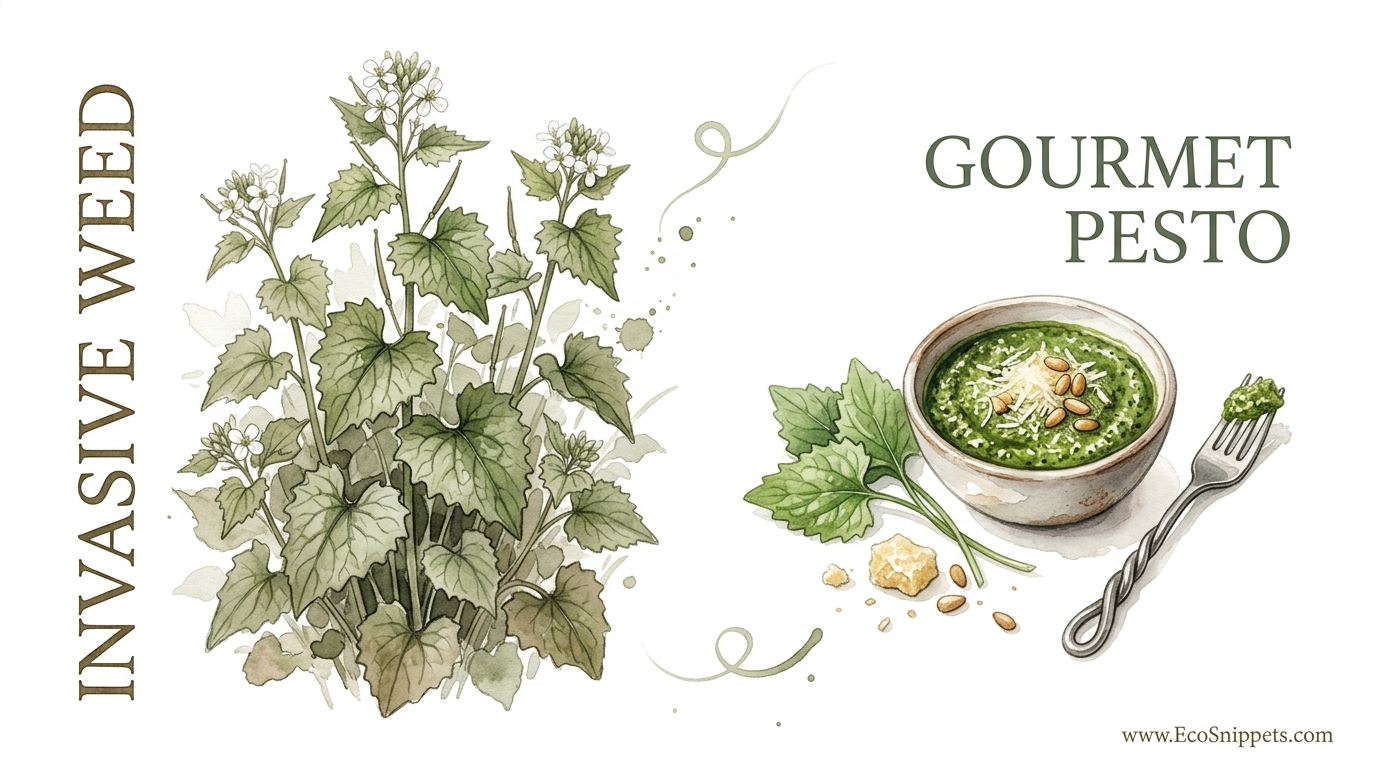
The plant you’re desperately trying to spray out of your woods is actually a free, nutrient-dense garlic and horseradish flavor bomb. Garlic Mustard is the ‘villain’ of the forest floor, but to the savvy homesteader, it’s a free, high-vitamin harvest. Stop fighting the spread and start harvesting the spicy, garlicky leaves for the best pesto you’ll ever taste. The more you eat, the more you help the ecosystem.
Foraging for wild edibles isn’t just about finding food; it’s about reclaiming a lost connection to the land. When European settlers brought Garlic Mustard (Alliaria petiolata) across the Atlantic in the mid-1800s, they didn’t see a weed. They saw a reliable, cold-hardy potherb that could survive the harshest winters and provide fresh greens before anything else dared to sprout. Today, this plant is a target for eradication efforts across North America, but for those who know its history, it remains one of the most versatile ingredients in the wild pantry.
How To Eat Garlic Mustard Weed
Garlic Mustard is a member of the Brassicaceae family, making it a distant cousin to broccoli, kale, and cabbage. It is unique because it combines the pungent, sulfurous bite of mustard with a distinct, savory aroma of garlic. Every part of this plant is edible, from the taproot to the tiny black seeds that appear in late summer.
To eat it effectively, you must understand its flavor profile, which shifts dramatically based on the plant’s age and the weather. In early spring, the young leaves are tender and mild. As the temperatures rise and the plant begins to flower, the flavor sharpens, developing a bitter edge that many find reminiscent of arugula or radicchio. This bitterness isn’t a flaw; it’s a culinary feature that cuts through rich fats like cheese, nuts, and olive oil.
In the kitchen, treat the leaves like a spicy spinach or a garlicky herb. The roots, particularly from first-year plants, can be grated and used as a direct substitute for horseradish. Even the flowering tops are a delicacy, offering a texture similar to broccoli rabe with a much bolder punch. By learning to incorporate this “invasive” plant into your diet, you turn a landscaping chore into a gourmet harvest.
How It Works: The Life Cycle of a Forest Invader
Understanding how Garlic Mustard grows is the key to both a successful harvest and effective forest management. This plant is a biennial, meaning it follows a strict two-year life cycle before it produces seeds and dies.
Year One: The Basal Rosette
In its first year, Garlic Mustard stays close to the ground. It forms what botanists call a “basal rosette”—a circular cluster of leaves that looks like a small green rug on the forest floor. These first-year leaves are kidney-shaped with scalloped edges and deep veins. They are often less than 10 centimeters (4 inches) across. During this phase, the plant is focused on building a deep, sturdy white taproot. If the ground doesn’t freeze hard, these rosettes can stay green all winter, ready to bolt the moment the sun warms the soil in the spring.
Year Two: The Bolting Phase
In the second spring, the plant undergoes a massive transformation. It “bolts,” sending up a flowering stalk that can reach heights of 60 to 100 centimeters (2 to 3 feet). The leaves change shape as they move up the stem, becoming more triangular or heart-shaped with sharply pointed teeth. In late spring or early summer, clusters of small white flowers appear at the top. Each flower has four petals arranged in the shape of a cross—a hallmark of the mustard family.
The Seed Production
After flowering, the plant produces long, thin seed pods called siliques. A single vigorous plant can produce up to 7,900 seeds, which can remain viable in the soil for five years or more. This incredible reproductive rate is why it spreads so quickly and why foragers are encouraged to pull the entire plant, root and all, to prevent further infestation.
Benefits of Foraging Garlic Mustard
Choosing to harvest Garlic Mustard offers a rare “win-win” in the world of homesteading. You are simultaneously improving your personal health and the health of your local woods.
Nutritional Powerhouse
Garlic Mustard is one of the most nutrient-dense greens ever analyzed. It contains higher concentrations of Vitamin C and Vitamin A than spinach or oranges. It is also a significant source of:
- Fiber: Essential for digestive health and blood sugar regulation.
- Minerals: Rich in calcium, potassium, magnesium, selenium, and iron.
- Omega-3 Fatty Acids: Rare for a leafy green, these support heart and brain health.
- Antioxidants: Contains Vitamin E and various sulfur-containing amino acids that help the body fight oxidative stress.
Ecological Restoration
By harvesting this plant, you are engaging in “conservation through consumption.” Garlic Mustard is allelopathic, meaning it releases sinigrin and other chemicals into the soil that inhibit the growth of native plants and beneficial soil fungi (mycorrhizal fungi). These fungi are the “underground internet” that trees use to swap nutrients. When Garlic Mustard moves in, it chokes out native wildflowers like trilliums and bloodroot, and can even stunt the growth of hardwood tree seedlings. Pulling it out helps the forest breathe again.
Self-Reliance and Cost Savings
In an era of rising food costs, Garlic Mustard is a free resource that requires no irrigation, no fertilizer, and no tilling. It grows in the shade where most garden vegetables fail, providing a reliable source of fresh greens when the grocery store shelves might be thin.
Challenges and Common Mistakes
While Garlic Mustard is easy to find, there are several pitfalls that can ruin a harvest or, in some cases, pose a safety risk.
The Herbicide Trap
Because Garlic Mustard is labeled as a “noxious weed,” public parks and forest preserves often treat large patches with herbicides like glyphosate. Never harvest plants that appear wilted, yellowed in a uniform pattern, or are located near high-traffic trails where spraying is common. Always ask for permission on private land to ensure the soil hasn’t been chemically treated.
Mistaking the Look-alikes
While Garlic Mustard is distinctive, beginners sometimes confuse first-year rosettes with Ground Ivy (Glechoma hederacea) or certain wild violets. Ground Ivy has smaller, hairier leaves and grows on creeping stolons (runners) rather than from a single taproot. The “crush test” is your best tool: if you crush a leaf and it doesn’t smell like a distinct mix of garlic and mustard, don’t eat it.
Bitterness Overload
As the weather gets hot, the leaves produce more defensive chemicals, making them intensely bitter. If you find the flavor too strong, try blanching the leaves in boiling water for 30 to 60 seconds before using them. This leaches out some of the bitter compounds and makes the greens much more palatable.
Limitations: When Foraging Isn’t Ideal
Despite its benefits, there are situations where you should pass on a Garlic Mustard harvest.
Soil Contamination
Like many wild plants, Garlic Mustard can bioaccumulate heavy metals from the soil. Avoid harvesting from old industrial sites, the edges of busy highways where lead or petroleum runoff is likely, or near old building foundations where lead paint may have leached into the ground.
The “Seed Spread” Risk
If you are harvesting in late summer when the seed pods are dry, you might accidentally do more harm than good. Bumping into a mature plant can spray thousands of seeds onto your clothes and boots. If you must harvest late in the season, carefully place a bag over the plant before pulling it to contain the seeds.
Cyanide Considerations
Like many members of the Brassicaceae family, Garlic Mustard contains trace amounts of cyanide-producing compounds. While the levels are generally considered safe for human consumption in normal quantities, individuals with specific sensitivities or thyroid issues should consult a professional. Cooking or soaking the leaves significantly reduces these compounds.
Comparison: Garlic Mustard vs. Garden Greens
| Feature | Garlic Mustard (Wild) | Spinach (Store-Bought) | Arugula (Garden) |
|---|---|---|---|
| Vitamin C Content | Extremely High | Moderate | Moderate |
| Flavor Profile | Garlic, Sharp Mustard | Mild, Earthy | Peppery, Nutty |
| Cost per Pound | Free | $3.00 – $6.00 | $4.00 – $8.00 |
| Growing Effort | None (Self-Sowing) | High (Water/Fertilizer) | Medium |
Practical Tips for a Successful Harvest
- Pull, Don’t Snip: To help the environment, always pull the entire plant including the root. This is easiest after a rain when the soil is soft.
- Harvest in the Shade: Plants growing in deep shade tend to be less bitter than those exposed to direct afternoon sun.
- The “Horseradish” Hack: If you’re harvesting first-year rosettes, keep the white taproots. Scrub them clean, grate them into a jar with a splash of apple cider vinegar and a pinch of salt, and you have a wild horseradish condiment.
- Freezing for Later: Garlic Mustard pesto freezes exceptionally well. Fill ice cube trays with your finished pesto, freeze until solid, and then transfer to a freezer bag. This preserves the Vitamin C which degrades with heat.
Advanced Considerations for Practitioners
For the serious homesteader, Garlic Mustard isn’t just a snack; it’s a management strategy. If you have a woodlot, you can use “intensive foraging” as a form of biocontrol. By identifying the largest “mother” plants—those that are bolting and about to flower—you can prioritize their removal.
Consider the timing of your harvest relative to the forest canopy. In early spring, Garlic Mustard has an advantage because it grows before the trees leaf out. This “early window” is when the plant is most vulnerable to being outcompeted if you remove it. Once you’ve cleared a patch, consider seeding the area with native fast-growers like Wild Ginger or Jewelweed to occupy the space before the Garlic Mustard seed bank can re-establish.
A Weekend Foraging Scenario
Imagine it’s a cool Saturday morning in April. You walk into a local woodlot and spot a sea of green rosettes. You spend an hour pulling about 2 kilograms (roughly 4.5 pounds) of Garlic Mustard.
Once back at the homestead, you separate the plants. The tender leaves from the center of the rosettes are saved for a raw salad. The larger leaves are blanched for 30 seconds, squeezed dry, and pulsed in a food processor with walnuts, olive oil, lemon juice, and a hard aged cheese. You’ve just created enough pesto to last the entire winter. Finally, you take the white taproots, grate them with a bit of vinegar, and serve them alongside a roast that evening. You’ve fed your family for free and left the woods healthier than you found them.
Final Thoughts
Garlic Mustard represents the complicated relationship between humans and the “wild.” While it is undeniably a “villain” in the context of North American forest ecology, its presence is a testament to the survival skills of the ancestors who brought it here. It is a resilient, stubborn, and incredibly generous plant that refuses to be ignored.
By shifting your perspective from “fighting a weed” to “harvesting a resource,” you unlock a level of self-reliance that few other plants can offer. Whether you’re making a batch of wild pesto or just adding a few spicy leaves to a sandwich, you’re participating in a tradition of wildcrafting that is as old as the forest itself.
The next time you see a patch of Garlic Mustard, don’t reach for the spray bottle. Reach for a harvest basket. The ecosystem will thank you, and your dinner table will never be the same.
