How To Become More Self-Sufficient Without Starting a Full-Blown Farm…
Want to start preserving your harvest, making your own soap, or building a backyard root cellar — but not sure where to begin? “Homesteading Advice” gives you instant lifetime access to 35+ practical homesteading books on food preservation, veggie gardening, DIY natural cleaning products (save over $250 per year with this skill alone), brewing, off-grid energy, and a whole lot more…
Click Here To Check It Out Now!
The world’s most refreshing soda isn’t found in a vending machine; it’s currently growing on the tips of your evergreen trees. We’ve been conditioned to buy corn syrup and CO2 in a can. But the ‘Wild Sparkler’ uses local yeast and forest needles to create a probiotic-rich, effervescent drink that costs $0 and tastes like the mountain air. It’s time to forage your refreshments.
Foraging for your own ingredients is more than a hobby; it is a return to a self-reliant way of life that our ancestors took for granted. Before industrialization handed us silver cans of phosphoric acid, people looked to the forest for their tonics. The evergreen trees standing in your backyard or local park are not just scenery; they are a living pantry of vitamins and wild microbes.
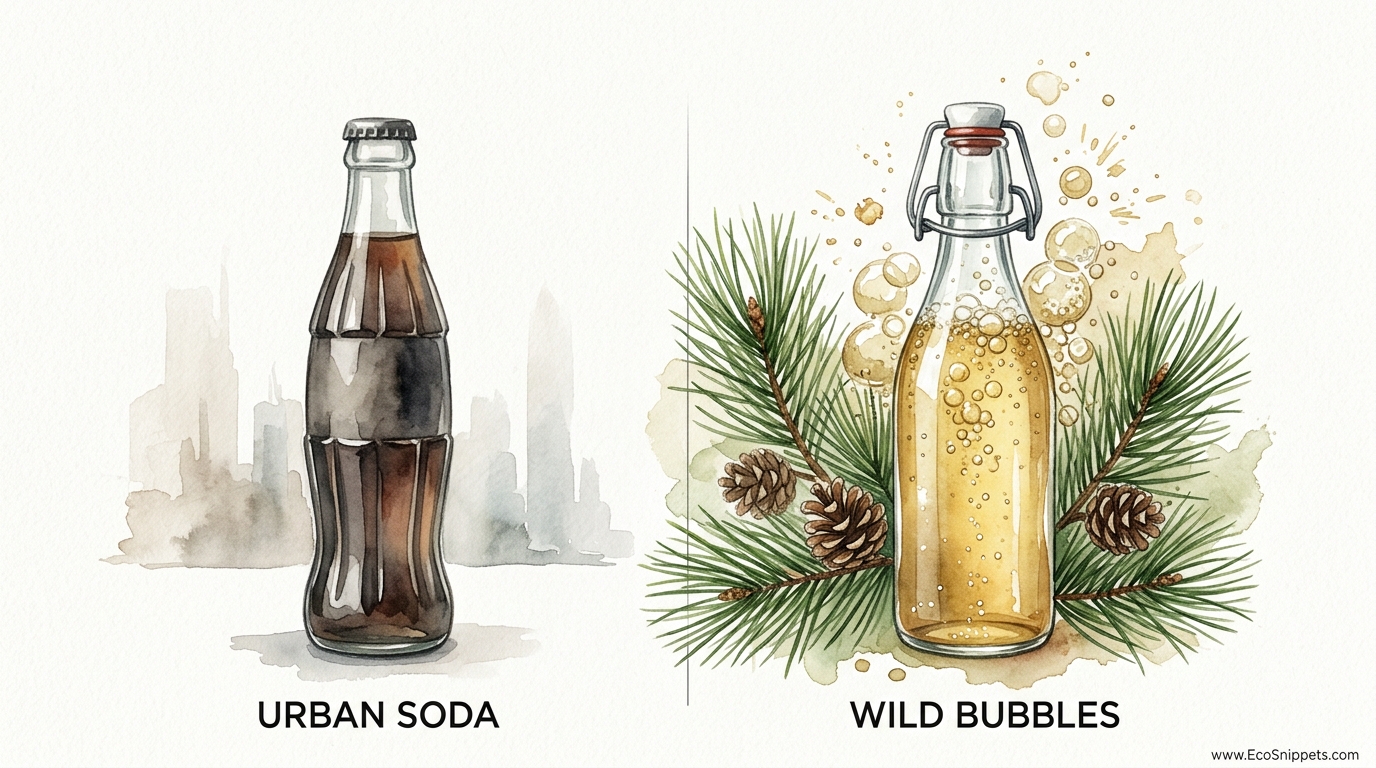
Pine needle soda represents the perfect intersection of botany and biology. It turns a simple walk in the woods into a culinary expedition. By understanding how to identify the right trees and harness the invisible workers of the microbial world, you can produce a beverage that is far superior to any “Urban Soda” found on a supermarket shelf. These “Wild Bubbles” offer a complex flavor profile—ranging from citrus and mint to earthy resin—that no laboratory can replicate.
Learning this skill requires a shift in perspective. You must stop seeing trees as timber and start seeing them as sources of life. This guide will walk you through the nuances of identifying safe species, the science of wild fermentation, and the practical steps to bottling the essence of the forest. Whether you are a seasoned forager or a curious beginner, the path to a better soda starts beneath the canopy.
How To Make Pine Needle Soda At Home
Pine needle soda is a naturally fermented beverage created by submerging fresh conifer needles in a sugar-water solution. This process utilizes the wild yeasts and lactic acid bacteria naturally present on the surface of the needles to consume sugar and produce carbon dioxide. Unlike commercial sodas that are force-carbonated with tanks of gas, this drink develops its fizz through a slow, living process.
This beverage exists because of the historical need for shelf-stable, nutrient-dense refreshments. In eras past, conifer-based drinks were essential for preventing scurvy and maintaining gut health during long winters when fresh fruit was unavailable. Today, it serves as a functional food that provides probiotics and a massive dose of Vitamin C in a form that is both delicious and hydrating.
In real-world situations, you can find variations of this technique in the “Spruce Beers” of early colonial America or the pine needle teas of Indigenous cultures. It is a tool for the modern homesteader who wishes to reduce their reliance on the global supply chain. By using only three primary ingredients—needles, water, and a sweetener—you bypass the chemical additives and plastic waste of the modern beverage industry.
Visualize the process as a small-scale ecosystem inside a jar. You are providing the habitat (the water), the fuel (the sugar), and the biological foundation (the needles). Over the course of a few days, the microbes “wake up” and begin to transform the liquid. The result is a sparkling, translucent gold or pale green elixir that carries the crisp, clean scent of a pine grove after a rainstorm.
The Science of Wild Fermentation: How It Works
Fermentation is an ancient partnership between humans and the microbial world. When you place pine needles into a sweetened liquid, you are initiating a spontaneous fermentation. The wild yeasts, primarily from the Saccharomyces family, and various Lactobacillus species that live on the evergreen bark and needles, become active once they are introduced to moisture and a food source.
The process happens in two distinct stages. During the primary fermentation, the jar is typically covered with a breathable cloth. This allows the yeast to multiply in an aerobic environment, where they begin breaking down the sucrose into glucose and fructose. You will notice small bubbles rising to the surface and a slight change in the aroma of the liquid as the pine resins begin to infuse into the water.
Once the primary stage shows active bubbling, usually after 2 to 5 days, the liquid is moved to the secondary fermentation phase. Straining the needles out and transferring the liquid to a sealed, pressure-rated bottle forces the carbon dioxide to remain trapped in the liquid. This creates the effervescence we associate with soda. Because this is a “wild” process, the timing depends heavily on the ambient temperature of your kitchen and the vigor of the specific yeast strains on your tree.
Temperature plays a critical role in the speed of this reaction. Microbes generally thrive between 20°C and 25°C (68°F to 77°F). If your home is cooler, the process may take a week or more; if it is warmer, you might have a fully carbonated drink in less than 48 hours. Monitoring the “fizz” through sight and sound is a vital part of the craft, as the microbes do not follow a strict human schedule.
Health and Environmental Benefits
Drinking a wild-fermented pine soda offers a nutritional profile that dwarfs any commercial alternative. Pine needles are famous for being exceptionally high in Vitamin C—often containing three to five times the amount found in an equivalent weight of oranges. This nutrient is vital for immune function and collagen production, making this drink a powerful tonic during the changing seasons.
Beyond vitamins, the fermentation process introduces beneficial probiotics into your system. These live cultures support a healthy gut microbiome, which is increasingly recognized as a cornerstone of overall health, affecting everything from digestion to mental clarity. When you choose “Wild Bubbles” over “Urban Soda,” you are choosing a beverage that actively contributes to your well-being rather than depleting it with refined sugars and phosphoric acid.
The environmental advantages are equally compelling. This soda has a near-zero carbon footprint, especially if you use locally sourced honey or maple syrup as your sweetener. There is no industrial shipping of heavy liquid-filled cans, no mining for aluminum, and no plastic waste. You are simply harvesting a sustainable resource from the landscape and reusing glass bottles from your own kitchen.
Self-reliance is perhaps the most profound benefit. Mastering the art of forest fermentation provides a sense of security and connection to the land. Knowing that you can walk into the woods and return with the ingredients for a sophisticated, healthy refreshment is a form of ancestral wisdom that empowers the individual in an age of over-consumption.
Challenges and Common Mistakes
Failure to identify the tree correctly is the most dangerous mistake a forager can make. While most pines, spruces, and firs are safe, the Yew tree (Taxus spp.) is highly toxic and can be fatal if consumed. Yew has flat needles that look similar to fir or hemlock, but it lacks the characteristic white stripes on the underside of the needles and produces red, berry-like arils instead of woody cones. Always use a reputable field guide to confirm your species before harvesting.
Another frequent pitfall is using tap water that contains high levels of chlorine or chloramine. These chemicals are designed to kill bacteria and yeast in city water systems, which means they will also kill the wild microbes on your pine needles. If your water smells like a swimming pool, the fermentation will likely fail or produce “off” flavors. Use filtered water or spring water to ensure a healthy microbial environment.
Bottle explosions are a serious risk for those who do not monitor their secondary fermentation. As the yeast eats the sugar, it produces CO2 gas. If this gas has nowhere to go and the bottle is not “burped” or moved to a refrigerator in time, the pressure can exceed the strength of the glass. Always use swing-top bottles designed for high pressure, and check them daily to gauge the carbonation levels.
Hygiene is paramount, but over-sterilization can be an issue. If you wash your pine needles with soap or boiling water, you will strip away the very yeast you are trying to cultivate. Rinse your needles in cool, clean water only to remove dust or insects. Ensure your fermentation vessel is clean and free of old soap residue, but remember that this is a wild process—perfection is not the goal, but a healthy environment is.
Limitations and Realistic Constraints
Seasonality dictates the flavor and speed of your brew. In the late spring, conifer trees produce “tips”—bright green, soft new growth. These tips are packed with citrusy oils and are incredibly tender, making for a light, floral soda. However, if you are foraging in the dead of winter, the needles will be tougher and the flavor more resinous and “piney.” Both are delicious, but they offer different experiences.
Geographic location also imposes boundaries. Pine trees thrive in the Northern Hemisphere and in high-altitude regions of the Southern Hemisphere, but they are not universal. If you live in a tropical or arid region, you may need to look for local alternatives like hibiscus or ginger to achieve similar results. This method is a celebration of “place,” and it works best when you are working with the species that naturally belong in your ecosystem.
Predictability is lower with wild ferments than with commercial yeast. Because you are relying on whatever microbes happen to be on the tree that day, one batch might be incredibly fizzy and tangy, while the next might be slower and more subtle. Practitioners must develop a “feel” for the process, learning to read the bubbles and the scent of the jar rather than relying solely on a timer or a thermometer.
Pregnancy and specific health conditions require caution. Certain species, such as the Ponderosa Pine, have historically been associated with risks for pregnant women when consumed in large quantities. While the amounts in a glass of soda are generally considered safe for the general population, those with specific medical concerns or those who are pregnant should consult a professional or stick to the most widely recognized safe species like the Eastern White Pine.
Comparing Wild Bubbles to Urban Soda
| Feature | Wild Pine Soda (Wild Bubbles) | Commercial Soda (Urban Soda) |
|---|---|---|
| Main Sweetener | Raw Honey, Maple Syrup, or Raw Sugar | High Fructose Corn Syrup |
| Carbonation | Natural (Microbial Fermentation) | Forced (CO2 Injection) |
| Nutrients | High Vit C, Vit A, Probiotics | None (Empty Calories) |
| Cost | Near $0 (Foraged) | $1.50 – $3.00 per unit |
| Flavor Profile | Complex, Forest, Citrus, Earthy | One-dimensional, Ultra-sweet |
The comparison clearly favors the wild approach for those prioritizing health and sustainability. While commercial soda offers instant gratification and consistent flavor, it lacks the biological “life” that makes pine soda a functional tonic. The “Urban Soda” is a dead product, whereas “Wild Bubbles” are a living system that continues to evolve in the bottle.
Efficiency in the kitchen is also a factor. While you can buy a can of soda in seconds, the 20 minutes spent foraging and the few days spent monitoring a ferment provide a different kind of efficiency—an emotional and spiritual efficiency that connects you to the rhythms of nature. This is a skill-based luxury that costs nothing but time and attention.
Practical Tips and Best Practices
Use the “Five-Needle Rule” for easy identification. The Eastern White Pine (Pinus strobus) is one of the safest and most delicious trees for soda. It is easily identified because its needles always grow in bundles of five (think of the five letters in the word “W-H-I-T-E”). These needles are soft, flexible, and have a bluish-green tint. They produce a soda that is remarkably similar to a high-end lime sparkler.
Harvest with respect for the tree. Never strip all the needles from a single branch, and never take the leading tip from a young tree, as this can stunt its vertical growth. Take a small handful of needles from several different branches. If the tree is large, you are essentially “pruning” it, which can be done without causing any long-term harm to the specimen.
Chopping the needles is a trade-off. If you leave the needles whole, the soda will be clearer and have a milder flavor. If you chop them into 2.5 cm (1 inch) pieces, you expose more surface area, releasing more Vitamin C and essential oils. This results in a much stronger, more medicinal flavor. Experiment with different ratios to find the balance that suits your palate.
Always use a “tester” bottle if you are fermenting in glass. Fill one small plastic soda bottle with the same liquid and needles. As the fermentation progresses, the plastic bottle will become hard to the touch. This is a safe way to gauge the pressure inside your glass bottles without having to open them and release the carbonation. Once the plastic bottle is rock-hard, move everything to the refrigerator.
Advanced Considerations for the Forest Brewer
Serious practitioners often use a “starter culture” to ensure a consistent ferment. While the wild yeast on the needles is usually sufficient, adding 50 ml (about 2 ounces) of active ginger bug or a splash of whey from a yogurt strain can act as a microbial insurance policy. This jumpstarts the colony and can prevent unwanted molds from taking hold if the environment is a bit too cool.
Scaling up your production requires careful attention to sugar ratios. A standard starting point is 100 grams of sugar per liter of water (roughly 1/2 cup per quart). However, if you want a drier, more “champagne-like” drink, you can reduce the sugar. If you intend to age the soda for more than a week in the fridge, a higher sugar content will provide more food for the yeast to maintain carbonation over time.
Terpene extraction is an advanced topic for those interested in the medicinal qualities of conifers. Alpha-pinene and limonene are the primary volatile compounds in pine and spruce. These are most concentrated in the resin and the new spring growth. By combining a “cold steep” (fermenting at room temperature) with a “hot steep” (making a strong tea first and then cooling it before adding yeast), you can capture a wider spectrum of these beneficial oils.
Consider the “vintage” of your trees. A pine tree growing in a sandy, coastal area will produce a different chemical profile than one growing in rich, mountain soil. Just as wine has terroir, pine needle soda reflects the geology and climate of your specific foraging grounds. Documenting your harvest locations and the resulting flavors is the mark of a master wildcrafter.
Example Scenario: The Late-Winter Tonic
Imagine it is mid-February in the Northern Hemisphere. The ground is still frozen, and the garden is dormant. You find a large Eastern White Pine that has dropped a branch during a recent windstorm. The needles are still vibrant green and smelling of citrus. You harvest 200 grams (about two large handfuls) and bring them inside.
You dissolve 200 grams of raw cane sugar in 500 ml of hot spring water, then top it off with 1.5 liters of cold water to bring it to a comfortable room temperature of 21°C (70°F). After rinsing the needles, you pack them into a 2-liter glass jar and pour the sugar water over them. You cover the jar with a clean piece of linen secured with a rubber band.
For the next three days, you stir the jar twice a day with a wooden spoon to aerate the liquid and prevent any needles from drying out on the surface. By the third evening, you see a ring of tiny bubbles at the top and hear a faint hiss when you stir. You strain the liquid into three swing-top glass bottles and leave them on the counter for another 24 hours. The next day, after a brief chill in the refrigerator, you pop the top. The “Wild Bubbles” are aggressive and fine, and the taste is a perfect balance of sweet, tart, and forest-fresh—a true winter medicine made from nothing.
Final Thoughts
Pine needle soda is more than a beverage; it is a gateway to a deeper relationship with the natural world. It proves that we do not need complex industrial systems to enjoy life’s small luxuries. By simply observing the trees and understanding the invisible dance of fermentation, you can create something that is both ancient and entirely new.
The journey from foraging to the first fizzy sip is a lesson in patience and observation. It encourages us to slow down, to look closer at the needles and the bark, and to trust in the processes that have sustained life on this planet for eons. Each bottle you brew is a unique expression of your local forest and your own growing skill as a wildcrafter.
Do not be afraid to experiment. Try a batch with Spruce for a more cola-like flavor, or add a slice of ginger to a Fir ferment for extra heat. The forest is a vast library of flavors waiting to be checked out. As you master these “Wild Bubbles,” you may find that the “Urban Soda” loses its appeal entirely, replaced by the crisp, probiotic-rich spark of the mountain air in a bottle.
