How To Become More Self-Sufficient Without Starting a Full-Blown Farm…
Want to start preserving your harvest, making your own soap, or building a backyard root cellar — but not sure where to begin? “Homesteading Advice” gives you instant lifetime access to 35+ practical homesteading books on food preservation, veggie gardening, DIY natural cleaning products (save over $250 per year with this skill alone), brewing, off-grid energy, and a whole lot more…
Click Here To Check It Out Now!
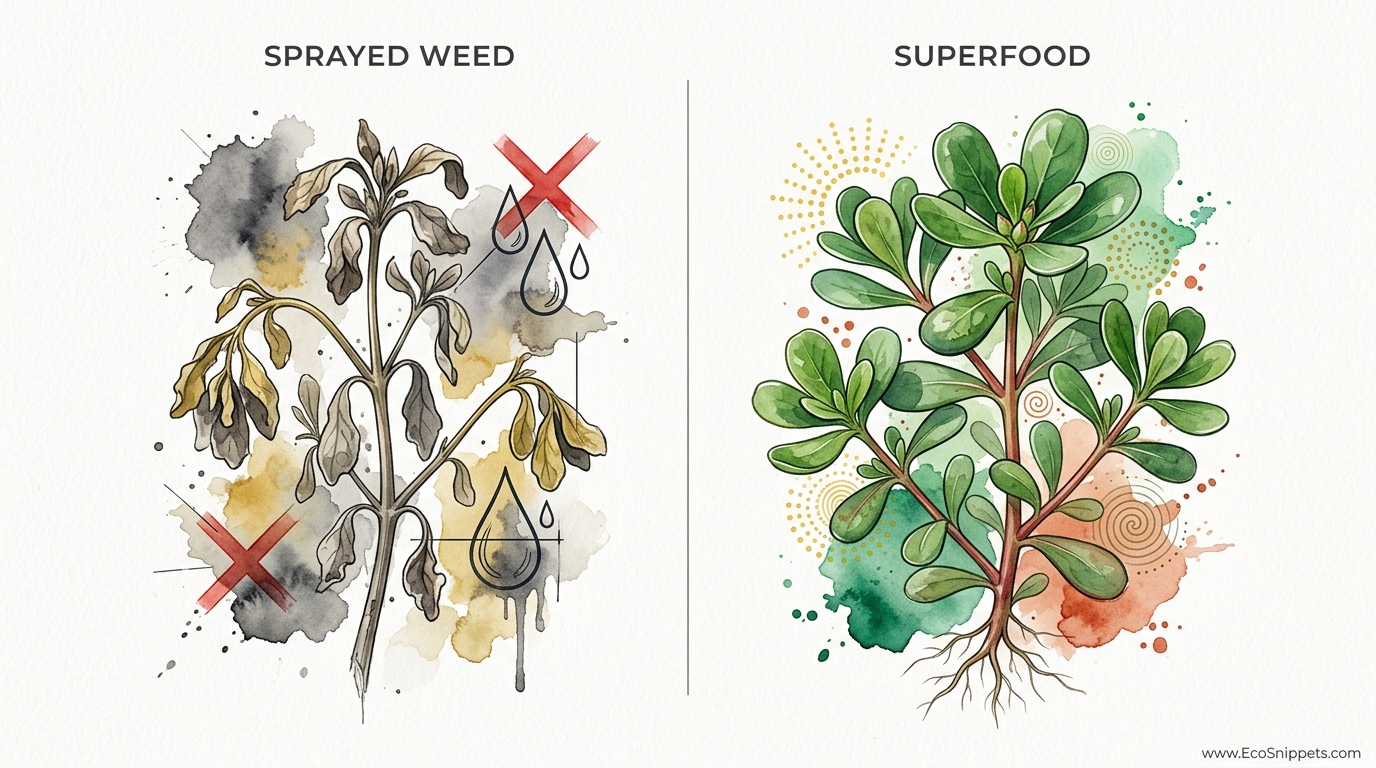
The plant you’re poisoning contains more heart-healthy Omega-3s than almost any other vegetable on earth. Most backyard farmers spend hours trying to eradicate Purslane from their paths, unaware they are killing a superfood. This ‘weed’ has more alpha-linolenic acid than spinach and is packed with antioxidants. Stop reaching for the herbicide and start reaching for the salad bowl. It’s a free, drought-resistant asset that literally grows itself while you’re busy elsewhere.
Why You Should Eat Purslane Instead Of Killing It
Purslane, known scientifically as Portulaca oleracea, is often the first thing pulled from a well-tended garden bed. It thrives in the most inhospitable environments, from the cracks in urban sidewalks to the dry, sun-baked edges of rural driveways. This resilience is precisely why it deserves a place on your plate rather than in your compost heap. Throughout history, cultures from the Mediterranean to the Far East have prized this plant for its tart, slightly salty flavor and its ability to provide nourishment when other crops fail.
While modern agriculture classifies it as a noxious weed, ancient wisdom tells a different story. In the Roman Empire, it was used as a remedy for everything from headaches to digestive issues. In Traditional Chinese Medicine, it is heralded as a “long-life vegetable” because of its dense nutritional profile. When you choose to eat Purslane, you are tapping into a lineage of self-reliance that predates commercial supermarkets and synthetic fertilizers. It is a plant that asks for nothing and gives back in abundance.
Understanding Purslane means seeing it not as an invader, but as a volunteer crop. It appears precisely when the summer heat begins to scorch more delicate greens like lettuce and spinach. Because it is a succulent, it stores water in its thick leaves and stems, allowing it to remain crisp and juicy even in the middle of a drought. For the modern homesteader or health-conscious individual, it represents the ultimate form of food security: a high-value nutrient source that requires zero maintenance.
How to Identify Purslane and Avoid the Poisonous Look-Alikes
Identification is the most critical skill for any forager. Purslane has a distinct appearance, but it shares its habitat with a toxic neighbor called Spurge (Euphorbia species). To safely harvest Purslane, you must look for its thick, succulent, spoon-shaped leaves that are smooth to the touch. The stems are usually a vibrant reddish-purple and can grow quite thick, sometimes reaching the diameter of a pencil (approx. 6-8 mm) in nutrient-rich soil.
The most important test for identification is the “sap test.” If you break a stem of true Purslane, the juice inside will be clear and watery. If you break a stem and see a milky, white liquid, do not eat it. This milky sap is characteristic of Spurge, which is poisonous and can cause severe skin irritation and digestive distress. Additionally, Purslane leaves grow in a whorled pattern at the ends of the stems, whereas Spurge leaves often have a small dark spot in the center and grow in opposite pairs along a much thinner, hairier stem.
Once you are certain of the identity, look at the flowers. Purslane produces tiny yellow flowers with five petals that only open in the bright morning sun. These flowers eventually turn into small, cup-like pods filled with hundreds of microscopic black seeds. Observing these details ensures that you are harvesting a nutrient-dense superfood rather than a hazardous garden weed. Always forage from areas that have not been treated with pesticides or herbicides, as Purslane is a “dynamic accumulator” and will soak up chemicals from the soil.
How the Nutritional Blueprint of Purslane Works
The secret behind Purslane’s power lies in its unique biology. Unlike most green vegetables, Purslane is an incredible source of alpha-linolenic acid (ALA), a type of Omega-3 fatty acid. In fact, research suggests it contains up to five to seven times more Omega-3s than spinach. This is highly unusual for a land-based plant, as these fats are typically found in cold-water fish or flaxseeds. These fatty acids are essential for cardiovascular health and brain function, making Purslane a vital asset for those looking to improve their heart health naturally.
Beyond its healthy fats, Purslane operates as a concentrated delivery system for antioxidants. It is loaded with Vitamin E (alpha-tocopherol), Vitamin C, and beta-carotene. Interestingly, the plant also contains high levels of glutathione, an antioxidant that helps protect cells from oxidative damage. Because it is a succulent, it also utilizes a specialized form of photosynthesis called Crassulacean Acid Metabolism (CAM) during periods of high heat. This process causes the plant to accumulate malic acid overnight, which it then converts to glucose during the day.
This biological process directly affects the flavor. If you harvest Purslane in the early morning (approx. 6:00 AM to 8:00 AM), it will have a much tarter, more lemony taste due to the higher concentration of malic acid. If you wait until the late afternoon (approx. 4:00 PM to 6:00 PM), the flavor will be milder and slightly sweeter. Understanding this cycle allows you to “tune” the flavor of your harvest to match your specific culinary needs, whether you want a sharp bite for a salad or a mellow addition to a stew.
The Practical Benefits of Eating Purslane
The primary advantage of integrating Purslane into your diet is the sheer density of nutrients it provides for zero cost. In a world where “superfoods” are often imported and expensive, Purslane is a local solution that outperforms many store-bought greens. A single 100-gram (approx. 3.5 oz) serving provides a significant portion of the daily recommended intake for Vitamin A, Vitamin C, magnesium, and potassium. These minerals are vital for maintaining healthy blood pressure and bone density.
Another major benefit is its role in ecological gardening. Purslane acts as a “living mulch.” Its prostrate growth habit covers the soil, reducing moisture evaporation and suppressing other, less desirable weeds. Its deep taproot can reach down into compacted soil, breaking it up and bringing minerals from the subsoil up to the surface. When the plant eventually dies back in the winter, those nutrients are released into the topsoil, essentially acting as a free fertilizer for your next season’s crops.
From a culinary perspective, Purslane offers a unique texture that most greens lack. The leaves are crunchy and succulent, while the stems provide a satisfying snap. When cooked, the plant releases a slightly mucilaginous (okra-like) substance that can serve as a natural thickener for soups and gravies. This versatility makes it an excellent survival food or a staple for anyone practicing self-reliant living. It can be eaten raw, sautéed, pickled, or even dried and ground into a nutritious powder for winter use.
Challenges and Common Mistakes to Avoid
The most frequent error people make when starting with Purslane is harvesting from contaminated areas. Because Purslane loves disturbed soil, it often grows near roadsides, parking lots, or the edges of treated lawns. This is dangerous because the plant can absorb heavy metals and residual herbicides. Always ensure your foraging ground is “clean” and at least 30 meters (approx. 100 feet) away from busy roadways or industrial sites. If you aren’t sure, it is better to transplant a small piece into a clean garden bed and let it spread there.
Another challenge is managing the oxalate content. Like spinach and rhubarb, Purslane contains oxalic acid, which can contribute to the formation of kidney stones in susceptible individuals. If you have a history of kidney stones, you should consume Purslane in moderation. A practical tip to mitigate this is to blanch the leaves in boiling water for about 45 to 60 seconds and then discard the water; this significantly reduces the oxalate levels while preserving most of the other nutrients.
Mistaking “Spurge” for Purslane remains the most dangerous mistake. Never rely on memory alone when first starting out. Use a physical guide or a reliable app, and always perform the sap test. Additionally, some people find the mucilaginous texture of cooked Purslane off-putting. To avoid “slimy” greens, stick to using it raw in salads or quick-sautéing it over high heat for no more than 2 minutes. Overcooking is a common pitfall that turns a crisp vegetable into a soggy mess.
Limitations and When Purslane May Not Be Ideal
While Purslane is a nutritional powerhouse, it is not a “magic bullet” for everyone. Its high sodium content, relative to other vegetables, means that individuals on strict low-sodium diets should monitor their intake. Because it is a succulent, it naturally retains more minerals, including salts, from the soil. This gives it its pleasant, savory flavor but can be a drawback for those with specific renal concerns.
Environmental constraints also dictate where Purslane can be a reliable food source. It is a summer annual and is highly sensitive to frost. In regions with short growing seasons or cool summers, the plant may not grow large enough to be a significant part of the diet. It requires soil temperatures above 21°C (approx. 70°F) to germinate effectively. If you live in a high-altitude or northern climate, you may need to start seeds indoors or wait for the peak of summer to see any meaningful growth.
Finally, there is the issue of “palatability fatigue.” Because Purslane has such a distinct, tart flavor and slightly mucilaginous quality, it can overwhelm a dish if used in too large a quantity. It is best treated as a high-value supplement to a meal—a handful in a salad or a cupful in a stew—rather than the sole ingredient in a dish. Like any wild food, it is most effective when used as part of a balanced, varied diet that respects the seasonal rhythms of the land.
Comparison: Purslane vs. Traditional Garden Greens
To truly understand the value of this “weed,” it helps to compare it directly with the greens we traditionally pay for at the market. While spinach and kale are often lauded as the kings of the vegetable aisle, Purslane holds its own and, in some categories, takes the lead. The following table highlights the differences between Purslane and Spinach based on a 100-gram serving.
| Nutrient / Factor | Purslane (Raw) | Spinach (Raw) |
|---|---|---|
| Omega-3 Fatty Acids (ALA) | Approx. 350-400 mg | Approx. 50-90 mg |
| Vitamin E | Very High (12.2 mg) | Moderate (2.0 mg) |
| Vitamin C | 21 mg | 28 mg |
| Drought Resistance | Excellent (Succulent) | Poor (Requires regular water) |
| Cost to Grow | $0 (Volunteers in paths) | Requires seeds, soil prep, water |
| Maintenance Level | Zero (Self-seeding) | High (Pest and bolt prone) |
As the comparison shows, Purslane is an efficiency champion. It provides massive amounts of heart-healthy fats and Vitamin E without the logistical burden of traditional gardening. While spinach may have a slight edge in some vitamins, the “effort-to-nutrient” ratio of Purslane is unbeatable. For the self-reliant practitioner, choosing a plant that grows itself over one that requires constant pampering is a simple matter of common sense.
Practical Tips for Harvesting and Storing
When you are ready to harvest, use a pair of clean garden snips or scissors. Instead of pulling the entire plant by the root, cut the stems about 5 cm (approx. 2 inches) above the ground. This “cut-and-come-again” method allows the plant to regrow, providing you with multiple harvests throughout the summer. Purslane is incredibly prolific; a single plant can produce several kilograms of edible greens over the course of a season if managed correctly.
Washing Purslane requires a bit more effort than store-bought lettuce. Because it grows prostrate against the soil, the crevices between the leaves and stems often trap grit and sand. The best method is to submerge your harvest in a large basin of cold water for at least 10 minutes. Swish the plants around vigorously to dislodge any dirt. You may need to repeat this process two or three times until no sediment remains at the bottom of the basin.
Fresh Purslane has a relatively short shelf life. It is best eaten within 2-3 days of harvest. To store it, wrap the dry stems in a damp paper towel and place them in a reusable silicone bag or a perforated plastic bag in the crisper drawer of your refrigerator. If you find yourself with an abundance of Purslane, the best way to preserve it is by pickling. The stems remain crunchy when pickled in a simple vinegar-and-salt brine, making for a delicious addition to winter sandwiches and charcuterie boards.
Advanced Considerations for the Serious Practitioner
If you want to take your Purslane game to the next level, consider “managing” your wild patches rather than just foraging them. You can encourage the growth of larger, more succulent leaves by occasionally watering your Purslane during extreme dry spells. While it can survive on almost nothing, it truly thrives and becomes much more tender when given a small amount of supplemental moisture. You can also mulch around your Purslane patches with clean straw to keep the leaves off the bare dirt, making the cleaning process much easier.
Seed saving is another advanced technique. Purslane seeds are incredibly hardy and can remain viable in the soil for up to 40 years. To collect them, wait until the small seed pods turn brown and start to open. Place a paper bag over the stems and shake it vigorously. These tiny black seeds can be ground into a meal and used as a nutritional additive in baking, much like poppy seeds or flaxseeds. Indigenous cultures in Australia have used Purslane seeds for thousands of years to make traditional seed cakes.
Finally, consider the soil health implications. Purslane is often an indicator of compacted, nutrient-poor soil. If you see it thriving in a particular area, it is telling you that the soil there needs aeration and organic matter. By allowing it to grow and then tilling the remains into the soil at the end of the year, you are using the plant’s natural biology to improve your land. It is a partner in your gardening efforts, not an enemy.
Practical Scenarios: Purslane in Action
Imagine a mid-August afternoon. The sun is unrelenting, and your carefully planted spinach has long since bolted and turned bitter. Your lettuce is wilted despite your best efforts at watering. This is the moment Purslane shines. You walk out to your garden path, where the “weed” is vibrant and crisp. You harvest two large handfuls of the reddish stems, wash them under the garden hose, and chop them into a bowl with some vine-ripened tomatoes and a splash of olive oil. In five minutes, you have a high-Omega-3 meal that cost you nothing.
In another scenario, consider the budget-conscious family. Instead of buying expensive bags of pre-washed kale, they spend twenty minutes a week “weeding” their own backyard. By harvesting the Purslane that grows between their tomato rows, they add a nutrient-dense component to their morning smoothies and evening stir-fries. Over the course of a summer, this simple act of foraging can save hundreds of dollars on the grocery bill while significantly increasing the family’s intake of essential fatty acids.
Even in an urban environment, Purslane can be a life-saver. A community garden that has fallen into disrepair may be overgrown with what looks like trash. However, a trained eye sees a carpet of Portulaca oleracea. This “trash” can be harvested (provided the soil is tested and clean) to provide fresh, raw nutrients to people who might otherwise only have access to processed foods. It is a testament to the plant’s role as a resilient, egalitarian source of health.
Final Thoughts
Purslane represents a bridge between the wild world and the domestic garden. It is a reminder that nature often provides exactly what we need, precisely where we are, if only we have the eyes to see it. By shifting your perspective from “eradication” to “harvest,” you transform a chore into a source of nourishment. This plant asks for no fertilizer, no tilling, and very little water, yet it offers more heart-healthy benefits than almost anything you could buy in a plastic clamshell.
Embracing Purslane is an act of self-reliance. It is a rejection of the idea that we must depend solely on industrial supply chains for our health. Whether you are a seasoned homesteader or a beginner looking to improve your diet, this humble succulent offers a path toward a more sustainable and nutritious way of life. The next time you see those reddish stems creeping across your path, don’t reach for the hoe. Reach for a basket, and give thanks for the free superfood at your feet.
Start small. Try a few leaves in your next salad or a handful in your morning eggs. Once you experience the snap of a fresh Purslane stem and the energy boost that comes from its dense mineral profile, you’ll never look at your “weeds” the same way again. Nature has been trying to feed you for years—it’s time to finally take a seat at the table.
