How To Become More Self-Sufficient Without Starting a Full-Blown Farm…
Want to start preserving your harvest, making your own soap, or building a backyard root cellar — but not sure where to begin? “Homesteading Advice” gives you instant lifetime access to 35+ practical homesteading books on food preservation, veggie gardening, DIY natural cleaning products (save over $250 per year with this skill alone), brewing, off-grid energy, and a whole lot more…
Click Here To Check It Out Now!
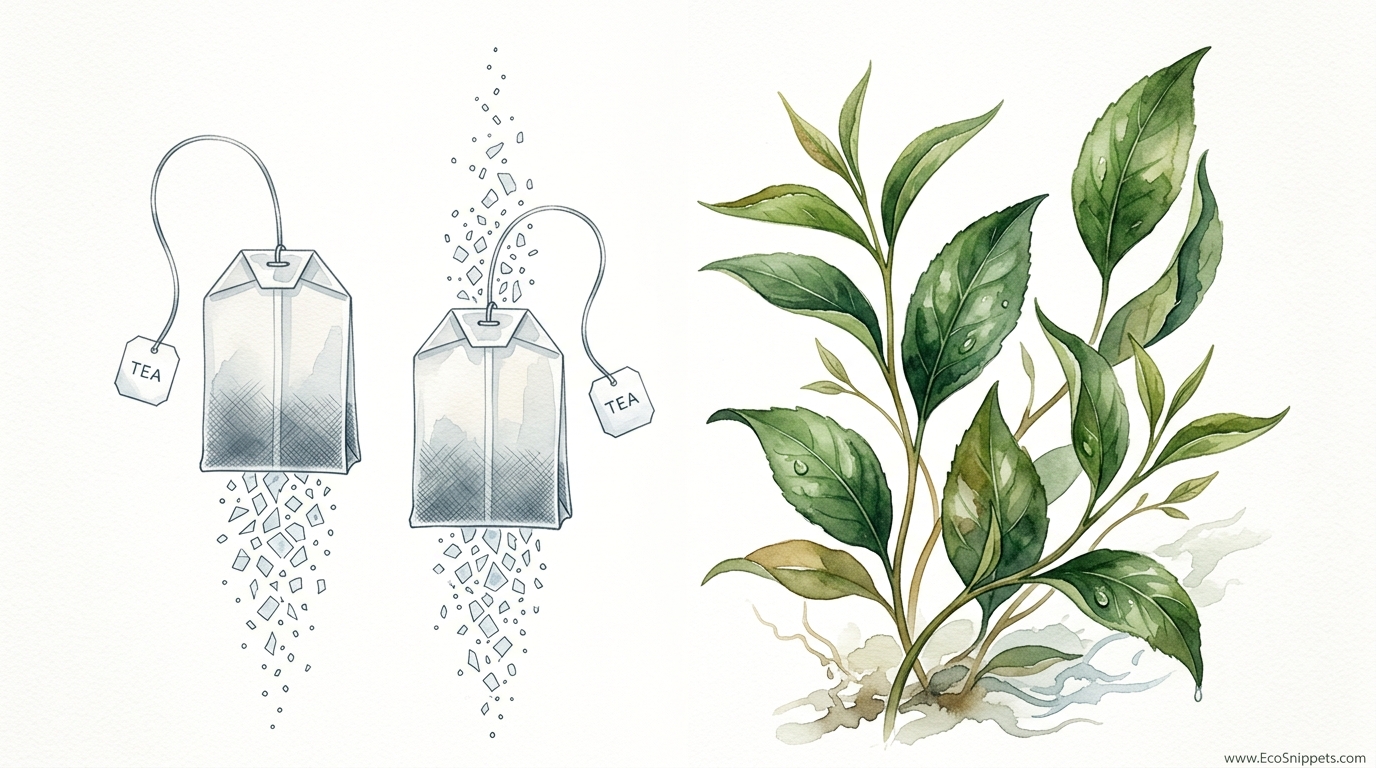
That ‘convenient’ tea bag is shedding 11 billion microplastic particles into your cup every single morning. Most modern tea bags are a ‘dead’ product—pulverized dust wrapped in bleached paper and plastic mesh. Switch to the ‘living’ ritual of whole-leaf foraged herbs and taste the essential oils that a factory bag could never preserve.
The quiet ritual of morning tea has been a cornerstone of human culture for millennia. It was once a time of connection between the person and the earth, a slow extraction of medicine and flavor from the landscape. Today, that connection has been severed by industrial convenience, replaced by a standardized pouch of leaf-waste that threatens both the environment and your health.
Reclaiming your morning cup is not about adding complexity to your life. It is about removing the artificial barriers between you and the nutrients you seek. When you move away from the sterile bag and toward the living leaf, you aren’t just making tea; you are practicing self-reliance and ancestral wisdom.
This guide will walk you through the reality of modern tea production, the scientific evidence regarding microplastics, and the practical steps to forage and brew your own wild infusions. Whether you are a beginner or a serious practitioner, understanding the difference between a factory product and a foraged herb will fundamentally change how you view your daily nourishment.
Are Tea Bags Full Of Microplastics?
The simple answer is a resounding yes. Modern tea bags are rarely just paper. To ensure that a tea bag does not fall apart in boiling water, manufacturers often use a variety of synthetic polymers. Even those that appear to be made of simple paper are frequently reinforced with plastic fibers or sealed with heat-resistant adhesives.
Research from McGill University in 2019 sent shockwaves through the health community. Scientists discovered that steeping a single “silken” plastic tea bag at a brewing temperature of 95°C (203°F) released approximately 11.6 billion microplastics and 3.1 billion nanoplastics into a single cup. These levels are thousands of times higher than those found in other foods, such as table salt or bottled water.
The materials responsible for this shedding are diverse. Many “premium” pyramid bags are made of nylon or polyethylene terephthalate (PET), the same plastic used in soda bottles. Standard rectangular paper bags often contain up to 25% polypropylene, a plastic polymer woven into the paper to allow for heat-sealing. When these materials meet near-boiling water, they begin to degrade, sloughing off microscopic fragments that you then ingest.
Beyond the plastic itself, many paper tea bags are treated with epichlorohydrin. This chemical is used to increase the “wet strength” of the paper, preventing it from tearing. When epichlorohydrin contacts water, it can form a compound called 3-MCPD, which is classified as a potential human carcinogen. By choosing a bagged product, you are often choosing a cocktail of synthetic chemicals and polymers over the pure plant medicine you intended to consume.
How to Transition to Whole-Leaf and Foraged Tea
Moving away from the tea bag is a process of re-learning how to interact with the botanical world. The goal is to move from “tea dust” to “whole leaf.” This transition happens in three primary stages: purchasing high-quality loose leaf, growing your own tea garden, and foraging from the wild.
The first step is to invest in a quality stainless steel, glass, or ceramic infuser. This replaces the single-use bag and allows whole leaves to unfurl completely. Unlike the dust found in bags, whole leaves require space to expand. As they hydrate, they release complex polyphenols and essential oils that have been preserved by the plant’s intact cellular structure.
Identifying Your Forage
Foraging for tea herbs is one of the safest ways to enter the world of wildcrafting. Many of the most potent tea plants are common “weeds” found in unsprayed backyards and meadows.
- Stinging Nettle (Urtica dioica): Rich in minerals like iron and calcium. Harvest in the early spring before it flowers, using gloves to avoid the sting.
- Dandelion (Taraxacum officinale): The leaves provide a bitter, cleansing tea, while the roasted roots offer a rich, coffee-like flavor.
- Wild Mint (Mentha arvensis): Easily identified by its square stem and unmistakable aroma. Mint is excellent for digestion.
- Raspberry Leaf (Rubus idaeus): Known as a powerful tonic for reproductive health, the leaves should be harvested in early summer.
The Harvesting and Drying Process
Harvesting should always be done with respect for the plant’s survival. Take only what you need and ensure you are not depleting a local population. Once collected, the herbs must be processed to preserve their vitality.
Rinse your finds under cool water to remove dust and insects. Pat them dry and prepare for the drying stage. You can hang-dry herbs in bunches in a well-ventilated area away from direct sunlight, or use a dehydrator set at a low temperature—usually between 35°C and 46°C (95°F to 115°F). Drying at higher temperatures can flash-off the delicate essential oils, leaving you with a “dead” flavor similar to store-bought bags.
Benefits of Whole-Leaf Foraged Herbs
The advantages of switching to whole-leaf foraged herbs extend far beyond the avoidance of microplastics. When you consume a plant in its whole, minimally processed form, you are accessing a level of nutrition that industrial processing simply cannot provide.
Whole tea leaves and foraged herbs contain a significantly higher concentration of antioxidants and polyphenols. Because the leaf remains intact until the moment of brewing, the essential oils are trapped inside the cells. In a tea bag, the leaves are pulverized into “dust” or “fannings,” which exposes a massive amount of surface area to oxygen. This leads to rapid oxidation, causing the tea to lose its medicinal potency and flavor profile within months of being packaged.
Environmental sustainability is another measurable benefit. The conventional tea industry is a major contributor to deforestation and habitat loss in tropical regions. Furthermore, the carbon footprint of shipping mass-produced tea across the globe is immense. By foraging your own herbs, you eliminate the need for pesticides, international shipping, and single-use packaging. Your “tea miles” are reduced to the distance between your back porch and your teapot.
Finally, the cost efficiency of whole-leaf tea is often misunderstood. While a tin of high-quality loose leaf may seem more expensive than a box of 100 bags, whole leaves can often be re-steeped two or three times. Foraged herbs are, of course, entirely free. The only investment is your time and the knowledge you build over the seasons.
Challenges and Common Mistakes
The primary challenge for any new forager is the risk of misidentification. Nature is full of lookalikes, and while many are harmless, some can be dangerous.
Confusion with Toxic Plants: This is the most critical error. For example, Poison Hemlock can look remarkably like Wild Carrot or Yarrow to an untrained eye. Never ingest a plant unless you are 100% certain of its identity. Use multiple field guides and cross-reference the leaf shape, stem characteristics (such as the presence of hair or purple spots), and the smell.
Harvesting in Polluted Areas: Plants are bio-accumulators. If you harvest herbs from the side of a busy highway or a lawn treated with chemical fertilizers, you are likely consuming those pollutants in your tea. Always seek out clean, unsprayed areas at least 50 meters (165 feet) away from major roads.
Improper Storage: Light, heat, and moisture are the enemies of dried herbs. Many people make the mistake of storing their tea in clear glass jars on a sunny windowsill. This leads to rapid degradation. To maintain the “living” quality of your foraged tea, store it in airtight, opaque containers in a cool, dark cupboard.
Limitations of Foraging and Whole-Leaf Systems
While the benefits are substantial, it is important to acknowledge the limitations of this approach. Foraging is not a system of instant gratification. It requires a commitment to learning the cycles of the seasons and the specific needs of local ecosystems.
Seasonality is the biggest constraint. You cannot harvest fresh nettles in the dead of winter or raspberry leaves in the early spring. This forces the practitioner to plan ahead, harvesting and drying enough herbs during the growing season to last through the dormant months. This lack of “on-demand” availability can be a hurdle for those accustomed to the 24/7 convenience of the modern grocery store.
There is also a significant time requirement. Identifying, harvesting, cleaning, and drying herbs takes hours of labor. For some, this time is a form of meditation; for others, it is a luxury they cannot afford. Furthermore, brewing whole-leaf tea requires more attention to water temperature and steeping time than simply dropping a bag into a mug of boiling water.
Comparison: Sterile Bags vs. Living Leaves
To understand the trade-offs, it helps to look at the measurable factors involved in each system.
| Feature | Conventional Tea Bags | Whole-Leaf / Foraged Herbs |
|---|---|---|
| Purity | High risk of microplastics and nanoplastics. | Zero plastic; high mineral and oil content. |
| Flavor Depth | One-dimensional, often bitter or “dusty.” | Complex, aromatic, and multi-layered. |
| Nutrient Density | Low; oxidized fannings lose potency quickly. | High; intact cells preserve antioxidants. |
| Cost | Variable, but generates recurring waste. | Low to zero (foraged); reusable multiple times. |
| Preparation Time | 1–3 minutes; instant. | 10–15 minutes (harvesting/drying excluded). |
| Sustainability | High waste (packaging, plastic mesh). | Zero waste; supports local biodiversity. |
Practical Tips and Best Practices
If you are ready to apply this knowledge, start by auditing your current kitchen setup. Remove any plastic or silicone infusers, as even “food-grade” silicone can leach compounds at high temperatures. Replace them with stainless steel or glass.
Mastering the Steep: Different plants require different temperatures. Delicate leaves and flowers (like mint or chamomile) should be steeped in water that has cooled slightly to about 80°C (176°F). Harder roots and barks (like dandelion root or willow bark) often require a decoction—simmering the herb in boiling water for 10 to 20 minutes to extract the tougher medicinal compounds.
The “Garbling” Technique: After your foraged herbs are dry, you must “garble” them. This is the process of separating the medicinal parts from the woody stems or debris. Use your hands to gently crush the leaves into a coarse grind. Avoid pulverizing them into a powder; the goal is to keep the fragments large enough to be easily strained but small enough to expose some surface area for infusion.
Labeling is Essential: Never trust your memory when it comes to dried herbs. Once a plant is dried and crushed, many species look identical. Label every jar with the common name, the botanical name (to avoid confusion with lookalikes), and the date of harvest. Most foraged herbs retain their peak potency for 12 to 18 months.
Advanced Considerations for the Serious Practitioner
For those who want to go beyond simple infusions, the world of herbal fermentation offers a way to mimic the depth of traditional black teas using local plants. This is a common practice with Rosebay Willowherb (Chamaenerion angustifolium), also known as Ivan Chai in Eastern Europe.
To ferment your own “black” tea, take fresh leaves and roll them between your palms until the cell walls break and the leaves become bruised and sticky. Pack them tightly into a jar and leave them in a warm place for 2 to 3 days. During this time, the polyphenols oxidize, changing the color from green to dark brown and developing a deep, honey-like aroma. Once the fermentation is complete, dry the leaves immediately at a low temperature to stop the process.
Scaling your foraged tea collection also requires an understanding of soil health. If you are harvesting from your own garden, ensure you are replenishing the soil with organic compost. Plants grown in mineral-depleted soil will produce tea that is equally lacking in nutritional value. The “living” ritual of tea begins with the health of the earth beneath your feet.
Scenario: A Day of Foraged Infusions
To see how this works in practice, imagine a typical day where you have replaced all industrial tea bags with foraged alternatives.
7:00 AM: Instead of a bagged English Breakfast, you brew a cup of dried Nettle and Dandelion Root. The nettle provides a burst of iron and minerals for energy, while the roasted dandelion root offers a bitter kick that stimulates digestion and wakes up the liver. You steep this for a full 10 minutes, covered, to ensure the essential oils stay in the cup.
1:00 PM: After lunch, you reach for a blend of Wild Mint and Raspberry Leaf. The mint helps soothe any digestive discomfort, while the raspberry leaf provides a gentle, earthy base. Because these are whole leaves, you use a large stainless steel basket that allows them to fully unfurl in the water.
8:00 PM: Before bed, you prepare a relaxing infusion of Chamomile flowers and Lemon Balm. These herbs were harvested during the peak of summer and dried slowly. The scent that fills the kitchen as the hot water hits the dried flowers is vastly superior to any store-bought “sleepy time” tea, as the volatile oils have been perfectly preserved in the whole blossoms.
Final Thoughts
Reclaiming the ritual of tea is a powerful act of resistance against a food system that prioritizes convenience over health. By recognizing that a factory bag is a “dead” product, you open yourself up to the vibrant, living world of whole-leaf botanicals. The transition from 11 billion microplastics to a cup full of essential oils and minerals is a journey that pays dividends in both physical health and mental clarity.
Experimentation is the key to mastery. Start with the plants you recognize—the dandelions in your yard or the mint in your garden. As your confidence grows, so will your pantry of wild medicines. Each cup of foraged tea is a reminder of your connection to the landscape and your ability to provide for yourself without the intervention of a factory.
The path toward self-reliance is built one small habit at a time. By replacing your morning tea bag with a handful of living leaves, you are choosing a cleaner body, a healthier planet, and a more intentional way of living. Taste the difference that the earth provides, and you will never go back to a plastic bag again.
