How To Become More Self-Sufficient Without Starting a Full-Blown Farm…
Want to start preserving your harvest, making your own soap, or building a backyard root cellar — but not sure where to begin? “Homesteading Advice” gives you instant lifetime access to 35+ practical homesteading books on food preservation, veggie gardening, DIY natural cleaning products (save over $250 per year with this skill alone), brewing, off-grid energy, and a whole lot more…
Click Here To Check It Out Now!
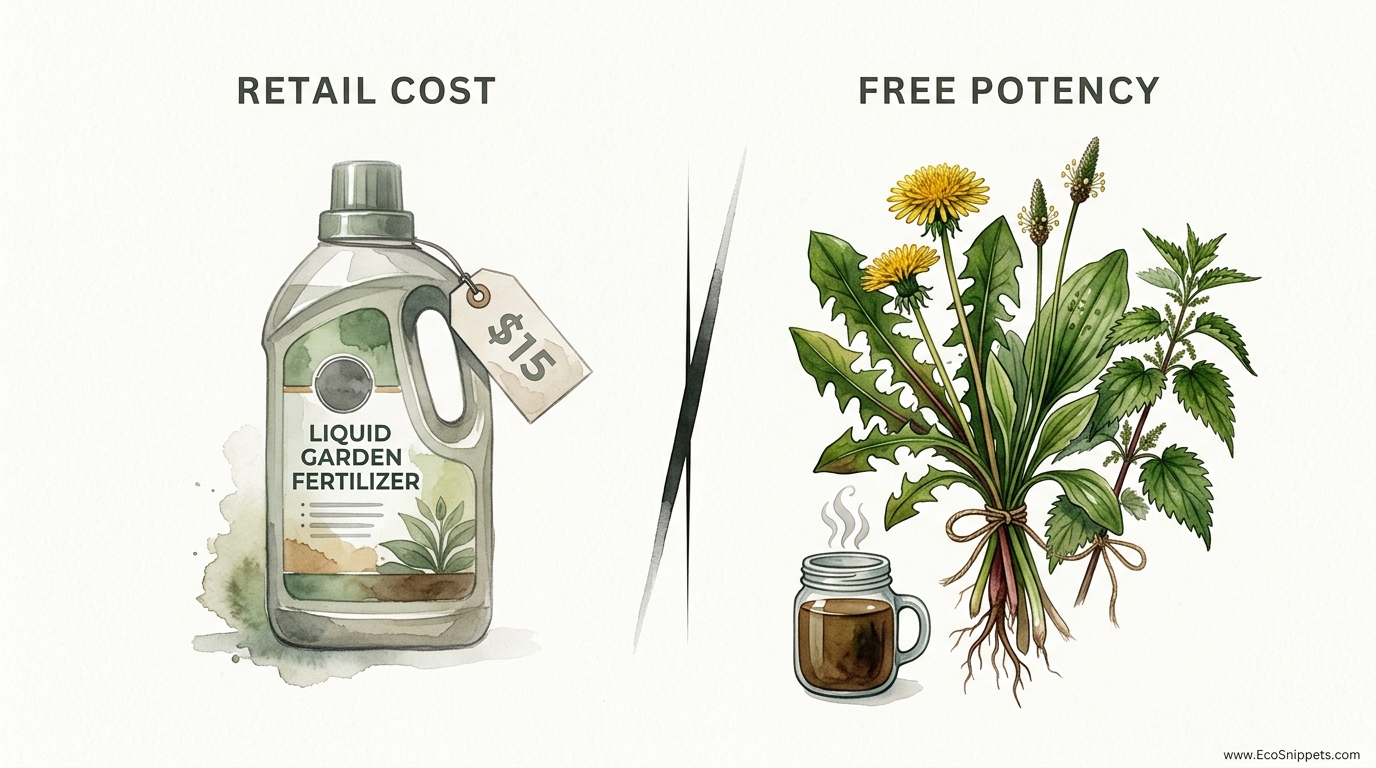
You are paying $40 a gallon for nutrients that are currently growing as ‘weeds’ in your own driveway. Why buy synthetic nutrients shipped across the country when your backyard ‘nuisance’ plants are nutrient pumps? Using the Korean Natural Farming method of Fermentation (FPJ), you can extract the growth hormones and minerals from weeds for the cost of a bag of sugar. Your plants won’t know the difference, but your wallet will.
Managing a garden often feels like an endless cycle of purchasing bottled solutions to solve problems that nature already has a handle on. If you look at the vigorous growth of a dandelion pushing through a crack in the concrete, you are looking at a plant with an incredible will to live and a biological toolkit designed for rapid expansion. This vitality is exactly what your garden crops need.
Mastering the art of Fermented Plant Juice (FPJ) allows you to capture that raw biological energy and deliver it directly to your vegetables, flowers, or fruit trees. This practice is a cornerstone of Korean Natural Farming (KNF), a system that prioritizes local resources and indigenous microorganisms over chemical interventions. It is about working with the ancestors of our modern crops to build soil that is alive and resilient.
Free Garden Fertilizer From Backyard Weeds
Fermented Plant Juice is a liquid extract made by combining fast-growing plant tips with brown sugar. This simple mixture initiates a process called osmotic pressure, which draws the “blood” or sap out of the plant cells and preserves it in a stable, shelf-stable form. In the world of Korean Natural Farming, this juice is considered a “growth booster” because it is packed with the very hormones and enzymes the plant was using to grow at its peak.
This method exists because nature is the most efficient chemist. When a plant like stinging nettle or comfrey grows, it isn’t just pulling nitrogen from the air or soil; it is synthesizing complex growth regulators like auxins, gibberellins, and cytokinins. These are the chemical signals that tell a plant to grow taller, push out more leaves, or strengthen its stems. Synthetic fertilizers usually provide the raw elements—nitrogen, phosphorus, and potassium—but they lack these sophisticated biological instructions.
Think of it like the difference between a person eating raw vitamin powders versus a nutrient-dense, home-cooked meal. The powders might keep you alive, but the meal provides the complex enzymes and co-factors that help your body actually use those nutrients. FPJ provides the “meal” for your garden. It is used in real-world situations from small backyard raised beds to large-scale organic rice farms in Asia, proving that self-reliance is not just for the hobbyist but for anyone serious about high-performance agriculture.
How to Do It: The Art of Extraction
The process of making FPJ is remarkably straightforward, but it requires attention to detail and a respect for the timing of the natural world. Success depends on capturing the plant at its most energetic moment.
To begin, you must collect your plant material at the right time. This means heading into the garden or the field before the sun crests the horizon. During the night, plants move their moisture and nutrients upward into their growing tips. In the early morning, when the dew is still heavy, the plant is in a state of respiration rather than photosynthesis. This is when the microbial activity on the leaf surface is at its peak and the internal pressure of the sap is highest.
Follow these steps for a successful extraction:
- Select the material: Look for the fastest-growing tips of vigorous plants. These are usually the top 2 to 3 inches (5 to 7.5 centimeters) of the plant. Avoid any plants that look diseased or are covered in pests.
- Do not wash: This is a common mistake. You need the indigenous microorganisms (yeasts and bacteria) that live on the surface of the leaves to drive the fermentation. Washing them away with tap water—which often contains chlorine—will stall the process.
- Chop and weigh: Use a sharp, clean knife to cut the plant material into small pieces, roughly 1 to 2 inches (2.5 to 5 centimeters) long. Weigh the material. This is crucial because you need an equal weight of sugar.
- The Sugar Mix: Use unrefined brown sugar. Avoid white sugar if possible, as the molasses content in brown sugar provides additional minerals and a better food source for the microbes. Mix the chopped plants with the sugar in a large bowl. Ensure every piece of plant is coated.
- Packing the jar: Place the mixture into a glass jar or food-grade plastic container. Pack it down firmly but do not mash it into a paste. The goal is to maximize surface area contact between the sugar and the plant.
- The Sugar Cap: Once the jar is about 2/3 or 3/4 full, add an extra layer of sugar on top. This “cap” prevents air from reaching the plant material, which helps avoid mold growth.
- Cover and ferment: Use a breathable cover like a paper towel, cheesecloth, or a clean cloth secured with a rubber band. This allows the carbon dioxide produced during fermentation to escape while keeping out dust and insects.
Place the container in a cool, dark place away from direct sunlight. After 24 hours, check the jar. The volume should have settled. Fermentation typically takes 5 to 7 days depending on the ambient temperature. In warmer climates (above 75°F or 24°C), it may be ready in 3 to 5 days. In cooler regions, it might take a full week. You will know it is ready when the plant material floats and a dark, syrupy liquid has collected at the bottom. The smell should be pleasantly sweet and slightly alcoholic, never rotten or sour.
Benefits of Fermented Plant Juice
The primary advantage of using FPJ is the delivery of bioavailable nutrients. Because the nutrients are already in a liquid form and have been “pre-digested” by microbes, your crops can absorb them almost immediately. This is especially true for foliar applications, where the juice is sprayed directly onto the leaves.
Practical benefits include:
- Hormonal Stimulation: By extracting the growth tips of fast-growing weeds, you are essentially “recycling” their growth hormones. For example, bamboo shoots contain high levels of gibberellins which promote rapid vertical growth.
- Microbial Inoculation: Every batch of FPJ is teeming with beneficial yeasts and lactic acid bacteria. When applied to the soil or leaves, these microbes help suppress pathogens and break down organic matter, making existing soil minerals more accessible.
- Resistance to Stress: Plants treated with FPJ often show a thicker cuticle (the waxy layer on the leaf). This makes them less susceptible to fungal infections like powdery mildew and less attractive to sucking insects like aphids.
- Cost Efficiency: A 5-pound (2.2 kilogram) bag of brown sugar costs a few dollars and can produce enough FPJ to last an entire season for a standard home garden. Compare this to the high price of premium organic “bloom boosters” or “vegetative tonics.”
Challenges and Common Mistakes
The most frequent error is improper moisture management. If you collect your plants during a rainstorm or immediately after a heavy downpour, the water content will be too high. This dilutes the osmotic pressure and can lead to putrefaction—essentially, your fertilizer will rot instead of fermenting. If the liquid smells like a swamp or rotten eggs, throw it out and start over.
Another mistake is using the wrong ratio of sugar. Some people try to save money by using less sugar, but the 1:1 ratio by weight is a scientific necessity. The sugar acts as a desiccant, pulling the moisture out of the plant cells. If there isn’t enough sugar, the moisture will allow bad bacteria to thrive. Always err on the side of slightly more sugar rather than less.
Using a tight, non-breathable lid is a dangerous mistake. Fermentation produces carbon dioxide gas. If this gas cannot escape, pressure will build up until the glass jar shatters. Always use a cloth or paper cover to ensure a safe, aerobic-to-anaerobic transition.
Limitations: When This May Not Be Ideal
While FPJ is a powerful tool, it is not a complete replacement for a healthy soil foundation. If your soil is completely devoid of organic matter or has been poisoned by heavy metals, no amount of fermented juice will fix the underlying structure. FPJ is a supplement and a biostimulant, not a primary source of bulk calories for the soil like compost or mulch.
Environmental constraints also play a role. If you live in an area where the “weeds” are heavily treated with roadside herbicides, do not use them. These chemicals can survive the fermentation process and may stunt or kill your garden crops. Always forage from areas you know to be clean and untreated.
Additionally, certain invasive weeds might have very hardy seeds. While the osmotic pressure and fermentation process usually kill most seeds, it is not 100% foolproof. If you are worried about spreading a particular weed, stick to using the vegetative tips before the plant has flowered or set seed.
The Choice: Free Potency vs. Retail Cost
To understand the value of this method, it helps to compare what you get from a store-bought synthetic versus what you brew in your kitchen.
| Feature | Synthetic Nutrients | Fermented Plant Juice (FPJ) |
|---|---|---|
| Average Cost | $30 – $60 per gallon | Cost of 1lb Brown Sugar ($1.50) |
| Nutrient Profile | Isolated N-P-K salts | Hormones, Enzymes, Microbes, Minerals | Soil Impact | Can lead to salt buildup | Enhances soil biology and structure |
| Absorption | High, but prone to leaching | High, stays in the root zone |
| Shelf Life | Years (if kept dry/stable) | 6-12 months (if stored properly) |
The comparison makes it clear that while synthetics offer convenience, they do so at the expense of soil health and your bank account. FPJ requires your time and observation, but it pays dividends in a garden that feels more like an ecosystem and less like a laboratory.
Practical Tips and Best Practices
The quality of your FPJ is only as good as the plants you choose. For the best results, focus on “dynamic accumulators”—plants with deep taproots that pull minerals from deep within the earth.
- Stinging Nettle: An absolute powerhouse of nitrogen and iron. Use this for leafy greens or any plant in the vegetative stage.
- Comfrey: Known for its high potassium levels. Comfrey FPJ is excellent for plants that are beginning to transition into the flowering or fruiting stage.
- Dandelion: Rich in calcium and other trace minerals. Dandelions are excellent “general purpose” plants for your ferments.
- Purslane: Extremely high in omega-3 fatty acids and moisture. It ferments very easily and provides a great energy boost to the soil.
When you are ready to use your juice, remember that it is highly concentrated. The standard dilution rate is 1:500 or 1:1000. In imperial measurements, this is roughly 1 to 2 tablespoons per gallon of water (approximately 4 to 8 milliliters per liter). Applying it more thickly will not help the plant and may actually attract ants or other sugar-loving insects. Spray it in the early morning or late evening when the plant’s pores (stomata) are open and receptive.
Advanced Considerations: The Nutritional Cycle
Experienced practitioners of Korean Natural Farming do not just use one type of juice. They match the ferment to the life stage of the target crop. This is known as the “Nutritional Cycle” theory.
During the Vegetative Stage, you want to use FPJ made from fast-growing green plants like mugwort or bamboo. These contain the hormones that tell a plant to get big and green.
As the plant moves into the Changeover Period (the time between growing leaves and growing flowers), you might switch to a ferment made from slightly older plants or a mix that includes comfrey.
In the Reproductive Stage (fruiting and flowering), some farmers switch from Fermented Plant Juice to Fermented Fruit Juice (FFJ). This is made using the same method but uses ripe fruits like bananas, papayas, or squash instead of green tips. Fruits are high in potassium and phosphorus, which are the primary needs of a plant during its final push toward harvest.
Example Scenario: The Spring Greenhouse Boost
Imagine it is early spring. Your tomato seedlings are in 4-inch (10-centimeter) pots in the greenhouse. They look a little pale and are starting to grow slowly as they wait for the ground to warm up.
You head out at 6:00 AM and harvest a handful of young stinging nettle tips and a few dandelion leaves. You have about 200 grams of plant material. You mix this with 200 grams of brown sugar and pack it into a small jar. Five days later, you strain out the dark, rich liquid.
You take 1 tablespoon of this liquid and mix it into a 1-gallon (3.8-liter) watering can. You water your seedlings and give the leaves a light misting. Within 48 hours, the pale green leaves turn a deep, vibrant forest green. The stems thicken, and the plants look more “awake.” This cost you about fifteen cents and twenty minutes of work, and you didn’t have to drive to the store for a bottle of miracle-grow.
Final Thoughts
Fermented Plant Juice is more than just a cheap fertilizer. It is a return to a way of thinking that recognizes the value in what others call “waste.” By looking at your driveway weeds as nutrient pumps rather than nuisances, you change your relationship with your land. You stop being a consumer of garden products and start being a steward of biological processes.
This method is reliable, scientifically sound, and rooted in generations of agricultural wisdom. It requires a bit of grit to get out there in the morning dew and a bit of patience to let the microbes do their work, but the results speak for themselves. Your garden will be more vibrant, your soil will be more alive, and you will have the satisfaction of knowing you grew your own fertility.
Experiment with different plants in your area. Nature provides exactly what you need for your specific climate and soil type. All you have to do is reach out, harvest the vitality that is already there, and let the fermentation begin.
