How To Become More Self-Sufficient Without Starting a Full-Blown Farm…
Want to start preserving your harvest, making your own soap, or building a backyard root cellar — but not sure where to begin? “Homesteading Advice” gives you instant lifetime access to 35+ practical homesteading books on food preservation, veggie gardening, DIY natural cleaning products (save over $250 per year with this skill alone), brewing, off-grid energy, and a whole lot more…
Click Here To Check It Out Now!
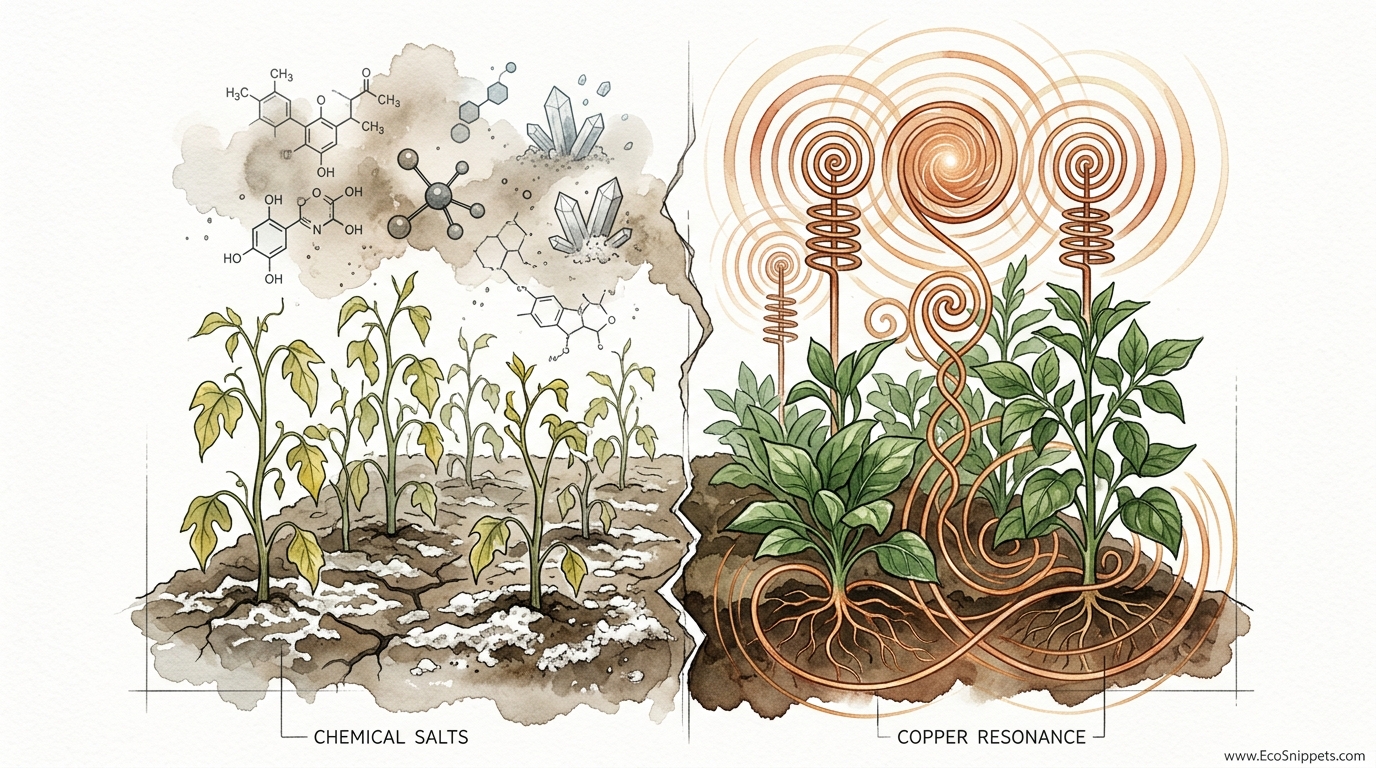
What if the secret to 300% larger harvests isn’t hidden in a bag of chemicals, but floating in the air above your garden? We’ve been taught that backyard farming requires a constant cycle of synthetic inputs. But what if your plants are actually antennas for the earth’s natural energetic pulse? Electroculture is sparking a revolution by replacing chemical salts with copper resonance. It’s a low-cost, fascinating way to work with nature’s unseen forces to boost plant vigor and soil health.
Modern agriculture often treats the soil like a sterile substrate that only exists to hold up a plant while we pump it full of liquid laboratory concoctions. This approach overlooks the fundamental truth that life is electric. Every cell in a plant, every microbe in the soil, and every drop of water in the atmosphere carries a charge. By tapping into this existing network, you can unlock a level of productivity that seems like magic but is rooted in the very physics of our planet.
This guide is designed to take you from a curious observer to a practitioner of energetic gardening. You don’t need a degree in electrical engineering to start, nor do you need a massive budget. All that is required is a willing hand, a few simple materials like copper wire and wooden stakes, and a shift in perspective. Let’s explore how you can turn your garden into a high-performance energy harvester.
Guide To Electroculture Gardening
Electroculture is the practice of using atmospheric electricity and the Earth’s natural magnetic fields to stimulate plant growth and soil fertility. It is an ancient concept rediscovered in the late 19th and early 20th centuries by pioneers who noticed that plants near lightning-struck areas or magnetic deposits often grew with unusual vigor. In its simplest form, it involves placing conductive materials—usually copper, zinc, or iron—around or above plants to act as antennas.
These antennas capture “free” energy from the atmosphere, specifically ions and static electricity, and channel it down into the soil. This energy acts as a catalyst for biological processes. It doesn’t replace the need for healthy soil, but it amplifies the efficiency of everything already present. In the real world, this method is used by small-scale regenerative farmers and home gardeners who want to move away from the “drug-addict” cycle of synthetic fertilizers.
Think of an electroculture antenna like a lightning rod for vitality. Just as a radio captures invisible waves to produce sound, these copper structures capture invisible energetic fields to produce food. It is a system of resonance rather than a system of consumption. Where traditional farming asks “What can I add to the soil?”, electroculture asks “How can I better connect the soil to the sky?”
This method is currently enjoying a massive resurgence because it empowers the individual. You cannot patent the air, and you cannot own the magnetic field of the earth. By building your own antennas, you are stepping back into a tradition of self-reliance that bypasses the industrial supply chain. It is a return to ancestral wisdom, updated for the modern homesteader.
How It Works: Tapping the Sky and Soil
The science of electroculture revolves around several key principles: atmospheric electricity, the Earth’s magnetic field, and the conductivity of the plants themselves. Our atmosphere is essentially a giant capacitor, with the ionosphere holding a positive charge and the Earth holding a negative charge. In between these two poles, there is a constant flow of energy.
Copper antennas facilitate this flow. When you place a tall copper-wrapped stake in the ground, you create a path of least resistance for atmospheric ions. These ions are carried down the wire and into the root zone. Once in the soil, this subtle electrical stimulation increases the “cation exchange capacity,” which is a fancy way of saying it helps the roots pull nutrients out of the dirt more effectively.
Magnetic fields also play a vital role. The Earth is a giant magnet, and plants have evolved to respond to its lines of force. By aligning your garden beds and antennas with Magnetic North, you can synchronize your plants with the planet’s natural rhythm. Some electroculture systems even use permanent magnets to “stretch” these fields across a garden bed, creating a localized area of high magnetic resonance.
On a biological level, this energetic boost affects the “sap” or blood of the plant. Electrical stimulation increases the conductivity of plant fluids, allowing for faster transport of water and minerals from the roots to the leaves. This is why many practitioners report that their seeds germinate days earlier than usual and their plants reach maturity much faster.
Types of Electroculture Systems
There are several ways to implement these principles, ranging from simple wire wraps to complex atmospheric collectors. The most common is the atmospheric antenna, which is a wooden pole wrapped in a copper spiral. These are usually 6 to 10 feet (1.8 to 3 meters) tall and act as the primary energy gatherer for a garden bed.
Lakhovsky Rings are another popular choice. Named after Georges Lakhovsky, these are open loops of copper wire placed around the base of a plant or its individual branches. Lakhovsky believed that cells are like tiny oscillating circuits, and his rings help these cells stay in resonance with cosmic frequencies. They are particularly effective for “healing” stressed or diseased trees and shrubs.
Magnetic antennas involve burying galvanized steel or copper wires in the soil, usually oriented North-to-South. These wires are often connected to a main collector or “magnetizer” at one end. This system creates a grid of energy beneath the surface, stimulating the soil’s microbial life and encouraging deep root growth. It is an excellent way to treat large areas without having tall poles everywhere.
Spiral designs, such as the Fibonacci spiral, are often used for individual plant stakes. The geometry of the spiral itself is believed to help concentrate energy. In the Northern Hemisphere, these should be wound clockwise (looking down from the top), while in the Southern Hemisphere, they should be wound counter-clockwise. This alignment follows the natural “vortex” movement of energy on our planet.
Step-by-Step: Building Your First Antenna
To build a basic atmospheric antenna, you will need a long wooden stake (cedar or bamboo works well), about 15 to 20 feet (4.5 to 6 meters) of 14-gauge or 16-gauge bare copper wire, and some wire cutters. Do not use insulated wire, as the plastic coating will block the atmospheric ions from reaching the metal.
Start at the bottom of the stake, leaving about 12 inches (30 centimeters) of wire dangling. This loose end will be buried in the soil to act as the “ground.” Begin wrapping the wire tightly around the stake, moving upward in a spiral. Space the coils about 2 to 3 inches (5 to 7 centimeters) apart as you go.
Once you reach the top of the stake, you can create a “collector” shape. This could be a simple coil, a cross-shape, or even a small pyramid. The more surface area and “points” your collector has, the more atmospheric energy it will attract. Some gardeners even attach a small zinc plate at the top to create a galvanic effect between the copper and zinc.
To install the antenna, dig a hole about 12 to 18 inches (30 to 45 centimeters) deep in the center of your garden bed. Place the stake in the hole and make sure the dangling wire at the bottom is spread out in the soil before you fill the hole back in. For a 4×8 foot (1.2×2.4 meter) raised bed, one central antenna is usually sufficient to see a noticeable difference.
Benefits of Electroculture Gardening
The most immediate benefit people notice is a dramatic increase in growth rate. It is not uncommon for tomato plants to grow 2 to 3 feet (60 to 90 centimeters) taller than their non-electrified counterparts. Faster germination is also a major advantage, with some seeds sprouting in half the time expected.
Yield increases are the primary goal for most food growers. While “300% larger harvests” is a high-end claim, many gardeners consistently see a 20% to 50% increase in total fruit weight. The fruit itself often ends up being more nutrient-dense because the plant has the energetic “budget” to pull more trace minerals from the soil.
Pest resistance is a secondary but vital benefit. Healthy, energetically balanced plants emit a different infrared signature than stressed ones. Pests like aphids and beetles are often attracted to the “low-vibration” signals of weak plants. By boosting a plant’s vitality, you effectively make it invisible or unappealing to many common garden invaders.
Water efficiency is another measurable gain. Electroculture seems to improve the “structure” of the water in the soil, making it more available to the plant. Practitioners often find they can reduce their irrigation by 30% or more while still maintaining lush, hydrated foliage. This makes the method invaluable for those in drought-prone regions.
Common Mistakes and Pitfalls
The biggest mistake beginners make is using the wrong materials. While steel and iron can work, copper is the gold standard for atmospheric antennas due to its high conductivity and resonance with the earth’s fields. Never use insulated wire, and avoid “enameled” copper wire often found in motor windings, as the coating prevents ion collection.
Winding direction is another frequent error. In the Northern Hemisphere, energy spirals naturally in a clockwise direction. If you wind your copper wire counter-clockwise, you may actually create an energetic “clash” that stunts the plant rather than helps it. Always double-check your orientation before finalizing your antenna.
Deep grounding is essential. If the wire doesn’t make good contact with moist soil, the energy has nowhere to go. It will simply sit on the antenna rather than flowing through the plant’s root zone. Ensure that at least 8 to 12 inches (20 to 30 centimeters) of bare wire is buried and in direct contact with the earth.
Over-expectation can lead to disappointment. Electroculture is not a replacement for water, sunlight, or organic matter. If your soil is completely dead and devoid of minerals, no amount of electricity will make a plant thrive. Think of it as a turbocharger for an engine; you still need fuel (nutrients) and oil (compost) for the system to work.
Limitations and Realistic Constraints
Electroculture is not a “magic bullet” that works the same way in every environment. In areas with extremely high electromagnetic interference (EMI), such as right under high-voltage power lines or next to cellular towers, the natural subtle fields can be drowned out. In these cases, the results may be less dramatic or even unpredictable.
Soil composition also plays a role in effectiveness. Sandy soils, which have low conductivity, may require more antennas or the addition of paramagnetic rock dust (like basalt) to help hold the charge. Conversely, extremely heavy clay may conduct too much, causing the energy to dissipate quickly before the plants can use it.
The method requires patience and observation. Unlike chemical fertilizers, which provide a visible “green-up” within 48 hours, electroculture builds health over weeks and months. It is a long-game strategy. You may not see a massive difference in the first month, but by the end of the season, the structural strength of the plants will be obvious.
Environmental constraints like extreme shade can also limit the system. While electroculture can help plants grow in less-than-ideal light, it cannot replace photosynthesis. A plant in total darkness will die regardless of how many copper coils you wrap around it. Always prioritize the basic needs of the plant before adding energetic layers.
Comparison: Chemical Salts vs. Copper Resonance
To understand why electroculture is gaining ground, we must look at how it compares to the industrial standard. The following table highlights the differences between traditional chemical-based gardening and the energetic approach.
| Feature | Chemical Salts | Copper Resonance |
|---|---|---|
| Initial Cost | Low per bag, high over time. | Medium (one-time wire purchase). |
| Soil Impact | Can degrade microbial life. | Stimulates microbial activity. |
| Maintenance | High (constant re-application). | Very Low (set it and forget it). |
| Complexity | Simple but requires measuring. | Requires initial setup logic. |
| Pest Resistance | Neutral to Low. | Significantly Improved. |
As the table shows, while chemical salts offer a quick fix, they require a lifetime of dependency and can harm the long-term health of the land. Copper resonance is an investment in the system itself. Once your antennas are built and your soil is “tuned,” the energy is free and perpetual.
Practical Tips and Best Practices
Always use 99% pure copper for your antennas. Recycled copper pipe or thick grounding wire from a hardware store are both excellent choices. If you are using thin wire, you can “braid” several strands together to increase the surface area, which helps in capturing more ions from the air.
Position your tallest antennas on the highest ground available in your garden. Atmospheric electricity is more concentrated at higher elevations. If your garden is on a slope, place the collector at the top and run a “feeder” wire down through the beds to distribute the energy across the entire plot.
Incorporate paramagnetic stones like basalt or granite into your soil. These stones act like little batteries that can hold the charge delivered by the antennas. A handful of basalt dust at the base of your antenna will significantly increase its effectiveness by creating a highly conductive zone for the energy to enter.
Clean your copper periodically. Over time, copper will develop a green patina (oxidation). While this looks beautiful, a heavy layer of oxidation can slightly reduce the conductivity of the surface. A quick wipe with a vinegar-soaked cloth once a year is usually enough to keep the energy flowing smoothly.
Advanced Considerations: Tuning Your Garden
For the serious practitioner, tuning the garden involves using specific frequencies and geometric ratios. The Golden Ratio (1.618) can be applied to the height and spacing of your antennas. Many find that building antennas in “Fibonacci lengths”—such as 5, 8, or 13 feet—creates a more harmonious environment for plant development.
Consider the role of water structuring. Electroculture works best when the water in the soil is “living.” Using a vortex flow form or even just stirring your watering can in a spiral before application can help the water hold the electrical charge better. This synergy between energetic water and energetic soil is where the most impressive yields are found.
Scaling up to larger acreage requires a grid system. Instead of individual poles, you can run long horizontal wires 6 to 8 feet (1.8 to 2.4 meters) above the ground, supported by wooden posts. These horizontal wires act like a giant net, catching energy over a wide area and funneling it down into the soil through vertical ground leads.
You can also experiment with “Tensor Rings.” These are specific lengths of copper wire welded into a circle. They create a “Meissner field” of energy within the ring. Hanging these on fruit tree branches or placing them over starting trays can protect young plants from environmental stress and provide a concentrated burst of growth energy.
Examples and Realistic Scenarios
Imagine a gardener named Sarah in the Pacific Northwest. She has a persistent problem with powdery mildew on her squash and slow-growing tomatoes due to the cool, cloudy springs. She installs three 8-foot (2.4-meter) atmospheric antennas in her main beds and puts Lakhovsky rings around her heirloom apple trees.
Within one season, Sarah notices her tomatoes are ready for harvest two weeks earlier than her neighbors’. The squash, which usually succumbs to mildew by August, stays green and productive through October. The apple trees, which had been stunted for years, put on 12 inches (30 centimeters) of new growth in a single spring.
In another scenario, a small-scale market gardener in a dry climate uses a buried magnetic wire system. He aligns his rows North-to-South and buries galvanized wire 6 inches (15 centimeters) deep. He finds that his lettuce crops require 40% less water to stay crisp, and the nutrient density of his kale—measured by a Brix meter—increases from a 6 to an 11.
These aren’t fairy tales; they are the results of working with the planet’s existing infrastructure. By simply providing a better “conduit” for natural forces, these gardeners achieved results that would usually require hundreds of dollars in fertilizers and pesticides. They traded a dependency on the store for a partnership with the sky.
Final Thoughts
Electroculture is a bridge between the forgotten wisdom of the past and the regenerative needs of the future. It challenges us to see our gardens not as chemical factories, but as living resonators. By shifting our focus from “feeding” to “tuning,” we can grow food that is more resilient, more nutritious, and entirely free from synthetic reliance.
This path requires a bit of pioneer-grit and a lot of observation. It asks you to step outside, get your hands in the dirt, and experiment with the unseen. The materials are simple, the cost is low, and the potential rewards are limited only by the scale of your imagination. Whether you start with a single copper coil or a full-scale atmospheric grid, you are taking a step toward true self-reliance.
Nature is already providing all the energy your garden needs. All you have to do is provide the antenna. Take what you have learned here, build your first collector, and watch as your plants begin to hum with the hidden pulse of the earth. The revolution isn’t coming; it’s already floating in the air above your garden, waiting for you to plug in.
