How To Become More Self-Sufficient Without Starting a Full-Blown Farm…
Want to start preserving your harvest, making your own soap, or building a backyard root cellar — but not sure where to begin? “Homesteading Advice” gives you instant lifetime access to 35+ practical homesteading books on food preservation, veggie gardening, DIY natural cleaning products (save over $250 per year with this skill alone), brewing, off-grid energy, and a whole lot more…
Click Here To Check It Out Now!
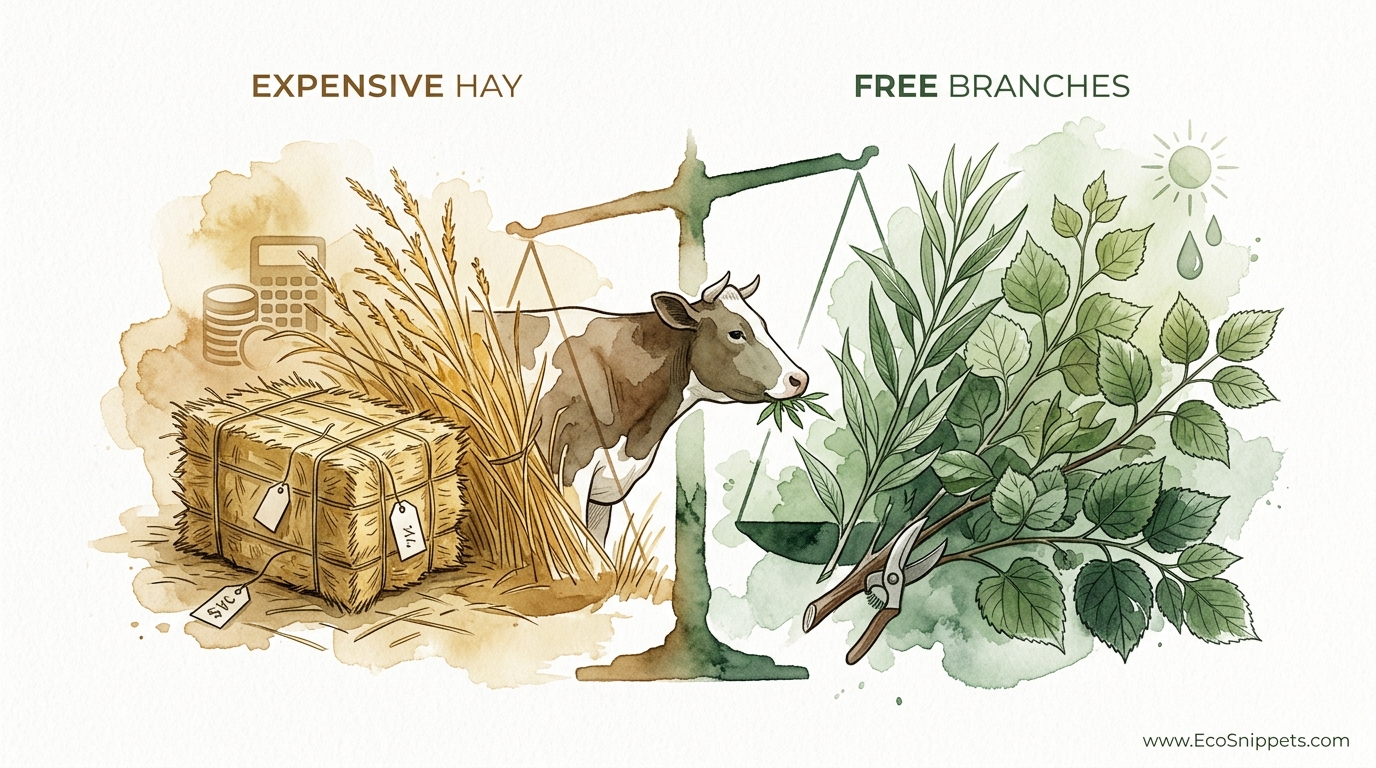
Why buy grass from the store when the trees in your pasture are holding a winter’s worth of minerals for free? Tree hay was the backbone of ancestral livestock survival. By cutting branches in mid-summer, you lock in minerals that grass simply cannot touch. Your goats will thank you.
Working with the land requires a shift in how we view the vertical space of a farm. Most modern graziers focus solely on what grows at their feet, but the old ways looked up. Before the tractor and the mechanical baler, farmers relied on the “air meadow” to see their herds through the lean months.
Tree hay is more than just a survival food. It is a concentrated source of nutrition that trees pull from deep within the subsoil. While grass roots may only reach a few inches, a willow or an oak reaches deep into the earth to find minerals that have been long washed away from the surface.
Bringing this practice back to your homestead or farm is a step toward true self-reliance. It reduces your dependence on expensive, imported hay and improves the health of your animals from the inside out. Let us look at how you can harvest this free resource and integrate it into your winter feeding program.
Nutritional Value Of Tree Fodder For Livestock
Tree fodder refers to the leaves, twigs, and bark of deciduous trees used as a feed source for livestock. It is an ancient resource that provides a different nutritional profile than traditional pasture. Where grass is high in simple sugars and fiber, tree leaves are often denser in protein and complex minerals.
Think of tree hay as a multi-vitamin for your herd. Because trees have extensive root systems, they can access trace elements like zinc, selenium, and copper that are often lacking in topsoil-dependent grasses. For example, willow leaves are exceptionally high in zinc and magnesium, which are vital for hoof health and immune function.
Nutritional density varies by species, but many common trees like Mulberry or Willow boast crude protein levels between 15% and 25% on a dry matter basis. This rivals or even exceeds high-quality alfalfa hay. This makes it an ideal supplement for lactating goats or growing lambs that require a protein boost during the winter.
Beyond the raw numbers of protein and minerals, tree fodder contains secondary compounds like tannins and salicylic acid. Tannins are particularly valuable for small ruminants like sheep and goats because they help disrupt the life cycle of internal parasites. They also help the animal’s rumen process protein more efficiently, leading to better weight gain and milk production.
Micro-Nutrient Comparison
Studies have shown that livestock fed tree fodder often show higher levels of essential trace minerals in their blood. Cobalt, which is necessary for vitamin B12 synthesis in ruminants, is frequently found in higher concentrations in trees than in common hay. Manganese and iron follow a similar pattern, providing a robust nutritional cushion during the stressful winter months.
How to Harvest and Store Tree Hay
Making tree hay is a straightforward process that requires little more than a pair of sharp loppers and some baling twine. The goal is to harvest the growth when the leaves are at their nutritional peak and dry them in a way that preserves their color and mineral content. Timing and technique are the two pillars of success here.
Choosing the Right Timing
Harvesting should occur in mid-summer, typically from late June through August in the Northern Hemisphere. This is when the leaves have fully expanded but before they begin to shut down for the autumn. Cutting at this time “locks in” the nutrients that the tree would otherwise pull back into its roots during the fall.
Avoid harvesting too early in the spring when the leaves are very high in water and low in structure. These young leaves tend to shrivel to nothing when dried. Wait for a dry spell of weather so you aren’t fighting moisture from the start.
The Bundling Process
Cut branches that are roughly the diameter of your thumb or smaller. Small branches are the most nutritious because the animals can consume the bark and the wood as well as the leaves. Aim for lengths of about 3 to 5 feet (1 to 1.5 meters) to make them manageable.
Gather these branches into bundles, often called “sheaves” or “faggots” in traditional farming. Use baling twine or even long, flexible willow withes to tie them tightly. Tie the bundle about one-third of the way down from the cut ends to ensure it stays together as the wood shrinks during the drying process.
Drying and Storage
Airflow is the secret to high-quality tree hay. Unlike grass hay, which is dried on the ground, tree hay is dried vertically or on racks. Hang your bundles from the rafters of an airy barn, or stack them loosely on pallets in a shaded, well-ventilated shed.
Never store tree hay in direct sunlight, as the UV rays will bleach the nutrients and vitamins out of the leaves. Properly dried tree hay will retain a vibrant green color. If the leaves turn brown and brittle, you likely had too little airflow or too much sun exposure.
Benefits of Tree Fodder
The advantages of using tree hay extend far beyond the nutritional profile. It is a tool for farm resilience, animal welfare, and land management. When you incorporate trees into your forage system, you are essentially adding a second story to your pasture.
Natural Parasite Control: The condensed tannins in many tree species, especially oak and willow, act as a natural dewormer. Goats and sheep that have access to these tannins often show lower fecal egg counts. This reduces the need for chemical anthelmintics, which are increasingly losing their effectiveness.
Drought Resistance: Grass is the first thing to die in a drought. Trees, with their deep roots, stay green long after the fields have turned brown. Harvesting tree fodder during a dry summer can provide a “green bridge” that keeps your animals fed when the grass stops growing.
Vertical Yield: By using pollarding or coppicing techniques, you can grow a massive amount of fodder on a very small footprint. A single well-managed mulberry tree can produce dozens of pounds of high-protein feed every year without taking up valuable grazing space.
Medicinal Properties: Many trees offer specific health benefits. Willow contains salicin, a natural precursor to aspirin, which provides mild pain relief and anti-inflammatory benefits to livestock. This is particularly helpful for older animals or those recovering from illness.
Challenges and Common Mistakes
While tree hay is a powerful resource, it is not without its pitfalls. Most mistakes happen during the identification phase or the storage phase. You must be diligent about what you are cutting and how you are keeping it.
Toxic Look-Alikes: Not every tree is safe for livestock. Identifying trees correctly is the most critical skill you can develop. For example, while many maples are safe, the Red Maple (Acer rubrum) is highly toxic to horses, especially when the leaves are wilted. Always confirm the species before you make your first cut.
Poor Airflow: Stacking bundles too tightly is a recipe for mold. If the center of the bundle feels damp or smells musty, it is not safe for your animals. Moldy tree hay can cause respiratory issues or listeriosis in ruminants. Ensure you have a constant cross-breeze in your storage area.
Over-Harvesting: You cannot strip a tree bare every single year and expect it to survive. Trees need leaves to photosynthesize and store energy for the winter. Follow a rotation—harvest from one group of trees this year, and let them rest for two or three years before cutting again.
Limitations of Tree Hay
Tree hay is a supplement, not a total replacement for forage. Understanding the boundaries of this system will help you use it more effectively within your farm’s ecosystem.
Labor Intensive: Making tree hay is more work than buying a square bale of grass. It requires manual labor to cut, bundle, and hang the branches. For a large commercial herd, this may not be a primary feed source, but for the homesteader or small-scale farmer, it is highly feasible.
Land Access: You need established trees to make this work. If your pasture is a cleared field with no hedgerows, you will have to plant your fodder trees and wait several years before they are ready for their first harvest. This is a long-term investment in your land.
Regulatory Constraints: In some regions, there are strict rules about when you can cut hedges or trees due to nesting birds or local conservation laws. Always check your local regulations before starting a mid-summer harvest to ensure you are in compliance with environmental protections.
Tree Hay vs. Grass Hay: A Comparison
How does the “air meadow” stack up against the traditional hay field? While both have their place, they offer very different benefits to the animal and the farmer.
| Factor | Tree Hay (Mulberry/Willow) | Standard Grass Hay |
|---|---|---|
| Protein Content | High (15-25%) | Moderate (7-12%) |
| Mineral Diversity | Very High (Deep roots) | Lower (Topsoil dependent) |
| Cost | Free (Labor only) | High (Market prices) |
| Digestibility | High (Leaves are low in lignin) | Varies (Decreases with age) |
| Parasite Control | Contains anti-parasitic tannins | None |
While grass hay provides the bulk and roughage necessary for rumen function, tree hay provides the “superfood” nutrients that keep the immune system strong. Using them in tandem is the most effective way to manage a healthy herd.
Practical Tips for Success
Implementation is where the theory meets the dirt. Use these best practices to ensure your tree hay project is successful from the first season.
- The Thumb Rule: Only harvest branches that are the diameter of your thumb or smaller. Animals will eat these entirely, leaving behind no waste.
- Label Your Bundles: Use different colored twines to identify tree species. You may want to feed willow (medicinal) during cold snaps and mulberry (high protein) to your milkers.
- Protect the Bark: When feeding in the winter, goats will strip the bark off the larger branches. This bark is packed with minerals. Once they are done, the leftover “white wood” makes excellent, dry kindling for your woodstove.
- Start Small: Don’t try to harvest your entire winter’s worth of feed in the first year. Start with 20 or 30 bundles to see how your animals react and how the drying process works in your specific climate.
Advanced Considerations: Pollarding and Coppicing
To truly master tree fodder, you must understand the art of pruning for regrowth. Pollarding and coppicing are the two primary methods used to create a sustainable, renewable source of tree hay.
Pollarding: This involves cutting the tree at a height of 6 to 8 feet (1.8 to 2.4 meters). This height is key because it keeps the new, tender regrowth out of the reach of browsing livestock. This allows you to grow fodder in the same field where your animals graze without them killing the tree by over-browsing.
Coppicing: This is the practice of cutting the tree down to the ground (the “stool”). The tree will send up multiple fast-growing shoots. This is ideal for hedgerows or dedicated fodder blocks that are fenced off from the animals until you are ready to harvest.
Both methods extend the life of the tree significantly. By keeping the tree in a state of constant rejuvenation, you prevent it from reaching the stage where it becomes top-heavy or prone to rot. Some pollarded oaks in Europe have lived for over 800 years—much longer than their unmanaged counterparts.
Example Scenario: A Winter Feed Supplement
Consider a small homestead with five dairy goats. In a typical winter, these goats might consume 1.5 tons of grass hay. By harvesting 150 bundles of mulberry and willow hay in August, the owner can reduce their grass hay needs by 20%.
More importantly, the goats receive a daily “treat” of high-protein leaves and mineral-rich bark. During a particularly cold week in January, the owner feeds extra willow sheaves. The salicin in the willow helps the goats manage the stress of the cold, and the extra protein keeps their milk production steady even when the temperature drops below freezing.
This homestead is not just saving money; it is building a more resilient system. If a storm delays the delivery of commercial hay, the owner has a “pantry” of tree hay in the barn to fall back on. This is the essence of self-reliance.
Final Thoughts
Tree hay is a bridge to our agricultural past and a solution for our future. It offers a way to harvest the deep-seated fertility of the earth without the need for heavy machinery or chemical fertilizers. By looking up into the canopy, we find a wealth of nutrition that has been waiting for us all along.
Start by identifying the trees on your property this week. Look for the willows by the creek, the mulberries in the fence line, and the oaks on the hill. These are your free mineral blocks. Once you see the enthusiasm with which your livestock greet a fresh sheaf of dried leaves, you will never look at your trees the same way again.
Experiment with different species and observe your animals. They are the best teachers when it comes to palatability and health. Over time, you will develop a rhythm with your land, harvesting in the heat of summer to provide comfort and strength in the depths of winter. This is how we build a farm that lasts for generations.
