How To Become More Self-Sufficient Without Starting a Full-Blown Farm…
Want to start preserving your harvest, making your own soap, or building a backyard root cellar — but not sure where to begin? “Homesteading Advice” gives you instant lifetime access to 35+ practical homesteading books on food preservation, veggie gardening, DIY natural cleaning products (save over $250 per year with this skill alone), brewing, off-grid energy, and a whole lot more…
Click Here To Check It Out Now!
Our ancestors didn’t need toxic sprays to keep their steel from rusting for a hundred years. We’ve been taught to reach for a can of petroleum spray the moment our tools squeak or rust. But those chemicals kill the very soil life we’re trying to build. Lanolin, the natural wax from sheep’s wool, creates a waterproof barrier that actually conditions the wood and metal of your tools without poisoning your garden beds.
Working with lanolin feels like reclaiming a lost piece of tradecraft. It is a thick, amber-colored substance that smells faintly of a rainy day in the pasture. While modern aerosol cans offer a quick fix, they often leave behind a thin, evaporating film that requires constant reapplication. Lanolin stays put, forming a self-healing shield that persists through rain, mud, and heavy use.
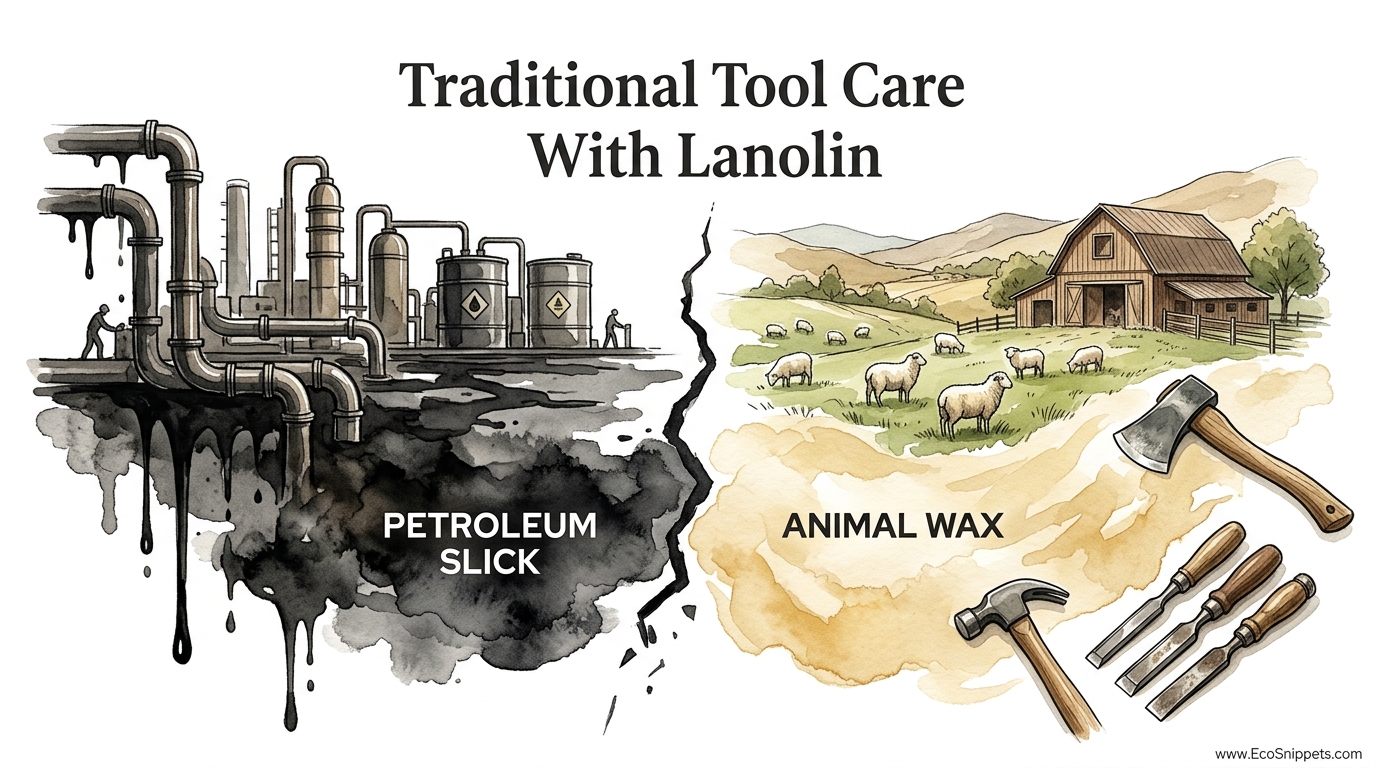
This guide explores the transition from the modern “petroleum slick” to the ancestral wisdom of “animal wax.” You will learn how to use this renewable resource to preserve everything from your heirloom hand saws to your hard-working garden spades. It is time to treat our tools with the same respect we give our soil.
Traditional Tool Care With Lanolin
Lanolin is a complex, waxy substance secreted by the sebaceous glands of sheep. Its primary job in nature is to keep the sheep’s fleece dry and protect their skin from harsh environmental conditions. In the world of tool maintenance, this translates into a powerful, moisture-rejecting barrier that prevents the oxidation of iron and steel.
Ancient civilizations, including the Greeks and Romans, recognized these protective qualities thousands of years ago. Knights in the Middle Ages would often coat their armor and weapons in wool grease to ensure they remained functional through long campaigns in damp climates. This is not a new “green” trend; it is the original standard for metal preservation.
Unlike modern oils, lanolin is not technically a fat because it lacks glycerides. It is chemically classified as a wax, consisting of long-chain esters and fatty alcohols. This unique chemistry allows it to bond tenaciously to metal surfaces, creating a hermetic seal that blocks oxygen and water—the two essential ingredients for rust.
You can find lanolin in various forms today, ranging from raw “wool grease” to highly refined “anhydrous lanolin.” In the garden and workshop, it serves as a non-toxic alternative to mineral oils. It is particularly valued by those who want to avoid introducing heavy metals or synthetic solvents into their vegetable patches or woodworking projects.
How It Works and How to Apply It
Lanolin works through a principle of high adhesion and moisture displacement. Because its molecules are polar, they are naturally attracted to the surface of ferrous metals. When you apply it to a tool, the wax physically pushes water out of microscopic pits in the steel and replaces it with a breathable, waterproof film.
To apply pure anhydrous lanolin, you generally need to warm it up first. At room temperature, about 20°C (68°F), it has the consistency of thick honey or stiff paste. Placing the container in a bowl of warm water or near a heat source makes it much easier to spread.
For a general-purpose tool wipe, follow these steps:
- Clean the tool of any loose dirt or heavy flaking rust using a wire brush or coarse wool.
- Warm a small amount of lanolin until it becomes pliable or liquid.
- Use a lint-free cloth to rub a very thin layer onto the metal surfaces.
- Wipe away any excessive clumps, leaving a dull, waxy sheen behind.
If you prefer a sprayable version, you can create a DIY mixture by dissolving one part lanolin into five parts of a natural solvent like citrus oil or high-grade spirits. This allows the wax to flow into tight hinges and crevices. Once the solvent evaporates, a durable layer of wool wax remains behind to guard the metal.
The Benefits of Choosing Lanolin
The most immediate advantage of lanolin is its incredible longevity. Petroleum-based lubricants often evaporate or “creep” away from the surface they are meant to protect. Lanolin is non-evaporative, meaning once it is on your shovel or pruning shears, it stays there until it is physically worn off by friction.
Soil health is another major factor for the modern grower. Standard workshop sprays often contain “volatile organic compounds” (VOCs) and petroleum distillates that are toxic to the microbes and earthworms in your garden. Lanolin is biodegradable and non-toxic, making it perfectly safe to use on tools that come into direct contact with your food crops.
Material compatibility is where lanolin truly shines. Petroleum products can cause rubber grips to swell and degrade over time, and they often stain or dry out wooden handles. Lanolin is actually a conditioner for both rubber and wood. It keeps wooden handles supple, preventing the cracks and splinters that lead to tool failure.
Finally, lanolin possesses “self-healing” properties. If you scratch the surface of a tool coated in lanolin, the wax remains soft enough to slowly flow back into the scratch. This provides a continuous level of protection that hard-drying paints or lacquers cannot match.
Challenges and Common Mistakes
The biggest challenge for new users is often the “tackiness” of the wax. Because lanolin does not dry to a hard finish, it remains slightly sticky. This can attract dust, sawdust, or fine sand if you apply it too thickly. The key is to use the smallest amount possible; a little goes an incredibly long way.
Over-application is the most frequent error. If your tool feels “gloopy” or leaves a thick residue on your hands, you have used too much. You want a microscopic film, not a heavy coating. If you apply too much to a garden spade, you might find that soil sticks to the blade more than usual during the first few minutes of work.
Temperature sensitivity can also be a factor in extreme climates. In very cold weather, lanolin can become quite stiff, which might make moving parts like spring-loaded shears feel sluggish. In extremely hot weather, such as temperatures exceeding 40°C (104°F), the wax may soften significantly, though it rarely runs off the tool entirely.
Limitations: When Lanolin May Not Be Ideal
Lanolin is an exceptional preservative, but it is not a high-speed lubricant. You should not use it inside internal combustion engines or on high-speed machine bearings. The heat and friction in those environments require specialized oils that can withstand much higher temperatures than natural wool wax.
If you are working in an environment with high levels of fine airborne particulates, like a professional flour mill or a very dusty woodshop, the tacky nature of lanolin might be a drawback. In these specific cases, a dry-film lubricant like graphite or specialized furniture wax might be more appropriate for preventing clogs.
Environmental limitations also apply to underwater use in high-flow areas. While lanolin is excellent for marine fasteners and boat trailers, a thin wipe-on coating on a boat hull will eventually wear away if subjected to constant high-speed water friction. For those applications, you would need a much thicker, grease-grade lanolin product.
PETROLEUM SLICK vs ANIMAL WAX
Choosing between modern synthetics and traditional lanolin often comes down to your priorities regarding safety and durability. The following table compares the two approaches across common metrics.
| Feature | Petroleum-Based Sprays | Lanolin (Animal Wax) |
|---|---|---|
| Environmental Impact | High; contains VOCs and toxins. | Low; biodegradable and renewable. |
| Durability | Short-term; evaporates quickly. | Long-term; non-evaporative. |
| Surface Prep | Requires clean, dry surface. | Can be applied over damp/light rust. |
| Material Safety | May damage rubber and plastics. | Safe for rubber, wood, and skin. |
| Cost per Application | Low initial cost, frequent use. | Moderate initial cost, infrequent use. |
Petroleum products are designed for convenience and “spray-and-forget” marketing. Lanolin is designed for the long haul, rewarding the user who takes a few extra moments to apply a high-quality natural barrier.
Practical Tips and Best Practices
Keep a “lanolin rag” in a sealed tin in your workshop. This is simply a piece of heavy denim or wool that has been saturated with lanolin. After every use of your garden tools or hand saws, give the metal a quick wipe with this rag. This builds up a seasoned, rust-resistant patina over time without any mess.
When treating wooden handles, rub the lanolin in vigorously with your bare hands. The heat from your palms helps the wax penetrate deep into the wood grain. This not only waterproofs the handle but also prevents the wood from becoming brittle and snapping under pressure.
If you find a tool has become too sticky or has collected too much debris, do not reach for harsh degreasers. A simple wipe with a cloth dampened with a little bit of vegetable oil or citrus solvent will thin the lanolin enough to wipe it away. You can then reapply a fresh, thin layer.
For seasonal storage, particularly during damp winters, apply a slightly heavier coat of lanolin to your mower blades and garden forks. This “winterizing” prevents the moisture in the air from pitting the steel while the tools sit idle in a cold shed or garage.
Advanced Considerations for Practitioners
Serious tool collectors often mix lanolin with other natural waxes to customize the finish. Adding a small amount of beeswax to melted lanolin (at a ratio of about 1:3) creates a much harder, less tacky finish. This is ideal for woodworking tools like planes and chisels that need to slide smoothly across wood surfaces.
Marine environments require the highest level of protection. If you live near the coast, salt air can destroy steel in weeks. Using a specialized “marine grade” lanolin grease on boat trailer springs and exposed bolts provides a level of salt-water resistance that most petroleum greases cannot match. Lanolin is naturally resistant to being washed off by salt water.
Electrical connections on outdoor equipment can also benefit from a thin smear of lanolin. Since it is non-conductive and excludes moisture, it prevents the green corrosion that often plagues battery terminals and light sockets on tractors or trailers. It serves as a natural dielectric grease.
Example Scenario: Restoring a Neglected Shovel
Imagine you have found an old, high-quality forged shovel at a yard sale. The blade is covered in surface rust, and the ash handle is dry and grey. Instead of using a chemical rust converter, you can use lanolin to bring it back to life.
First, use a wire brush to remove the loose “scaly” rust. You do not need to get it down to shiny silver metal; lanolin actually penetrates surface rust to stop further oxidation. Warm up a tablespoon of anhydrous lanolin until it is the consistency of soft butter.
Rub the lanolin into the metal blade and the entire length of the wooden handle. Let the tool sit in the sun for an hour to allow the heat to help the wax soak into the pores of the iron and the fibers of the wood. Buff away the excess with a clean rag. The result is a tool that is protected from the elements, feels comfortable in the hand, and is ready to go back into the soil without bringing any toxins with it.
Final Thoughts
Shifting your maintenance routine toward natural lanolin is about more than just preventing rust. It represents a commitment to a closed-loop system where the products we use to tend the earth are as healthy as the earth itself. By choosing a renewable byproduct of the wool industry, we reduce our dependence on the oil refinery.
Your tools are an extension of your hands. Treating them with a substance that is safe for your skin and beneficial for the wood and metal ensures they will last for generations. The small effort of warming a bit of wax is a meditative practice that connects you to the craftsmen and farmers of the past.
Experiment with your own mixtures and application methods. Whether you are a weekend gardener or a dedicated homesteader, the transition to lanolin will simplify your kit and provide superior protection. Start with your most used tool today and see the difference that a bit of sheep’s wool wax can make.
