How To Become More Self-Sufficient Without Starting a Full-Blown Farm…
Want to start preserving your harvest, making your own soap, or building a backyard root cellar — but not sure where to begin? “Homesteading Advice” gives you instant lifetime access to 35+ practical homesteading books on food preservation, veggie gardening, DIY natural cleaning products (save over $250 per year with this skill alone), brewing, off-grid energy, and a whole lot more…
Click Here To Check It Out Now!
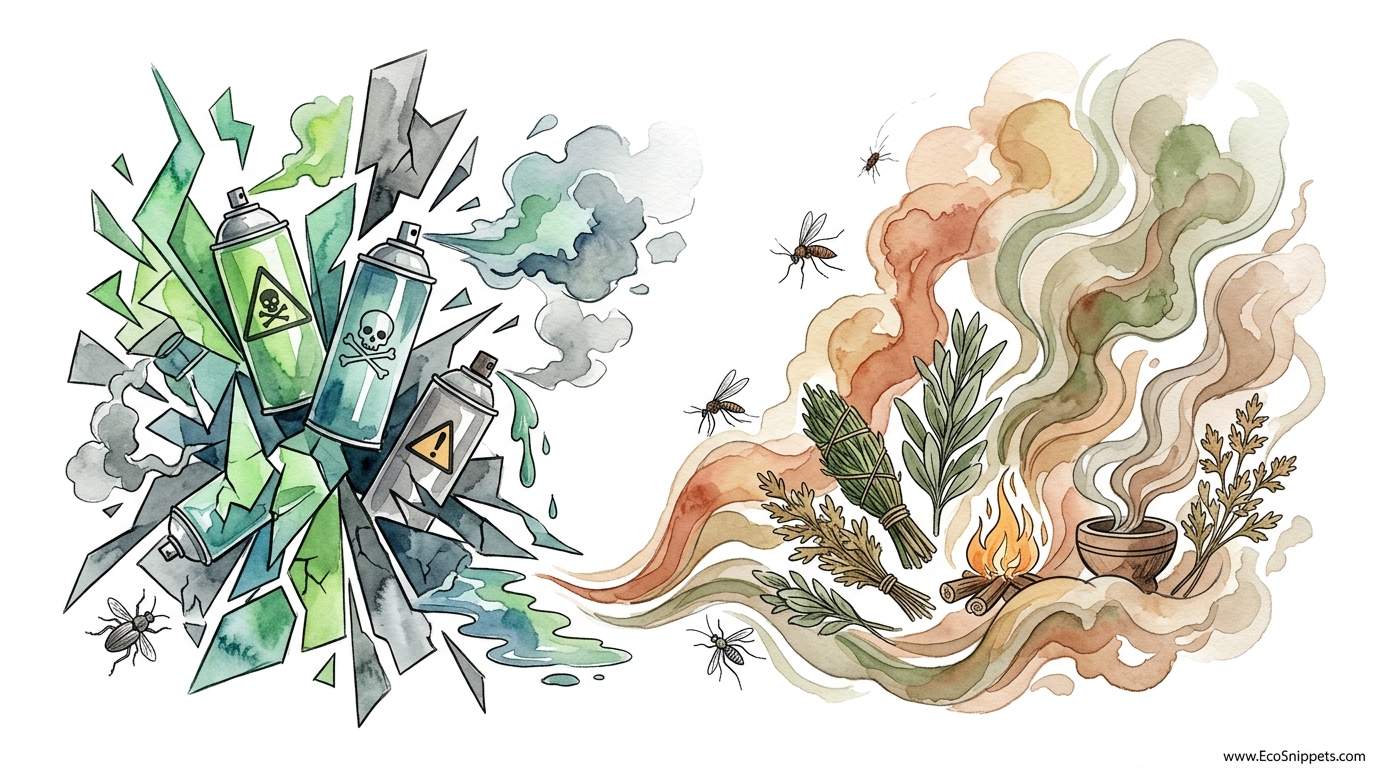
Before we had labs, we had the hearth – and the bugs hated it. Our ancestors didn’t reach for a bottle of DEET; they used the natural aromatic defenses of the forest. Smoke-infusing your garden cloches creates a barrier that bugs find intolerable.
Modern chemical solutions often rely on neurotoxins that linger in the soil and water for years. Ancestral smoke, however, utilizes the very compounds plants evolved to produce for their own protection. Returning to these traditional methods connects us with a deep lineage of land stewardship that prioritizes balance over eradication.
Every wisp of smoke contains a complex cocktail of organic molecules that act as a signal to the insect world. Understanding how to harness this ancient tool allows you to protect your most delicate seedlings with nothing more than a few handfuls of dried herbs and a small ember.
Ancestral Pest Control Smoke Methods
Traditional agriculture across the globe has long utilized smoke as a primary line of defense against crop destruction. Around 950 BC, Chinese farmers were already using smoke and fire to purge their fields of locusts and beetles. Ancient Greek and Roman records indicate that farmers would burn trash, compost, and specific aromatic plants so the smoke would drift over their orchards and vineyards to deter pests.
This practice is essentially a form of localized fumigation. While we now think of fumigation as a heavy industrial process involving plastic tents and dangerous gases, ancestral smoke was a daily rhythm of the homestead. In many cultures, the “smudge” was used not only for spiritual cleansing but for the practical purpose of clearing biting flies and gnats from living spaces and garden plots.
Native American agricultural traditions often included controlled burns and smoldering piles of sage or cedar near food stores. These methods relied on the observation that certain plants do not attract insects in the wild. Burning those specific plants releases their volatile oils in a concentrated form, effectively “masking” the scent of the crops you wish to protect.
The Science of Smoke and Insect Biology
Insects do not breathe through mouths or noses; they use a system of tiny openings along the sides of their bodies called spiracles. These spiracles lead into a network of tubes called tracheae that deliver oxygen directly to their tissues. Most insects cannot voluntarily close these openings for long periods, meaning they are forced to “breathe” whatever environment they are in.
Smoke acts as a physical and chemical irritant within this respiratory system. Carbon monoxide and other gases in the smoke can act as mild toxicants, while the particulate matter can physically interfere with the gas exchange process. This creates a powerful survival instinct in the insect to flee the area immediately.
The chemistry of the wood itself plays a vital role. When lignin—the “glue” that holds wood fibers together—is burned, it undergoes pyrolysis and produces phenolic compounds. One of the most important is guaiacol, a natural organic compound with a distinct smoky, medicinal odor. Guaiacol and its derivatives, such as syringol, are potent repellents that signal “danger” to many common garden pests like aphids and mites.
How to Smoke-Infuse Your Garden Cloches
Infusing a cloche with smoke is a deliberate process that requires patience and a steady hand. The goal is not to cook the plant but to saturate the micro-environment under the dome with protective aromatics.
First, select your cloche. Traditionally, these were bell-shaped glass jars, but you can use large mason jars, overturned buckets, or even DIY domes made from heavy-duty plastic sheeting. Ensure the cloche is large enough to leave at least 5 to 10 centimeters (2 to 4 inches) of clearance between the plant foliage and the walls of the container.
Next, prepare your smoke source. A handheld beekeeper’s smoker is the ideal tool for this task, as it allows you to control the direction and density of the smoke. If you do not have a smoker, a small ceramic bowl or a metal tin can serve as a “smudge pot.” Place a single small coal from your woodstove or a lit charcoal briquette in the bowl and top it with your chosen aromatic herbs.
Introduce the smoke by lifting one edge of the cloche and puffing the smoke underneath. You only need enough smoke to make the air inside look hazy, not opaque. Lower the cloche immediately to trap the smoke. Allow the infusion to sit for 30 to 60 seconds before venting the cloche or moving it to the next plant. This brief exposure is sufficient to coat the leaves with a microscopic layer of resinous compounds and drive out any resident pests.
The Best Materials for Ancestral Smoke
The choice of fuel determines the effectiveness and “flavor” of the protection you are providing. Avoid any wood that has been treated, painted, or stained, as these release toxic heavy metals and chemicals when burned.
- Cedar: This is a powerhouse for repelling moths and beetles. The natural oils in cedar wood are highly volatile and create a dense, resinous smoke that sticks well to leaf surfaces.
- Sage and Rosemary: Burning these culinary herbs releases essential oils that are particularly effective against mosquitoes, flies, and soft-bodied insects. They also have the added benefit of being antimicrobial.
- Fruitwoods: Wood from apple, cherry, or pear trees produces a mild smoke that is less likely to cause phytotoxicity (plant damage) if you accidentally over-apply.
- Dried Marigold: Known as a companion plant, dried marigold heads produce a pungent smoke that is excellent for clearing whiteflies from under-cloche environments.
Benefits of Smoke-Infusion
Choosing smoke over synthetic sprays offers several measurable advantages for the self-reliant gardener. Beyond the obvious avoidance of “Modern Toxins,” smoke-infusion provides a biological boost to the plant itself.
Research into post-fire environments has identified a class of chemicals called karrikins. These butenolide compounds are found in plant-derived smoke and act as potent growth stimulants. When a plant is exposed to these molecules, it often shows improved seedling vigor, faster germination, and more robust root development.
Smoke also provides a temporary boost in carbon dioxide (CO2) levels within the cloche. In the presence of sunlight, the plant can utilize this extra CO2 to accelerate photosynthesis, essentially “feeding” the plant while simultaneously clearing out its enemies. This dual action of protection and stimulation is something synthetic pesticides cannot replicate.
Challenges and Common Mistakes
Temperature control is the most significant challenge when using this method. Glass cloches act like small greenhouses, trapping heat rapidly. If you introduce hot smoke or place the cloche in direct, midday sun immediately after smoking, you risk “steaming” your plants. Always perform smoke-infusions in the early morning or late evening when ambient temperatures are lower.
Soot buildup can also become an issue if you use “dirty” or wet fuel. Thick, black soot on leaves can block sunlight and clog the plant’s stomata, which are the pores used for gas exchange. The smoke should be “blue” or “white” and relatively transparent. If the smoke is thick and black, your fire is not getting enough oxygen, and you should refine your fuel source.
Another common error is over-exposure. You do not need to keep the plant in a smoke-filled environment for hours. A “flash” treatment of less than a minute is usually enough to disrupt the lifecycle of pests without stressing the plant.
Limitations of the Method
Smoke-infusion is a localized tactic, not a broad-acre solution. It is highly effective for protecting individual “prize” plants, such as expensive heirloom tomatoes or delicate herbs, but it is labor-intensive for a large-scale vegetable garden.
Furthermore, smoke is a deterrent and a mild toxicant, not a permanent shield. It works best against mobile, soft-bodied insects like aphids, thrips, and mites. It may have less effect on hard-shelled beetles or large caterpillars that are already well-established. Weather conditions also play a role; high winds can make it difficult to maintain a consistent smoke density under your cloches.
Practical Comparison: Smoke vs. Modern Alternatives
| Factor | Ancestral Smoke | Neem Oil (Organic) | Synthetic Pesticides |
|---|---|---|---|
| Cost | Near zero (foraged materials) | $15 – $30 per bottle | $10 – $50 per container |
| Residual Effect | Hours to days (aromatic) | 5 – 7 days | Weeks to months |
| Growth Stimulation | Yes (Karrikins & CO2) | No | No |
| Complexity | Moderate (requires technique) | Low (mix and spray) | Low |
| Environmental Impact | Minimal / Biodegradable | Low | High (potential bioaccumulation) |
Practical Tips for Best Results
Preparation is the key to a successful smoke session. Gather all your materials beforehand so you can move quickly from plant to plant. This minimizes the amount of time the cloches are off the ground, helping to maintain soil moisture.
- Use “Cold Smoke”: Ensure the smoke has cooled slightly before it enters the cloche. If using a bee smoker, the long bellows and chamber help cool the smoke naturally.
- Aromatic Blending: Experiment with a 50/50 mix of cedar and dried lavender. This combination offers a broad spectrum of repellent properties while leaving a pleasant scent on the plant.
- Moisture Check: Mist your plants with water before smoking. The moisture helps the smoke particles and resins adhere to the leaves more effectively.
- Monitor the Stomata: Avoid smoking plants during the hottest part of the day when they may be closing their pores to conserve water. Early morning is ideal as the plant is most active.
Advanced Considerations: Resin and Wax Infusions
Serious practitioners can elevate this method by adding specific resins or waxes to their smoker. In ancient times, resins like galbanum or propolis (bee glue) were burned to create a very heavy, protective smoke. Propolis smoke is exceptionally antimicrobial and can help prevent fungal outbreaks in humid conditions.
Controlling the “color” of the smoke is another advanced skill. White smoke usually indicates a higher water vapor content and a lower temperature, which is safer for young seedlings. Blue smoke is thinner and richer in the volatile organic compounds that repel insects. Learning to adjust the airflow to your smoker to produce the desired smoke quality is a hallmark of an experienced practitioner.
Example Scenario: The Aphid Clear-Out
Imagine a row of young kale starts being overwhelmed by green aphids. Instead of reaching for a chemical spray, the gardener gathers a handful of dried pine needles and a few sprigs of rosemary.
Using a glass cloche, the gardener covers the first kale plant. They ignite the pine needles in their smoker, wait for the smoke to turn a light grey, and then puff it under the rim of the glass. The smoke swirls around the kale leaves, filling the space. Within 30 seconds, the aphids—sensing the “forest fire” signal—begin to drop from the leaves or crawl toward the soil. The gardener moves the cloche to the next plant, repeating the process. By the time they reach the end of the row, the first plant is clear, stimulated by the CO2, and coated in a thin, protective rosemary resin.
Final Thoughts
Relying on the natural aromatic defenses of the forest isn’t just a nod to the past; it is a sophisticated strategy for the future. Smoke-infusing your garden cloches provides a non-toxic, cost-effective, and biologically beneficial way to protect your food supply. It encourages a deeper observation of plant and insect behavior, moving away from “pest control” and toward “ecosystem management.”
Self-reliance begins with the realization that the solutions to many modern problems have been sitting in the hearth all along. As you experiment with different woods and herbs, you will develop an intuition for what your garden needs. The bugs may hate the smoke, but your plants—and your peace of mind—will thrive in it.
Apply these lessons during your next growing season. Start small, observe the results, and let the ancient wisdom of the smudge guide your hands. The connection between the forest, the fire, and the field is a powerful one, and it is a connection well worth rekindling.
