How To Become More Self-Sufficient Without Starting a Full-Blown Farm…
Want to start preserving your harvest, making your own soap, or building a backyard root cellar — but not sure where to begin? “Homesteading Advice” gives you instant lifetime access to 35+ practical homesteading books on food preservation, veggie gardening, DIY natural cleaning products (save over $250 per year with this skill alone), brewing, off-grid energy, and a whole lot more…
Click Here To Check It Out Now!
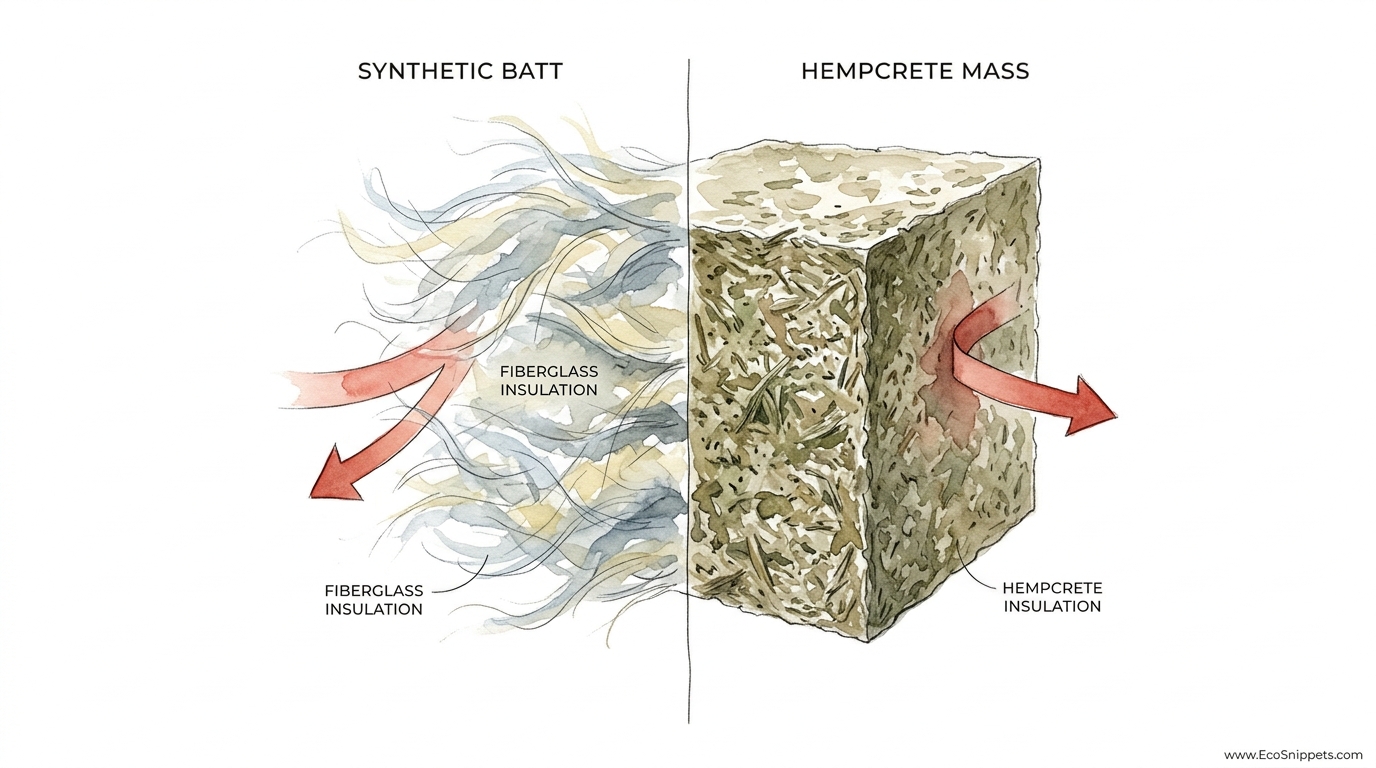
One of these walls is a toxic, sagging liability, while the other is a breathable carbon-sink that gets stronger for a century. We were told fiberglass was the gold standard, but it turns your house into a non-breathable box. Hempcrete doesn’t just insulate; it manages humidity, resists mold, and actually petrifies into stone over time. It’s time to build with biology, not chemicals.
Walking into a home insulated with conventional synthetic batts often feels like stepping into a plastic bag. The air is stagnant, the humidity is trapped, and you can almost sense the chemical off-gassing from the pink rolls hidden behind the drywall. For decades, the construction industry prioritized speed and “R-value” over the health of the occupants and the longevity of the structure. We traded ancestral wisdom—the knowledge of stone, lime, and plant fibers—for cheap, short-lived solutions that fail at the first sign of moisture.
Hempcrete represents a return to a more resilient way of living. It is a bio-composite material made from the woody core of the industrial hemp plant, mixed with a lime-based binder and water. This isn’t just a change in material; it’s a change in philosophy. Instead of fighting nature with vapor barriers and toxic fungicides, we are building with a material that breathes, regulates its own temperature, and actually improves the air you breathe every day.
This guide will take you through everything you need to know about transitioning from synthetic insulation to hempcrete. Whether you are a weekend builder looking to renovate a shed or a serious practitioner planning a full-scale homestead, understanding the intersection of plant biology and mineral chemistry is the first step toward a home that lasts for generations.
Hempcrete Vs Fiberglass Insulation Efficiency
Efficiency in a building envelope is often reduced to a single number: the R-value. This measures the resistance to conductive heat flow. While fiberglass batts typically boast an R-value of 2.9 to 3.8 per inch (R-1.1 to R-1.5 per 25mm), these numbers only tell part of the story. In a laboratory, fiberglass performs well, but in the real world, its efficiency drops the moment air leaks through gaps or moisture accumulates in the fibers.
Hempcrete generally offers an R-value between 2.0 and 3.7 per inch (R-0.8 to R-1.4 per 25mm), which might seem lower on paper. However, hempcrete provides two critical efficiency factors that fiberglass lacks: thermal mass and hygrothermal behavior. Because hempcrete is a dense, monolithic material, it stores heat within the wall itself. During a hot summer day, the wall absorbs the heat, preventing it from entering the living space. At night, as the temperature drops, the wall slowly releases that stored energy back into the house.
Thermal mass effectively creates a “thermal bridge” in time rather than space, smoothing out temperature swings and reducing the workload on your heating and cooling systems by 30% to 50%. Fiberglass, being lightweight and airy, has almost zero thermal mass. It resists heat flow but cannot store it. This means your HVAC system must cycle on and off constantly to maintain a steady temperature, leading to higher energy bills and more wear on your equipment.
Another efficiency gain comes from moisture management. Fiberglass loses its insulating ability when it becomes damp. Even a 1.5% increase in moisture content can lead to a 50% drop in thermal performance for some synthetic materials. Hempcrete is hygroscopic, meaning it can absorb and release moisture without losing its R-value. It acts as a giant humidity buffer, pulling excess water from the air during wet seasons and releasing it when the air is dry. This natural regulation prevents the “swampy” feeling of a poorly ventilated home and eliminates the need for expensive mechanical dehumidifiers.
The Chemistry of Petrifying Walls: How Hempcrete Works
The magic of hempcrete lies in the chemical reaction between the lime binder and the atmosphere. The process starts with the hemp “hurd” or “shive”—the woody, cellulose-rich core of the hemp stalk. These hurds are incredibly porous, filled with microscopic air pockets that provide the material’s insulating properties. When these hurds are coated in a lime binder, a process called carbonation begins.
Lime (calcium hydroxide) reacts with the carbon dioxide (CO2) in the air to turn back into limestone (calcium carbonate). This is a slow, steady petrification. As the wall stands over decades, it literally turns into stone, locking the hemp fibers into a rigid, breathable matrix. Unlike fiberglass, which settles, sags, and degrades over 15 to 20 years, hempcrete actually gets stronger as it ages. It is a material that rewards the patient builder, reaching its peak durability long after the initial construction is finished.
Casting hempcrete involves mixing the hurds, binder, and water in a specific ratio—usually around 4 parts hurd to 1 part binder by volume for walls—and tamping the mixture into temporary forms around a timber frame. Because the lime is highly alkaline (pH of 12.4), it protects the hemp fibers from rotting and makes the wall completely unattractive to pests. Rodents and insects cannot nest in hempcrete because the material is both physically abrasive and chemically inhospitable.
The drying process is the most critical phase of the work. Because the mixture is “wet-laid,” the excess water must evaporate for the carbonation process to complete. In a standard 12-inch (300mm) wall, this can take anywhere from 4 to 8 weeks depending on the climate. Proper airflow is essential. A common mistake is sealing a hempcrete wall with non-breathable paint or drywall too early. The wall must remain “open” to the air to breathe and petrify correctly.
Beneath the Surface: The Benefits of Bio-Aggregates
Choosing hempcrete over fiberglass provides a suite of benefits that extend far beyond simple temperature control. These advantages are rooted in the material’s biological and mineral origins, offering a level of resilience that synthetic materials cannot match.
- Fire Resistance: Hempcrete is naturally fire-resistant. It does not burn or melt like fiberglass and spray foam. In fact, it often receives a Class A fire rating, the highest possible for building materials. When exposed to a direct flame, it merely chars slowly without releasing toxic smoke, providing hours of protection for the structural frame.
- Carbon Sequestration: This is a carbon-negative material. Hemp grows incredibly fast, absorbing 8 to 15 tons of CO2 per hectare annually. When you build with hempcrete, you are effectively “locking” that carbon into the walls of your home for the next century. A typical 1,500-square-foot (140-square-meter) home can sequester upwards of 20,000 lbs (9,000 kg) of carbon.
- Indoor Air Quality: Hempcrete is entirely non-toxic. It contains no VOCs (Volatile Organic Compounds), no formaldehyde, and no irritating glass fibers. Because it regulates humidity and has a high pH, it is practically impossible for mold or mildew to grow on its surface. This makes it the gold standard for anyone suffering from respiratory issues or chemical sensitivities.
- Acoustic Performance: The porous nature of the hemp hurds makes the material an exceptional sound absorber. Hempcrete walls create a quiet, “soft” internal environment, dampening external noises like traffic or wind, and preventing internal echoes.
Common Hurdles: Challenges and Installation Pitfalls
While the benefits are profound, building with hempcrete is not as simple as stapling batts between studs. It requires a different set of skills and a deeper understanding of the materials. One of the most common pitfalls is over-tamping the mix. Beginners often feel the need to pack the material as tightly as concrete, but this squeezes out the air pockets. The goal is to achieve “surface integrity” while keeping the core of the wall loose and airy. Over-tamped hempcrete is heavy, has a lower R-value, and takes much longer to dry.
Another challenge is sourcing high-quality materials. Not all hemp hurds are created equal. They must be “decorticated”—freed from the outer fiber—and cleaned of dust. Fine dust in the mix will absorb too much water and interfere with the lime binder’s ability to coat the hurds. Similarly, using the wrong lime can be disastrous. You cannot use standard hydrated lime from a hardware store meant for mortar; you need a hydraulic lime (like NHL 3.5) or a formulated binder specifically designed for hempcrete to ensure the material sets correctly in thick applications.
Labor is perhaps the biggest hurdle. Casting a monolithic wall is physically demanding and time-consuming compared to modern methods. You are essentially hand-forming every square inch of your home’s envelope. This has led to the development of hempcrete blocks and spray-applied systems which can speed up the process, but they often come at a higher cost for the materials themselves.
The Boundaries: When Hempcrete May Not Be Ideal
Hempcrete is an incredible infill material, but it has distinct limitations that every builder must respect. First and foremost, hempcrete is non-structural. It has a compressive strength of only about 17% of traditional concrete. You cannot use it to support a roof or a second floor on its own; it must always be cast around a load-bearing frame, usually made of timber, steel, or engineered wood.
Environmental conditions also play a role. If you are building in a region with extremely high humidity and no drying season, getting a cast-in-situ wall to dry can be difficult. In these climates, using prefabricated hempcrete blocks is often a better choice because they arrive on-site fully cured and dry. Additionally, hempcrete is not suitable for use below grade or in direct contact with the ground. It is porous and will wick up groundwater, leading to saturation and potential structural issues for the timber frame. All hempcrete walls must sit on a proper foundation or stem wall with a robust damp-proof course.
Cost is the final boundary. While the long-term energy savings and lack of maintenance make hempcrete cheaper over a 100-year lifespan, the upfront cost is higher. You can expect to pay $15 to $25 per square foot ($160 to $270 per square meter) for a finished hempcrete wall, whereas a standard fiberglass-insulated wall might only cost $10 to $15 per square foot. If your budget is strictly focused on the lowest initial build cost, hempcrete may be a difficult sell.
The Ledger: A Head-to-Head Comparison
When deciding between these two approaches, it helps to see how they stack up across the key metrics of health, performance, and longevity. Use this table as a quick reference for your planning phase.
| Feature | Hempcrete Mass | Synthetic Fiberglass Batt |
|---|---|---|
| Primary Mechanism | Thermal Mass + Insulation | Thermal Resistance Only |
| Moisture Strategy | Hygroscopic (Breathable) | Vapor Barrier (Sealed) |
| Lifespan | 100+ Years (Petrifies) | 15-25 Years (Sags/Degrades) |
| Fire Rating | Class A (Non-combustible) | Melts/Combustible Backing |
| Carbon Impact | Negative (Sequestration) | High Positive (Manufacturing) |
| Toxicity | Zero VOCs / Food-safe ingredients | Formaldehyde / Glass Fibers |
| Complexity | High (Specialized skill) | Low (DIY-friendly) |
The Builder’s Log: Practical Tips and Best Practices
For those ready to get their hands in the bucket, following these best practices will save you from the most common headaches on site. Preparation is 90% of the battle when working with lime and hemp.
- Sourcing Local: Hemp hurds are bulky and expensive to ship. Try to find a regional processor within 300 miles (500 km) to keep your carbon footprint and costs low. Support local agriculture—it’s part of the regenerative cycle.
- Mixing Consistency: The mix should look like “chunky granola” coated in a thin, gray-white glaze. It should not be soupy or dripping. A common test is the “snowball test”: if you can squeeze a handful of the mix and it holds its shape without getting your hands dripping wet, it’s perfect.
- Formwork Secrets: Use 1/2-inch (12mm) plywood or specialized plastic forms. Coat the inside of the forms with a natural release agent like vegetable oil to prevent the lime from sticking. Don’t leave the forms on for more than 24 hours; the wall needs air to begin the drying process.
- Framing Details: Place your timber frame in the center of the hempcrete wall. This ensures the wood is completely encased, protecting it from moisture and fire. Use “ladders” or horizontal spacers to keep the forms steady without creating thermal bridges.
- Safety First: Lime is caustic. Always wear gloves, long sleeves, and eye protection. If you get lime on your skin, use a mild acid like vinegar to neutralize it. Don’t wait until it starts to burn.
Deep Wisdom: Advanced Considerations for Master Builders
Once you understand the basics of casting, you can begin to look at more advanced ways to optimize the performance of the building. The 2024 International Residential Code (IRC) now includes Appendix BL, which officially recognizes hemp-lime (hempcrete) as an approved non-structural infill. This is a massive victory for builders, as it provides a prescriptive pathway for permit approval in many US jurisdictions without the need for expensive engineering variances.
For high-performance builds, consider varying the density of your hempcrete. You can cast a denser, higher-lime mix at the base of the wall for better impact resistance and air sealing, and a lighter, higher-hemp mix at the top of the wall (or in the ceiling) where maximum R-value is desired. In the attic, hempcrete can be used as a loose-fill insulation, though it should be lightly misted with a lime slurry to “crust” the top and prevent it from blowing around or attracting moisture from the roof deck.
Integration with other natural materials is where hempcrete truly shines. Finishes should always be vapor-permeable. Traditional lime plasters or clay-based finishes are the best choices. These materials work in harmony with the hempcrete to manage moisture. Avoid acrylic-based paints or cement-based renders, which act like a plastic wrap, trapping moisture inside the wall and causing the timber frame to rot over time. The “breathability” of the entire wall assembly is non-negotiable.
Living Evidence: Real-World Scenarios and Performance
In 2020, a home in Boulder, Colorado, was built using a 12-inch (300mm) hempcrete wall system. Despite the region’s intense temperature swings—ranging from sub-zero winters to 100°F (38°C) summers—the homeowners reported that their internal temperature rarely fluctuated more than 5 degrees without the use of an air conditioner. The thermal mass of the walls provided enough “inertial cooling” to keep the home comfortable even during record-breaking heatwaves.
Similarly, in the United Kingdom, hempcrete has been used to restore 18th-century timber-framed buildings. Because the lime binder is compatible with historical building methods, it allows these old structures to breathe again. Many of these buildings had been damaged by 20th-century renovations that used fiberglass and cement, which trapped moisture and caused the original oak beams to decay. Replacing those “toxic liabilities” with hempcrete not only saved the buildings from collapse but made them more energy-efficient than most modern new-builds.
Consider the “100-Year Math.” While a fiberglass-insulated home may require the insulation to be pulled out and replaced 4 to 5 times over a century due to sagging, moisture damage, or pest infestation, a hempcrete home remains a one-time investment. When you factor in the avoided costs of mold remediation, lower healthcare costs from improved air quality, and the sheer durability of a wall that petrifies into stone, hempcrete is the clear economic winner for anyone building for the long haul.
Final Thoughts
Building with hempcrete is an act of defiance against the “disposable” culture of modern construction. It is a commitment to a home that lives and breathes with its occupants, a structure that heals the environment rather than harming it. While the learning curve is steeper and the manual labor more intense than working with synthetic batts, the reward is a sanctuary that is fireproof, mold-proof, and carbon-neutral.
The transition from chemicals to biology is more than just a trend; it is a return to a standard of quality that our ancestors would recognize. By choosing to build with hemp and lime, you are not just insulating a house; you are creating a legacy. You are proving that it is possible to live in comfort without sacrificing the health of the planet or your family.
If you are ready to start, begin small. Cast a small garden wall or a shed. Feel the weight of the material, observe how it reacts to the weather, and watch as it slowly petrifies into a solid, stony mass. Once you experience the quiet, steady comfort of a hempcrete space, you will never want to go back to living in a plastic box again. The future of building is ancient, and it starts with a single stalk of hemp.
