How To Become More Self-Sufficient Without Starting a Full-Blown Farm…
Want to start preserving your harvest, making your own soap, or building a backyard root cellar — but not sure where to begin? “Homesteading Advice” gives you instant lifetime access to 35+ practical homesteading books on food preservation, veggie gardening, DIY natural cleaning products (save over $250 per year with this skill alone), brewing, off-grid energy, and a whole lot more…
Click Here To Check It Out Now!
Ancient Amazonians created soil that grows more fertile every year – while our modern soil is literally disappearing into the wind. Modern agriculture treats soil like a dead chemistry set, requiring constant infusions of synthetic feed. The ancient ‘Terra Preta’ builders treated soil like a living organism. By combining biochar, fish waste, and pottery shards, they created a carbon-rich battery that is still 10x more fertile than surrounding land 2,000 years later.
This dark, mysterious earth, often called Amazonian Dark Earth (ADE), represents one of the greatest agricultural achievements in human history. Thousands of years ago, indigenous civilizations transformed the naturally acidic, nutrient-poor red clays of the Amazon basin into deep, black, and incredibly productive gardens. Today, researchers and home gardeners alike are looking back to these ancestral methods to solve the problems of soil exhaustion and climate instability.
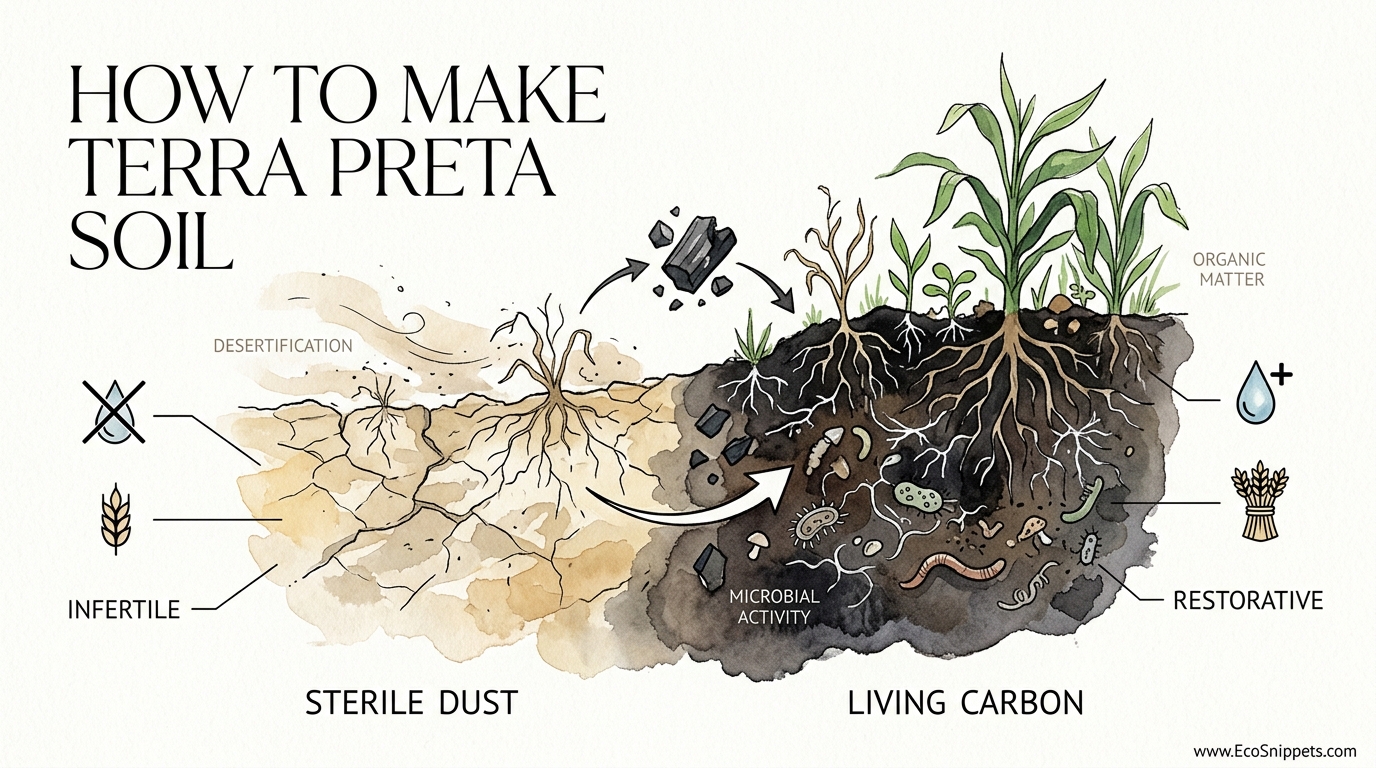
Understanding Terra Preta is about more than just adding charcoal to a garden bed. It is a philosophy of building a permanent, self-regenerating “living carbon” system. This approach moves away from the “sterile dust” of modern chemical farming and toward a method that actually pulls carbon out of the atmosphere and locks it into the ground for millennia.
How To Make Terra Preta Soil
Terra Preta, which translates to “Black Earth” in Portuguese, is a man-made soil characterized by high concentrations of low-temperature charcoal, organic waste, and mineral additives. In the wild, Amazonian soils are typically Oxisols—highly weathered, nutrient-depleted sands and clays that lose fertility almost immediately after being cleared. Ancient people solved this by developing “slash-and-char” systems rather than “slash-and-burn” practices.
The creation of this soil is an intentional process of building a biological battery. You are essentially creating a housing complex for microorganisms using charcoal as the foundation. This charcoal, often referred to as biochar in modern terms, acts as a permanent structure that holds onto water and nutrients that would otherwise wash away.
Modern replication of Terra Preta involves more than just dumping ash into the dirt. It requires a specific recipe of stable carbon, nitrogen-rich organic matter, and slow-release minerals. This combination creates a soil that is 3 to 5 times richer in organic carbon than standard garden soil and significantly higher in phosphorus and calcium.
The Ingredients of Ancestral Earth
Recreating this ancient miracle requires a few specific components that work in synergy. Each piece of the puzzle serves a biological or chemical purpose that contributes to the soil’s longevity.
Low-Temperature Biochar
The backbone of Terra Preta is charcoal produced through pyrolysis, which is the heating of organic material in a low-oxygen environment. For the best results, you want “low-temperature” char produced at roughly 400°C to 500°C (752°F to 932°F). At this temperature, the wood retains some of its organic resins and oils, which feed the bacteria, while the carbon structure remains incredibly stable.
Organic Waste and Nitrogen
Raw charcoal is a sponge that will suck nutrients out of the soil if it isn’t “charged” first. Ancient people used fish waste, animal manure, and even human excrement to saturate the charcoal. For a modern garden, high-quality compost, aged manure, or fermented compost tea serves as the primary nitrogen source.
Bones and Minerals
High levels of phosphorus and calcium are hallmarks of Terra Preta. This was originally achieved by incorporating animal and fish bones into the soil. You can use bone meal or crushed eggshells to provide these essential minerals, ensuring the “battery” has enough chemical energy to support heavy-feeding plants.
Pottery Shards and Clay
Archaeologists consistently find millions of tiny pottery shards in these dark earth sites. These shards aren’t just trash; they provide micro-habitats for fungi and help manage moisture within the soil. They also leach small amounts of minerals over decades, contributing to the soil’s complex structure.
How It Works: The Carbon Battery
The secret to Terra Preta’s success lies in its Cation Exchange Capacity (CEC). Most garden soils lose their ability to hold nutrients over time as organic matter decomposes. Charcoal, however, does not decompose; it has a high surface area and a negative charge that attracts and holds positively charged nutrients like potassium, calcium, and magnesium.
A single gram of high-quality biochar can have a surface area equivalent to a small warehouse. Within these millions of tiny pores, beneficial microbes find shelter from predators and environmental stress. These microbes process nutrients and deliver them to plant roots in exchange for sugars, creating a closed-loop system that actually improves with age.
Water retention is another massive benefit of this structure. The porous nature of the char acts like a subterranean reservoir, holding onto moisture during dry spells and releasing it as needed. This reduces the need for irrigation and prevents the “sterile dust” effect where dry soil becomes hydrophobic and repels water.
The Step-by-Step Process for Your Garden
Building a true Terra Preta bed is a multi-stage process that requires patience. You cannot simply mix the ingredients and plant immediately; the system needs time to “wake up” and colonize with life.
Step 1: Produce or Source Clean Biochar
Start with clean, unpainted wood or agricultural waste. Avoid using BBQ charcoal briquettes, as these often contain chemical binders and coal dust that can kill soil microbes. If you are making your own, use a pit or a specialized kiln to ensure the wood chars rather than turning to ash. Ash is mostly minerals and will disappear quickly, while char is the permanent carbon skeleton you need.
Step 2: Crushing and Sizing
Break the charcoal into small pieces, ranging from dust to the size of a pea. Smaller pieces have more surface area per volume, which speeds up the colonization process. Aim for a mix of sizes to create a diverse range of pore spaces within the soil profile.
Step 3: Inoculating (The Charging Phase)
Soak your charcoal in a nutrient-rich liquid for at least two to four weeks. Using a 50/50 mix of compost and water or a high-quality liquid manure works well. This step is critical; skipping it will result in the charcoal stealing nitrogen from your plants during the first season. The goal is to fill the charcoal’s “pockets” with nutrients before it hits the ground.
Step 4: The Mineral Mix
Add your minerals to the soaking char. Incorporate approximately 1.5 kg of rock dust or bone meal for every 100 liters of char (roughly 3 lbs per 26 gallons). This ensures that the microorganisms have a steady supply of phosphorus and calcium as they begin to build their colonies.
Step 5: Incorporation
Mix the charged biochar into your topsoil at a ratio of about 10% to 20% by volume. For most gardens, this means adding about 5 cm to 10 cm (2 to 4 inches) of the mix to the top layer and tilling it in gently. Adding some crushed terracotta or unglazed clay shards at this stage will help replicate the physical structure of the original Amazonian sites.
Benefits of the Dark Earth Method
Switching to a Terra Preta-style system offers measurable advantages that go beyond simple fertility. It is a way of future-proofing your land against environmental extremes.
- Permanent Fertility: Unlike compost, which must be reapplied every year, the carbon in Terra Preta stays in the soil for centuries.
- Reduced Fertilizer Needs: Because the soil holds onto nutrients so effectively, you can reduce supplemental fertilization by up to 50% or more.
- Climate Resilience: The high water-holding capacity helps plants survive droughts that would kill crops in standard soil.
- Carbon Sequestration: Every ton of biochar added to the soil removes approximately 3 tons of CO2 from the atmosphere, making your garden a literal carbon sink.
- Microbial Diversity: Research shows that Terra Preta supports a much wider variety of bacteria and fungi than conventional soils.
Challenges and Common Mistakes
The most frequent error people make is adding “raw” or “dead” charcoal directly to the soil. This creates a temporary nutrient deficit because the charcoal is so effective at binding nitrogen that it competes with the plant roots. You may see stunted, yellowing plants if you skip the inoculation phase.
Another pitfall is using high-temperature industrial charcoal or ash. Ash raises the pH of the soil very rapidly and lacks the porous structure needed for microbial housing. True Terra Preta charcoal is slightly acidic to neutral and feels “clink-y” like ceramic when handled.
Many gardeners also fail to provide enough organic matter to accompany the char. The charcoal is the house, but the compost and waste are the food. Without a steady supply of organic matter for the microbes to process, the system will become a dormant carbon pile rather than a living soil.
Limitations and Environmental Constraints
Terra Preta is not a “magic powder” that works instantly in every environment. In very cold climates, the microbial activity required to fully integrate the char into the soil moves much slower. You might not see the full benefits of the system for two or three growing seasons in temperate or sub-arctic zones.
Soil pH is another consideration. Biochar is often slightly alkaline, which is perfect for the acidic soils of the Amazon or the Eastern United States. However, if you already have highly alkaline soil (pH 8.0 or higher), adding large amounts of biochar could push the pH too high for most vegetables. Always perform a soil test before making massive amendments.
Comparison: Terra Preta vs. Modern Soil Management
To understand the value of this ancient system, it helps to compare it to the “dead chemistry” approach used in most industrial and even some home gardens.
| Feature | Modern Chemical Soil | Terra Preta (Living Carbon) |
|---|---|---|
| Nutrient Retention | Low (requires constant inputs) | High (retains nutrients for years) |
| Carbon Stability | Poor (carbon gasses off quickly) | Extreme (stable for 500+ years) |
| Water Usage | High (soil dries out fast) | Low (charcoal acts as a reservoir) |
| Microbial Life | Minimal (suppressed by salts) | Diverse (housed in carbon pores) |
| Longevity | Seasonal | Generational |
Practical Tips for Immediate Application
You do not need to convert your entire farm at once. Start with a single “test plot” or even a few large containers to see how your local plants respond to the mix.
- Use Urine: If you are comfortable with it, human urine is a sterile and incredibly rich source of nitrogen and phosphorus for “charging” your biochar.
- Mix with Your Compost Pile: The easiest way to inoculate char is to add it to your compost pile as you build it. The char will absorb the nutrients as they are released during decomposition.
- Add Rock Dust: Combined with biochar, basalt or granite dust provides the trace minerals that modern soils often lack.
- Mulch Heavily: Keep the soil surface covered to protect the microbes living in the top layer of your new dark earth.
Advanced Considerations: The Long Game
Serious practitioners should look into the “Slash and Char” philosophy for managing wood lots and garden waste. Instead of hauling brush away or burning it to ash, use a flame-cap kiln or a trench fire to convert that biomass into permanent soil wealth. This cycle turns “waste” into a high-value asset that increases the value and productivity of your land.
Scaling this process requires thinking about “nutrient density.” If you are building large beds, consider using “effective microorganisms” (EM-1) or local forest leaf mold to jump-start the microbial populations in your biochar. This mimics the natural fungal networks found in the original Amazonian sites.
Example Scenario: The Sandy Garden Transformation
Imagine a gardener in a region with very sandy soil that requires watering twice a day and heavy fertilizing just to grow basic tomatoes. In the first year, they incorporate 20 liters (approx. 5 gallons) of charged biochar per square meter (approx. 10 square feet).
The result is a noticeable change in soil color from tan to deep brown. By the second year, the water requirement drops by 40% as the carbon battery begins to hold moisture. In the third year, the gardener finds that they no longer need to add synthetic nitrogen, as the established microbial community and the stable carbon are recycling enough nutrients to support a heavy harvest. This is the “compounding interest” of the Terra Preta system.
Final Thoughts
Terra Preta is a reminder that the most advanced technology is often thousands of years old. By shifting our focus from feeding the plant to building the soil, we move away from the fragile cycles of modern agriculture and toward a system of true self-reliance. This “living carbon” approach doesn’t just grow better vegetables; it heals the earth by pulling excess carbon out of the sky and putting it back where it belongs.
Building your own dark earth is an investment in the future of your land. The work you do today to charge and bury stable carbon will still be paying dividends for your grandchildren. It is a path toward a garden that doesn’t just survive but thrives, becoming more fertile with every passing season.
Encourage yourself to experiment with different local feedstocks for your char and various organic waste streams for your inoculation. The ancient Amazonians didn’t have a laboratory; they had observation, patience, and a deep respect for the living world beneath their feet. Apply those same principles, and you will see your “sterile dust” transform into a “living battery” of growth.
