How To Become More Self-Sufficient Without Starting a Full-Blown Farm…
Want to start preserving your harvest, making your own soap, or building a backyard root cellar — but not sure where to begin? “Homesteading Advice” gives you instant lifetime access to 35+ practical homesteading books on food preservation, veggie gardening, DIY natural cleaning products (save over $250 per year with this skill alone), brewing, off-grid energy, and a whole lot more…
Click Here To Check It Out Now!
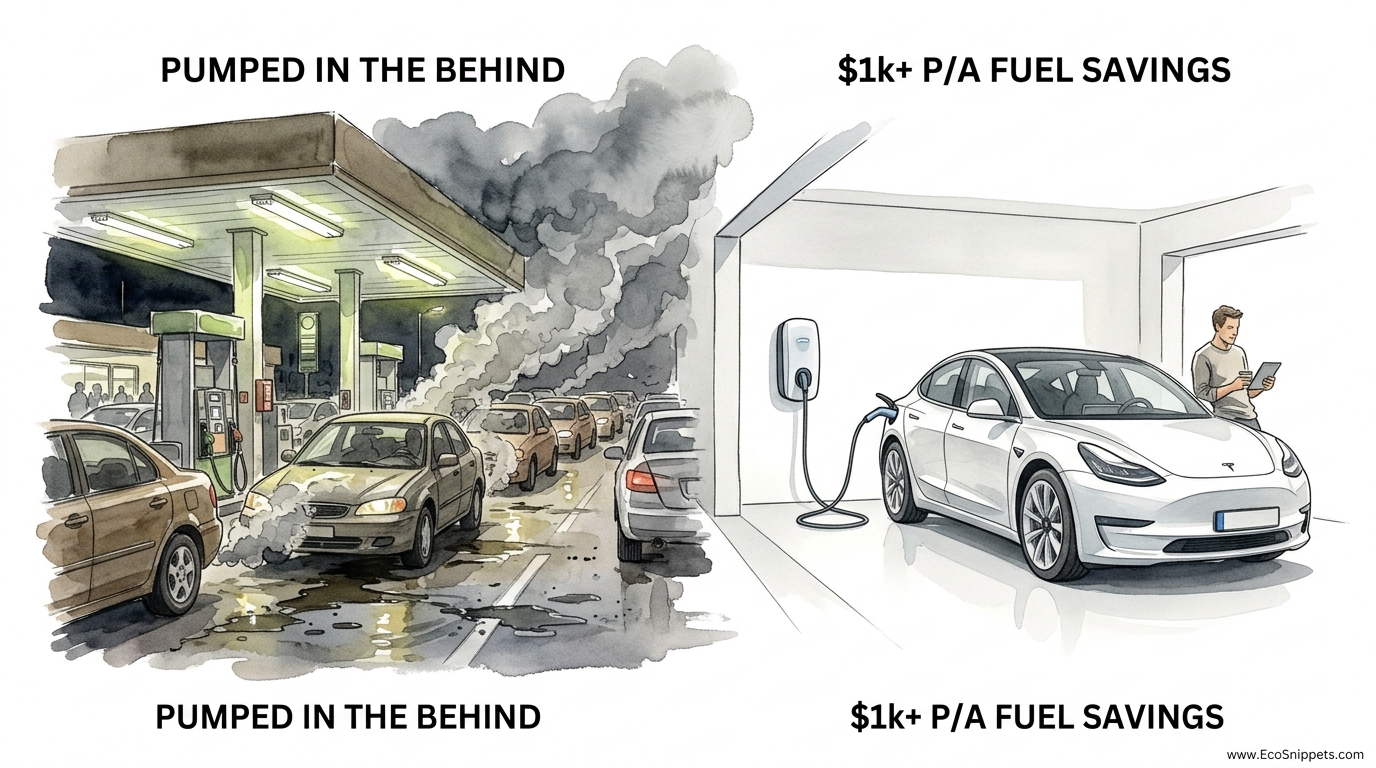
Why are you still standing in oil puddles when your car could be fueling while you sleep for a fraction of the cost? Stop planning your life around the fuel light. EV owners are saving an average of $1,000 a year on fuel and slashing maintenance costs by 40%. No more oil changes, no more spark plugs, and no more greasy pumps. Just the calm, predictable order of a full battery every single morning.
Transitioning to electric power is not just about the latest technology. It represents a return to a fundamental sense of self-reliance that would have made our ancestors proud. In the early days of the frontier, a man was only as good as his tools and his ability to maintain them without a shop on every corner. Today, the internal combustion engine has become a labyrinth of 2,000 moving parts, each a potential point of failure that keeps you tethered to a global supply chain of petroleum and specialized labor.
Choosing an electric vehicle (EV) is a decision to simplify your existence. Imagine a machine with only about 20 moving parts in its drivetrain. Think about the peace of mind that comes from knowing you are no longer being PUMPED IN THE BEHIND at the gas station every time global tensions shift. This guide explores the hard data and the practical reality of what it means to own an electric car in 2025 and beyond.
Cost To Own An Electric Car vs Petrol – The Facts
The true cost of owning a vehicle is rarely found on the sticker in the window. To understand the financial reality, you must look at the total cost of ownership (TCO). This includes the purchase price, taxes, fuel or charging costs, maintenance, insurance, and the inevitable sting of depreciation.
Current data for 2025 reveals a narrowing gap in the initial purchase price. The average new EV transaction price sits around $53,000, while a comparable gasoline-powered vehicle averages about $48,000. While the upfront cost remains higher for electric models, federal tax credits of up to $7,500 can often erase this difference entirely.
Operating costs tell a much more dramatic story. Fueling a gasoline car averages between $2,000 and $2,220 annually for a typical driver covering 15,000 miles (24,140 kilometers). In contrast, charging an EV at home generally costs between $500 and $800 per year. This $1k+ P/A fuel savings is a tangible benefit that lands directly in your pocket every month.
Maintenance is another area where the facts favor the battery. Modern electric vehicles require approximately 40% less maintenance over their lifetime compared to petrol cars. The elimination of oil changes, transmission flushes, spark plug replacements, and exhaust system repairs creates a massive buffer against inflation and mechanical failure.
Used EVs have become a particularly compelling value proposition. In 2024, the prices for used electric vehicles fell by more than 30%, far outstripping the depreciation of used gas cars. This creates a “sweet spot” for those who value self-reliance and fiscal discipline, allowing them to acquire a low-maintenance vehicle that has already taken its biggest financial hit.
How the Electric Drivetrain Works
Understanding the simplicity of an electric motor compared to an internal combustion engine is essential for any modern pioneer. A petrol engine is a symphony of controlled explosions, requiring precise timing, cooling, lubrication, and air filtration. It relies on thousands of components—pistons, valves, crankshafts, and timing belts—all rubbing against each other under intense heat.
Electric vehicles replace this complexity with a simple magnetic interaction. An electric motor consists primarily of a rotor and a stator. When electricity from the battery flows through the stator, it creates a magnetic field that spins the rotor. This rotational energy is sent directly to the wheels.
Most EVs utilize a single-speed transmission. Because electric motors provide 100% of their torque instantly, they do not need a complex multi-gear gearbox to stay in a “power band.” This lack of shifting results in a smooth, linear acceleration that feels more like a natural force than a mechanical process.
Thermal management is still necessary, but it is far simpler. Instead of an radiator cooling an engine that generates 200-degree heat, an EV uses a coolant loop to keep the battery and motor within an optimal temperature range. This system is closed and requires far less frequent attention than the cooling system of a traditional truck.
Benefits of Making the Switch
Energy independence is perhaps the greatest advantage of EV ownership. When you own a petrol car, you are a customer of the oil industry for life. When you own an EV, you have the option to become your own fuel provider. Integrating a home solar array allows you to harvest energy from the sun and store it directly in your vehicle.
The daily convenience of home charging cannot be overstated. Much like a smartphone, an EV is plugged in at night and is ready to go in the morning. This eliminates the weekly chore of detouring to a gas station, standing in the cold, and handling a greasy fuel nozzle.
Regenerative braking is a functional benefit that changes how you drive. When you lift your foot off the accelerator, the electric motor reverses its role and acts as a generator. This creates resistance that slows the car while sending energy back into the battery. This process significantly reduces the wear on your physical brake pads, which can last twice as long as those on a petrol car.
Quiet operation provides a psychological benefit. The roar of an engine is often seen as power, but in a world of constant noise, the silence of an electric drivetrain is a luxury. It allows for better conversation, a clearer mind, and a more observant driving experience.
Challenges and Common Pitfalls
Initial sticker shock is the first hurdle many face. While the long-term savings are clear, the higher upfront cost requires more capital or a larger loan. This can be a barrier for those who do not have the liquid assets to leverage the future savings.
Insurance premiums are currently a point of contention. On average, insuring an EV costs 15% to 30% more than a similar petrol vehicle. This is largely due to the specialized labor and parts required for repairs. If an EV is involved in an accident that damages the battery pack, the repair cost can be high enough that insurers choose to “write off” the vehicle more quickly than they would a gas car.
Tire wear is a hidden cost that many new owners overlook. Electric vehicles are roughly 20% heavier than their gas counterparts due to the weight of the battery. They also deliver instant torque, which can lead to more aggressive acceleration. Together, these factors cause tires to wear out approximately 20% faster. Expecting 30,000 to 40,000 miles (48,000 to 64,000 kilometers) from a set of tires is more realistic than the 60,000-mile rating often seen on traditional cars.
Public charging infrastructure remains inconsistent in rural areas. While the “filling station” is your home 90% of the time, long-distance travel requires planning. Relying on public fast-chargers can also be expensive, sometimes costing as much as gasoline per mile, which erodes the primary financial benefit of the vehicle.
Limitations to Consider
Cold weather performance is a reality that cannot be ignored. Lithium-ion batteries are sensitive to temperature. In freezing conditions, an EV can lose 20% to 30% of its range as the system uses energy to heat the battery and the cabin. For those living in the far north, this requires a larger battery buffer than those in temperate climates.
Towing is another area where internal combustion still holds a temporary edge. While electric trucks like the F-150 Lightning have immense pulling power, towing a heavy trailer can cut the range by 50%. For a pioneer moving heavy equipment over long distances across the plains, the frequent stops for charging may be impractical.
The environmental “break-even” point is a factor for the conscious buyer. Producing an EV battery is energy-intensive, meaning an EV leaves the factory with a higher carbon debt than a petrol car. However, most studies indicate that this debt is “repaid” within the first 15,000 to 20,000 miles of driving, after which the EV is significantly cleaner.
Comparison Table: 10-Year Cost Projection
| Expense Category | Gasoline Vehicle (ICE) | Electric Vehicle (EV) |
|---|---|---|
| Avg. Purchase Price (after incentives) | $45,000 | $48,000 |
| Fuel / Energy Cost (10 yrs) | $21,000 | $6,500 |
| Maintenance & Repairs (10 yrs) | $12,500 | $4,800 |
| Insurance Premiums (10 yrs) | $14,000 | $17,500 |
| Total 10-Year Spend | $92,500 | $76,800 |
Practical Tips for New EV Owners
Maximizing battery health is the key to ensuring your vehicle outlasts its warranty. Avoid keeping the battery at 100% charge for long periods if you do not need the full range. Most manufacturers recommend a daily limit of 80% to reduce chemical stress on the cells.
Investing in a high-quality Level 2 home charger is the best upgrade you can make. While a standard wall outlet (Level 1) can take 24 hours to charge a car, a Level 2 station (240V) can do it in 6 to 8 hours. This ensures you always start the day with the range you need.
Time-of-use (TOU) electricity plans can further slash your costs. Many utility companies offer significantly lower rates for power used between midnight and 6:00 AM. Setting your car to charge only during these windows can bring your “fuel” cost down to the equivalent of less than $1.00 per gallon.
Smooth acceleration preserves both your tires and your range. While the “launch” of an EV is thrilling, using it sparingly will save you hundreds of dollars in rubber over the life of the vehicle. Think of the torque as a tool for safety and passing, rather than a toy for every stoplight.
Advanced Considerations for the Serious Practitioner
Vehicle-to-Grid (V2G) and Vehicle-to-Home (V2H) technologies are the next frontier of self-reliance. Modern EVs like the Nissan Leaf or Ford F-150 Lightning can actually send power back into your home during a blackout. This turns your car into a massive backup battery, providing enough energy to run a refrigerator and lights for several days.
Software updates have replaced the traditional tune-up. Unlike petrol cars, which slowly degrade in performance as parts wear, EVs can actually get better over time. Manufacturers frequently push “over-the-air” updates that improve battery efficiency, increase motor power, or add new safety features. This digital maintenance requires no trip to the dealer.
The “Second Life” for batteries is an emerging market. When an EV battery eventually degrades to about 70% capacity (usually after 15 to 20 years), it may no longer be ideal for a car, but it is perfect for stationary home energy storage. Serious practitioners are already looking at how these retired packs can be used to store solar energy for workshops or off-grid cabins.
Scenario: The Daily Commuter vs. The Weekend Warrior
Consider a commuter who travels 60 miles (96 kilometers) round trip daily. In a petrol car getting 25 MPG, they consume 2.4 gallons of fuel per day. At $3.50 per gallon, that is $8.40 daily. Over a 250-day work year, they spend $2,100 on fuel and roughly $300 on oil changes and minor maintenance.
The same commuter in an EV uses about 18 kWh of electricity. At an average home rate of $0.15 per kWh, the daily cost is $2.70. Their annual energy spend is $675, with virtually zero scheduled maintenance cost for the first several years. The $1,725 annual difference pays for the higher insurance and the slightly more expensive tires while still leaving a significant surplus.
Contrast this with a “Weekend Warrior” who only drives 3,000 miles a year and uses a truck for heavy towing. For this individual, the higher purchase price and insurance of an EV might not be offset by the fuel savings for many years. The “facts” of ownership change based on how much you rely on the machine.
Final Thoughts
The transition from petrol to electric power is reminiscent of the shift from the horse to the internal combustion engine. It is a change that brings more power, less mess, and a new way of thinking about how we move across the land. While the upfront costs and insurance premiums remain higher for now, the path toward long-term savings and mechanical simplicity is clear.
Embracing an electric vehicle is ultimately an act of foresight. It is about choosing a machine with 20 moving parts over one with 2,000. It is about the quiet satisfaction of fueling your transport with sunlight rather than standing in an oil puddle at a crowded pump. By understanding the data and mastering the practical requirements of battery care, you can secure a level of independence that traditional vehicles simply cannot offer.
Take the time to analyze your own driving habits and local electricity rates. The numbers do not lie, but they do require a calculator and a bit of “pioneer grit” to execute properly. Whether you are looking to slash your monthly expenses or simply want a more reliable tool for the modern world, the electric vehicle stands ready to deliver on the promise of a more efficient future.
