How To Become More Self-Sufficient Without Starting a Full-Blown Farm…
Want to start preserving your harvest, making your own soap, or building a backyard root cellar — but not sure where to begin? “Homesteading Advice” gives you instant lifetime access to 35+ practical homesteading books on food preservation, veggie gardening, DIY natural cleaning products (save over $250 per year with this skill alone), brewing, off-grid energy, and a whole lot more…
Click Here To Check It Out Now!
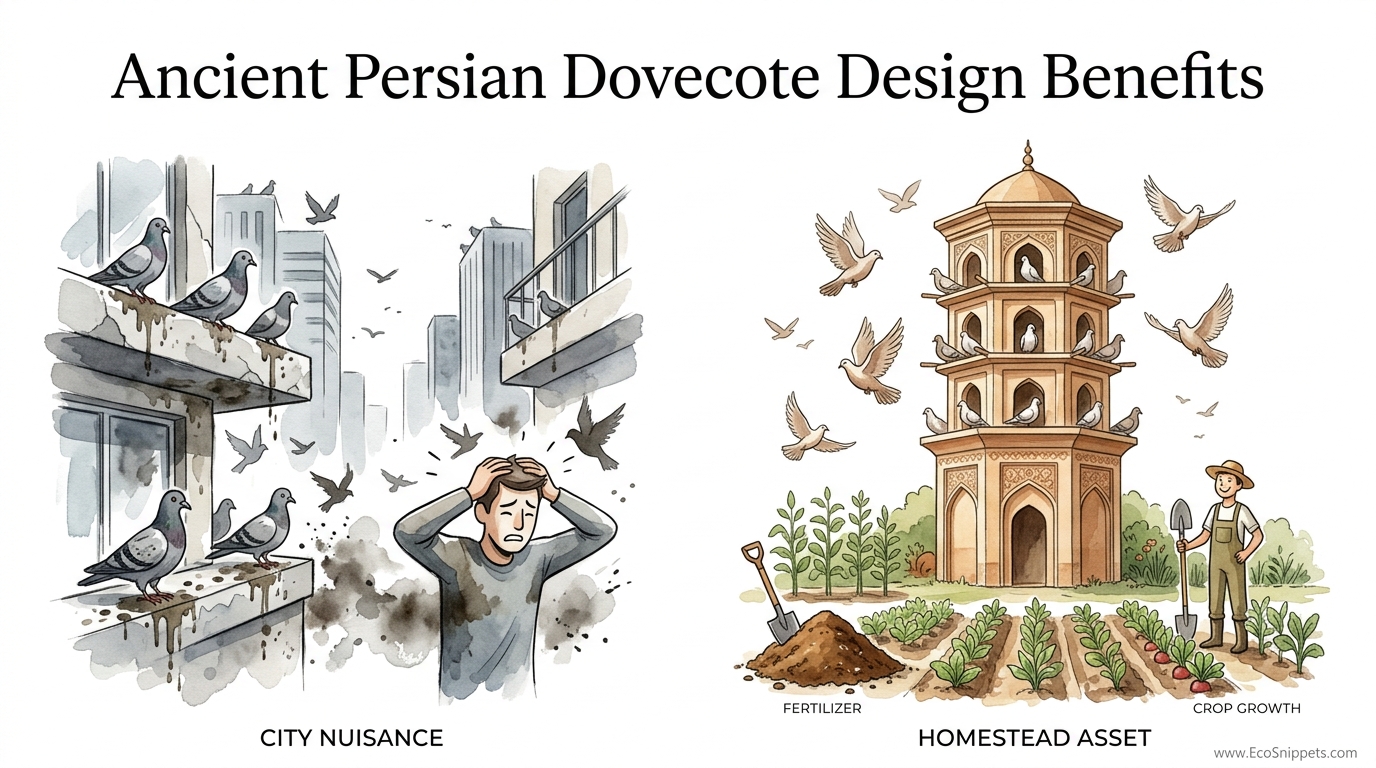
Ancient civilizations didn’t see ‘rats with wings’ – they saw the most powerful high-nitrogen fertilizer on the planet. In ancient Persia and Rome, pigeons weren’t pests; they were the engine of the agricultural economy. Building ‘Dovecote’ towers allowed farmers to turn common birds into a 24/7 fertilizer factory. This ‘White Gold’ was so potent it was used to grow legendary melons in the middle of the desert. Here is how you can use this ancient avian system to supercharge your backyard soil.
Pigeons have been companions to human agriculture for over 10,000 years. Early farmers in the Middle East noticed that where wild rock pigeons nested, the vegetation grew with unnatural vigor. They realized these birds were gathering nutrients from miles away and concentrating them in one spot. This observation led to the birth of the dovecote, a specialized structure designed to harvest “White Gold.”
Modern gardeners often struggle with depleted soil or expensive synthetic bags of nitrogen. The ancient Persian system offers a self-sustaining alternative that works with the rhythm of nature. You provide the housing, and the birds provide the fertility. This is not about raising birds for meat; it is about managing a biological nutrient pump for your garden.
Reviving this ancestral wisdom changes your perspective on the local environment. A bird that was once a nuisance becomes a vital homestead asset. You start to see the surrounding landscape as a source of free minerals that the pigeons will kindly collect and deliver to your doorstep every evening.
Ancient Persian Dovecote Design Benefits
Persian dovecote towers, known as borj-e-kaftar, are masterpieces of vernacular engineering. These structures were most prominent in the Isfahan region, where thousands of them once dotted the desert landscape. Builders used sun-dried mud bricks and lime plaster to create massive, hollow cylinders that stood up to 20 meters (65 feet) tall. The sheer scale of these towers was not for vanity; it was for maximum surface area.
The interior of a Persian dovecote is a complex honeycomb of nesting niches. A single tower could house as many as 14,000 pigeons. Architects designed the walls with thousands of small cubby holes, typically measuring about 20 by 20 by 28 centimeters (8 x 8 x 11 inches). This specific dimension provided enough space for a breeding pair to nest while preventing larger predators from entering the cavity.
Thermal regulation was another primary benefit of the Persian design. The thick mud-brick walls provided incredible insulation against the blistering desert sun. Inside, the temperature remained remarkably stable, encouraging the birds to stay and breed year-round. Small vents at the top allowed for constant airflow, which dried the droppings quickly and reduced the buildup of ammonia.
Structural stability was achieved through a central pillar or a series of inner walls that supported the outer shell. These internal structures also increased the number of nesting sites significantly. Designers often added bands of smooth plaster or “muqarnas” friezes around the exterior to prevent snakes and rats from climbing the tower. This created a safe fortress for the birds, ensuring they returned every night to deposit their valuable guano.
How the System Operates
Operating a dovecote system requires understanding the natural behavior of the rock pigeon. These birds are instinctively attracted to rocky ledges and high crevices for safety. The dovecote mimics this habitat, providing a superior nesting environment compared to what is available in the wild. You do not need to capture or train the birds; they will naturally colonize a well-designed structure.
Pigeons are unique because they do not require you to provide their daily food. They fly out every morning to forage across the surrounding countryside, eating seeds, grains, and wild plants. They can travel several miles in their daily search for sustenance. While they are away, they are effectively gathering minerals and nitrogen from the wider landscape and processing them in their digestive systems.
Nitrogen collection happens while the birds roost at night. Unlike many other animals, pigeons tend to hold their waste until they are perched. This behavior means that the vast majority of their droppings end up on the floor of the dovecote. This concentrated deposit is what farmers call “White Gold” because of its extremely high nutrient density.
Harvesting the manure is a straightforward but periodic task. In the ancient Persian towers, a small door at the base allowed farmers to enter once or twice a year to shovel out the accumulated guano. The droppings were usually bone-dry due to the desert climate and the tower’s ventilation. This dry state is crucial because it preserves the nitrogen and makes the manure easier to handle and store.
Benefits of Pigeon Guano
Pigeon manure is widely considered the most potent organic fertilizer available to the home gardener. It typically boasts an N-P-K (Nitrogen-Phosphorus-Potassium) ratio of approximately 4-3-1, though some samples have shown nitrogen levels as high as 17% depending on the birds’ diet. This is significantly higher than the nitrogen content found in cow or horse manure. The high phosphorus levels also make it an exceptional choice for flowering and fruiting plants.
Rich mineral content is another major advantage of this avian fertilizer. Because pigeons forage on a wide variety of wild seeds and greens, their waste contains a broad spectrum of trace elements. You will find higher concentrations of magnesium, iron, and calcium in pigeon guano than in standard commercial fertilizers. These micronutrients are essential for building plant immunity and improving the flavor of vegetables.
Fast-acting results are a hallmark of this system. The nitrogen in pigeon manure is in a form that is readily available to plants once it has been properly cured or diluted. Ancient Persian farmers used this “White Gold” specifically to grow melons and cucumbers, which are notoriously hungry for nitrogen. The result was legendary fruit that was famous across the Silk Road for its size and sweetness.
Sustainability is the ultimate long-term benefit. A dovecote creates a closed-loop fertility system on your property. You are not buying bags of synthetic chemicals that degrade soil biology over time. Instead, you are using a biological engine to harvest nutrients from the atmosphere and the surrounding environment. This method builds soil health by adding organic matter and beneficial microbes alongside the raw nutrients.
Challenges and Common Mistakes
Handling raw pigeon manure requires caution and respect for its potency. The most common mistake is applying “hot” manure directly to the base of sensitive plants. Fresh pigeon droppings are highly acidic and concentrated. They can easily “scald” the roots and stems of your crops, leading to stunted growth or plant death within days.
Dust inhalation is a significant health risk during the harvesting process. Dried bird droppings can harbor fungal spores, such as Histoplasma capsulatum, which causes respiratory issues in humans. Wear a high-quality mask and gloves whenever you are cleaning out a dovecote or handling dry guano. Dampening the manure slightly before shoveling can help keep the dust down and keep your lungs safe.
Attracting unwanted visitors is a risk for any structure housing many birds. If the dovecote is not properly secured, it can attract hawks, owls, and snakes. Small entrance holes (no larger than 6 cm or 2.5 inches) are essential for keeping out larger predatory birds. A smooth band of metal or polished plaster around the exterior base will prevent climbing predators from reaching the nesting niches.
Local zoning and neighbor relations can be a hurdle for dovecotes in suburban areas. Some municipalities categorize pigeons as a nuisance or have strict laws regarding the height of towers. Check your local ordinances before building a large-scale Persian-style structure. A smaller, wall-mounted dovecote or a “pigeon loft” design may be a more appropriate choice for smaller lots.
Limitations of the Dovecote System
Quantity requirements can be a reality check for the small-scale gardener. A few pigeons will produce enough fertilizer for a few flower pots, but it takes a significant flock to support a large vegetable garden. Ancient towers housed thousands of birds because the agricultural demand for nitrogen was massive. You should manage your expectations based on the number of birds your property can realistically support.
Environmental constraints play a major role in the system’s success. Pigeons need access to a reliable water source and plenty of foraging ground. If you live in a heavily forested area or a dense urban core with no green space, the birds may struggle to find the diverse diet needed for high-quality guano. The system works best in open landscapes, agricultural fringes, or large suburban lots with nearby fields.
Time is a necessary ingredient for safety. You cannot use the manure the same day it is dropped. It must be cured or composted to break down the high acidity and neutralize any potential pathogens. This means you need a system for storing and aging the guano, which adds a layer of management to your gardening routine. It is a slow-burn system that requires planning months in advance of the planting season.
Fertilizer Comparison: Pigeon vs. Others
Understanding how pigeon guano stacks up against other common manures helps you plan your soil amendments. While all organic fertilizers have value, pigeon manure is uniquely concentrated and fast-acting.
| Manure Type | Nitrogen (N) | Phosphorus (P) | Potassium (K) | Best Use Case |
|---|---|---|---|---|
| Pigeon Guano | High (4% – 17%) | High (2% – 8%) | Moderate (1% – 3%) | Heavy feeders like melons, tomatoes, and greens. |
| Chicken Manure | Moderate (1% – 1.5%) | Moderate (1%) | Low (0.5%) | General garden fertilizer; requires composting. |
| Cow Manure | Low (0.6%) | Low (0.2%) | Low (0.5%) | Building soil structure and organic matter. |
| Horse Manure | Low (0.7%) | Very Low (0.3%) | Moderate (0.6%) | Large-scale soil conditioning; high weed seed risk. |
Pigeon manure contains four times more nitrogen than horse manure and eight times more phosphorus than cow manure. This concentration means you use much less volume to achieve the same nutrient boost. It is a “surgical” fertilizer, meant for targeted application rather than broad-scale soil building.
Practical Tips for Modern Backyard Dovecotes
Starting with a smaller design is often better for the modern homesteader. You do not need a 20-meter tower to see benefits. A simple “doocot” or wall-mounted nesting box system can attract enough birds to provide a steady supply of manure for a backyard garden. Ensure the boxes are at least 3 meters (10 feet) off the ground to make the birds feel secure from ground predators.
Proper curing is the secret to success with “White Gold.” Mix one part dried pigeon guano with five parts of carbon-rich material like sawdust, straw, or peat. Let this mixture sit in a covered compost bin for at least 3 to 6 months. This process neutralizes the high acidity and allows beneficial bacteria to begin the nitrification process, making the nutrients safer for your plants’ roots.
Liquid “Pigeon Tea” is the fastest way to deliver nutrients to your crops. Fill a burlap sack with two kilograms (about 4 pounds) of dried, cured guano and submerge it in a 200-liter (50-gallon) barrel of water. Let it ferment for 14 days, stirring occasionally. Dilute the resulting dark liquid until it looks like weak tea (usually a 1:10 ratio) and apply it to the base of your plants once every two weeks during the peak growing season.
Timing your application is critical for maximum efficiency. Apply your cured pigeon manure to the garden in late autumn or early spring, at least 4 to 6 weeks before you intend to plant. This allows the rain and soil microbes to further break down the nutrients and incorporate them into the soil profile. Avoid applying it to the leaves of vegetables, as the high nitrogen content can cause foliage burn if the solution is too strong.
Advanced Considerations for Serious Practitioners
Integrating a dovecote into a permaculture design maximizes the “stacking” of functions. In addition to fertilizer, pigeons provide a form of integrated pest management. The high towers of Persia were designed to attract raptors like kestrels and owls to the top sections. These birds of prey would then patrol the surrounding 50 acres, naturally controlling rodents and locusts that would otherwise devastate the crops.
Scaling up requires thinking about bird health and sanitation. If you manage a large flock, you must ensure the interior of the dovecote stays dry. Moisture leads to disease and the loss of nitrogen through ammonia volatilization. Use a layer of wood chips or sand on the floor to absorb moisture and make the weekly or monthly cleanup easier. Regular maintenance prevents the dovecote from becoming a source of odor.
Selecting for specific “wild” traits can improve the efficiency of your nutrient pump. Traditional dovecote pigeons are descendants of the wild Rock Dove (Columba livia). These birds are hardier and better foragers than fancy show breeds. If you are starting a flock, look for birds with strong homing instincts and a history of successful foraging in your specific climate.
Mineral supplementation for the birds can indirectly fertilize your soil. Providing a “grit” box filled with crushed oyster shells, sea salt, and charcoal ensures the birds have the minerals they need for digestion. These minerals are eventually passed through their system and deposited in the guano, further enriching the fertilizer with calcium and trace elements that your garden might be lacking.
Examples and Scenarios
Consider the “Melon King” scenario from historical Isfahan. A farmer with a single large dovecote housing 5,000 birds could harvest nearly 5 tons of dry guano annually. This amount of fertilizer was sufficient to nourish a massive field of desert melons. The high phosphorus drove intense flowering, while the nitrogen supported the rapid expansion of the fruit. This allowed for high-calorie food production in a landscape that would otherwise be marginal for agriculture.
In a modern backyard setting, imagine a gardener with a small four-unit dovecote on their garage wall. This setup might house 8 to 12 pigeons. Over a year, these birds would produce roughly 25 to 50 kilograms (55 to 110 pounds) of manure. When cured and mixed into compost, this provides enough high-octane fertilizer to support a 100-square-foot intensive vegetable bed, producing hundreds of pounds of tomatoes and peppers with zero external fertilizer costs.
A rural homestead example involves converting the peak of a barn into a dovecote. By installing nesting niches along the interior gable, a farmer can house 100 birds. This flock acts as a mobile nutrient harvester, cleaning up spilled grain and wild seeds from the surrounding pastures. The collected manure becomes a valuable “compost activator,” added to piles of horse or cow manure to speed up decomposition and boost the final nitrogen count of the homestead’s fertilizer supply.
Final Thoughts
The ancient Persian dovecote system is more than just a historical curiosity; it is a blueprint for self-reliance in the modern age. It teaches us that the solutions to our most pressing agricultural problems—like soil depletion and chemical dependency—often lie in the past. By providing a simple home for a misunderstood bird, we can tap into a massive, natural flow of nutrients that costs nothing but a bit of architectural foresight.
Embracing the “White Gold” system requires a shift in mindset. It means moving away from the “pills and potions” approach of modern gardening and moving toward a partnership with the local ecosystem. The pigeon is not your enemy; it is a hardworking member of your homestead team that gathers the world’s minerals and brings them home to you. This is the essence of ancestral wisdom applied to the modern backyard.
Experimenting with dovecotes will deepen your connection to the land and the seasons. Whether you build a grand tower or a simple nesting box, you are participating in a tradition that fed empires and turned deserts into gardens. Start small, respect the potency of the manure, and watch as your soil transforms into a powerhouse of fertility through the simple, ancient power of the pigeon.
