How To Become More Self-Sufficient Without Starting a Full-Blown Farm…
Want to start preserving your harvest, making your own soap, or building a backyard root cellar — but not sure where to begin? “Homesteading Advice” gives you instant lifetime access to 35+ practical homesteading books on food preservation, veggie gardening, DIY natural cleaning products (save over $250 per year with this skill alone), brewing, off-grid energy, and a whole lot more…
Click Here To Check It Out Now!
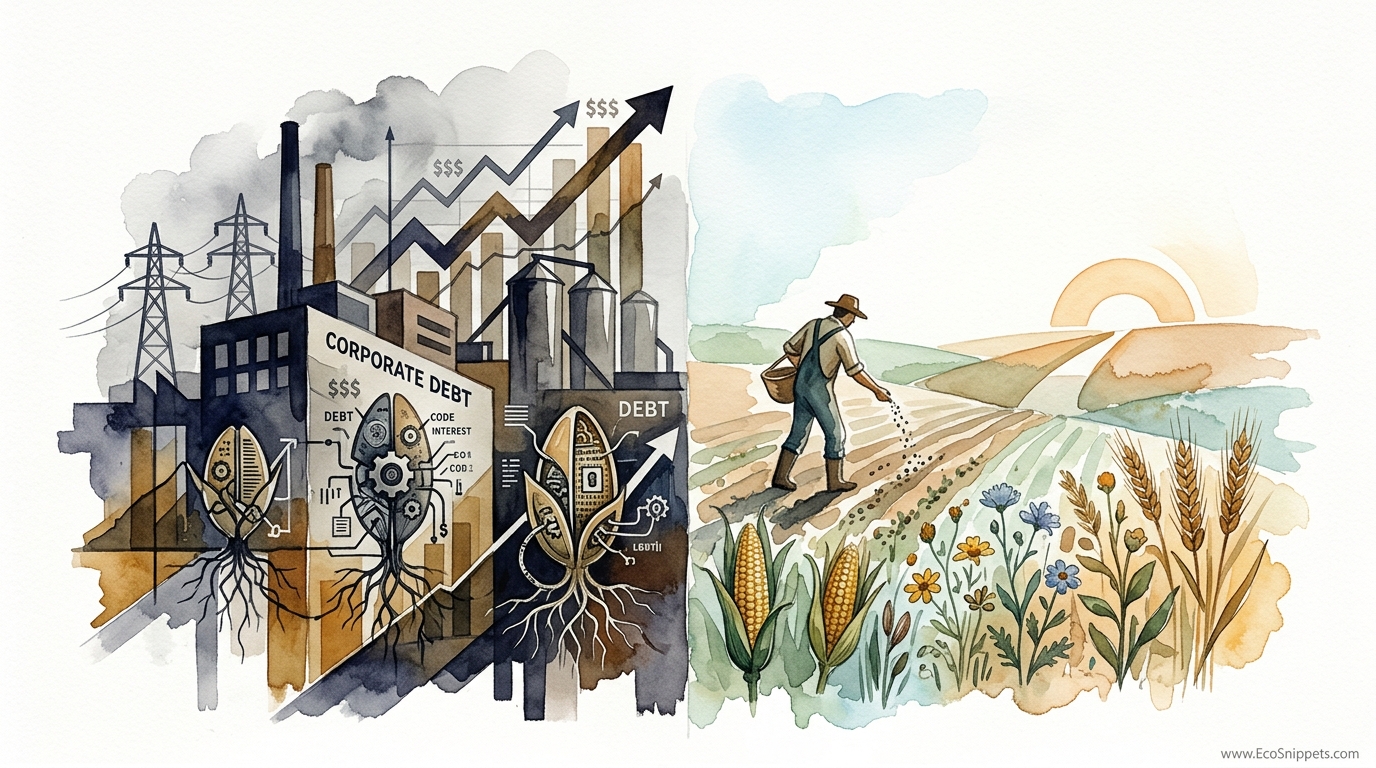
What happens when you no longer own the right to the seeds from your own harvest? For decades, one corporation has held a stranglehold on the global food supply by turning seeds – the foundation of life – into a proprietary subscription service. Every year, farmers are forced to buy back what nature used to give for free, all while drenching their soil in chemicals that kill the very biology that creates fertility. It’s time to stop paying for your own soil’s destruction and start reclaiming the ancestral right to save seeds.
The transition from a self-reliant farmer to a corporate contractor didn’t happen overnight. It was a slow erosion of independence fueled by the promise of higher yields and easier management. Today, many growers find themselves trapped in a cycle of debt, purchasing patented seeds and the specific herbicides required to grow them. This system isn’t designed for the health of the land or the prosperity of the family farm; it is designed for the efficiency of the balance sheet.
Reclaiming seed sovereignty is more than just a gardening hobby. It is a fundamental shift toward resilience and a rejection of the idea that life can be owned. When you save a seed, you are preserving a history of adaptation. You are keeping a lineage alive that has learned how to survive in your specific climate, your specific soil, and your specific water conditions. This guide will walk you through the reality of the modern seed industry and show you how to break the cycle of dependency.
The Monsanto Seed Monopoly
The Monsanto Company, which was acquired by Bayer in 2018, pioneered the use of utility patents for living organisms. Before this shift, seeds were generally considered a common heritage of humanity. While plant breeders had some protections under the Plant Variety Protection Act, farmers still maintained the right to save seed from their harvest to plant the following year. The introduction of genetically modified (GMO) crops changed everything by allowing corporations to claim ownership of the genetic sequences themselves.
This monopoly exists because of a legal framework that treats seeds like software or mechanical inventions. When a farmer buys a bag of “Roundup Ready” soybeans, they aren’t just buying a physical product; they are signing a technology agreement. This contract explicitly forbids the farmer from saving any seed for the next season. If they do, they are considered “seed pirates,” and the corporation has a long history of using aggressive litigation to enforce these patents.
The real-world impact of this monopoly is most visible in the loss of biodiversity. When one or two companies control the vast majority of the seed market, they prioritize a few high-profit varieties that perform well in a chemical-heavy industrial system. Traditional, locally adapted varieties – often called heirlooms – are pushed aside. This creates a fragile food system where a single pest or disease could potentially wipe out a massive percentage of a global crop because the genetic diversity has been bred out in favor of uniformity.
Furthermore, the monopoly creates a “technology package” dependency. The seeds are engineered to be resistant to specific herbicides, like glyphosate. This encourages the heavy application of chemicals, which eventually leads to resistant weeds and degraded soil health. The farmer is then forced to buy even more expensive chemicals and new “traited” seeds to combat the problems created by the previous generation of products. It is a treadmill of corporate debt that replaces the natural fertility of the earth with expensive, laboratory-derived inputs.
How Seed Saving Works: The Path to Independence
Breaking away from the corporate model requires understanding the biology of the plants you grow. To save seeds effectively, you must distinguish between different types of seeds and how they reproduce. The goal is to move toward open-pollinated varieties that come “true to seed,” meaning the offspring will have the same characteristics as the parents.
The first step is identifying the difference between hybrids and open-pollinated seeds. Hybrid seeds (often labeled F1) are the result of crossing two different parent varieties to produce a specific set of traits. While they can be productive, their seeds will not produce the same plant next year; instead, the offspring will revert to a random mix of ancestral traits. To build a self-sustaining system, you must focus on open-pollinated or heirloom varieties.
Pollination methods are the next critical piece of knowledge. Plants generally fall into two categories: self-pollinators and cross-pollinators. Self-pollinating plants, like peas, beans, and tomatoes, have flowers that contain both male and female parts and often fertilize themselves before the flower even opens. These are the easiest for beginners because there is a very low risk of the plants crossing with a different variety nearby.
Cross-pollinating plants, such as squash, corn, and brassicas, rely on wind or insects to move pollen from one plant to another. If you grow two different types of squash close together, the seeds you save will likely produce a strange “mystery” fruit the following year. To prevent this, you must use isolation distances – physical space between varieties – or mechanical barriers like blossom bags and hand-pollination techniques. Understanding these biological boundaries is how you maintain the purity and quality of your seed stock.
Step-by-Step Seed Processing
Once your plants have reached full maturity, you must harvest and process the seeds correctly to ensure they remain viable. This process differs depending on whether the seed is “dry” or “wet.”
- Dry Seed Processing: This applies to crops like beans, grains, and most herbs. Allow the seeds to dry completely on the plant until they are hard and the pods or stalks are brittle. Harvest them on a dry day, remove the chaff (the leafy debris), and ensure they are bone-dry before storage.
- Wet Seed Processing: This is used for fleshy fruits like tomatoes and cucumbers. You must extract the seeds and, in the case of tomatoes, undergo a short fermentation process. Fermenting the seeds in water for a few days removes the gel coating that inhibits germination and kills many seed-borne diseases.
- Cleaning and Winnowing: Use screens or a simple fan to blow away light dust and empty seed hulls. Only the heaviest, healthiest seeds should be kept for planting.
The Benefits of Reclaiming Your Seeds
Choosing to save your own seeds offers measurable advantages that far outweigh the convenience of buying a new packet every year. The most immediate benefit is regional adaptation. When you save seeds from the strongest plants in your specific garden, you are performing natural selection. Over several generations, those plants become perfectly tuned to your local rainfall patterns, temperature swings, and pest pressures.
The financial benefit is another significant factor in moving from corporate debt to farmer freedom. While a single packet of seeds may seem inexpensive, the cost of specialized, patented seeds for a large-scale operation can be staggering. By eliminating this annual recurring expense, you keep more of your hard-earned value on the farm. You are no longer paying for a “subscription” to grow food; you are building an asset that grows in value every year.
Seed saving also protects food security. In times of supply chain disruption or economic instability, the person who has a jar of seeds in the cellar is the person who can always eat. You are no longer vulnerable to a corporation deciding to discontinue a variety you love or raising prices beyond what you can afford. You become the steward of your own food supply, ensuring that the flavors and nutrition your family relies on are preserved for the next generation.
Finally, there is a deep sense of ancestral connection. For thousands of years, humans have carefully selected and saved seeds to ensure the survival of their communities. By participating in this process, you are stepping back into a lineage of self-reliance. You are reclaiming a skill that was nearly lost in the flash-in-the-pan era of industrial agriculture, and in doing so, you are ensuring a more resilient future for the planet.
Challenges and Common Mistakes
The journey to seed independence is not without its hurdles. One of the most frequent errors is harvesting seeds too early. In many crops, the stage at which we eat the vegetable is not the stage at which the seeds are mature. For example, a “table-ready” cucumber is actually immature; to save seeds, you must leave the fruit on the vine until it turns yellow or orange and the skin becomes tough. Learning the “seed-mature” state for every crop is essential.
Another common pitfall is the population size. If you only save seeds from one or two plants, you risk “inbreeding depression.” This happens because the genetic pool becomes too narrow, leading to weaker plants and lower yields over time. For many crops, you need to save seeds from a minimum of 20 to 50 individual plants to maintain healthy genetic diversity within the variety. Beginners often overlook this, focusing on the “best” plant rather than a healthy cross-section of the population.
Moisture is the enemy of seed storage. Many people spend a whole season growing and cleaning seeds, only to have them mold in the jar because they weren’t fully dry. Seeds should be “cracker-dry” – if you can’t snap a bean or dent a corn kernel with your thumbnail, it’s probably dry enough. Storing seeds in a warm or humid environment will rapidly decrease their germination rate, leading to disappointment when spring finally arrives.
Cross-pollination is perhaps the most frustrating challenge. It is easy to accidentally create “franken-veggies” if you aren’t paying attention to what your neighbors are growing or what else is in your garden. A common mistake is growing multiple varieties of the same species, like acorn squash and pumpkins, without realizing they will readily cross. The result isn’t dangerous, but it is often unpalatable and a waste of a season’s effort.
Limitations and Practical Boundaries
While seed saving is a powerful tool, it is important to recognize its limitations. Some crops are significantly harder to save than others. Biennial plants, such as carrots, onions, and beets, do not produce seeds in their first year. You must find a way to keep them alive through a winter—either in the ground with heavy mulch or in a root cellar—and replant them the following spring. This requires extra space and a longer commitment that may not be ideal for every grower.
Environmental factors also play a role. If you live in an extremely humid climate, “dry” seed processing becomes very difficult. Seeds may begin to sprout while still on the plant, or they may never reach the level of dryness needed for long-term storage. In these cases, you may need to use supplemental heat or desiccant packs to ensure your seeds don’t rot. You have to work with the hand nature deals you, and sometimes that means certain crops are not candidates for seed saving in your region.
There is also the reality of “patent contamination.” In areas where GMO crops are grown on a massive scale, it is nearly impossible to prevent wind-blown pollen from drifting onto your land. For organic growers or those seeking 100% purity, this is a major boundary. While you can take steps to minimize the risk, the pervasive nature of industrial agriculture means that we are all operating in a landscape that has been altered by corporate interests. This doesn’t mean you shouldn’t save seeds, but it does mean you should be aware of the environment surrounding your farm or garden.
Corporate Control vs. Farmer Freedom
To understand the value of seed saving, it helps to compare the two dominant systems of agriculture currently at play. This comparison highlights why the shift toward self-reliance is so critical for long-term sustainability.
| Feature | The Corporate Model | The Seed Saving Model |
|---|---|---|
| Cost | High annual recurring expense. | Near zero after initial purchase. |
| Ownership | Seeds are licensed, not owned. | Seeds are your property and heritage. |
| Adaptation | Bred for broad, chemical-heavy use. | Locally adapted to your specific soil. |
| Biodiversity | Promotes monocultures and uniformity. | Preserves rare and heirloom varieties. |
| Resilience | Dependent on global supply chains. | Independent and self-sustaining. |
The corporate model thrives on complexity and dependency. It requires a fleet of machinery, a laboratory’s worth of chemicals, and a constant connection to a proprietary supply chain. This system is efficient at producing massive amounts of a few commodities, but it is incredibly fragile. If the price of fuel or fertilizer spikes, or if a patent-holder decides to raise licensing fees, the farmer’s profit margin evaporates.
The seed-saving model, by contrast, focuses on resilience through simplicity. It acknowledges that the most efficient system is one that powers itself. By using seeds that have been adapted to the land and using regenerative techniques to build soil fertility, you remove the need for expensive inputs. This isn’t just a different way of farming; it’s a different way of relating to the earth – one that prioritizes long-term health over short-term extraction.
Practical Tips for Success
Start small to avoid being overwhelmed. Choose one or two crops that are easy to save, like beans or tomatoes, and master the process before moving on to more complex biennials or cross-pollinators. This allows you to build your confidence and your seed bank without risking your entire harvest on a steep learning curve.
Invest in proper storage. Glass jars with airtight lids are the gold standard for home seed savers. Keep your seeds in a “cool, dark, and dry” location. A basement or a dedicated closet in the center of the house is often better than a garage or shed where temperatures fluctuate wildly. Label every jar clearly with the variety name, the year it was harvested, and any notes on how the plants performed that season.
- Use Silica Gel: If you live in a humid area, put a small silica packet in your jars to pull out any remaining moisture.
- The Snap Test: For beans and peas, they should be dry enough to shatter when hit with a hammer, not squish.
- Record Keeping: Keep a garden journal. Note which plants were the most drought-tolerant or pest-resistant so you know which ones to save from next year.
- Join a Seed Swap: Community is your best defense against the monopoly. Trading seeds with others in your region helps spread diversity and ensures that even if you have a crop failure, the variety lives on.
Advanced Considerations for the Serious Practitioner
As you gain experience, you can begin to engage in active plant breeding. This involves more than just saving seeds; it means intentionally selecting for specific traits like flavor, storage life, or cold hardiness. By rogueing out (removing) the plants that don’t meet your standards before they flower, you ensure that only the best genetics are passed on. This is how the great heirloom varieties of the past were created, and you have the power to continue that work.
For those looking to scale up, consider the equipment needed for larger batches. Seed cleaners, air separators, and specialized screens can make the process much faster and more accurate. However, always remember that the technology should serve the seeds, not the other way around. High-tech equipment can help with efficiency, but it cannot replace the keen eye of a grower who knows their plants.
Understanding the legal landscape is also vital. While saving open-pollinated seeds is perfectly legal, you should be careful if you are selling seeds. Different regions have different labeling laws and germination standards. Furthermore, be aware of “Utility Patents” which can sometimes be attached to even non-GMO varieties in certain jurisdictions. Staying informed about the push for “Seed Sovereignty” legislation in your area can help you protect your rights and the rights of your community.
Scenario: The Drought-Resistant Bean
Imagine a season where an unexpected heatwave and drought strike your region. Most of your garden struggles, but you notice three specific bean plants that remain green and continue to produce pods while the others wither. In a corporate system, those three plants are irrelevant; you’ll just buy the same standard seed again next year and hope for better weather.
In a self-reliant system, those three plants are gold. You mark them with a piece of twine and let their pods dry completely on the vine, even if you’re hungry for fresh beans. You harvest those seeds separately. The following year, you plant those seeds, and suddenly, your entire bean patch is slightly more resistant to heat. By the fourth or fifth year, you have developed a “landrace” variety that is uniquely suited to your farm’s microclimate. This is how you turn a challenge into a permanent advantage without spending a dime on new technology.
Final Thoughts
Reclaiming the right to save seeds is one of the most radical acts of independence a person can perform today. It is a direct rejection of a system that views life as a patentable commodity and the soil as a sterile medium for chemical applications. By taking control of your own seeds, you are opting out of a cycle of corporate debt and moving toward a future of farmer freedom and ecological health.
The knowledge required to save seeds is not “lost”; it is simply waiting to be practiced. It requires observation, patience, and a willingness to work with the natural cycles of the earth. As you begin to build your own seed bank, you will find that you aren’t just growing food—you are growing a deeper relationship with the land and a more resilient community.
Start this season. Pick one variety, let it go to seed, and experience the profound satisfaction of holding the potential for next year’s harvest in the palm of your hand. This is the foundation of true self-reliance, and it is a gift that will keep giving for as long as you are willing to steward it. The monopoly only has power as long as we are dependent; the moment we save our own seeds, the stranglehold begins to break.
