How To Become More Self-Sufficient Without Starting a Full-Blown Farm…
Want to start preserving your harvest, making your own soap, or building a backyard root cellar — but not sure where to begin? “Homesteading Advice” gives you instant lifetime access to 35+ practical homesteading books on food preservation, veggie gardening, DIY natural cleaning products (save over $250 per year with this skill alone), brewing, off-grid energy, and a whole lot more…
Click Here To Check It Out Now!
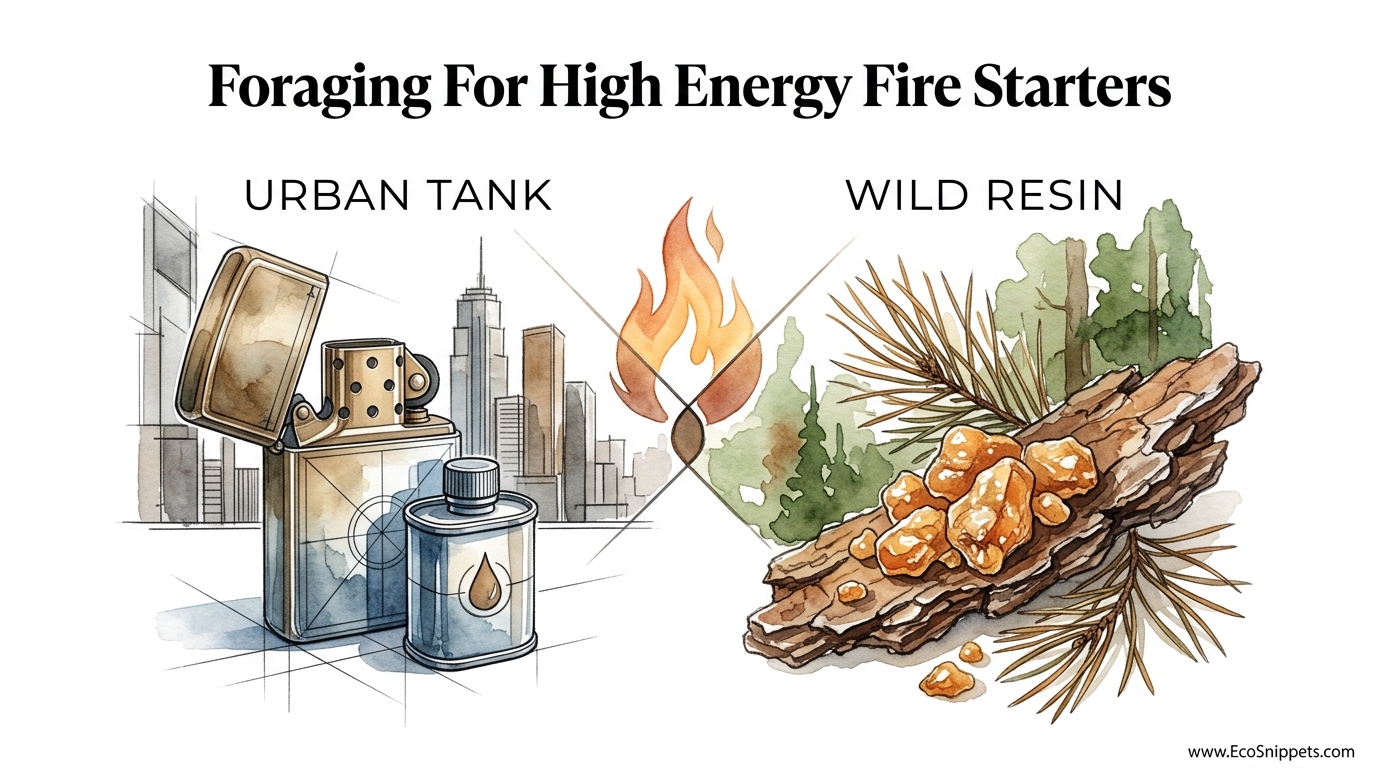
You are paying a monthly subscription for energy that the ‘wild’ landscape is trying to give you for free in the form of high-density resins. The urban energy model depends on a truck showing up at your gate. The wild model depends on your ability to recognize ‘fatwood’ and ‘cured hardwoods’ that provide more BTUs per pound than the gas you’re currently buying.
Modern life has conditioned us to view warmth as a utility—a line item on a monthly statement. When the temperature drops, most people turn a plastic dial on a wall and wait for a furnace to burn a fuel they don’t own, delivered by a company they don’t control. This dependency creates a fragile existence where your comfort is tied to global supply chains and infrastructure.
The alternative is a return to ancestral competence. In the woods, energy is stored in the dense fibers of oak and the volatile resins of pine. These are natural batteries, charged by years of sunlight and locked away in the cellular structure of the tree. Learning to harvest and utilize this energy is not just a survival skill; it is a declaration of independence from the “urban tank” model.
Understanding wood as a fuel source requires a shift in perspective. You are no longer looking for “sticks to burn.” You are looking for specific chemical compositions and density levels that offer the highest return on your physical investment. This guide explores how to identify, harvest, and utilize the high-energy fuels that the landscape provides for free.
Foraging For High Energy Fire Starters
The most potent fire starter provided by the wild is fatwood, also known as “lighter knots” or “heart pine.” This is not just old wood; it is wood that has undergone a chemical transformation. When a pine tree dies—whether from a storm, a cut, or natural rot—the resin in the roots and trunk is drawn into the heartwood and the stumps.
This resin is a concentrated cocktail of terpenes, the primary component of turpentine. As the surrounding sapwood and bark rot away over several years, the resin-saturated heartwood remains. Because the resin is naturally rot-resistant and waterproof, these “gold mines” of energy can persist on the forest floor for decades, long after the rest of the tree has turned to dust.
You can find fatwood most reliably in the stumps of old conifers, particularly Longleaf, Slash, or Scots pines. Look for stumps that appear weathered and grey on the outside but feel unnaturally heavy. When you kick a rotting stump and the outer layers crumble away to reveal a hard, dark-amber core, you have found fatwood. This material is so energy-dense that it can be lit with a single spark from a ferrocerium rod, even if it has been sitting in a puddle.
Another common source of high-energy resin is found in the “knots” or branch junctions of fallen pine trees. As the tree decays, the point where the branch joined the trunk often remains saturated with pitch. These small, bone-like pieces can be collected by the handful and used as miniature fire-starting torches. Shaving these pieces down releases a powerful scent of turpentine, a certain indicator of high resin content.
How Wood Energy Works: The Science of BTUs
Every piece of wood contains energy, but that energy is not created equal. To understand wood as a fuel, you must understand the British Thermal Unit (BTU). One BTU is the amount of energy required to raise the temperature of one pound (0.45 kg) of water by one degree Fahrenheit (0.55 degrees Celsius). When we talk about “high-energy” wood, we are referring to species that pack more BTUs into the same physical volume.
Density is the primary factor here. A cord of Shagbark Hickory (Carya ovata) contains roughly 28 million BTUs, whereas a cord of White Pine (Pinus strobus) contains only about 14 million. This means that to get the same amount of heat, you would have to cut, haul, split, and stack twice as much pine as you would hickory. For the self-reliant practitioner, choosing dense hardwoods is a strategy for efficiency and labor conservation.
The chemistry of the wood also plays a role. Resinous softwoods like pine and fir actually contain more energy per pound than hardwoods—roughly 9,000 BTUs per dry pound (20,000 kJ/kg) compared to 8,600 (19,000 kJ/kg) for hardwoods. However, because pine is so much less dense, you need a far larger pile to reach that weight. The resin acts as an accelerant, making softwoods excellent for starting fires, while the density of hardwoods makes them superior for maintaining a long-lasting, steady heat.
Moisture is the enemy of wood energy. Freshly cut “green” wood can have a moisture content as high as 50% to 70%. When you try to burn wet wood, the first thing the fire must do is boil off that water. This consumes a massive amount of energy that should be heating your home. Burning green wood isn’t just difficult; it’s a waste of the fuel’s potential, often losing up to 50% of the available BTUs to the evaporation process.
The Art of Curing Your Harvest
Seasoning wood is the process of reducing its moisture content to an optimal level, usually between 15% and 20%. This transformation doesn’t happen overnight. For most dense hardwoods, you should plan for at least 12 to 24 months of drying time. Even softwoods usually require a minimum of six months to reach a safe burning state.
Airflow is the most critical component of the seasoning process. Wood should be split as soon as possible after felling to expose the interior grain. Stack the split wood in a way that allows the wind to move through the pile. A simple row of wood, raised off the ground on pallets or stringers and covered only on the top, is the most effective setup. Covering the sides with plastic is a common mistake that traps moisture and encourages rot.
You can identify seasoned wood through several physical markers. Dry wood will develop small cracks, known as “checks,” on the end grain as the fibers shrink. The bark will often become loose or fall off entirely. Perhaps the most reliable field test is the “ring” test: strike two pieces of wood together. Seasoned wood will produce a sharp, hollow “clink” or “ring,” while wet wood will produce a dull, heavy “thud.”
If you want precision, a digital moisture meter is a worthwhile investment. To get an accurate reading, you must split a piece of wood and test the freshly exposed center. Testing the outside will give you a false sense of security, as the surface dries much faster than the core. Achieving a moisture content of 20% or less ensures that the wood will burn cleanly, produce maximum heat, and minimize the buildup of dangerous creosote in your chimney.
Benefits of the Wild Energy Model
Switching to a wood-based energy model offers immediate financial advantages. The average homeowner in North America or Europe can spend anywhere from $1,000 to $3,000 (roughly €900 to €2,800) per year on natural gas, heating oil, or electricity. Foraging or harvesting your own wood reduces this cost to the price of fuel for a chainsaw and the physical effort involved.
Resilience is the second major benefit. When the power grid fails during a winter storm, an electric furnace becomes a useless box of metal. A wood stove, however, operates independently of the grid. It provides not only heat but also a surface for cooking and a way to boil water. This level of self-sufficiency provides a peace of mind that no utility contract can match.
There is also a physical and psychological benefit to the “wild” model. The act of foraging for fatwood and processing firewood connects you to the rhythms of the seasons. It requires a level of situational awareness—recognizing species, assessing tree health, and understanding weather patterns—that sharpens the mind and strengthens the body. It turns a chore into a practice of mindfulness and survival.
Finally, wood is a renewable resource. Unlike fossil fuels, which are extracted from the earth and gone forever once burned, a well-managed woodlot can provide energy indefinitely. By focusing on “dead and down” wood or selective thinning, you are actually improving the health of the forest by removing competition and reducing the fuel load for wildfires.
Challenges and Common Mistakes
The most common mistake beginners make is failing to identify the difference between fatwood and punky, rotting wood. Both can look dark and weathered, but fatwood is hard and heavy, while rot is soft and light. If you can push your fingernail easily into the wood, it isn’t fatwood; it’s a sponge that will only smoke and fizzle.
Burning unseasoned wood is another frequent error. Beyond the loss of heat, burning wet wood creates creosote—a black, tar-like substance that coats the inside of your chimney. Creosote is highly flammable and is the primary cause of chimney fires. If you see thick, dark-grey smoke and hear a “hissing” sound from your stove, your wood is too wet, and you are creating a hazardous situation.
Physical overextension is a realistic challenge. Processing wood is demanding work. Attempting to cut and split three or four cords of wood in a single weekend can lead to injury if you aren’t conditioned for it. The wise practitioner treats wood processing as a year-round activity, doing a little bit every week rather than trying to do everything right before the first frost.
Over-harvesting is a mistake that affects the ecosystem. While the woods are full of “free” energy, that wood also provides habitat for insects, fungi, and small mammals. Removing every single piece of dead wood from a patch of forest can deplete the soil of nutrients over time. Always leave some material behind to rot and return its minerals to the earth.
Limitations of the Wild Model
The wild energy model is not universally applicable. If you live in a high-density urban area with strict air quality regulations, burning wood may be restricted or even illegal. Modern wood stoves are significantly cleaner than old-fashioned fireplaces, but they still emit particulates that can become problematic in stagnant urban air basins.
Geographical location also dictates your energy potential. If you live in a region dominated by willow, cottonwood, or balsam poplar, you are dealing with low-density “trash” woods. These species have very low BTU values and require an immense amount of storage space for very little heat return. In these areas, the “wild” model may be more of a supplementary strategy than a primary one.
Storage space is a practical boundary. A single cord of wood occupies a space 4 feet high, 4 feet wide, and 8 feet long (1.2m x 1.2m x 2.4m). If you need four cords to get through a winter, you need a significant amount of dry, accessible space to keep that wood seasoned. For those on small suburban lots, the logistics of storing a year’s worth of fuel can be a major hurdle.
Physical ability is the final constraint. Harvesting and processing wood requires a certain level of strength and mobility. As we age, the ability to swing a splitting maul or haul heavy rounds diminishes. While tools like hydraulic splitters can help, there is still a baseline of physical labor that cannot be avoided in the wild energy model.
Energy Comparison: Urban Tank vs. Wild Resin
To truly appreciate the value of what the woods provide, it helps to compare the energy density and cost of various fuels. The following table illustrates the approximate energy content of common fuels compared to high-energy hardwoods.
| Fuel Type | Unit of Measure | Approximate BTUs | Energy Density/Cost Factor |
|---|---|---|---|
| Natural Gas | 1 Therm (100 cu. ft.) | 100,000 | Dependent on grid pricing |
| Electricity | 1 Kilowatt Hour (kWh) | 3,412 | Highest cost per BTU |
| Hickory / Oak | 1 Cord (Seasoned) | 24,000,000 – 28,000,000 | Free (Foraged) or ~$300/cord |
| White Pine | 1 Cord (Seasoned) | 14,000,000 | Excellent for starting fires only |
| Fatwood | 1 Pound (0.45 kg) | ~11,000 | Higher density than gasoline |
As the table shows, a single cord of hickory provides the energy equivalent of roughly 240 to 280 therms of natural gas. When you consider that many homes use 500 to 800 therms for a winter season, you can see that three cords of high-quality hardwood can completely replace your reliance on the gas company.
Practical Tips for the Modern Forager
Always carry a small folding saw and a fixed-blade knife when you go for a walk in the woods. You never know when you will stumble upon a “lighter knot” or a fallen limb of seasoned oak. Collecting small amounts of high-energy fuel throughout the year is much easier than trying to find everything in a panic when the snow starts to fall.
When lighting a fire, use the “Top-Down” method. Place your largest, densest logs on the bottom, followed by a layer of smaller kindling, and put your fatwood shavings and smallest tinder on the very top. Lighting the fire from the top allows the heat to radiate downward, pre-heating the larger logs and creating a much cleaner burn with less smoke.
Learn to identify trees by their bark and budding patterns, not just their leaves. Since most foraging for firewood happens in the late fall or winter when leaves are gone, you need to be able to distinguish a White Oak from a Red Maple just by the texture of the trunk. This skill ensures you aren’t wasting time hauling home low-BTU species.
Invest in high-quality tools. A dull axe is more dangerous than a sharp one because it is prone to glancing off the wood rather than biting into it. A well-maintained chainsaw with a sharp chain will save you hours of labor and significantly reduce your fuel consumption. Taking care of your tools is a fundamental part of the wild energy philosophy.
Advanced Considerations: Beyond the Fireplace
For those looking to maximize their energy efficiency, wood gasification is the next frontier. In a standard fireplace, much of the energy escapes up the chimney as smoke (unburned gases). A gasification stove or boiler uses a secondary combustion chamber to burn these gases, reaching temperatures over 2,000°F (1,100°C). This process can increase your efficiency from 50% to over 80%.
Biochar production is another advanced technique. When you burn wood in a limited-oxygen environment, you create charcoal. If you use this charcoal as a soil amendment, it is called biochar. This allows you to get heat from the wood first, then use the carbon byproduct to sequester carbon and massively increase the fertility of your garden soil.
Thermal mass is a concept that serious practitioners use to store energy. A masonry heater—a massive structure of brick or stone—can absorb the heat from a single, intense fire and radiate it slowly for 12 to 24 hours. This eliminates the need to “feed the fire” every few hours and provides a much more consistent, comfortable heat throughout the day.
Understand the legalities of foraging in your specific area. In the United States, for example, the Bureau of Land Management (BLM) and the Forest Service often issue “dead and down” permits that allow you to collect several cords of wood for a nominal fee. In Europe, many countries have specific traditional rights or local permits for firewood gathering. Always ensure you are operating within the law to protect your access to these resources.
Example Scenario: A Winter of Independence
Consider a household in a temperate climate that typically spends $250 a month on natural gas for heating from November through March. That is a $1,250 annual “subscription” for warmth. By switching to a wood-burning setup, this household decides to forage and process their own fuel.
They spend three Saturdays in the spring and fall gathering “dead and down” oak and hickory from a nearby forest with a $20 permit. They find four old pine stumps that yield 50 pounds (23 kg) of fatwood, enough to last several years. They stack and season the wood behind their house, allowing the summer sun and wind to do the work of drying.
When winter arrives, they have four cords of seasoned hardwood and a supply of fatwood fire starters. Each morning, they use a few shavings of fatwood to light a top-down fire. The house remains at a steady 72°F (22°C), and the gas furnace never turns on. By the end of the season, they have saved over $1,200 and gained the confidence that comes from providing for their own basic needs.
Final Thoughts
The transition from the urban energy model to the wild model is more than a way to save money. It is a return to a more deliberate and capable way of living. By learning to recognize the high-density resins and cured hardwoods that the landscape offers, you move from being a consumer to being a producer.
This journey begins with observation. Start looking at the woods not as a backdrop, but as a warehouse of stored energy. Practice identifying the trees in your area and searching for the tell-tale orange glow of fatwood in old stumps. Each piece of wood you harvest and season is a tangible step toward self-reliance.
Experiment with different species and techniques. Learn the “personality” of each wood—how it splits, how it smells, and how it burns. The wisdom of our ancestors was built on this foundation of practical knowledge, and it is a wisdom that remains just as valuable today as it was a thousand years ago. Apply what you have learned, and you will find that the highest-quality heat doesn’t come from a tank; it comes from the wild.
