How To Become More Self-Sufficient Without Starting a Full-Blown Farm…
Want to start preserving your harvest, making your own soap, or building a backyard root cellar — but not sure where to begin? “Homesteading Advice” gives you instant lifetime access to 35+ practical homesteading books on food preservation, veggie gardening, DIY natural cleaning products (save over $250 per year with this skill alone), brewing, off-grid energy, and a whole lot more…
Click Here To Check It Out Now!
Most of the ‘health food’ in your pantry is actually in a state of biological sleep – here is how to wake it up. We were taught that grains are just shelf-stable calories, but they are actually biological batteries waiting for a spark. Sprouting turns a ‘static’ seed into a ‘dynamic’ superfood by unlocking enzymes that make minerals 300% more bioavailable. Stop eating dormant dust and start eating life.
Grains have sustained humanity for millennia, yet our modern relationship with them is broken. In the rush for convenience and shelf-life, we have forgotten the ancestral wisdom of soaking, fermenting, and germinating. This guide will walk you through the process of returning life to your grains, transforming them from heavy, hard-to-digest staples into vibrant sources of active nutrition.
How To Sprout Grains For Health
Sprouting is the simple act of germinating seeds, grains, or legumes until they begin to grow into young plants. In its dormant state, a grain is a package of potential energy protected by chemical shields called antinutrients. These compounds, such as phytic acid, protect the seed from being eaten or rotting in the soil before it is ready to grow.
When you introduce moisture and warmth, you signal to the grain that it is time to wake up. This process triggers a cascade of enzymatic reactions that begin to dismantle those chemical shields. Amylases break down complex starches into simpler sugars, while proteases begin to pre-digest proteins into amino acids. This makes the grain far easier for the human digestive system to process.
Sprouting exists as a bridge between the seed and the plant. In real-world situations, this method is used to increase the nutrient density of breads, salads, and porridges. Think of a dormant grain like a locked safe; sprouting is the combination that opens it, allowing you to access the wealth of vitamins and minerals stored inside.
The Sprouting Process: A Step-by-Step Guide
Turning your kitchen into a biological laboratory requires very little equipment but a great deal of consistency. The basic principle involves keeping the grains moist but never soggy, and ensuring they have plenty of fresh air.
Step 1: Selecting and Cleaning the Grains
Choose whole, raw grains that have not been heat-treated or pearled. Pearled grains have had their outer bran removed, which often damages the germ and prevents sprouting. Common choices include wheat berries, rye, barley, quinoa, and buckwheat. Place your grains in a bowl and rinse them thoroughly with cool, filtered water until the water runs clear.
Step 2: The Initial Soak
Place the rinsed grains in a large glass jar or bowl. Cover them with at least double the amount of water, as grains will expand significantly. For example, use 2 cups (473 ml) of water for every 1 cup (180g to 200g) of grain. Allow them to soak at room temperature—ideally between 68°F and 75°F (20°C to 24°C). Soak times vary: quinoa only needs 4 hours, while wheat berries and rye require 7 to 12 hours.
Step 3: Rinsing and Draining
After the soak, drain the water completely. Use a mesh sprouting lid or secure a piece of cheesecloth over the mouth of the jar with a rubber band. Rinse the grains again with fresh, cool water and drain them once more. Turn the jar upside down and prop it at a 45-degree angle in a bowl or a drain rack. This allows excess water to escape while maintaining airflow.
Step 4: The Growing Phase
Repeat the rinse and drain cycle at least twice a day—once in the morning and once in the evening. In warmer or more humid climates, a third rinse may be necessary to prevent bacterial buildup. You will soon see a tiny white “tail” emerging from the grain. This is the radical, or the beginning of a root. Most grains are ready for harvest when this sprout is about the same length as the grain itself, usually within 1 to 5 days.
Benefits of Living Grains
The practical benefits of sprouting are measurable and go far beyond simple flavor improvements. By reducing antinutrients, you significantly improve the way your body absorbs nutrition.
Sprouting has been shown to reduce phytic acid levels by 30% to 50% in many grains, and in some cases, up to 81%. This is critical because phytic acid binds to minerals like iron, zinc, calcium, and magnesium in the digestive tract, preventing them from being absorbed. When these levels drop, the bioavailability of these essential minerals can increase by 300% or more.
Vitamin content also experiences a dramatic surge. Germination has been found to increase concentrations of B-vitamins, including folate, thiamine, and riboflavin. Some grains, like sprouted cowpeas, can show a vitamin C increase of 4 to 38 times their dormant levels. Additionally, the process increases levels of antioxidants and gamma-aminobutyric acid (GABA), which supports neurological health and stress management.
Digestibility is perhaps the most immediate benefit. Because enzymes have already begun breaking down gluten and other complex proteins, many people with mild grain sensitivities find sprouted grains much easier to tolerate. The reduction in starch content also leads to a lower glycemic index, meaning sprouted grains cause a more moderate rise in blood sugar compared to their unsprouted counterparts.
Challenges and Common Mistakes
Sprouting is a biological process, and like any living thing, it can go wrong if the environment is not properly managed. Most failures come down to moisture and airflow.
Inadequate Drainage
Excess water is the primary cause of rot. If the grains sit in a puddle at the bottom of the jar, they will begin to ferment in an anaerobic environment, leading to a sour or putrid smell. Always ensure the jar is tilted at an angle and that no standing water remains after rinsing.
Overcrowding the Jar
It is tempting to sprout a large batch at once, but filling a jar more than one-third full of dry grain is a mistake. Grains expand as they soak and continue to grow as they sprout. If the jar is too full, air cannot circulate through the center of the mass, creating hot spots where mold can thrive.
Using Treated Grains
Grains intended for industrial milling are sometimes treated with heat to extend shelf life. These “dead” grains will not sprout no matter how long you soak them. Always source “sprouting grade” or raw, organic whole grains to ensure the germ is intact and viable.
Limitations and Safety Constraints
Sprouting requires a balanced understanding of food safety. Because the warm, humid conditions required for germination are also ideal for bacteria like Salmonella, E. coli, and Listeria, certain precautions must be taken.
Vulnerable populations, including young children, the elderly, pregnant women, and those with compromised immune systems, should avoid eating raw sprouts. For these individuals, it is highly recommended to cook sprouted grains thoroughly—such as by boiling them into a porridge or baking them into bread—to eliminate any potential pathogens.
Environmental constraints also play a role. Sprouting in extremely hot, humid climates without air conditioning can be difficult, as the risk of mold increases significantly. In these regions, more frequent rinsing and the use of cooler water are necessary to keep the temperature of the germinating seeds stable.
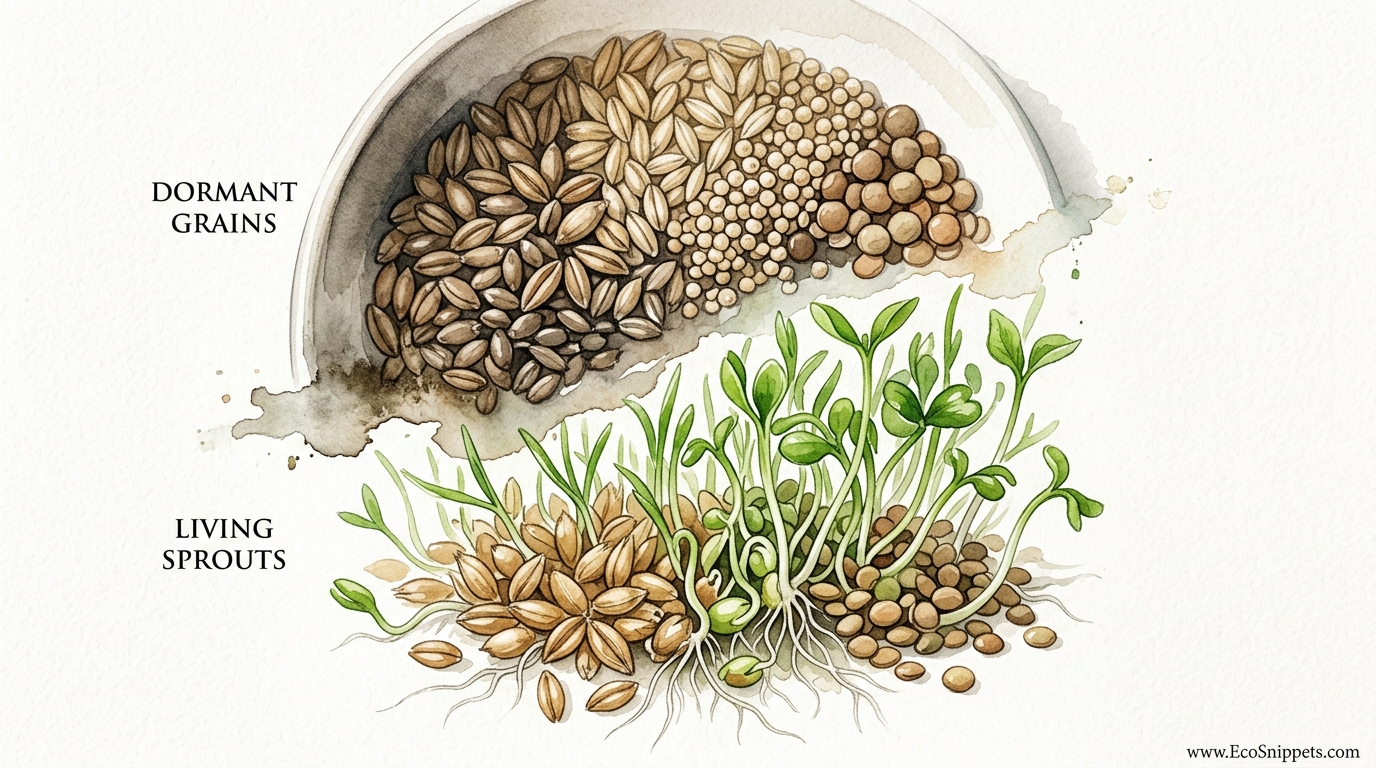
Comparison: Dormant Grains vs. Living Sprouts
Understanding the shift from a dormant seed to a living sprout helps clarify why this ancient practice is regaining popularity.
| Feature | Dormant Grains (Standard) | Living Sprouts |
|---|---|---|
| Nutrient Status | Stored / Bio-unavailable | Active / Highly Bioavailable |
| Phytic Acid | High (Locks minerals) | Low (Reduced by 30-81%) |
| Digestibility | Requires heavy cooking/fermentation | “Pre-digested” by enzymes |
| Vitamin C Content | Negligible | Significantly Increased |
| Glycemic Index | Higher | Lower |
Practical Tips and Best Practices
Immediate application of these techniques can yield impressive results in your daily diet. Use these strategies to optimize your home sprouting setup.
- Smell-Check Daily: A healthy sprout should smell fresh and earthy, like a garden after a rain. If you detect a sour, fermented, or bleach-like odor, discard the batch and sanitize your equipment.
- Use Filtered Water: Chlorine and other additives in municipal tap water can sometimes inhibit the delicate enzymatic processes of the grain. Using a basic carbon filter can improve germination rates.
- Light Control: Most grains prefer to sprout in a dark or dimly lit area. Avoid direct sunlight, which can cause the sprouts to overheat or develop a bitter flavor too early.
- Temperature Stability: Aim for a consistent room temperature of 70°F (21°C). If your kitchen is particularly cold in the winter, you might place the jar near a pilot light or on top of a refrigerator where it is slightly warmer.
Advanced Considerations
Serious practitioners often move beyond simple jar sprouting to more sophisticated methods like large-scale tray systems or dehydrating for flour.
Dehydrating sprouted grains allows you to create sprouted flour, which can be used as a 1:1 replacement for traditional flour in baking. To do this, sprout your grains until the “tail” just begins to show (about 1/8 inch or 3mm). Dry them in a dehydrator or a very low oven set to no more than 115°F (46°C). Keeping the temperature low ensures that the newly activated enzymes remain intact. Once bone-dry, mill the grains into a fine powder.
Scaling considerations are also important. If you are sprouting for a large family, consider using stackable trays. These systems provide better airflow and allow you to sprout multiple types of grains simultaneously. Remember that as you scale up, the heat generated by the germinating seeds themselves can increase, necessitating more frequent rinsing to keep the mass cool.
Examples and Scenarios
Consider the case of a home baker who traditionally finds whole wheat bread too “heavy” or difficult to digest. By switching to sprouted wheat berries, the baker transforms the recipe.
A typical scenario involves soaking 2 lbs (about 900g) of wheat berries overnight. Over the next two days, the baker rinses them twice daily. By the third morning, the berries have sprouted small white tips. These are then ground into a “wet mash” and added directly to a dough, or dried and milled into flour. The resulting bread is lighter, has a naturally sweeter profile because the starches have been converted to maltose, and provides much higher levels of usable iron and zinc for the family.
Another example is the use of sprouted quinoa in a summer salad. Quinoa sprouts incredibly quickly, often within 4 to 6 hours of the initial soak. These tiny, crunchy sprouts can be eaten raw by healthy adults, adding a fresh, nutty flavor and a significant boost of folate and protein to a standard meal without the need for boiling.
Final Thoughts
Sprouting is a return to a more rhythmic, intentional way of eating. It acknowledges that the foods we consume are not just inert units of energy, but living organisms that require a “spark” to offer their full potential. By taking a few minutes each day to rinse and drain your grains, you are participating in an ancient biological cycle that benefits your health and connects you to ancestral food traditions.
The transition from dormant dust to living food is a powerful metaphor for self-reliance. It proves that you do not need expensive supplements or highly processed “fortified” foods to achieve optimal nutrition. The power to unlock life-giving vitamins and minerals is already sitting in your pantry; it simply needs a little water and a bit of your time.
Experiment with different grains and observe how each one reacts to your environment. You will find that some sprout with vigor while others require more patience. This journey into the heart of the seed will not only improve your digestion but will also deepen your appreciation for the profound intelligence of the natural world.
