How To Become More Self-Sufficient Without Starting a Full-Blown Farm…
Want to start preserving your harvest, making your own soap, or building a backyard root cellar — but not sure where to begin? “Homesteading Advice” gives you instant lifetime access to 35+ practical homesteading books on food preservation, veggie gardening, DIY natural cleaning products (save over $250 per year with this skill alone), brewing, off-grid energy, and a whole lot more…
Click Here To Check It Out Now!
Is your yard a monthly bill you pay, or a biological dividend that pays you back? We were taught that a ‘perfect’ yard is a mowed lawn, but that’s just an expensive habit. When you shift your identity from a consumer of lawn services to a producer of food, your land finally comes alive.
Modern landscaping has convinced us that the highest use of our land is a sterile green carpet. This tradition stems from an era where an unproductive lawn was a sign of extreme wealth, proving the owner did not need to grow their own food. Today, this aesthetic choice costs homeowners billions of dollars in maintenance, chemicals, and water every year. Moving away from this model is not just about gardening; it is about reclaiming your role as a steward of the earth.
Transitioning from a consumer to a producer means looking at your property as a functional ecosystem. You are no longer fighting nature with a lawnmower; you are collaborating with it to create abundance. This guide will walk you through the practical, physical, and psychological steps to turn your yard into a productive sanctuary.
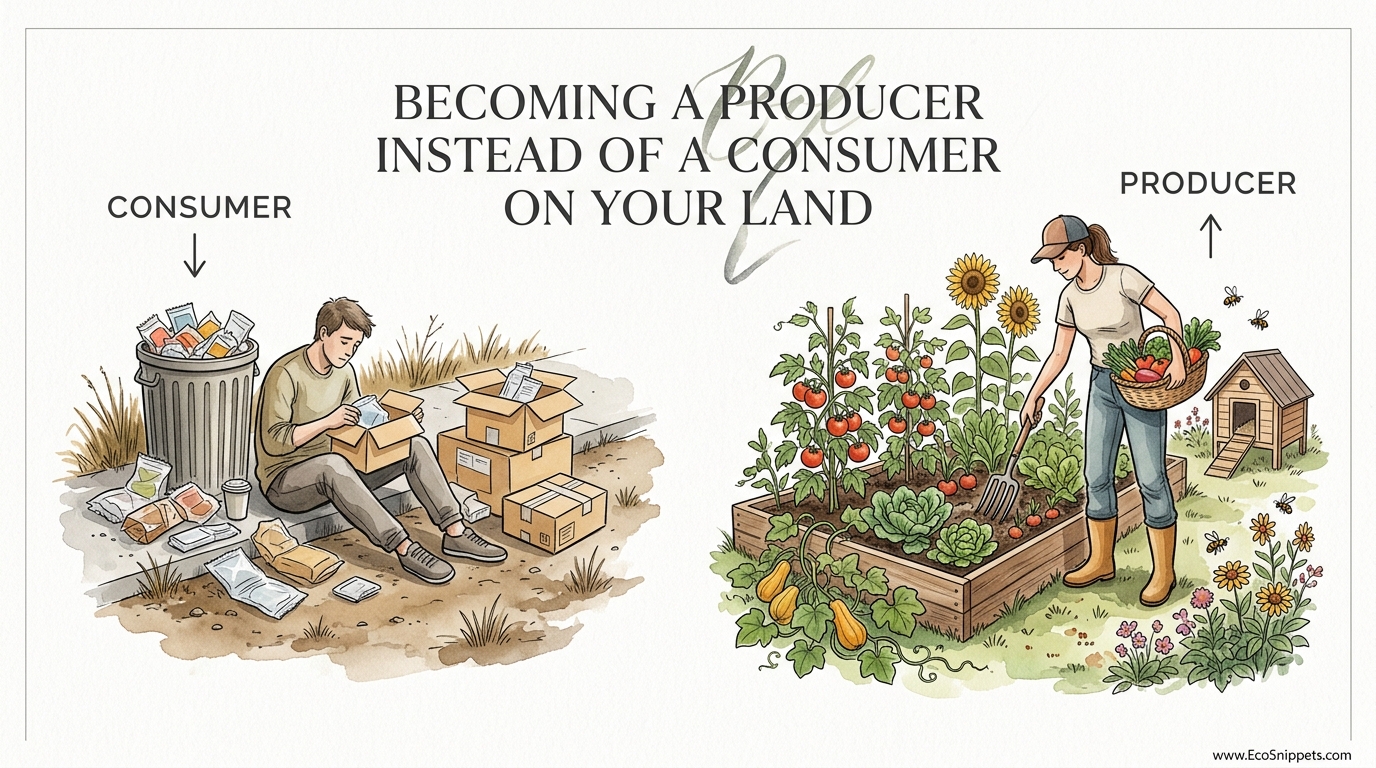
Becoming A Producer Instead Of A Consumer On Your Land
A producer is someone who generates value, nutrition, and ecological health from the resources available to them. In contrast, a consumer relies on external systems to provide every necessity, often paying a premium for goods that could be grown at home. Your yard is currently a “resource sink” if it requires constant inputs—water, fertilizer, and gasoline—without giving anything back but a visual standard of conformity.
Transforming into a producer changes the math of homeownership. Instead of viewing 1,000 square feet (93 square meters) of grass as a chore, you begin to see it as potential calories, medicine, and habitat. This concept is used in permaculture and regenerative agriculture to build “biological capital.” Real-world examples include the “Food Not Lawns” movement, where neighbors replace turf with fruit trees and vegetable patches to increase local food security.
Analogy helps clarify this shift: A lawn is like a high-interest car loan that never gets paid off. You keep pouring money into it just to keep it from depreciating. A food garden is like a diversified investment portfolio. Initial effort is required to set it up, but over time, it grows in value and pays out regular dividends in the form of fresh produce, better soil, and a healthier environment.
Methods For Converting Your Land: Sheet Mulching and Hugelkultur
Traditional gardening often starts with tilling, but this destroys soil structure and wakes up dormant weed seeds. Effective producers use “no-dig” methods to transition their lawns. These techniques mimic the forest floor, where organic matter falls and decomposes in layers, building rich, dark humus over time.
The Art of Sheet Mulching
Sheet mulching, also known as “lasagna gardening,” is the most efficient way to kill a lawn without chemicals. This process smothers the grass while simultaneously feeding the soil microbes that will support your future plants.
- Preparation: Mow your grass as short as possible. Leave the clippings where they fall to provide an initial burst of nitrogen.
- Carbon Barrier: Lay down a thick layer of plain brown cardboard or several layers of newspaper. Ensure the edges overlap by at least 6 inches (15 centimeters) to prevent grass from sneaking through.
- Hydration: Soak the cardboard thoroughly with water. This jumpstarts the decomposition process and makes it easier for earthworms to move upward.
- Nitrogen Layer: Add 2 inches (5 centimeters) of “green” material, such as compost, fresh grass clippings, or aged manure.
- Bulk Carbon Layer: Top the bed with 4 to 6 inches (10 to 15 centimeters) of “brown” material like wood chips, straw, or shredded leaves.
The Hugelkultur Method
Hugelkultur is a German term meaning “hill culture.” This technique involves burying large amounts of wood under the soil. As the wood rots, it acts like a giant sponge, holding moisture and releasing nutrients for decades.
This method is ideal for areas with poor soil or regions prone to drought. You begin by piling logs and branches into a mound. Smaller sticks are packed into the gaps, followed by layers of leaves, compost, and finally a layer of topsoil. A well-constructed hugel bed can remain productive for 20 years without needing additional fertilizer.
The Measurable Benefits of Home Production
Shifting to home food production offers advantages that go far beyond the dinner table. Statistics show that the average American family uses 320 gallons (1,211 liters) of water per day, with up to 60% of that used outdoors for lawn maintenance. Converting just half of that space to a food forest can reduce supplemental water needs by 50% to 75% once the system is established.
Nutritional density is another major win. Produce found in grocery stores often travels over 1,500 miles (2,414 kilometers) before reaching your plate. During this transit time, vegetables lose a significant portion of their vitamins and minerals. When you harvest a tomato from your yard and eat it within minutes, you are consuming the peak expression of that plant’s nutrients.
Economic resilience is perhaps the most practical benefit. While initial setup costs for seeds and soil can range from $100 to $500, a mature 1/4 acre (0.1 hectare) garden can produce thousands of dollars worth of organic produce annually. This acts as a hedge against inflation and supply chain disruptions, giving your family a level of security that a grass lawn never could.
Challenges and Common Mistakes to Avoid
Many beginners fall into the “Spring Rush” trap. This happens when the weather warms up, and enthusiasm leads to planting more than can be managed. It is much better to have a perfectly maintained 10-foot by 10-foot (3-meter by 3-meter) plot than an overgrown, neglected half-acre that leaves you feeling defeated.
Ignoring soil health is a frequent error. Grass can grow in compacted, low-nutrient dirt, but vegetables require a living soil web. Failure to test your soil’s pH and nutrient levels often leads to stunted plants and frustration. You should always treat the soil as your primary crop; if the soil is healthy, the plants will take care of themselves.
Over-reliance on annuals is another pitfall. Most new producers focus solely on tomatoes, peppers, and lettuce. While delicious, these require replanting every year. A resilient producer balances annuals with perennials like asparagus, fruit trees, and berry bushes. These “long-term assets” require less labor over time and provide a consistent harvest year after year.
Limitations and Environmental Constraints
Realistic expectations are necessary for long-term success. Not every yard is suitable for every crop. Sunlight is the most common limiting factor. Most fruiting plants require at least 6 to 8 hours of direct sun. If your yard is heavily shaded by old-growth oaks or neighboring buildings, you must adapt by growing shade-tolerant greens or mushrooms.
Legal constraints also play a role. Homeowners Associations (HOAs) often have strict rules regarding front-yard aesthetics. While states like Florida and California have passed laws protecting “personal agriculture,” you should always review your local ordinances. If a full vegetable patch is prohibited, “edible landscaping” offers a middle ground, using blueberry bushes as hedges and kale as ornamental foliage.
Physical labor is a requirement that cannot be ignored. While “no-dig” methods reduce work, they do not eliminate it. Pruning, harvesting, and seasonal mulching take time and effort. If you have physical limitations, consider installing tall raised beds or automated drip irrigation systems to make the land more manageable.
Comparing Lawns vs. Food Forests
The differences between a traditional lawn and a food-producing ecosystem are stark when viewed through the lens of inputs and outputs.
| Factor | Traditional Lawn | Food Forest / Garden |
|---|---|---|
| Annual Cost | $500 – $2,000 (Mowing, fertilizer, water) | $100 – $300 (Seeds, mulch, occasional tools) |
| Water Usage | High (9,000+ gallons per month in summer) | Moderate to Low (Decreases as soil health improves) |
| Biodiversity | Near Zero (Monoculture) | Very High (Supports bees, birds, and soil life) |
| Yield | None (Waste product: grass clippings) | High (Fruits, vegetables, herbs, nuts) |
| Maintenance | Repetitive, weekly chores | Seasonal, observational, and rewarding |
Practical Tips for Immediate Application
Start by identifying the “Zone 1” of your property. In permaculture, Zone 1 is the area you walk past every day, usually right outside the kitchen door. This is where you should plant your most frequent-use items, like culinary herbs and salad greens. If you have to walk 100 feet (30 meters) to pick a sprig of rosemary, you probably won’t use it.
Rainwater harvesting is a simple way to increase your self-reliance. Setting up a basic rain barrel allows you to store water for dry spells and reduces your reliance on treated municipal water. Chlorine in tap water can actually harm the beneficial bacteria in your garden soil, so using rainwater is a double win for plant health.
Composting is the ultimate producer skill. Every kitchen scrap and yard trimming is a resource, not trash. By keeping a compost bin, you close the nutrient loop on your property. You turn “waste” into the very fuel that grows your next meal, eliminating the need to buy synthetic fertilizers.
Advanced Considerations: Guilds and Microclimates
Serious practitioners eventually move beyond simple rows of vegetables and begin designing “plant guilds.” A guild is a community of plants that support one another. For example, an apple tree guild might include comfrey to pull nutrients from deep in the soil, daffodils to repel deer, and clover to fix nitrogen in the ground. This stacking of functions creates a self-regulating system that requires minimal intervention.
Understanding microclimates allows you to push the boundaries of your local climate. A south-facing brick wall (in the Northern Hemisphere) acts as a thermal mass, absorbing heat during the day and radiating it at night. This small area might be 5 to 10 degrees warmer than the rest of the yard, allowing you to grow peppers or citrus that wouldn’t normally survive.
Verticality is the secret to high yields in small spaces. Use trellises, cattle panels, and pergolas to grow “up” instead of “out.” Vining crops like cucumbers, squash, and beans can produce massive harvests in a footprint of just a few square inches. This strategy also improves airflow around the plants, significantly reducing the risk of fungal diseases.
A Realistic Transition Scenario
Imagine a typical suburban home on 1/4 acre (0.1 hectare) with a standard lawn. In Year 1, the owners decide to stop mowing the 20-foot by 20-foot (6-meter by 6-meter) sunny corner of the backyard. They use the sheet mulching method, laying down free cardboard from a local appliance store and covering it with wood chips provided for free by a tree service company.
By Year 2, the grass underneath has completely decomposed, leaving behind rich, friable soil. They plant three fruit trees—an apple, a peach, and a cherry—and surround them with berry bushes. In the gaps, they plant garlic and strawberries. They spend approximately 15 minutes a week observing the area and pulling the occasional weed.
By Year 5, this small corner provides enough fruit for the family to eat fresh all summer and preserve for the winter. The soil has become a dark, carbon-rich sponge that rarely needs watering. The family has saved hundreds of dollars on groceries and hundreds more on lawn care services. This “biological dividend” continues to grow every year, providing security and joy that no lawn could ever offer.
Final Thoughts
Transforming your yard from a consumer of resources to a producer of life is one of the most radical and rewarding shifts you can make. It requires a change in perspective—seeing the “weeds” as pioneers and the “dirt” as a living community. This journey is not about achieving perfection; it is about building resilience and reconnecting with the ancestral wisdom of growing your own food.
The path toward self-reliance starts with a single layer of cardboard or a single seed. Every square foot you reclaim from the monoculture lawn is a victory for your health, your wallet, and the local ecosystem. As you watch your land come alive with bees, birds, and abundance, you will realize that a yard was never meant to be a bill you pay, but a gift that keeps on giving.
Encourage yourself to experiment and fail small. Each season is a lesson in biology and patience. Before long, you won’t just be a person with a garden; you will be a producer who understands the rhythm of the seasons and the true value of the land beneath your feet.
