How To Become More Self-Sufficient Without Starting a Full-Blown Farm…
Want to start preserving your harvest, making your own soap, or building a backyard root cellar — but not sure where to begin? “Homesteading Advice” gives you instant lifetime access to 35+ practical homesteading books on food preservation, veggie gardening, DIY natural cleaning products (save over $250 per year with this skill alone), brewing, off-grid energy, and a whole lot more…
Click Here To Check It Out Now!
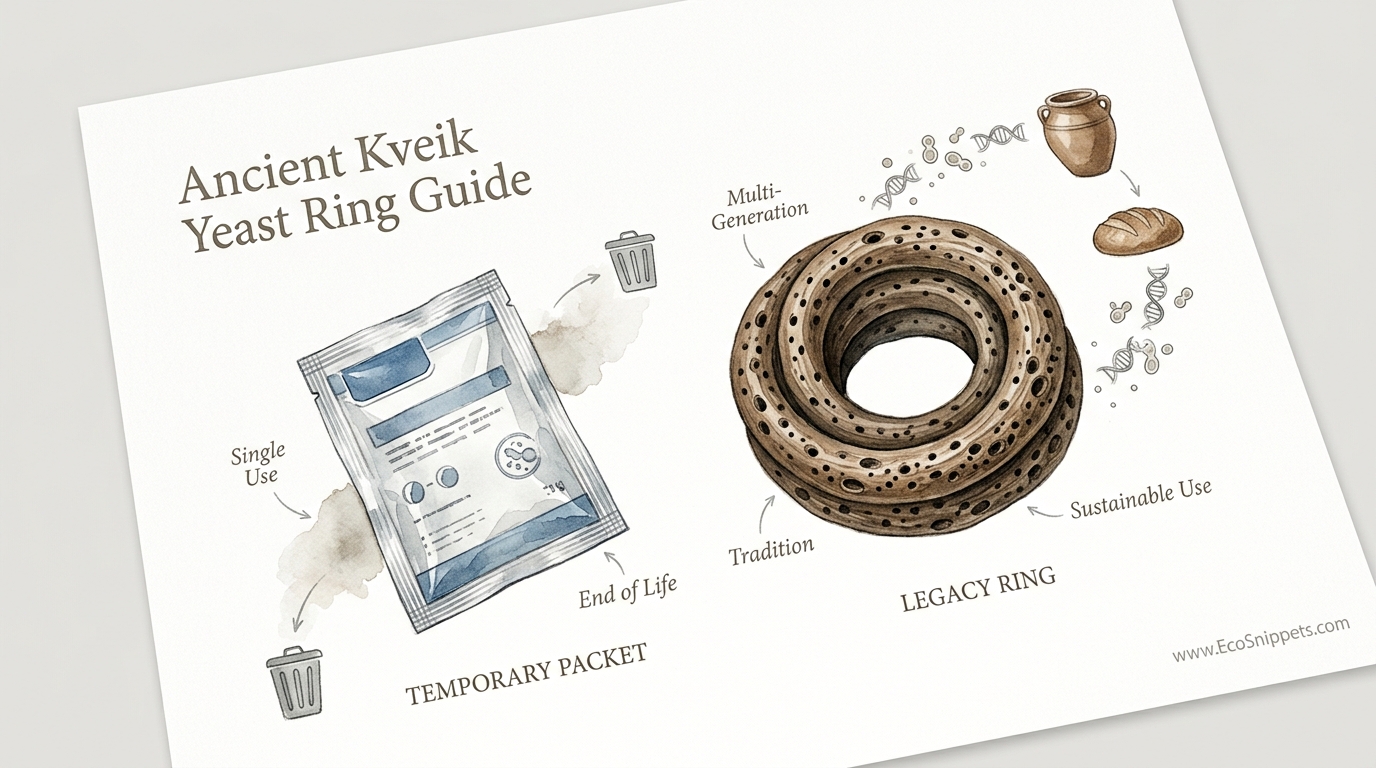
Are you a customer of the baking industry, or the guardian of a 500-year-old biological heirloom? Every time you buy a yeast packet, you’re renting a single-use biological tool. The Vikings used a ‘Gjærkrans’ – a carved wooden ring that captured their family’s unique yeast strain and dried it for the next brew or bake. This isn’t just about saving $2; it’s about owning the means of your family’s nutrition forever.
Imagine a world where your kitchen doesn’t rely on a supply chain. For centuries, rural Norwegian families didn’t buy little silver packets from a supermarket shelf. They looked to the rafters, where a crown of interlocking wooden pegs hung like a silent sentinel. This was the yeast ring, or gjærkrans, and it held the dormant soul of their household’s bread and ale.
In our modern “buy-and-discard” culture, we have forgotten that yeast is a domesticated animal. Just as a shepherd keeps a flock, the farmhouse brewer once kept a culture. This article is your guide to reclaiming that heritage, understanding the science of the kveik yeast ring, and learning how to build a self-sustaining cycle of fermentation that can last for generations.
Ancient Kveik Yeast Ring Guide
The kveik yeast ring (or gjærkrans) is a traditional Scandinavian tool designed to harvest and preserve landrace yeast. In the farmhouse brewing traditions of Western Norway—specifically regions like Voss, Hornindal, and Stranda—”kveik” refers not to a single strain, but to a complex, multi-strain community of yeast that has been handed down through families for centuries.
These rings are essentially high-surface-area “biophysical storage devices.” They are typically composed of dozens of small, interlocking wooden pegs that create thousands of tiny nooks and crannies. When a batch of beer or bread is fermenting, the ring is dipped into the thick, creamy foam (the krausen) or the yeast slurry. The wood absorbs the yeast, and as it hangs to dry, the yeast enters a state of desiccation-induced dormancy.
Unlike modern laboratory yeast, which is often delicate and prone to mutation, kveik strains are incredibly hardy. They have adapted over hundreds of years to survive the harsh process of being dried on wood and left in the open air of a farmhouse. This survival mechanism is why a gjærkrans is more than just a piece of wood; it is a bridge through time, allowing a brewer to “pitch” the same lineage of yeast that their ancestors used in the 17th century.
How the Yeast Ring Works
The functionality of a yeast ring is a masterclass in primitive engineering. To understand how it works, you have to look at the relationship between the wood, the yeast cells, and the air.
First, the physical structure of the ring matters. A typical gjærkrans is made of many individual wooden pegs, often carved in a “vertebrae” shape that slots together. This design serves two purposes: it provides a massive amount of surface area for yeast to cling to, and it allows for rapid, even airflow. If the yeast stays wet too long, it will rot or grow mold. If it dries quickly, the yeast cells can protect their internal structures and go to sleep.
When you dip the dry ring into a fermenting wort, the dormant yeast cells rehydrate instantly. Within minutes, they begin to “wake up” and seek out sugars. Conversely, when you pull the ring out of a finished batch, the wood acts as a substrate. The porous nature of the wood (often maple, birch, or juniper) helps wick moisture away from the yeast clusters, facilitating the drying process that keeps them viable for months—or even years—without refrigeration.
The Harvesting Process
To harvest yeast with a ring, you wait until the fermentation is at its peak, often called “high krausen.” This is when the yeast is most active and healthy. You carefully lower the sterilized ring into the foam. After it is thoroughly coated, you pull it out and hang it on a hook. Traditionally, this would be done in a place with good airflow but away from direct sunlight, which can damage the yeast.
Once the ring is dry to the touch, the yeast looks like a “leathery” or “crusty” layer covering the wood. In this state, the yeast is remarkably stable. To use it again, you simply drop the entire ring into your next batch of warm wort. The cycle then repeats, with the yeast gradually evolving and adapting to your specific brewing environment, water, and grains.
Benefits of Using a Yeast Ring
The primary advantage of the yeast ring is **true biological independence**. When you master the use of a gjærkrans, you are no longer a consumer; you are a steward. You don’t need to check the expiration date on a packet or worry about a shipping delay. Your “yeast lab” is hanging on your wall.
Beyond the philosophical benefits, there are practical, measurable advantages to this ancient method:
- Unmatched Resilience: Kveik yeast is famous for its ability to ferment at extremely high temperatures (up to 43°C / 109°F) without producing the “off-flavors” or “fusel alcohols” that would ruin a standard ale. The yeast ring preserves this hardiness.
- Cost Efficiency: While the initial construction of a ring takes time, the lifetime cost is nearly zero. You never have to buy yeast again.
- Speed: Because the yeast on a ring is a massive, multi-strain colony, fermentation often starts within 30 minutes of pitching. Some kveik brews are finished and ready to drink in as little as 48 hours.
- Flavor Complexity: Traditional rings often host “landrace” cultures—a mix of several different yeast strains that work in harmony. This creates a depth of flavor (notes of orange peel, dried fruit, and spice) that single-strain commercial yeasts can rarely replicate.
Challenges and Common Mistakes
While the Vikings made it look easy, using a yeast ring does require a specific set of skills and a shift in mindset. The most common mistake modern brewers make is treating a yeast ring like a piece of plastic equipment. It is an organic tool, and it must be treated as such.
Contamination is the biggest fear. If you hang a wet yeast ring in a damp cellar with no airflow, you won’t get dormant yeast; you’ll get a science project of black mold. The drying phase is the most critical window. If the ring takes more than 24 hours to dry, the risk of spoilage increases exponentially.
Another pitfall is temperature shock. While kveik loves heat, it does not like being “cooked” during the drying process. Some people try to speed up drying by putting the ring in a hot oven. If the temperature exceeds 45°C (113°F), you risk killing the very yeast you are trying to save. The goal is “warm and airy,” not “hot and stagnant.”
Finally, many beginners fail to properly sanitize the wood before its very first use. While the yeast eventually creates its own “biofilm” that protects the ring, a brand-new ring should be boiled or steamed to ensure there are no wild bacteria or wood-boring insects hiding in the grain.
Limitations: When a Yeast Ring May Not Be Ideal
It is important to be realistic: the kveik ring is a specialized tool for a specialized type of yeast. It is not a universal solution for all brewing.
Most modern yeast strains (like Lager yeasts or standard US-05 Ale yeast) are not evolved for desiccation. If you try to dry a standard Belgian Saison yeast on a wooden ring, it will likely die. These strains have been “babied” in laboratories for so long that they have lost the genetic pathways required to survive extreme drying. The yeast ring is almost exclusively reserved for **kveik** and other traditional farmhouse landrace strains.
Furthermore, the yeast ring is not a tool for “precision” brewing. If you are trying to win a competition where every milligram of yeast must be accounted for to achieve a specific technical profile, the “dip and dry” method might be too variable for you. The yeast ring is about **robustness and tradition**, not laboratory-grade consistency.
Comparison: Traditional Ring vs. Modern Packets
| Feature | Traditional Yeast Ring (Gjærkrans) | Modern Commercial Packets |
|---|---|---|
| Cost per Use | Zero (after initial build) | $5 – $12 per batch |
| Longevity | Indefinite (with proper care) | 6–12 months (refrigerated) |
| Fermentation Speed | Very Fast (starts in minutes) | Moderate (needs lag time) |
| Biological Diversity | Multi-strain “Landrace” culture | Single isolated strain |
| Required Skill | High (maintenance & harvesting) | Low (rip and pour) |
| Sustainability | High (no waste, low energy) | Low (plastic waste, shipping energy) |
Practical Tips and Best Practices
If you are ready to start your own yeast legacy, follow these best practices to ensure your ring stays healthy for years to come:
- Choose the Right Wood: Hardwoods like maple or birch are preferred. Avoid resinous softwoods like pine, which can impart a turpentine-like flavor to your beer. Juniper is a traditional choice in Norway because it has natural antimicrobial properties.
- The “Fan” Trick: During the first 12 hours of drying your ring, place a small electric fan nearby. Moving air is your best defense against mold. It also discourages fruit flies from landing on the wet yeast.
- Boil the Ring (Once): Before the very first time you use a new wooden ring, boil it in water for 15 minutes. This leaches out excess tannins (which can be bitter) and ensures the wood is sterile before the yeast takes up residence.
- Underpitching is Key: Kveik yeast actually performs better when “stressed” by a low pitching rate. You don’t need a thick layer of yeast on your ring. A light, even coating is often enough to ferment 20 liters (5 gallons) of wort.
- Storage: Once fully dry, store your ring in a paper bag or hang it in a dry, cool pantry. Avoid airtight plastic bags unless the yeast is 100% bone-dry, as any trapped moisture will cause spoilage.
Advanced Considerations: The Science of the “Gjærstokk”
For the serious practitioner, the yeast ring is only one part of the equation. Some brewers prefer a **gjærstokk** (yeast log). This is a single piece of wood, often intricately carved with holes or “teeth” to increase surface area. While the ring is more common in Voss, the log was often seen in other parts of Norway.
Scientifically, the wood itself becomes a “bioreactor.” Over dozens of uses, the yeast penetrates into the deeper fibers of the wood. This means that even if you were to “wash” the ring, there would likely still be enough viable cells deep in the grain to kickstart a fermentation. This is why these tools were often treated as sacred family objects—they were literally alive.
In advanced setups, brewers will “cycle” their rings. They might have three rings: one in use, one drying, and one in “deep sleep” as a backup. This redundancy ensures that if one batch ever goes sour, the family’s yeast lineage is preserved in the other two rings. This is the ultimate form of **homesteading security**.
Example Scenario: The Weekend Brew Cycle
Let’s look at how this works in a real-world setting. Imagine it’s a Saturday morning. You have a pot of 40°C (104°F) wort ready to be fermented.
1. You take your dry gjærkrans off the hook in your pantry. It smells slightly of bread and dried orange peel.
2. You drop the ring directly into the warm wort.
3. Within 45 minutes, you see tiny bubbles rising to the surface.
4. By Sunday evening, the fermentation is already slowing down. The yeast has done its work.
5. You rack your beer into bottles or a keg, leaving the yeast “cake” or foam at the top.
6. You pull the ring out, now covered in a fresh layer of creamy yeast.
7. You hang it back on the hook with a fan blowing on it.
8. By Monday morning, your yeast is dormant again, ready for next month—or next year.
This process eliminates the need for yeast starters, stir plates, and nutrient additions. It is a streamlined, ancient system that respects the biology of the organism.
Final Thoughts
The kveik yeast ring represents a fork in the road for the modern provider. On one path is the convenience of the modern world—packets that are consistent but leave us dependent on a fragile system of manufacturing and logistics. On the other path is the way of the ancestor: a carved piece of wood and a living culture that asks for nothing but a bit of warmth and a place to dry.
By adopting the gjærkrans, you are not just making beer or bread; you are participating in a 500-year-old conversation. You are proving that the most advanced technology is often the one that was perfected centuries ago. Whether you are brewing a traditional Norwegian Raw Ale or a modern IPA, the yeast ring offers a sense of permanence that no plastic packet can match.
Start small. Find a piece of clean, untreated hardwood. Carve your marks into it. And the next time you ferment, let the wood capture the life of the batch. You might just find that the most rewarding part of the harvest isn’t the drink itself, but the knowledge that your family’s “biological heirloom” is safe and sound, hanging on a hook, waiting for the next fire to be lit.
