How To Become More Self-Sufficient Without Starting a Full-Blown Farm…
Want to start preserving your harvest, making your own soap, or building a backyard root cellar — but not sure where to begin? “Homesteading Advice” gives you instant lifetime access to 35+ practical homesteading books on food preservation, veggie gardening, DIY natural cleaning products (save over $250 per year with this skill alone), brewing, off-grid energy, and a whole lot more…
Click Here To Check It Out Now!
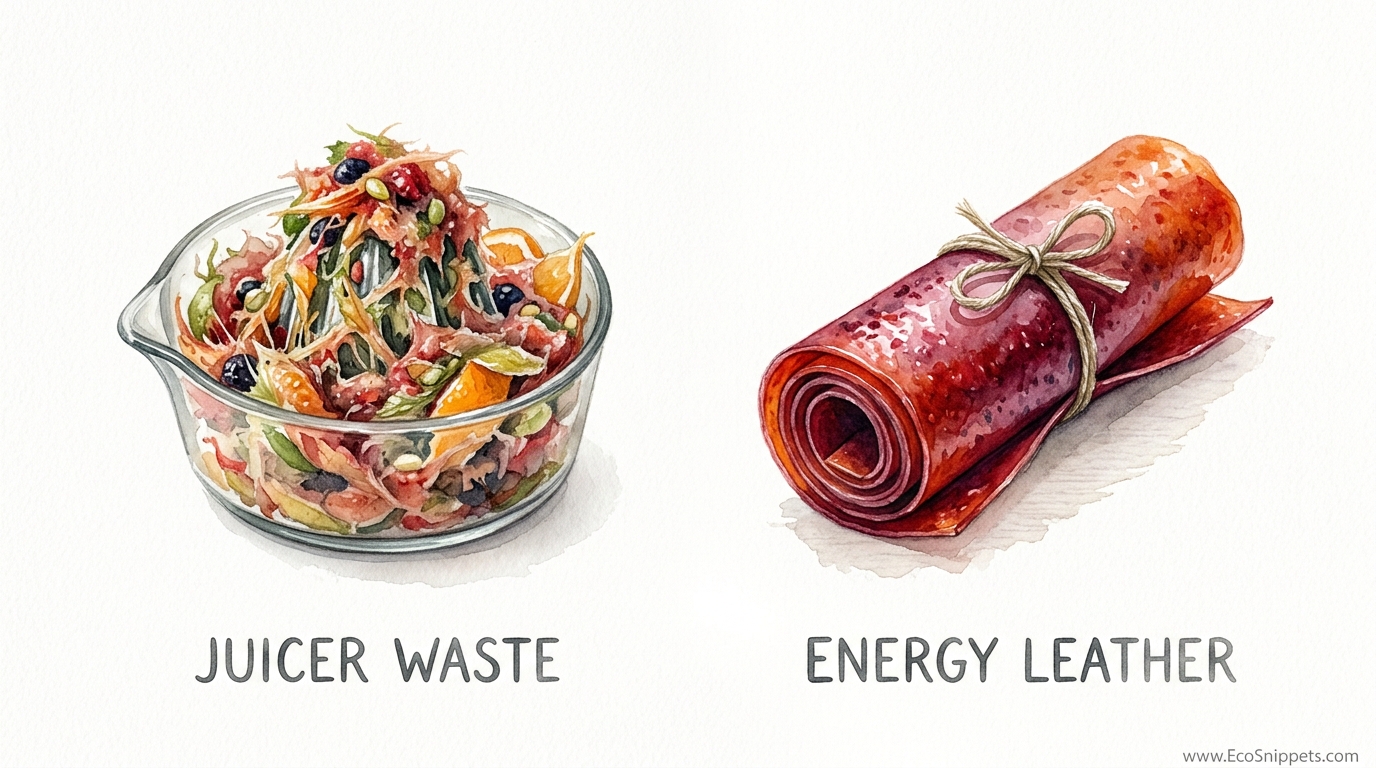
You are throwing away the most valuable part of your fruit every time you juice. Here is how to turn that ‘trash’ into a shelf-stable superfood. Juicing is great, but the fiber left behind is a homesteading goldmine. Instead of tossing it, blend it with a little applesauce or honey and dehydrate it. You’ll turn what most people consider ‘waste’ into a high-energy, shelf-stable fuel that’s perfect for the pantry or the trail. It’s the ultimate zero-waste preservation hack.
Most modern kitchens see juicer pulp as a nuisance—a soggy, fibrous mass that clogs drains or fills compost bins. In the world of self-reliance, however, we see this “waste” as the concentrated backbone of the fruit. This fiber is what slows down sugar absorption and keeps your system running smoothly. When you extract the juice, you leave behind up to 95% of the fruit’s fiber and nearly half of its original nutrients.
Reclaiming this pulp isn’t just about saving money; it’s about respect for the harvest. By transforming these fibers into what we call “energy leather,” you create a portable, nutrient-dense fuel that lasts for months. Whether you are stocking a survival pantry or looking for a clean snack for a day in the woods, juicer pulp leather is the answer to the “empty calorie” problem of traditional fruit snacks.
How To Use Juicer Pulp To Create Fruit Leather
Juicer pulp fruit leather is a preserved food made by recombining the fibrous remains of juiced produce with a binder, such as honey or fruit puree, and drying it until it reaches a flexible, leathery consistency. While traditional fruit leather uses whole pureed fruit, pulp leather specifically utilizes the “pomace”—the solid material left over after pressing. This makes the final product significantly higher in insoluble fiber than standard store-bought snacks.
In a practical sense, this process is an extension of ancestral “waste-not” wisdom. Historically, our ancestors would never dream of throwing away the skins, cores, and fibers of their harvest. They would boil them down, dry them, or ferment them. Today, we use a dehydrator or a low-temperature oven to achieve the same goal. The result is a snack that is less like a sugary candy and more like a dense “energy bar” that provides sustained fuel without the sugar crash associated with pure juice or refined sweets.
The texture of pulp leather is naturally more “mottled” and rustic than the smooth, translucent sheets made from filtered purees. It feels substantial and satisfying. Because the juice has already been removed, the drying process is often faster, and the flavors are highly concentrated. It is an ideal solution for homesteaders who juice in large volumes and want to ensure every ounce of their organic produce is utilized.
The Science and Process of Energy Leather
The process of creating fruit leather from pulp relies on the principle of moisture reduction. By removing water, you inhibit the growth of bacteria and mold, making the food shelf-stable. However, because juicer pulp is naturally dry and crumbly, the secret lies in the “re-hydration and binding” phase. You must add enough moisture and pectin-rich material back into the pulp to allow it to form a cohesive sheet that won’t crumble once dried.
Step 1: Collection and Selection
Not all pulp is created equal. Pulp from a masticating (slow) juicer is often drier and finer than pulp from a centrifugal juicer. For the best leather, use pulps from apples, pears, berries, or stone fruits. Avoid using too much citrus pulp, as it can become bitter when concentrated. Always collect your pulp immediately after juicing to prevent fermentation or browning.
Step 2: The Binding Mix
Since the pulp lacks the liquid needed to spread smoothly, you must mix it with a binder. A ratio of 2 parts pulp to 1 part binder is a solid starting point. Common binders include:
- Applesauce: Adds pectin and natural sweetness, creating a very pliable leather.
- Honey or Maple Syrup: Acts as a humectant, keeping the leather chewy rather than brittle.
- Water or Fruit Juice: Can be used if the pulp is already very flavorful but just needs help spreading.
Step 3: Pureeing for Texture
If you prefer a smoother, “store-bought” texture, run your pulp and binder through a high-speed blender or food processor. This breaks down the tough cell walls of the fiber, making the nutrients more bioavailable and the final product easier to chew. If you enjoy a rustic, “granola-bar” style texture, you can skip this step and simply mix the ingredients by hand.
Step 4: Spreading and Drying
Line your dehydrator trays with silicone mats or unbleached parchment paper. Spread the mixture evenly, aiming for a thickness of about 1/8 to 1/4 inch (3 to 6 mm). A key tip is to spread the edges slightly thicker than the center, as the edges dry faster and can become brittle if too thin. Dehydrate at 135°F (57°C) for 6 to 12 hours. If you are using an oven, set it to its lowest temperature (usually around 170°F / 77°C) and keep the door slightly ajar to allow moisture to escape.
Benefits of Reclaiming Juicer Pulp
The most immediate benefit is the massive increase in fiber intake. Most people get less than 15 grams of fiber per day, while our bodies thrive on 25 to 30 grams. Juicer pulp is rich in insoluble fiber—often described as a “broom” for the digestive system—which helps regulate blood sugar levels and promotes gut health. While juice provides a quick hit of vitamins, energy leather provides the “slow-burn” fuel your body needs for physical labor or long-distance travel.
From a self-reliance perspective, this method significantly reduces your “cost per ounce” of food. If you are buying high-quality organic produce, throwing away 40% of it in the form of pulp is a financial drain. Turning that pulp into a shelf-stable snack essentially doubles the value of your purchase. Additionally, because the leather is lightweight and compact, it is the perfect “bug-out” food or hiking snack, offering high calories in a small, indestructible package.
There is also the benefit of flavor customization. When you make your own energy leather, you control the ingredients. You can add anti-inflammatory spices like ginger or turmeric, or boost the protein content by folding in chia seeds or hemp hearts. You are no longer reliant on store-bought “fruit snacks” that are often just glorified corn syrup and food dye.
Challenges and Common Mistakes
The most frequent error is drying the leather for too long, which turns it into “fruit chips” that crack when touched. While still edible, brittle leather is difficult to store and lacks the satisfying chew of a proper roll-up. If this happens, you can often rescue the batch by lightly misting it with water and letting it sit for a few minutes to re-absorb some moisture before rolling.
Another common mistake is uneven spreading. If one side of your tray is 1/4 inch thick and the other is paper-thin, you will end up with a sheet that is half-raw and half-burnt. Using an offset spatula or even a large spoon to ensure a level surface is vital. If your dehydrator doesn’t have a fan, you must rotate your trays every few hours to ensure even airflow.
Mold is the ultimate enemy of preserved foods. If you under-dry the leather or store it while it is still warm, condensation will form in the container, leading to spoilage. Always ensure the leather is “tacky but not sticky” and shows no indentations when pressed with a finger. If you see any wet spots, it needs more time in the heat.
Limitations and Constraints
Not every fruit is a candidate for pulp leather. Citrus fruits like grapefruit and lemons contain high levels of pith that can become intensely bitter once the water is removed. While a small amount of lemon juice is a great preservative and color-enhancer, using pure citrus pulp usually results in an inedible snack. Similarly, very seedy fruits like raspberries or blackberries can create a “gritty” leather that some find unpleasant; in these cases, you may need to press the pulp through a fine-mesh sieve first.
Environmental humidity also plays a major role. If you live in a very humid climate, sun-drying is almost impossible as the pulp will likely mold before it dries. Even in an oven, high humidity can double the required drying time. In these situations, an electric dehydrator with a dedicated fan and temperature control is not just a luxury—it is a necessity for food safety.
Comparing Fruit Leather Styles
It is helpful to understand the difference between standard fruit leather and the energy leather made from pulp. While both are excellent preservation methods, they serve different purposes in a homesteader’s pantry.
| Feature | Standard Puree Leather | Pulp-Based Energy Leather |
|---|---|---|
| Fiber Content | Low to Moderate | Very High (Insoluble) |
| Drying Time | 8–14 Hours | 6–10 Hours |
| Texture | Smooth, Jelly-like | Dense, Rustic, Chewy |
| Energy Type | Quick Glucose Spike | Sustained Release |
Practical Tips and Best Practices
To ensure your energy leather stays fresh, use the “conditioning” method. After removing the leather from the dehydrator, place the pieces in a glass jar for about a week. Shake the jar daily. If you see any condensation forming on the glass, the leather isn’t dry enough and needs to go back into the dehydrator for an hour. This process ensures that moisture is evenly distributed throughout the batch, preventing “hidden” wet spots that cause mold.
For the best storage, roll your leather in strips of parchment paper to prevent it from sticking to itself. Store these rolls in an airtight glass jar or vacuum-sealed bag in a cool, dark place. While it is shelf-stable for a month at room temperature, it will keep for several months in the refrigerator and up to a year in the freezer. Always label your jars with the date and the ingredients used.
If you find the flavor of your pulp leather a bit bland, remember that flavors concentrate as they dry. However, adding a pinch of sea salt, a squeeze of lemon juice, or a dash of cinnamon before drying can significantly brighten the final taste. For a savory “vegetable leather,” try using carrot and beet pulp with a little ginger and a splash of soy sauce or coconut aminos.
Advanced Considerations: Fermented and Fortified Pulps
For the serious practitioner, juicer pulp can be fermented before drying to create a probiotic-rich snack. By adding a small amount of whey or a starter culture to your pulp and binder mix and letting it sit at room temperature for 12–24 hours, you allow beneficial bacteria to begin breaking down the fibers. When you dehydrate this mixture at a low temperature (below 115°F / 46°C), you preserve these enzymes and probiotics, creating a truly functional superfood.
You can also “fortify” your leather for specific needs. If you are preparing for a long-distance hike, add nut butters or ground flax seeds to the mix to increase the fat and protein content. This transforms the leather from a simple snack into a meal replacement. Just be aware that adding fats (nuts/oils) will shorten the shelf life, as fats can go rancid over time. These fortified leathers should be stored in the freezer for long-term safety.
Example Scenario: The “Morning Green” Recovery Leather
Imagine you’ve just made a large batch of green juice using apples, kale, ginger, and lemon. You are left with about 4 cups (approx. 1 liter) of vibrant green pulp. Instead of tossing it, you place the pulp in a blender with 1 cup (240ml) of unsweetened applesauce and 2 tablespoons (30ml) of raw honey.
You blend the mixture until smooth, then spread it across two dehydrator trays lined with silicone mats. You set the temperature to 135°F (57°C) before heading to bed. By morning, you have two large, flexible sheets of “Green Energy Leather.” You cut them into 2-inch (5cm) strips, roll them up, and tuck them into your pack. You now have a high-fiber, vitamin-rich fuel source that will keep you satisfied during your chores without the sugar crash of the juice itself.
Final Thoughts
Reclaiming juicer pulp is a fundamental shift in how we view our kitchen resources. It moves us away from a culture of disposal and back toward a culture of stewardship. By recognizing that the “waste” of one process is the “raw material” for another, we build a more resilient and sustainable way of living. This energy leather is more than just a snack; it is a testament to the idea that nothing of value should ever be thrown away.
Experiment with your own combinations. Try mixing tart berry pulp with sweet banana binder, or earthy root vegetable pulp with warming spices. The more you work with these fibers, the more you will appreciate the hidden bounty within your harvest. Once you start making your own energy leather, you’ll never look at a full juicer basket the same way again. Start small, dry thoroughly, and enjoy the satisfaction of a truly zero-waste pantry.
