How To Become More Self-Sufficient Without Starting a Full-Blown Farm…
Want to start preserving your harvest, making your own soap, or building a backyard root cellar — but not sure where to begin? “Homesteading Advice” gives you instant lifetime access to 35+ practical homesteading books on food preservation, veggie gardening, DIY natural cleaning products (save over $250 per year with this skill alone), brewing, off-grid energy, and a whole lot more…
Click Here To Check It Out Now!
Your garden ‘pests’ are actually a high-density protein source that commercial feed manufacturers charge a premium to replicate. Why are we paying for soy-based pellets shipped from across the country when our gardens are overflowing with the highest-quality protein a duck can eat? Setting simple ‘snail traps’ (damp boards) allows you to harvest pounds of free, nutrient-dense feed every morning while protecting your lettuce.
Many homesteaders overlook the sheer volume of nutrition crawling beneath their garden mulch. Traditional wisdom suggests that a slug is a nuisance to be poisoned, but the self-reliant steward sees a slug as an 80% protein package wrapped in a convenient, soft-bodied delivery system. Turning these invaders into egg-laying fuel is a cornerstone of an efficient, closed-loop homestead.
Ducks are built for this work. Their broad, sensitive bills are designed to root through damp soil and filter out the high-value morsels that chickens often ignore or scratch past. Shifting your focus from “eliminating pests” to “harvesting protein” changes the entire economy of your backyard flock.
Practical duck keeping relies on understanding how to leverage nature’s abundance. Instead of fighting the environment with chemicals, you can use the duck’s natural drive to forage as a way to slash your monthly feed bill. This guide explores the biology, the benefits, and the simple systems required to turn your garden’s biggest headache into its greatest asset.
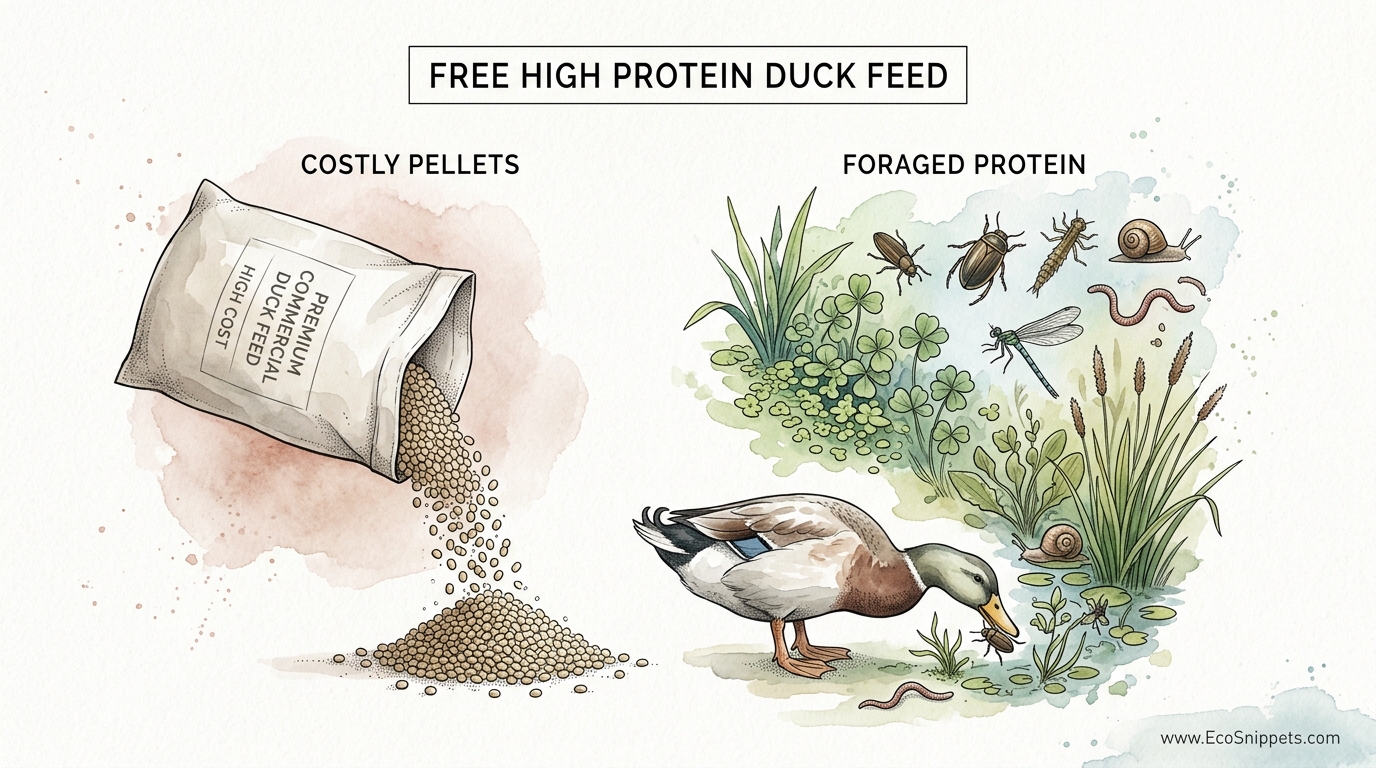
Free High Protein Duck Feed
Free high protein duck feed is any naturally occurring invertebrate—typically slugs, snails, beetles, and grubs—found within the homestead environment. These creatures serve as a direct replacement for the expensive, processed animal or soy proteins found in commercial bags. In a natural setting, a duck’s diet is roughly 15% to 20% protein, much of which they source through opportunistic foraging in wetlands and pastures.
Garden pests represent a concentrated form of this ancestral diet. Slugs and snails are particularly valuable because their nutritional profile closely mimics the “snail meal” used in high-end aquaculture and specialized poultry rations. Research into sustainable feed alternatives shows that snail meat can contain between 53% and 83% crude protein on a dry-matter basis. This is significantly higher than the 44% to 48% protein typically found in soybean meal.
Most commercial feed manufacturers rely on soy because it is easy to transport and store in bulk. However, soy is a plant-based protein that often requires synthetic amino acid supplementation to meet a duck’s specific needs for lysine and methionine. Wild invertebrates come “pre-packaged” with these essential amino acids, along with bioavailable minerals like magnesium and calcium that support strong eggshells and healthy feathers.
Integrating this free resource requires a mental shift. You are no longer just a gardener; you are a protein harvester. Every Japanese beetle or slimy slug you provide to your ducks is a “free scoop” of feed that didn’t have to be grown in a monoculture field, processed in a mill, and trucked to your local supply store.
How It Works: Harvesting the Harvest
Converting garden pests into duck feed involves two primary strategies: direct foraging and active trapping. Direct foraging allows the ducks to do the work themselves, while trapping enables you to collect pests from sensitive areas where the ducks might cause damage to young seedlings.
The Damp Board Method
Moist environments attract slugs and snails like magnets. You can exploit this behavior by placing scrap pieces of plywood, old shingles, or even damp cardboard between your garden rows. These “traps” provide a cool, dark refuge where mollusks congregate during the heat of the day.
Checking these boards every morning is a simple chore. Flip the board over, and you will likely find dozens of slugs clinging to the underside. You can either bring the ducks to the garden for a supervised feeding session or scrape the slugs into a bucket for delivery to the coop. This method keeps your ducks out of the lettuce while still providing them with the benefits of the pest population.
Rotating Duck Tractors
Using a mobile duck tractor is the most efficient way to clear large areas of beetles and grasshoppers. A tractor is a bottomless, portable coop that you move daily across your lawn or fallow garden beds. As you move the pen, the ducks have access to a fresh “buffet” of insects that have moved into the grass overnight.
Concentrated foraging in a specific area ensures that the ducks find every available grub and larvae. This system works exceptionally well in late autumn or early spring when you want to clear the soil of overwintering pests before planting. The ducks’ flat feet provide light aeration and their manure deposits nitrogen exactly where you need it for the coming season.
Night Harvesting and Beer Traps
Nocturnal pests require a different approach. Going out at night with a headlamp and a jar allows you to hand-pick the largest offenders. Alternatively, setting “beer traps” (shallow containers filled with cheap lager) can lure slugs from a wide radius. While some keepers worry about feeding “drunk” slugs to ducks, the alcohol content is usually diluted enough by the time the ducks eat them to be harmless. A more economical version of this trap uses a mixture of water, sugar, and baker’s yeast, which provides the same enticing aroma without the cost of the beer.
Benefits of Foraged Protein
Transitioning to foraged protein offers measurable advantages for both the flock’s health and the homestead’s bottom line. The most immediate benefit is the reduction in feed costs. Feed can represent up to 70% of the total cost of raising poultry; every ounce of foraged protein directly offsets the amount of commercial grain required.
Superior Amino Acid Profile
Ducks do not actually require “protein” in a generic sense; they require specific building blocks called amino acids. Lysine and methionine are the two most critical amino acids for laying ducks. While soybean meal is often deficient in these, snail and slug meat is naturally rich in them.
Ducks fed a diet supplemented with fresh invertebrates often show higher egg production rates and better feed conversion ratios. The eggs themselves are frequently larger and have deeper, more vibrant yolks due to the high levels of natural carotenoids found in a wild, diverse diet. The immune-boosting properties of fresh, live food also cannot be overlooked, as foraged insects provide a variety of trace minerals often missing from processed pellets.
Ecological Balance
Integrating ducks into the garden creates a “closed-loop” system. In a typical garden, pests eat the crops, and the gardener spends money on poison to kill the pests. In a duck-integrated system, the pests eat the weeds and a few sacrificial plants, the ducks eat the pests, and the ducks produce manure that fertilizes the crops. This cycle eliminates the need for synthetic pesticides, which are often toxic to the very soil microbes that make a garden thrive.
Challenges and Common Mistakes
Harvesting garden protein is not without risks. The primary concern when feeding wild-caught invertebrates is the potential for internal parasites. Slugs, snails, and earthworms serve as intermediate hosts for several harmful organisms.
The Threat of Gapeworm
Gapeworm (*Syngamus trachea*) is a parasitic roundworm that attaches to the trachea of a duck, causing respiratory distress. Ducks infected with gapeworm will often “gape” their mouths open, stretching their necks out to catch their breath. This parasite is commonly transmitted when ducks eat infected slugs or earthworms that have picked up the larvae from wild bird droppings.
Managing this risk involves maintaining a clean environment and occasionally deworming the flock if symptoms appear. Mature ducks with strong immune systems are less susceptible, but young ducklings should be kept away from high-density slug areas until they are fully feathered and their immune systems are more robust.
Impacted Crops and Exoskeletons
Overfeeding hard-bodied insects like Japanese beetles or June bugs can lead to crop impaction, especially if the ducks do not have access to sufficient grit. The chitinous exoskeletons of beetles are difficult to break down. If a duck gorges on hundreds of beetles in a single afternoon without enough water and coarse sand to help the gizzard grind them down, the material can become stuck. Always ensure a bowl of insoluble grit is available whenever ducks are foraging.
Chemical Contamination
Feeding pests from a garden that has been treated with pesticides is a recipe for disaster. Even “organic” slug baits like iron phosphate (Sluggo) can be harmful if consumed in large quantities by ducks. If you are transitioning to a duck-based pest control system, you must stop using all chemical baits and sprays. The ducks are your “biological pesticides,” and they are far more effective when they aren’t competing with—or being poisoned by—synthetic alternatives.
Limitations: When Foraging Isn’t Enough
Foraging is a seasonal and regional strategy. In many climates, the “protein harvest” disappears during the winter months. When the ground freezes and insects go dormant, your ducks will rely almost entirely on the commercial feed you provide.
Scarcity in Dry Seasons
Slugs and snails require moisture to thrive. During a drought or an exceptionally dry summer, the population of these “free feeds” will plummet. Relying solely on foraging during these times can lead to a drop in egg production or weight loss. A wise keeper monitors the “insect load” of their property and adjusts the daily grain ration accordingly.
Environmental Boundaries
Small urban lots may not produce enough biomass to sustain a flock’s protein needs. A single duck can consume hundreds of slugs and beetles in a week. If your space is limited, you might clear the area of pests in just a few days, leaving the ducks with nothing to hunt. In these cases, you might need to “import” protein by setting traps in a neighbor’s garden or focusing on other supplemental feeds like cultured mealworms or black soldier fly larvae.
Nutritional Comparison: Snail Protein vs. Soybean Meal
Understanding the raw numbers helps justify the effort of trapping and foraging. The table below compares the typical nutritional values of dried snail meal (a concentrated form of garden pests) against standard commercial soybean meal.
| Nutrient | Snail Meal (Dry) | Soybean Meal (Dry) | Benefit to Duck |
|---|---|---|---|
| Crude Protein | 53% – 83% | 44% – 48% | Faster growth and better feathering. |
| Lysine | 4.2% – 9.0% | 2.8% – 3.2% | Crucial for egg production. |
| Calcium | 3.5% – 6.0% | 0.3% – 0.5% | Stronger eggshells; less supplemental oyster shell needed. |
| Magnesium | High | Moderate | Supports metabolic health and bone density. |
| Cost | Free (Labor only) | Premium Market Price | Drastic reduction in homestead overhead. |
Practical Tips for Success
Implementing a high-protein foraging system requires more than just letting the ducks loose. You need to manage the environment to ensure the ducks stay healthy while they work.
- Provide Constant Water: Ducks need water to swallow and digest protein. Slugs are notoriously sticky; without water to rinse their bills, ducks can choke on the very food you are trying to provide. Place water buckets near your foraging areas, not just in the coop.
- Force Multiplier – The Flashlight: If you have a severe infestation, go out at night and collect the pests yourself. Toss them into a bucket of water. In the morning, dump the “protein soup” into the ducks’ feeding area. This prevents them from wandering into the garden and trampling your delicate seedlings.
- Training with Treats: Teach your ducks to come to a specific whistle or call. When they associate your presence with a “slug dump” or a flipped board, they will become highly efficient partners, following you to the specific areas of the garden that need the most attention.
- Use Sacrificial Mulch: Leave some areas of the garden with thick, damp straw. This creates a “slug nursery” that you can harvest from regularly. It’s better to have the slugs in a controlled mulch pile than in your cabbage patch.
Advanced Considerations: The Integrated Cycle
Experienced practitioners take the concept of “free feed” a step further by managing the life cycles of the pests themselves. This is often referred to as “vermicomposting with feathers.” Instead of just finding wild slugs, you can create conditions that encourage them to thrive in areas specifically designed for harvesting.
Scaling this system involves rotating your ducks through “wild zones.” By leaving a portion of your property in tall grass or brush, you create a sanctuary for a wide variety of insects. Rotating the ducks into these zones for one week out of every four allows the insect population to recover, providing a perpetual source of high-density protein.
Serious practitioners also consider the timing of the harvest. Snail and slug populations typically peak in early spring and late autumn. By preserving excess “protein” through dehydration or freezing (in the case of beetles), you can provide a high-protein boost during the winter months when the ground is frozen. Frozen Japanese beetles are a particular favorite for ducks and can be stored in the freezer for months without losing their nutritional value.
Example Scenario: The Mushroom Yard Defense
Consider a homestead that grows shiitake mushrooms on logs in a shaded, damp area. This environment is a paradise for slugs, which can decimate a mushroom crop overnight. A commercial grower might spend hundreds of dollars on organic slug baits or copper tape.
A duck-integrated approach uses a small flock of Khaki Campbells or Indian Runners. These ducks are “herded” into the mushroom yard for two hours every morning and evening. Because the mushrooms are grown on logs above the ground, the ducks can easily patrol the soil beneath them without damaging the crop.
In this scenario, the ducks provide “almost zero observable slug damage” to the mushrooms while obtaining nearly 40% of their daily protein from the very creatures trying to eat the farmer’s profit. The reduction in commercial feed costs, combined with the increased yield of high-quality mushrooms, makes the ducks a triple-threat asset: pest control, fertilizer source, and protein-to-egg converters.
Final Thoughts
The modern reliance on bagged grain has blinded many to the abundance of our own backyards. Reclaiming the “pests” in your garden as a high-density protein source is more than just a way to save a few dollars; it is a return to a more resilient, ancestral way of animal husbandry. When we stop viewing nature as something to be “controlled” with chemicals and start viewing it as a system of energy to be harvested, our homesteads become more productive and less dependent on fragile supply chains.
Ducks are the perfect bridge between the garden and the kitchen. They take the slimy, the unwanted, and the destructive, and they turn it into the rich, nutrient-dense eggs that sustain our families. This process requires a bit of morning labor and a watchful eye for parasites, but the rewards are measurable in the health of your flock and the thickness of your wallet.
Start small. Place a few damp boards in your garden tonight. Tomorrow morning, flip them over and watch the excitement in your ducks’ eyes as they realize the feast you’ve uncovered. Once you see the transformation of a “nuisance” into a “resource,” you will never look at a slug the same way again. The path to self-reliance is often paved with silver trails, and your ducks are more than ready to follow them.
