How To Become More Self-Sufficient Without Starting a Full-Blown Farm…
Want to start preserving your harvest, making your own soap, or building a backyard root cellar — but not sure where to begin? “Homesteading Advice” gives you instant lifetime access to 35+ practical homesteading books on food preservation, veggie gardening, DIY natural cleaning products (save over $250 per year with this skill alone), brewing, off-grid energy, and a whole lot more…
Click Here To Check It Out Now!
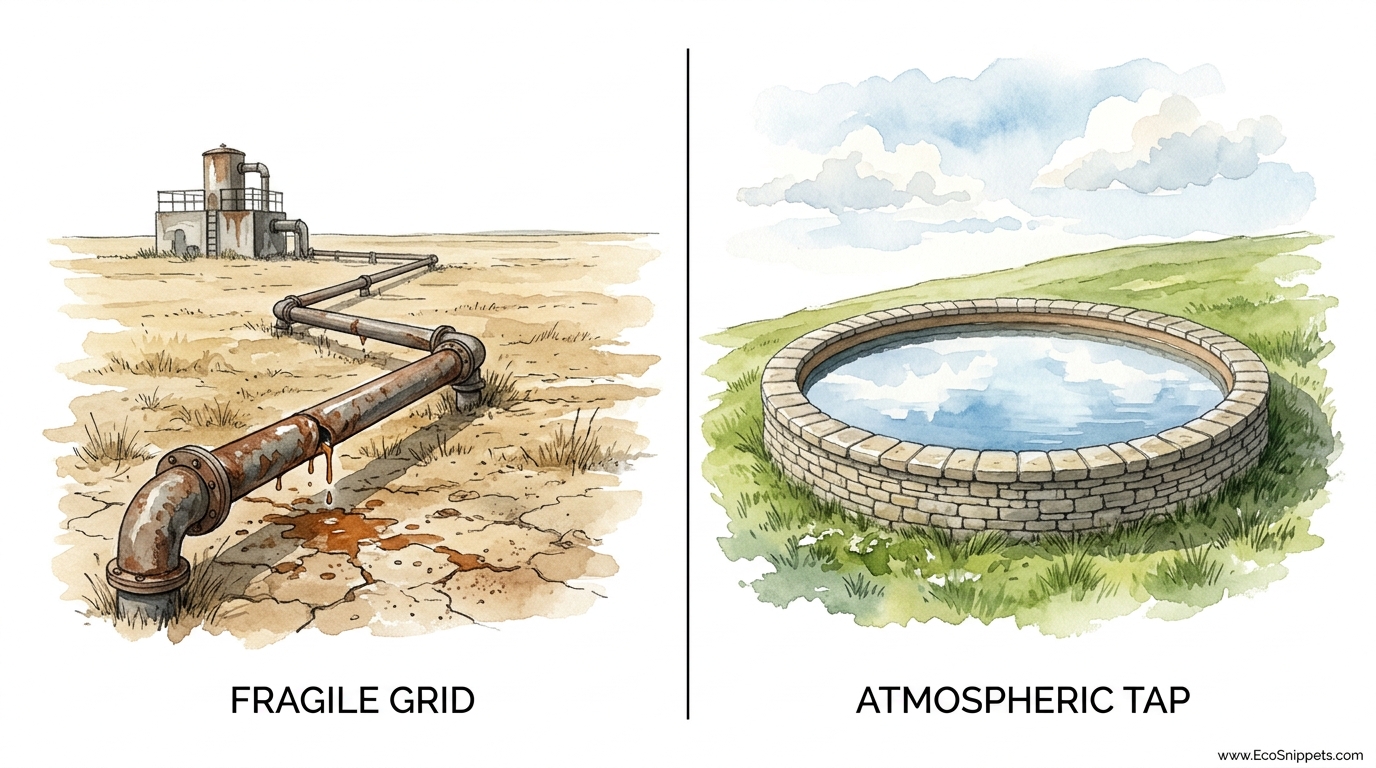
When the pumps stop and the pipes burst, this ancient hilltop basin keeps right on filling from the morning mist. and Neolithic farmers didn’t need a municipal grid to water their herds on high ridges. They built ‘Dew Ponds’ – precision-engineered basins that use temperature differentials to pull moisture directly from the air. Learn how to tap the ‘Wild’ water supply on your own property.
The modern world lives on borrowed time, tethered to a fragile grid of plastic pipes and electric pumps that can fail with a single downed wire or a rusted valve. Our ancestors lived differently. They understood that the sky is a river and the earth is a sponge. On the high, dry ridges of the South Downs in England, where chalk bedrock swallows every drop of rain, shepherds once maintained thousands of circular ponds that never ran dry, even in the heat of a parched summer. These were not mere holes in the dirt; they were sophisticated atmospheric taps designed to capture the invisible.
Building a dew pond is an act of defiance against modern dependency. It is a commitment to a landscape and a testament to the idea that water can be harvested where none seems to exist. Whether you are managing a small homestead or a large acreage, understanding the mechanics of these ancient basins offers a path to true water security. You are not just digging a pond; you are creating a thermal engine that breathes in the night air and exhales life-sustaining liquid.
Ancient Dew Pond Construction Guide
An ancient dew pond is a man-made, shallow, and usually circular basin specifically designed to collect and retain water on high ground where no springs or streams exist. Historically, these structures allowed livestock to graze on elevated pastures that would otherwise be unusable. While the name suggests they are filled entirely by dew, the reality is more complex. They are sophisticated catchment systems that combine direct rainfall, mist interception, and condensation.
These ponds were traditionally constructed using a layered “sandwich” of natural materials. The primary goal was to create a surface that remained colder than the surrounding earth. This temperature differential is the secret to their success. When warm, moist air moves over the chilled surface of the pond, the air reaches its dew point, and moisture begins to condense. On a foggy morning, a well-built dew pond can gain significant volume even without a single drop of rain.
Traditional construction relies on “puddled” clay or chalk. Puddling is the process of working raw clay with water and mechanical pressure—often the treading of oxen or the rhythmic beating of heavy wooden tools—until the air is squeezed out and the platelets of the clay align. This transformation creates an impermeable, stone-like barrier that prevents water from seeping into the porous ground below. In regions like the Yorkshire Wolds or the Sussex Downs, these ponds have served as the lifeblood of the landscape for millennia.
The Physics of the Atmospheric Tap
To understand why a dew pond works, you must look at the science of thermal mass and insulation. A standard hole in the ground will eventually reach the same temperature as the earth around it. In the summer, the ground stays warm, which encourages evaporation and prevents condensation. A dew pond breaks this cycle by using a thick layer of dry straw as a thermal break.
The straw acts as a non-conductor, much like the insulation in a thermos flask. It sits between the cold water and the warm earth. During the day, the water is chilled by evaporation from its surface. At night, while the surrounding hills remain warm from the day’s sun, the pond stays significantly colder. As the temperature of the air in contact with the water falls below the dew point, water vapor transforms into liquid droplets.
Another factor is the saucer-like shape of the basin. A shallow, wide-mouthed pond maximizes the surface area available for both rainfall collection and mist interception. Some historical accounts suggest that the best ponds were sited near a lone, stunted tree or a thicket of holly. These “mist-catching” trees would collect droplets on their leaves, which then dripped directly into the pond, acting as a natural extension of the catchment area.
Step-by-Step Traditional Construction
Building a traditional dew pond is a labor-intensive process that requires patience and a deep understanding of your materials. It is best to begin during the drier months to ensure the ground is stable, but you will need a nearby water source for the puddling process.
Excavation and Shaping
Dig a shallow, circular depression. A typical size is roughly 10 meters to 15 meters (33 to 50 feet) in diameter, with a depth of no more than 1 meter to 1.2 meters (3 to 4 feet) at the center. The sides should slope gently at a ratio of approximately 3:1. This gentle slope is crucial; it prevents the heavy lining materials from sliding toward the center and allows livestock to enter and exit without damaging the edges.
The Base Layer: Lime and Soot
Cover the excavated soil with a thin layer of slaked lime or soot. Ancestral wisdom tells us that this layer deters earthworms from burrowing upward. If worms penetrate the clay lining, they create tiny channels that will eventually lead to leaks. Lime also provides a firm, alkaline base that helps stabilize the soil before the heavier layers are added.
The Insulating Layer: Dry Straw
Lay down a thick bed of dry wheat straw. This layer should be approximately 15 centimeters to 20 centimeters (6 to 8 inches) deep. Ensure the straw is clean and free of rot. This is your thermal barrier. It is essential that this straw remains dry during the initial phases of construction, as wet straw loses its insulating properties and will eventually rot away, causing the pond to shift.
The Waterproof Core: Puddled Clay
This is the most critical stage. You will need roughly 15 to 20 tonnes of high-quality clay for an average pond. Spread the clay in layers of 15 centimeters (6 inches). To puddle it, you must add a small amount of water and work it into a plasticine-like consistency. Historically, a “gang” of men would use wooden beaters, known as “bitels,” to pound the clay until it became as smooth as glass. You can use a small excavator for this today, but the principle remains the same: you are compressing the clay to remove all air pockets. Aim for a total puddled thickness of 25 centimeters to 30 centimeters (10 to 12 inches).
The Protective Layer: Flint and Stone
Cover the puddled clay with a final layer of broken flint, chalk rubble, or small stones. This protects the delicate clay from the sun, which could cause it to crack, and from the hooves of animals. Without this “armour,” the clay would eventually dry out at the water line or be punctured by a thirsty cow.
Benefits of a Living Water System
A dew pond offers advantages that modern tanks and troughs cannot match. Because it is a “living” system, it integrates with the local ecology while providing a reliable fallback for your property.
1. True Resilience
When the power goes out or the well pump fails, the dew pond remains. It requires no fuel, no electricity, and no maintenance from a technician. It is a passive system that works 24 hours a day, 365 days a year.
2. High-Quality Water
Because the water is primarily sourced from the atmosphere, it is exceptionally soft and clean compared to groundwater, which may be laden with minerals or agricultural runoff. Studies of historical ponds have shown that the water quality often meets or exceeds modern drinking standards for livestock.
3. Biodiversity Oasis
In a dry landscape, a dew pond becomes a magnet for wildlife. It provides a breeding ground for amphibians, a drinking source for birds, and a habitat for dragonflies. These predators, in turn, help control pest populations on your farm, creating a healthier micro-environment.
4. Livestock Health
Animals often prefer the open water of a pond to the confined space of a trough. The shallow edges allow sheep and cattle to drink comfortably without the risk of falling into a deep, steep-sided tank.
Challenges and Common Mistakes
Building a structure that must remain watertight for decades is not without its risks. Most failures in dew pond construction can be traced back to a few specific errors.
Piercing the Lining
The most common cause of failure is a puncture in the puddled clay. This usually happens if the protective stone layer is too thin or if heavy-hooved animals like cattle are allowed into the pond when the water level is dangerously low. If the hooves reach the clay, the seal is broken.
Vegetation Overgrowth
Trees should never be allowed to grow on the banks of a dew pond. While a distant overhanging tree can help catch mist, a tree too close will send roots deep into the ground. Those roots will inevitably seek out the moisture in the pond, piercing the clay and draining the basin like a straw.
Incomplete Puddling
If the clay is not worked thoroughly, it will remain porous. Many modern attempts at clay-lined ponds fail because the builder simply spread the clay without “beating” or compressing it. Puddling is a mechanical change in the material; without it, you just have a hole full of mud that will eventually dry up.
Siting in a Gale
While hilltops are excellent for catching mist, an extremely wind-exposed site can suffer from high evaporation rates. The wind can whip the surface of the water, stripping away the cool air layer and reducing the pond’s efficiency. Finding a slight depression on a high ridge is the ideal balance.
Limitations and Environmental Constraints
A dew pond is not a universal solution. Its effectiveness depends heavily on your local climate and geology.
Geological Constraints
In very sandy or gravely soils, the risk of the pond shifting or the lining failing is much higher. These ponds were originally designed for chalk and limestone uplands where the ground is stable and the underlying drainage is excellent. If your soil is prone to “heaving” with frost, you may need a more robust, modern lining approach.
Climate Requirements
A dew pond thrives in temperate regions with high humidity and frequent mists. In a desert environment, the evaporation rates will almost always exceed the collection rates. While you might still catch some dew, the pond will likely remain dry for most of the year.
Volume Expectations
Do not expect a dew pond to power a modern household’s plumbing. It is designed for livestock and emergency backup. While a large pond can hold hundreds of thousands of liters (tens of thousands of gallons), it refills slowly. It is a slow-drip system, not a high-flow hydrant.
Comparison: Traditional Clay vs. Modern Synthetic
If you are considering building a pond today, you must choose between ancestral methods and modern technology. Both have their place.
| Factor | Traditional Puddled Clay | Modern Butyl/EPDM Liner |
|---|---|---|
| Cost of Materials | Low (local clay, straw, stone) | High (specialized synthetic sheets) |
| Labor Intensity | Very High (weeks of puddling) | Moderate (excavation and laying) |
| Longevity | 50–100+ years if maintained | 20–30 years (degrades in UV) |
| Repairability | Easy (add more clay/puddle) | Difficult (requires patches/glue) |
| Ecological Impact | Natural and non-toxic | Plastic-based, potentially leaches |
Traditional ponds represent the ultimate in self-reliance, as they can be built using only what is found on the land. Modern liners are faster to install but leave you dependent on the global supply chain for future repairs or replacements.
Practical Tips and Best Practices
For those ready to break ground, these tips will help ensure your pond remains a permanent feature of the landscape.
- Test Your Clay: Before starting, perform a “sausage test.” Roll a piece of damp clay into a thin cylinder in your hands. If it can bend into a circle without cracking, it has the plasticity required for puddling.
- Manage the Margin: Extend your clay lining at least 3 meters (10 feet) beyond the water’s edge. This creates a wider catchment area for runoff and ensures that the “seal” is buried deep enough to prevent drying at the edges.
- The Horse Method: If you don’t have bitels, you can use the traditional “ox-treading” method. Fence the area and lead a horse or several sheep around the basin for several days once the clay is laid. Their hooves provide perfect, localized pressure.
- Keep it Clean: Every 5 to 10 years, you may need to remove silt. Use a wide shovel and work carefully to avoid gouging the clay. Silt reduces the pond’s volume and can harbor excessive algae.
Advanced Considerations: Thermal Optimization
For the serious practitioner, the goal is to maximize the temperature differential between the pond and the air. This is what separates a simple rainwater hole from a true atmospheric tap.
Consider the “albedo” or reflectivity of your pond’s edges. Using white chalk or light-colored stones for the protective layer helps reflect solar radiation during the day, keeping the basin cooler. Some advanced builders have even experimented with adding a layer of charcoal or ash beneath the clay. This acts as an additional antimicrobial barrier and helps with thermal regulation.
Scaling your water supply is best done with a “necklace” of ponds rather than one massive basin. Smaller ponds are easier to maintain and can be sited in different microclimates across your property—one in a mist-heavy hollow, another on a ridge. This diversity ensures that if one pond suffers from a localized issue, the others remain functional.
Example Scenario: The Ridge-Top Homestead
Imagine a 20-acre property situated on a high limestone ridge. The well on the property is 150 meters (500 feet) deep, making the cost of pumping water significant. To reduce dependency on the well, the owner decides to build a 12-meter (40-foot) dew pond at the highest point of the pasture.
After excavating the saucer shape, the owner uses 18 tonnes of local clay, puddled over three weeks with the help of a small, rented walk-behind roller. They add a layer of wheat straw for insulation and cap it with limestone rubble found during the excavation.
In the first year, despite a dry autumn, the pond fills to a depth of 0.8 meters (2.6 feet) through a combination of light rains and heavy morning mists. The owner’s 15 sheep drink from the pond exclusively, saving the owner hundreds of dollars in pumping costs and providing the animals with a cool, natural water source that never requires a power cord.
Final Thoughts
The dew pond is a masterpiece of low-tech engineering. It proves that with a few simple materials—clay, straw, and stone—it is possible to create a reliable water source that thrives on the very air we breathe. These basins are more than just water storage; they are a connection to a time when survival was tied to a deep understanding of natural cycles.
Building one on your property is a long-term investment in resilience. It requires a significant upfront cost in labor and attention, but the reward is a water system that outlasts plastic pipes and outlives electric grids. It is a legacy you leave for the land, a permanent oasis that will continue to fill from the mist long after the modern world’s pumps have gone silent.
Experimenting with these ancient techniques allows us to reclaim the wisdom of the past. Start small if you must, but start. The morning mist is waiting to be caught.
