How To Become More Self-Sufficient Without Starting a Full-Blown Farm…
Want to start preserving your harvest, making your own soap, or building a backyard root cellar — but not sure where to begin? “Homesteading Advice” gives you instant lifetime access to 35+ practical homesteading books on food preservation, veggie gardening, DIY natural cleaning products (save over $250 per year with this skill alone), brewing, off-grid energy, and a whole lot more…
Click Here To Check It Out Now!
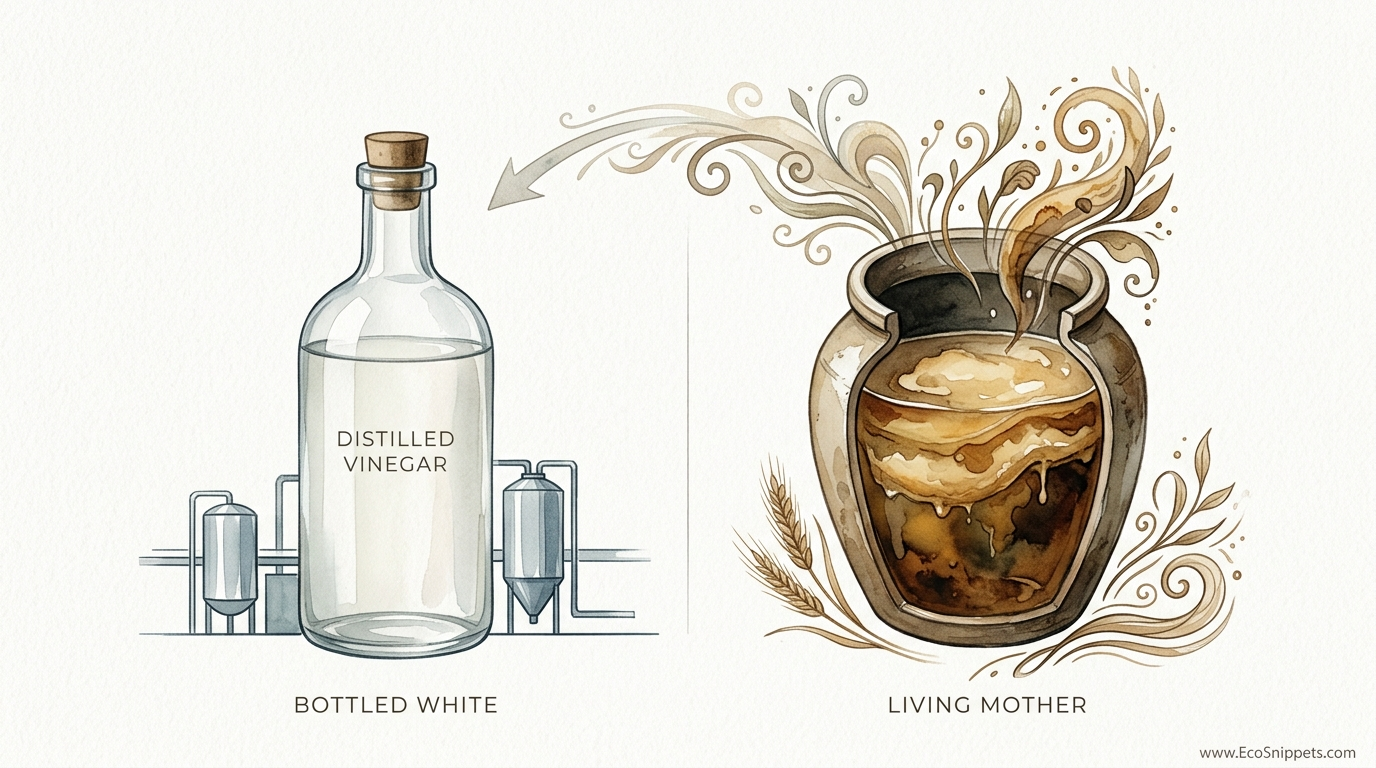
Most vinegar is just dead acid; your kitchen deserves a living legacy that gets better with every year. Stop buying vinegar. Using the Solera method, you create a dynamic, perpetual cycle where the ‘old’ vinegar teaches the ‘new’ batch. It’s a living probiotic engine that provides better flavor for a lifetime.
When you look at a bottle of store-bought white vinegar, you are looking at a sterile, industrial product. It is consistent, certainly, but it lacks the soul and depth of a vinegar that has been nurtured over years. The Solera system is an ancient technique that transforms simple wine or cider into a complex, evolving pantry staple. This method relies on fractional blending, a process where you never fully empty your vessel, ensuring that the wisdom of the old vinegar is always there to guide the development of the new.
How To Start A Solera Vinegar System
A Solera system is a method of aging and maturing liquids by partial blending. Historically, this system found its roots in the 18th and 19th centuries in the wine-producing regions of Spain and Portugal, specifically for Sherry and Madeira. The name comes from the Spanish word solum, meaning “on the ground,” because the oldest barrels in the system traditionally sit on the bottom row.
In a Solera, you organize a series of containers into levels called scales or criaderas (nurseries). The bottom level, the solera, contains the oldest vinegar ready for use. The levels above it, the first, second, and third criaderas, contain progressively younger vinegars. When you draw vinegar from the bottom, you replenish it with liquid from the level immediately above it. This chain reaction continues until the top level is topped off with fresh, unfermented or partially fermented wine or cider.
This system exists to provide incredible consistency and complexity. Instead of having a single “vintage” that might vary wildly from year to year, the Solera averages out those differences. It creates a perpetual blend where a fraction of the very first batch you ever started may still be present decades later. In the real world, this is how the world’s most expensive balsamic vinegars and finest Sherries are crafted. It is a commitment to the long game, valuing steady growth over quick results.
The Mechanics of Fractional Blending
The heartbeat of this system is the saca and the rocío. The saca is the extraction of the finished product. To maintain the health of the system, you should never remove more than one-third (33%) of the total volume from any single vessel at once. This ensures that enough of the mature liquid remains to “colonize” the incoming younger liquid with the proper bacteria and flavor compounds.
Following the saca, you perform the rocío, which is the replenishing or “washing down” of the casks. You take liquid from the first criadera to fill the void in the solera barrel. Then, you use liquid from the second criadera to fill the first, and so on. The youngest level at the top is then filled with your base alcohol—whether that is a hard apple cider, a red wine, or a malt beverage.
This movement of liquid does more than just mix ages. It introduces small amounts of oxygen, which is vital for the Acetobacter bacteria. These bacteria are the workers that convert ethanol (alcohol) into acetic acid. Without oxygen, they cannot do their job. The Solera method naturally provides these tiny bursts of aeration during the transfer process, keeping the “probiotic engine” running at peak performance.
Choosing Your Battery: Barrels vs. Jars
Traditional systems use large oak barrels, often 600 liters (about 158 gallons) in size. For a home practitioner, this is likely too much vinegar for a single household. You can scale this down using smaller vessels while still maintaining the integrity of the process. A “battery” of five to seven containers is traditional for balsamic vinegar, but a three-stage system is often sufficient for a dedicated home pantry.
Glass carboys or food-grade jars are excellent for beginners. They allow you to see the “mother” of vinegar as it forms—a rubbery, translucent film of bacteria and cellulose on the surface. However, glass does not breathe. If you use glass, you must cover the openings with a fine-weave cloth (like a flour sack towel) to allow air exchange while keeping out fruit flies.
Wood is the gold standard for a reason. Casks made of oak, chestnut, cherry, or mulberry each impart unique tannins and flavors. Oak provides vanillin and structure, while chestnut adds deeper color and tannins. Cherry wood is known for adding a subtle sweetness to the finished vinegar. If you can source small 5-gallon (19-liter) or 10-gallon (38-liter) barrels, you will achieve a depth of flavor that glass simply cannot replicate.
The Science of the Mother: Understanding Acetobacter
Vinegar is the result of a two-stage fermentation process. First, yeasts convert sugars into alcohol. This is an anaerobic process, meaning it happens without air. In the second stage, Acetobacter bacteria take that alcohol and turn it into acetic acid. This second stage is strictly aerobic; the bacteria need air to breathe.
The “Mother of Vinegar” is the physical manifestation of these bacteria. It often looks like a slimy, gelatinous disc floating on the surface. In a Solera system, the mother is the legacy you are preserving. Each time you move liquid down the chain, you are carrying over these specific, hardy strains of bacteria that have adapted to your specific environment and base ingredients.
Keeping your mother healthy requires maintaining the right environment. These bacteria thrive in temperatures between 60°F and 85°F (15°C to 29°C). If the environment gets too cold, they go dormant. If it gets too hot, they can die. They also need a steady supply of alcohol, but not too much at once. A base liquid with an alcohol by volume (ABV) of 5% to 8% is the sweet spot for conversion.
Managing Alcohol Levels
Starting with a liquid that is too high in alcohol can actually inhibit or kill your vinegar bacteria. Most wines are 12% to 14% ABV, which is often too aggressive for a young mother to handle. Diluting your wine with a bit of filtered water or unfermented juice can bring that ABV down to a more manageable level.
Hard ciders are naturally around 5% to 6% ABV, making them perfect candidates for a Solera system. If you are using a high-gravity craft beer or a fortified wine, you must be cautious. The goal is to provide enough “fuel” for the bacteria without overwhelming the system.
Step-by-Step: Setting Up Your First System
Begin by selecting three to five identical containers. Clean them thoroughly with hot water, but avoid using harsh chemical sanitizers like bleach, as these can linger and kill your bacteria. If using new wood barrels, they must be “seasoned” first by soaking them in water to swell the staves and then perhaps a sacrificial batch of wine to remove the harshest initial tannins.
Fill the first container (your top criadera) with your base liquid and a healthy amount of “raw” vinegar with the mother. You can buy raw apple cider vinegar to start your first batch. Leave at least 20% of the container as “headspace” to maximize the surface area exposed to air. This surface area is where the magic happens.
Wait for the mother to form and the liquid to turn sharply acidic. This usually takes two to four months depending on the temperature. Once that first batch is clearly vinegar, move half of it to the second container. Top the first container back up with fresh wine or cider. Repeat this process until all your vessels are active and full. Your system is now “primed.”
Benefits of the Solera Method
The primary advantage of the Solera system is the incredible complexity of flavor. By blending different ages, you capture the bright, sharp acidity of young vinegar alongside the mellow, woody, and rounded notes of aged vinegar. It is a total sensory experience that a single-batch method cannot match.
Another benefit is the resilience of the system. Because you always maintain a large volume of “seed” vinegar, the system is much harder to ruin than a small, isolated jar. The established microbial community acts as a shield, preventing stray “bad” bacteria or molds from taking over. It is a self-stabilizing environment.
This method also offers a consistent harvest. Once the system is mature, you can draw off a liter or a gallon of world-class vinegar every few months like clockwork. It turns vinegar making from a series of “projects” into a reliable, ongoing rhythm of the household. It is the ultimate expression of food security and self-reliance.
Challenges and Common Mistakes
One of the most frequent errors is moving the liquid too quickly. Patience is the primary ingredient in a Solera. If you draw vinegar before the Acetobacter have fully converted the alcohol, you will end up with a product that tastes like “boozy acid,” which is unpleasant and unstable. Always taste and, if possible, test the pH of your solera level before bottling.
Fruit flies are the eternal enemy of the vinegar maker. They are attracted to the acetic acid and can carry “vinegar eels” (tiny nematodes) or unwanted wild yeasts into your system. Using a very fine mesh or a tightly woven cloth is mandatory. Never leave your vessels open to the air without a barrier.
Evaporation is another factor to watch. In the dry attics of Italy where traditional balsamic is made, evaporation is welcomed because it concentrates the sugars and acids. However, in a home environment, too much evaporation can lead to a vinegar that is unpleasantly strong or “syrupy” before it has properly aged. If the volume drops too low, top it up with a bit of water or fresh juice to maintain the balance.
Limitations and Environmental Constraints
A Solera system is a commitment of space. Unlike a jar tucked in a cupboard, a multi-stage system requires a dedicated, stable area where it won’t be bumped or agitated. Moving the vessels frequently can break the mother, causing it to sink to the bottom where it can rot and create off-flavors.
Climate plays a massive role. In regions with extreme seasonal shifts, the speed of your vinegar production will change. During a cold winter, the bacteria may stop working entirely. In a sweltering summer, they may work so fast that the vinegar becomes harsh. You must learn to read the “mood” of your system and adjust your harvest schedule accordingly.
The system is also limited by its base. You cannot easily switch from a red wine Solera to an apple cider Solera without completely draining and cleaning the vessels, which destroys the “legacy” you’ve built. Most practitioners choose one style of vinegar and stick with it for the life of that specific battery.
Comparison: Traditional vs. Home-Scale Solera
| Feature | Traditional (Industrial) | Home-Scale (Kitchen) |
|---|---|---|
| Vessel Material | Large Oak/Chestnut Barrels | Small Wood Barrels or Glass Jars |
| Number of Tiers | 4 to 14 Scales | 2 to 4 Stages |
| Maintenance Level | High (requires specialized pumps) | Low (manual pouring/siphoning) |
| Yield Frequency | Daily or Weekly Extractions | Quarterly or Annual Extractions |
Practical Tips and Best Practices
Always use a siphon when moving liquid between stages. Pouring liquid from one jar to another can be messy and introduces too much turbulence, which may sink your mother. A simple food-grade plastic siphon allows you to draw liquid from beneath the mother without disturbing the surface.
Label everything. It is easy to forget which jar is which when they all look similar. Mark each vessel with the date it was last “washed down” and the source of the base liquid you used. This record-keeping is what separates a lucky hobbyist from a master vinegar maker.
Consider the “Angel’s Share.” This is the portion of liquid that evaporates through the wood or cloth. If you notice your vinegar becoming too dark or too thick, it may be concentrating too much. You can slow this down by using a slightly tighter weave of cloth or moving the system to a cooler, more humid part of your home.
Advanced Considerations: Customizing Your Flavor
Once you have mastered the basic cycle, you can begin to experiment with “finishing” your vinegar. Some makers add a small amount of toasted oak chips to the solera level to increase the woody profile. Others might add a handful of dried herbs or peppercorns to a small secondary “finishing jar” after the vinegar is drawn from the system.
You can also play with the base blend. While most people stick to one fruit, a “kitchen scrap” Solera can produce a fascinating, multi-dimensional vinegar. You might top off your top criadera with a mix of leftover cider, the dregs of a wine bottle, and even the liquid from fermented honey (mead). As long as the ABV is correct and the bacteria are healthy, the Solera will blend these disparate flavors into a harmonious whole.
For those truly dedicated to the craft, consider a “Battery” of different woods. Start with a large oak barrel at the top and progress down to a small mulberry or cherry barrel at the bottom. This mimics the traditional Aceto Balsamico Tradizionale method, where the vinegar picks up different characteristics as it concentrates and moves through various wood types.
Scenario: The Five-Year Vinegar Plan
Imagine you start a three-jar Solera today with local apple cider. In Year One, you are mostly establishing the mother and getting the acidity right. You might not harvest anything for the first twelve months. You are simply building the “engine.”
By Year Three, the system is fully mature. You are drawing off 2 liters (about 0.5 gallons) of vinegar every six months. This vinegar has a deep amber color and a complex, appley sweetness that store-bought cider vinegar lacks. The harsh “bite” of the early batches has smoothed out into a sophisticated tang.
In Year Five, your Solera is a local legend. You have shared mothers with friends, starting their own legacies. Your vinegar now has a “house character” that is unique to your kitchen’s environment. This is no longer just a condiment; it is a living history of the ciders and wines that have passed through your home over half a decade.
Final Thoughts
Building a Solera vinegar system is an act of defiance against the fast-paced, disposable culture of modern food. It requires you to slow down, observe the natural world, and participate in a biological partnership that spans years. The reward is not just a better salad dressing; it is the satisfaction of knowing you have created something that grows more valuable with every passing season.
This method teaches us that consistency does not have to mean sterility. Through fractional blending, we can achieve a product that is both reliable and infinitely complex. It is a system that honors the old while welcoming the new, ensuring that the best flavors are always preserved for the future.
Whether you start with a set of repurposed glass jars or a row of hand-crafted oak barrels, the journey is the same. You are tending a fire that never goes out. Start your battery today, and in a few years, you will wonder how you ever settled for the “dead acid” of a supermarket shelf. Your kitchen, and your legacy, deserve the living depth of a Solera.
